Author: ckmguy2

  • Advertising Trust Signals: Why AI Ad Sameness Is Pushing Businesses Toward Physical Marketing


    Advertising Trust Signals: Why AI Ad Sameness Is Pushing Businesses Toward Physical Marketing

    Advertising Trust Signals: Why AI Ad Sameness Is Pushing Businesses Toward Physical Marketing

    By Arizona Balloon Company (arizonaballoon.com) — July 3, 2026

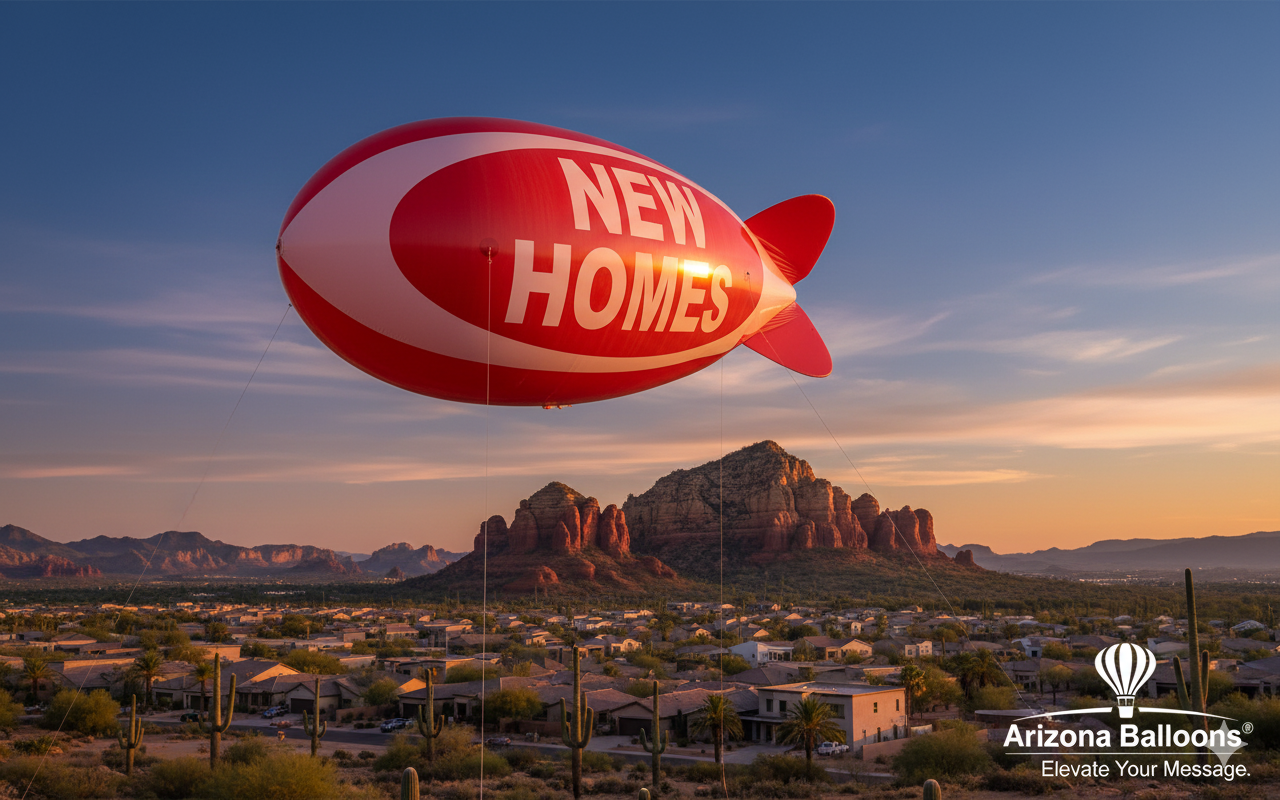
    Advertising trust signals shown through a large outdoor helium balloon display at a business location

    The AI Creative Sameness Problem

    New industry data published this week is putting a number on something marketers have felt for months: advertising trust signals are becoming harder to find in a feed full of AI-generated content that all looks and sounds the same. A July 2026 advertising trends report cited by startup marketing analysts found that 46% of marketers now use AI to scale creative production, while 86% have seen AI-generated outputs that resemble competitor content. In plain terms, the tools that were supposed to make brands stand out are quietly making them blend in.

    The report goes further, noting that three in four marketers are actively worried that AI-generated creative is making their brand indistinguishable from rivals. For small businesses competing against larger, better-funded competitors on the same social platforms, that is a warning sign. When every digital ad is drafted by a similar model with a similar prompt, differentiation has to come from somewhere else.

    Why Trust Is Now a Measurable Conversion Asset

    The same analysis argues that trust markers such as reviews, proof, precise claims, and visible humans now carry more weight in conversion paths than ever before, largely because audiences are learning to filter out anything that feels synthetic or interchangeable. It also points out that nostalgic, founder-led, and proof-based creative is outperforming polished but forgettable ads, and that campaigns built around genuine memory and identity can lift brand likability by a notable margin.

    That shift matters beyond the digital feed. Businesses looking to build authentic visibility — whether through a local marketing partner or a physical presence at a storefront or event — are finding that tactics rooted in real-world proof, not just algorithmic reach, are what cut through. This is exactly where outdoor and location-based advertising re-enters the conversation for home builders, dealerships, and trade show exhibitors.

    Advertising trust signals shown through a large outdoor helium balloon display at a business location

    The Physical Marketing Response

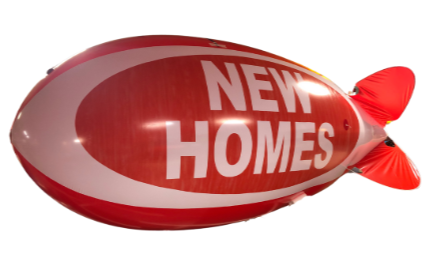
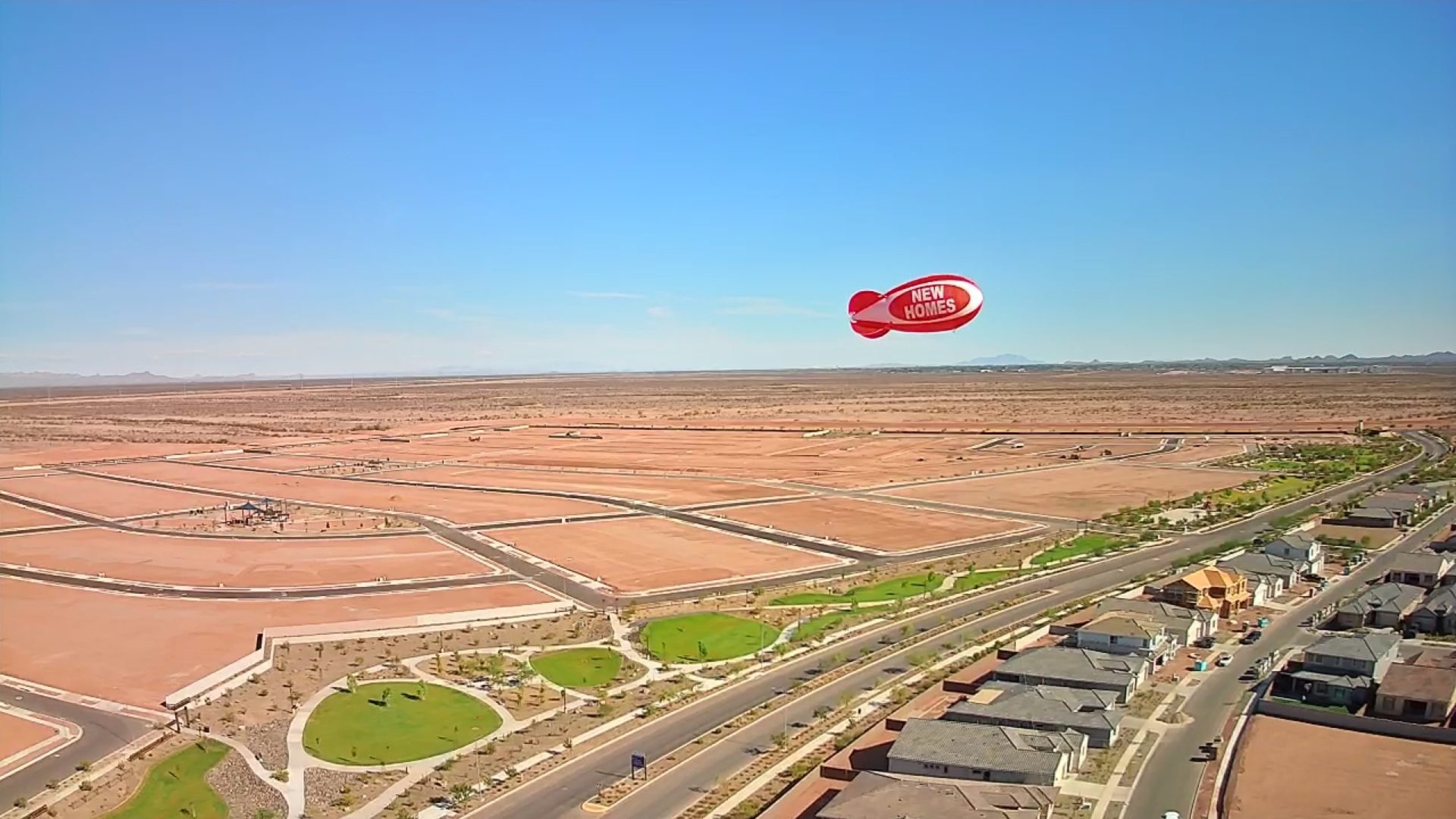
    As digital creative becomes commoditized, businesses are re-examining channels that cannot be templated or mass-produced by a language model. A giant helium balloon towering over a parking lot, or a marketing blimp circling a stadium before a game, is inherently a one-of-one asset. It cannot be A/B tested into sameness because there is only one of it, and it exists in physical space where a competitor’s identical ad literally cannot occupy the same spot at the same time.

    This is not a rejection of digital strategy. The report is clear that AI, first-party data, and structured websites still matter for reach and measurement. But it also confirms what outdoor advertisers have argued for years: attention earned in the real world carries a credibility that a synthetic feed struggles to replicate.

    How Helium Balloons and Blimps Fit the Trust Gap

    For home builders trying to draw weekend traffic to a new community, or auto dealers competing on the same three-mile strip, a large-format inflatable balloon or an advertising blimp functions as a trust signal in its own right. It says, plainly and visibly, “we are here, we are real, and we are worth stopping for.” That kind of unmistakable, physically present branding is difficult for an algorithm to replicate and impossible to scroll past.

    Trade show exhibitors face a similar version of this problem indoors. Booths that rely purely on printed banners and screens increasingly look like every other booth on the floor. A branded advertising balloon rising above the exhibit hall solves the same sameness problem the July report describes, just in three dimensions instead of a social feed.

    Who Benefits Most Right Now

    Businesses with a physical location or a live event are best positioned to act on this shift immediately. Home builders opening new phases, dealerships pushing seasonal inventory, and trade show exhibitors preparing for fall convention season all have a natural moment to pair digital campaigns with a visible, unmistakable presence on the ground.

    Getting Started With Outdoor Trust Marketing

    The practical first step is simple: identify one high-traffic location or event already on the calendar and pair it with a large-format inflatable or blimp presence rather than another round of near-identical digital creative. Businesses do not need to abandon paid social or search; they need one asset that customers can point to and remember, which is exactly the gap the current data describes.

    What This Means for Your Marketing

    Outdoor and location-based marketing is regaining relevance precisely because digital advertising is becoming harder to differentiate. When every brand’s social ads are drafted by similar AI tools, the businesses that win attention are often the ones willing to occupy physical space in a way competitors cannot copy overnight. A branded balloon over a sales lot or a blimp above a stadium is not a nostalgia play; it is a direct answer to the sameness problem marketers are now measuring and naming.

    For home builders and auto dealers, this means treating outdoor presence as a scheduled, recurring part of the marketing calendar rather than a one-time stunt — tied to grand openings, model home weekends, or seasonal sales events when foot traffic and buyer intent are highest. For trade show exhibitors, it means budgeting for booth visibility the same way competitors budget for premium floor space, since a memorable physical presence extends the life of the interaction well past the show itself.

    Businesses considering this approach can review options for helium advertising balloons to plan a presence that fits their location, budget, and event calendar. As digital ad creative continues to converge, the value of a visible, physical brand statement is likely to keep growing rather than fade.

    Sources


  • Helium Shortage Advertising Balloons: What It Means for Your 2026 Marketing Budget


    Helium Shortage Advertising Balloons: What Businesses Need to Know in 2026

    Helium Shortage Advertising Balloons: What It Means for Your 2026 Marketing Budget

    By Arizona Balloon Company (arizonaballoon.com) — July 2, 2026

    helium shortage advertising balloons floating above a business storefront

    Why the Helium Shortage Is Hitting Advertising Balloons Hardest

    The helium shortage advertising balloons and marketing blimps depend on has moved from a distant industry headline to a real budgeting problem for business owners. Since Iranian strikes damaged Qatar’s Ras Laffan gas complex in March 2026, roughly a third of the world’s helium supply has been offline, and distributors have begun rationing what remains. Industry analysts have been blunt about where that rationing falls hardest: essential medical and semiconductor uses get priority, while lower-priority, more substitutable uses such as party and promotional balloons face the sharpest cuts first. For companies that rely on helium advertising balloons to draw traffic to a storefront, dealership, or trade show booth, that ranking matters.

    Unlike a typical supply hiccup, this shortage traces back to physical damage at one of the world’s largest helium production sites, and repair estimates from QatarEnergy itself run three to five years. That timeline has pushed marketing teams to start asking a practical question: how do we keep using inflatable advertising without getting squeezed out of the supply chain entirely?

    Where Supply Stands Heading Into Summer 2026

    Early in the conflict, distributors were leaning on existing channel inventory built up during an oversupplied 2024 and 2025. That buffer is now running thin. Analysts have projected that stockpiled reserves at many distributors would be largely exhausted between May and July 2026, which lines up with reports this spring of surcharges, allocation calls, and force majeure declarations from major industrial gas suppliers. In Canada, independent regional helium suppliers report allocation calls happening more frequently than at any point since the 2018 shortage, with smaller commercial buyers, including balloon retailers, feeling the pinch before large industrial accounts do.

    helium shortage advertising balloons floating above a business storefront

    Who Feels It First: Party Suppliers vs. Commercial Advertisers

    Reporting out of Canada has already shown what this looks like on the ground. One Ontario balloon retailer told The Globe and Mail her customer volume dropped by an estimated 70 percent since the war began, with helium tank prices climbing so much that a single balloon now costs several dollars more than before. That story is playing out at small party and event suppliers across North America, and it illustrates a key distinction for commercial marketers: single-use latex balloons filled from a rented helium tank are the most exposed to shortages, because they are treated as the lowest-priority, most substitutable use of the gas.

    Commercial advertising inflatables sit in a different category. A well-built advertising balloon or blimp is refillable, reusable across many campaigns, and increasingly built from materials engineered to hold helium far longer than standard products, which reduces how often a business needs to buy more gas in the first place.

    Homebuilders and Auto Dealers: Still Planning Grand Openings

    For homebuilders launching new communities and auto dealers running weekend sales events, the calendar does not stop because of a supply chain disruption on the other side of the world. Grand openings, model home tours, and clearance events are still scheduled through the back half of 2026, and roadside visibility remains one of the most cost-effective ways to convert drive-by traffic into showroom visits. The difference now is that these businesses are being more selective about who supplies their inflatables, favoring vendors who can demonstrate helium efficiency and reliable turnaround rather than the lowest up-front rental price.

    How Low-Helium Materials Are Changing the Industry

    One response to tighter helium supply has been a shift toward premium polyurethane construction instead of standard PVC in advertising balloons and blimps. Polyurethane holds helium noticeably longer, which means fewer refills, less gas wasted to leakage, and lower total cost over a multi-week campaign even as per-unit helium prices rise. Manufacturers positioning themselves around this durability advantage are seeing renewed interest from clients who want to keep flying inflatables without absorbing every price increase upstream.

    Trade Show Exhibitors Adjust Booking Timelines

    Trade show organizers and exhibit managers are also adapting. Where booking a helium blimp or ceiling balloon for a convention center display was once a last-minute add-on, exhibitors are now reserving inflatable displays and confirming helium availability weeks earlier than in past years. Booths that anchor their branding to a floating advertising blimp still stand out above crowded show floors, but exhibitors are building in more lead time to avoid scrambling for gas the week of the event.

    What This Means for Your Marketing

    The helium shortage is a supply chain story, but for business owners it is really a marketing planning story. Outdoor, location-based advertising still delivers some of the strongest cost-per-impression numbers available, especially for time-limited events like grand openings, model home showcases, and dealership sales weekends. The businesses navigating this shortage well are not abandoning inflatable advertising; they are locking in vendors earlier, choosing equipment built to retain helium longer, and treating gas availability as a factor in campaign timing the same way they would weather or venue booking.

    Working with an established supplier also matters more in a constrained market. A company with decades of manufacturing experience, direct relationships with gas distributors, and reusable, durable inflatables is better positioned to deliver on schedule than a one-off rental outfit competing for the same shrinking allocation.

    Businesses evaluating their next campaign should talk to a supplier that can walk through material choice, refill frequency, and delivery timelines up front. Reaching out early to a provider of helium advertising balloons gives marketing teams more room to plan around supply constraints rather than reacting to them after a booking falls through.

    Sources


  • Home Builder Marketing Under Pressure as Builder Confidence Slips in June


    Home Builder Marketing Under Pressure as Builder Confidence Slips in June

    Home Builder Marketing Under Pressure as Builder Confidence Slips in June

    By Arizona Balloon Company (arizonaballoon.com) — July 1, 2026

    Home builder marketing team reviewing buyer traffic strategy at a new home community

    June Housing Market Index Signals a Tougher Selling Season

    Home builder marketing teams have a new data point to reckon with this week. The National Association of Home Builders (NAHB) and Wells Fargo reported that builder confidence in the market for newly built single-family homes fell two points to 35 in June, with current sales conditions dropping to 38 and buyer traffic holding at a soft 25. For decision-makers who plan promotions, model-home events, and community grand openings, the message is clear: getting prospects through the door is becoming the industry’s central challenge. Anyone running a home building or land development business can review current listings and community activity at Arizona Balloon Company to see how visibility tools are being used to respond to exactly this kind of slowdown.

    Why Home Builder Marketing Must Adapt Now

    The same NAHB survey found that 35% of builders cut prices in June, up from 32% in May, with the average price reduction holding at 6%. Sales incentives were used by 62% of builders — the 15th straight month that figure has topped 60%. In other words, discounting alone isn’t reliably moving buyers anymore. That shift is forcing home builder marketing budgets toward tactics that generate foot traffic and local awareness rather than relying purely on price. Builders exploring on-site visibility upgrades for model homes and sales centers often start by browsing advertising balloon packages designed specifically for community entrances and grand openings.

    Home builder marketing team reviewing buyer traffic strategy at a new home community

    The Real Problem: Buyer Traffic, Not Just Rates

    Of the three components that make up the HMI, buyer traffic is the weakest and has stayed flat for months. That distinction matters. Builders can control incentives and pricing, but attracting qualified visitors to a sales office in the first place is a marketing and visibility problem, not a financing one. Zonda’s May 2026 new home market update reinforces this: quick move-in inventory is trending down and buyers now have more resale competition than at any point in recent years, meaning every community needs to work harder to stand out on a crowded street.

    Why Visibility Tools Are Getting a Second Look

    With digital ad costs climbing and buyers increasingly numb to online listings, sales and marketing teams are revisiting physical, location-based tools that create an unmistakable presence near the community itself. Large-format signage, directional flags, and helium displays are inexpensive relative to paid search or print, can be redeployed across multiple communities, and create a landmark effect that pulls drive-by traffic off the main road and into the sales office — precisely the kind of measurable foot traffic the HMI shows builders are struggling to generate.

    Where Helium Balloons and Marketing Blimps Fit In

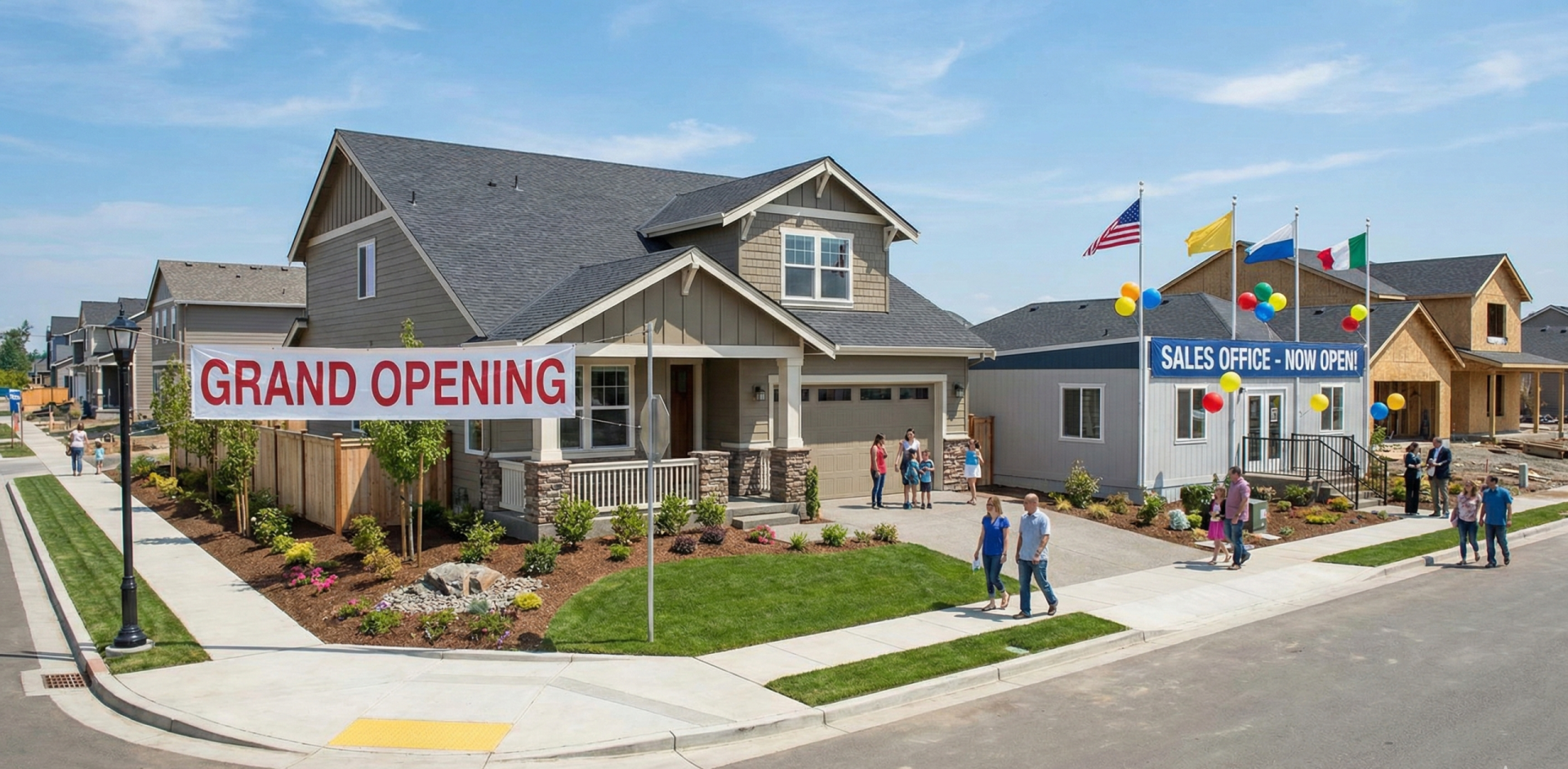
    This is where the inflatable and promotional products industry intersects directly with the housing story. Giant helium arches, cold-air balloons, and tethered advertising blimps are built for exactly the scenario builders now face: making a temporary sales center or a new-phase release visible from a distance, without a long-term signage commitment. A blimp or balloon positioned above a community entrance functions like a landmark — visible to passing traffic well before a buyer ever sees a yard sign or a digital ad. For an industry where 62% of builders are already leaning on incentives to close deals, adding a low-cost, high-visibility marketing layer can be the difference between a passerby stopping in and driving past.

    A Mixed Regional Picture

    Conditions aren’t uniform. Zonda’s data shows community counts rising sharply in markets like San Jose, Miami, and Greenville, while builders in Washington, D.C., Portland, and Philadelphia are pulling back. Builders expanding into growth markets face a different challenge than those managing shrinking inventory — but both groups share the same need to make each community, phase, or sales event as visible as possible to a more cautious, price-sensitive buyer.

    What This Means for Your Marketing

    For home builders, auto dealers, and trade show exhibitors alike, the June housing data is a reminder that outdoor, location-based marketing still delivers something digital channels can’t: an immediate, physical signal that something is happening right now, right here. When incentives and price cuts are already the norm across an industry, the businesses that stand out are the ones that make their location impossible to miss.

    A well-placed helium advertising balloon at a community entrance, or an aerial marketing blimp positioned above a grand opening, does double duty — it draws eyes from the road and photographs well for social media, extending the reach of a single event well past the day it happens. These tools are also flexible enough to move with the market: the same balloon fleet used for a model-home grand opening this month can support a trade show booth or a dealership event next month.

    Businesses weighing their options for the second half of 2026 can review current inventory, rental terms, and custom branding options through Arizona Balloon Company, which supplies helium advertising balloons and marketing blimps to home builders, dealers, and exhibitors across the country.

    Sources


  • Slow Sales? A Model Home Blimp Rental Gets Buyers In

    New-home sales slipped again this June, and builder confidence has now sat below 40 for fourteen straight months — a stretch the industry hasn’t seen since the foreclosure years. With affordability squeezing first-time buyers, builders everywhere are leaning on rate buydowns, price adjustments, and incentives just to get people through the door. But here’s the part that often gets overlooked in all the talk about mortgage rates: before a buyer can fall in love with your floor plan, they have to actually find your community. That’s exactly where a model home blimp rental earns its keep.

    model home blimp rental

    Why visibility matters more in a buyer’s market

    When demand is hot, foot traffic takes care of itself. When the market cools, every walk-through counts, and the builders winning right now are the ones making their model homes impossible to miss. A giant advertising balloon floating 30 or more feet above your subdivision does something no yard sign or banner can — it pulls the eye from a quarter-mile down the road and tells passing drivers, “turn here, something new is happening.” For a homebuilder competing on a busy arterial or tucked behind an established neighborhood, that kind of altitude is the difference between a curious glance and a missed lead.

    New home advertising balloons also signal momentum. A bright, professionally tethered blimp says your community is active, staffed, and worth a stop — a subtle but powerful cue when buyers are nervous about builders pausing or pulling back. It’s marketing that works around the clock, in the one place your buyers already are: their cars.

    Why polyurethane changes the math for builders with Model Home Blimp Rental

    Here’s where Arizona Balloon Company does something most advertising companies can’t. Since 1979, we’ve manufactured our helium balloons and blimps from proprietary polyurethane rather than the PVC most of the industry uses. Polyurethane is a lighter, tougher material, which means our balloons hold helium far more efficiently. In plain terms: they need significantly less gas to fly and stay aloft longer between fills. That efficiency is the reason we can offer short-term and weekend rentals at prices that actually pencil out for a builder — something competitors relying on helium-hungry PVC simply can’t match.

    So whether you want a blimp up for a single grand-opening weekend, a month-long push on a slow-moving phase, or a permanent fixture over your flagship model, the numbers work. You’re not paying for a tank of helium that leaks out by Sunday afternoon.

    Built for the work, trusted by serious organizations

    Arizona Balloon Company doesn’t just rent balloons — we manufacture and service them, so the product flying over your model home is engineered to take the heat, sun, and wind of an Arizona summer. The same construction quality has put our balloons and blimps in the hands of organizations like NASA, JPL, the U.S. Navy, ASU, and the NIH. When your advertising has to perform reliably day after day in front of your buyers, that track record matters.

    We work directly with home builders to match the right balloon or blimp to your site, whether that’s a classic blimp shape tethered over the sales office or a towering sphere that marks the community entrance. We handle the helium, the rigging, and the servicing, so your sales team can stay focused on closing.

    A homebuilder marketing idea that pays for itself

    In a stretch where builders are spending real money on rate buydowns and discounts, a model home blimp rental is one of the rare marketing ideas that’s both affordable and impossible to ignore. Instead of shaving another point off your margin, you’re capturing the drive-by traffic those incentives are designed to convert. More eyes on the community means more walk-throughs, and more walk-throughs means more chances to put your buydown offer in front of the right buyer.

    If sluggish traffic is making this season feel harder than it should, raising your visibility — literally — is one of the simplest levers you can pull. Arizona Balloon Company can get a balloon or blimp flying over your model home faster than you might expect, with rental terms that fit a single weekend or a full season.

    Ready to make your community the one buyers can’t drive past? Visit arizonaballoon.com to talk through options and get your model home noticed from blocks away.

  • Buyer’s Market Real Estate Trend Reshapes Strategy for Home Builders


    Buyer’s Market Real Estate Trend Reshapes Strategy for Home Builders

    Buyer’s Market Real Estate Trend Forces Builders and Sellers to Rethink Strategy

    By Arizona Balloon Company (arizonaballoon.com) — June 30, 2026

    buyer's market real estate trend shown through rows of new homes for sale width=

    Inventory Climbs as Affordability Pressure Builds

    The latest housing data confirms what many builders and agents have felt for months: the
    buyer’s market real estate trend is taking hold across much of the country.
    Monthly housing payments have climbed to roughly $2,647, just shy of the all-time record,
    driven by mortgage rates hovering near 6.5–6.7% and a median home sale price above $400,000.
    At the same time, active inventory has continued to improve in many metros, giving buyers more
    options and more negotiating power than they’ve had in years. For home builders and developers
    tracking Arizona Balloon Company, this shift signals
    that simply having homes available is no longer enough — visibility and differentiation now
    matter more than ever.

    Sellers Grow Cautious While Buyers Gain Leverage

    Pending home sales rose 3.8% in May, with every U.S. region posting gains, suggesting pent-up
    demand remains alive despite affordability strain. Still, sellers in many markets, including
    competitive metros like Orange County, are increasingly pulling listings rather than cutting
    prices, a sign that most sellers aren’t distressed but are willing to wait. Real estate
    brokerages note that homes priced aggressively are sitting longer, pushing agents to recommend
    more realistic pricing strategies. For builders and exhibitors promoting new communities, this
    means foot traffic and curb appeal carry more weight than in a seller-favored market — a gap
    that tools like helium advertising
    balloons
    are well suited to close by drawing attention from passing traffic to model homes
    and open houses.

    buyer's market real estate trend shown through rows of new homes for sale  width=

    A Hyperlocal, Region-by-Region Story

    National averages mask significant variation at the local level. Some markets, such as
    Tallahassee, are seeing sales and prices rise with shrinking days on market, while coastal
    regions like Florida’s Forgotten Coast report nearly nine months of supply — a classic buyer’s
    market by the numbers. Commercial real estate is similarly uneven: data centers and industrial
    space remain strong performers nationwide, while office space continues to lag in many cities.
    This divergence means builders and marketers can’t rely on generic strategies; campaigns need
    to reflect the specific competitive pressure of each submarket.

    Mortgage Rates Remain the Wildcard

    Inflation picked up in May, rising 0.5% month-over-month and 4.2% year-over-year, largely due
    to an energy-price shock, which has kept the Federal Reserve cautious about cutting rates. The
    30-year fixed mortgage rate has climbed back toward 6.5%, reversing earlier-year declines. Most
    economists describe 2026 as a “rebalancing year” rather than a crash, but the elevated-rate
    environment means buyers are more selective, comparison-shopping longer, and weighing multiple
    communities before committing.

    Standing Out in a Crowded Market

    When buyers have more listings to choose from, the developments and dealerships that capture
    attention first often win the sale. This is where outdoor, location-based marketing becomes a
    competitive advantage rather than a nice-to-have. Builders racing to differentiate model homes,
    exhibitors competing for floor traffic, and dealers working through larger lots are all turning
    to large-format visual marketing — including
    marketing blimps — to create
    unmistakable, highly visible landmarks that pull drive-by traffic off the road and into
    showrooms.

    What This Means for Your Marketing

    As inventory grows and buyers become more selective, the businesses that win are the ones that
    are seen first. Outdoor, location-based marketing remains one of the most cost-effective ways
    to cut through digital ad fatigue and capture attention from local traffic that’s already in
    market-shopping mode. A well-placed, oversized visual cue at a model home, dealership lot, or
    trade show booth does what banner ads and social posts cannot: it physically interrupts a
    commute and redirects it toward your property.

    For home builders specifically, a buyer’s market means every open house and sales event needs
    to work harder to justify the visit. Aerial visibility — from rooftop level or above — extends
    a property’s reach far beyond its street frontage, making it visible to buyers driving several
    blocks or even a highway away. The same principle applies to auto dealers and trade show
    exhibitors competing for limited buyer attention in a slower-moving market.

    Businesses looking to adapt their marketing mix for current conditions can explore
    aerial marketing blimps and helium balloon displays
    designed specifically for high-traffic, high-visibility placements, whether at a new community
    grand opening, a dealership lot, or a regional trade show floor.

    Sources

  • Grand Opening Outdoor Marketing in 2026: What Retailers Need to Know


    Grand Opening Outdoor Marketing in 2026: What Retailers Need to Know


    Grand Opening Outdoor Marketing in 2026: What Retailers Need to Know

    By Arizona Balloon Company (arizonaballoon.com) — June 29, 2026

    grand opening outdoor marketing retail event with balloons and signage

    The Big Shift: Retail Is Becoming an Experience Platform

    Grand opening outdoor marketing has taken on new urgency in 2026, as retailers across the United States increasingly recognize that their physical locations are no longer just storefronts — they are media channels, experiential destinations, and brand stages. Industry analysts and retail trade groups published several reports this week underscoring a decisive trend: businesses that invest in bold, visible, in-person activations at launch are dramatically outperforming those that rely on digital ads alone to attract opening-day crowds.

    The Pennsylvania Food Merchants Association, citing research from their member firm Old City Media, noted in a report published just six days ago that the most successful retailers heading into 2026 and 2027 are those treating their physical footprint — particularly high-traffic, front-of-store areas — as monetizable media real estate. Longer-term experiential programs running 60 to 90 days or more are replacing one-off promotions, and brands are investing in staffed experiences and always-on activations that create familiarity with local shoppers over time.

    The implication for businesses planning a grand opening is significant: the event itself is no longer the finish line. It is the beginning of a sustained campaign, and physical visibility from day one is the cornerstone of that campaign. Reaching shoppers who are nearby but not yet paying attention requires tools that operate above eye level — literally and figuratively.

    Retailers serious about launch-day foot traffic can explore Arizona Balloon Company’s full range of aerial marketing products, designed specifically to create the kind of unmissable presence that fills parking lots and drives first-day conversions.

    Outdoor Signage and Visibility Lead the Foot-Traffic Fight

    Fresh data published this month by signage industry sources confirms what experienced retail marketers have long suspected: outdoor visibility is the single most cost-effective driver of local foot traffic for new store launches. A-frame sidewalk signs, according to YardSigns.com, can boost foot traffic by as much as 43 percent and increase customer inquiries by up to 48 percent. Blade signs mounted perpendicular to storefronts improve visibility by 35 percent compared to flat-mounted alternatives, while illuminated signage delivers a similar 35 percent lift in brand recognition in high-traffic corridors.

    Outdoor advertising specialist site MyHoardings, in a guide published March 2026, stressed that successful retail openings build what they call a “mental itch” in the surrounding neighborhood three to four weeks before the doors open — using layered formats that range from ground-level sidewalk displays to large-scale visual anchors that are visible from a distance. The goal is for potential customers to recognize the business name and location before they ever walk through the front door.

    Grand opening advisors at PromotionalProductInc.com, writing within the past two weeks, echoed this point directly: physical signage and banners do the heaviest lifting for local foot traffic, and businesses must ensure the street can see them before opening day. Critically, they note the most common grand opening mistake is treating the event as the marketing itself rather than as the payoff of a sustained pre-launch awareness campaign.

    grand opening outdoor marketing retail event with balloons and signage

    The 2026 Grand Opening Playbook: What Works Now

    Event planning firm EMRG Media, in a guide published just two days ago focused on high-profile retail launches, outlined the five pillars that drive lasting results for a grand opening event. Timing matters: Saturdays between 11 AM and 4 PM generate the highest retail foot traffic. Strategic venue zoning, branded signage, and at least one photo-worthy installation are described as non-negotiable. Live programming — music, product demos, brand activations — keeps guests engaged for 90 minutes or more on average. And pre-event marketing should launch six full weeks before opening day for maximum reach.

    The firm also cited a 2026 SoHo boutique launch that invested in curated event programming, attracting more than 400 guests and earning 11 local media placements in a single weekend. In another example, a well-staged ribbon cutting in a high-foot-traffic neighborhood generated more than 500 organic social media impressions within 48 hours, driven entirely by passersby sharing posts about the event. The takeaway for marketing managers: the event itself becomes the content when it is visually compelling enough to stop people in their tracks.

    Retailers looking to create that stopping power overhead should consider custom advertising blimps, which combine massive aerial visibility with branded messaging that can be seen from a quarter-mile or more — a scale that no sidewalk sign or window decal can match.

    Why Aerial Advertising Gives Retailers a Visible Edge

    One of the most consistent themes across this week’s retail marketing coverage is the challenge of cutting through noise in a crowded commercial environment. Whether the competition is a neighboring strip mall, a nearby big-box store, or simply the infinite scroll of a consumer’s phone screen, retailers at launch face the problem of getting noticed first. Aerial marketing assets solve this problem in a way that ground-level signage simply cannot.

    Helium advertising balloons and cold-air marketing blimps operate in a visual zone — 20 to 100 feet above street level — that no competitor’s A-frame sign or window cling occupies. They are visible across intersections, above tree lines, and from moving vehicles on arterial roads. For a business spending thousands of dollars on opening-day inventory, staffing, and promotions, the cost of a rental balloon or blimp represents a small fraction of the budget while delivering a reach that digital ads in a two-mile radius simply cannot replicate with the same immediacy.

    Industry data from the outdoor advertising sector supports this logic. The Creative Stable’s 2026 outdoor advertising guide noted that retail point-of-sale environments that integrate large-format visual assets consistently drive foot traffic and urgency in a way that interior displays and digital formats cannot, precisely because they intercept potential customers before they have made a decision about where to shop. An aerial balloon seen from a highway off-ramp or a busy intersection puts a business on the consideration list of thousands of passing drivers every hour — without requiring a single click or impression on a phone screen.

    In-Person Experiences Are Outperforming Digital for Local Launch Events

    Perhaps the most striking finding across this week’s retail marketing research is how definitively in-person experience has reasserted itself as the dominant strategy for driving brand connection and conversion at the local level. Quad’s 2026 marketing trend report, citing Harris Poll research, found that 76 percent of Americans report connecting more deeply with brands through in-person retail experiences than through digital channels. Consumers, particularly Gen Z and Millennials, are actively seeking out what researchers are calling “retail tourism” — physical store visits that offer something a screen cannot replicate.

    Mall foot traffic data published by GrowthFactor in late 2025 supports this shift. Open-air shopping centers led recovery among all mall formats, recording more than 10 percent year-over-year visitor growth — and notably, these were the first mall formats to fully surpass their pre-2019 foot traffic levels. Retailers in open-air, strip mall, and standalone locations are particularly well-positioned to capture this rebound, provided they have the outdoor presence to draw attention from passing traffic.

    The National Retail Federation’s 2026 outlook adds another dimension: with digital fatigue mounting and AI-generated content flooding every screen, brands that deliver unmistakably human, physically present experiences are gaining a trust advantage that translates to opening-day crowds and repeat visits. A helium balloon visible above a parking lot is, in the most literal sense, the opposite of a digital ad — and in 2026, that contrast is working in retailers’ favor.

    What This Means for Your Marketing

    The convergence of trends this week paints a clear picture for business owners preparing a retail or grand opening launch: outdoor visibility is not a complement to your marketing strategy — it is the foundation of it. Digital geo-targeted ads can reach people on their couches, but only a compelling, unmissable physical presence in your immediate trade area will convert a curious passerby into a first-day customer. Investing in layered outdoor marketing — from sidewalk signage and banners to large-format aerial assets — is the single highest-return decision most retailers can make in the weeks leading up to and immediately following an opening.

    The most effective grand opening campaigns in 2026 are treating their launch events as multi-week campaigns with a visible physical anchor at the center. That anchor needs to be something a driver can see from a block away, something a shopper can photograph and share, and something a competitor cannot easily replicate at ground level. For retailers in strip centers, standalone locations, new residential communities, and high-traffic corridors, helium advertising balloons and aerial marketing blimps from Arizona Balloon Company provide exactly that combination of scale, visibility, and brand impact — available to rent, purchase, or have serviced by a team with decades of experience supporting grand openings across the country.

    If your grand opening is weeks or months away, now is the right time to plan your aerial marketing asset. Lead times for custom-printed balloons and blimps require advance scheduling, and the businesses that integrate overhead visibility into their pre-opening timeline consistently outperform those that treat it as a last-minute add-on. Contact the team at Arizona Balloon Company to discuss rental, purchase, and custom branding options for your next launch event.

    Sources


  • Trade Show Exhibit Visibility Is the New B2B Battleground


    Trade Show Exhibit Visibility Is the New B2B Battleground

    Trade Show Exhibit Visibility Is the New B2B Battleground

    By Arizona Balloon Company (arizonaballoon.com) — June 27, 2026

    trade show exhibit visibility with large branded display at convention floor

    CEIR 2026 Report: What the Data Shows

    Trade show exhibit visibility has emerged as a defining competitive factor in B2B marketing,
    according to the Center for Exhibition Industry Research’s newly released 2026 Marketing Spend
    Decision Report. The study, which tracks how exhibitors across the United States allocate marketing
    dollars across channels, confirms that face-to-face exhibitions continue to command the largest
    single share of B2B marketing budgets — outpacing digital advertising, content marketing, and
    paid search. For marketing managers and business owners evaluating where to concentrate resources
    this season, the findings carry significant strategic weight.

    Nancy Drapeau, IPC, CEIR’s Vice President of Research, summarized the headline finding directly:
    exhibitions remain a core investment for organizations where face-to-face engagement is central
    to marketing and sales, both before the pandemic and today. The report found that 40.8% of
    exhibitor marketing budgets flow to B2B exhibitions, making it the top channel by a wide margin.
    Equally telling, industry Net Promoter Scores have rebounded sharply — from a negative six in
    2021 to a positive 35 today — reflecting renewed confidence in the in-person event format.

    The U.S. trade show industry as a whole has reached an estimated $24.7 billion in revenue in 2026,
    growing at a compound annual rate of 12.8% since 2021. Attendance at major shows has returned to
    within 3.7% of 2019 levels, according to the CEIR Index, signaling that the post-pandemic recovery
    is effectively complete for flagship events.

    Despite the optimistic headline numbers, the CEIR report paints a more nuanced picture on the
    ground. Most exhibitors are holding their show participation steady rather than expanding it:
    47% plan to participate in the same number of events as last year, while 28% expect to add
    events to their schedule. Booth sizes have remained largely stable, with 83% of respondents
    indicating no plans to increase their footprint.

    What is shifting is where dollars go within the trade show budget. Exhibitors are concentrating
    spend on investments that demonstrably influence floor performance — booth design, pre-show
    outreach, and attendee engagement tools — while scrutinizing line items that are harder to tie
    to outcomes. Industry data from independent researchers supports this shift: exhibit design
    changes alone can improve booth stop rates by 30 to 45%, while proper lighting generates more
    than a twofold improvement in perceived brand quality. Yet the average exhibitor still allocates
    only 18 to 22% of their total show budget to design and presentation, suggesting a meaningful gap
    between what the data supports and what budgets reflect.

    For exhibitors working with Arizona Balloon Company,
    this trend reinforces a simple truth: the brands that invest in attention-commanding presence
    at and around the venue consistently outperform those relying on the booth alone.

    trade show exhibit visibility with large branded display at convention floor

    The Growing Pressure to Prove Trade Show ROI

    One of the most actionable themes running through the CEIR 2026 report is the intensifying
    expectation that trade show investments produce measurable returns. Approximately one in ten
    exhibitors is actively reassessing their event schedules in response to sales challenges and
    broader economic uncertainty. Those who remain committed to the channel are doing so with
    greater discipline: demanding clearer audience quality data from organizers, tighter lead-tracking
    capabilities, and stronger post-event reporting frameworks.

    Independent benchmarks reinforce this pressure. Cost-per-lead at B2B trade shows ranges from
    $112 to $186, making the channel cost-competitive with high-intent digital advertising for
    complex sales. However, only 6% of exhibitors report confidence in their ability to convert
    leads effectively on the show floor. The gap between traffic and conversion remains wide, and
    it starts with whether prospective buyers actually stop at the booth in the first place.

    Research consistently shows that 76% of trade show attendees arrive with a pre-planned list of
    booths they intend to visit. Pre-show marketing, combined with high-visibility presence on the
    day of the event, directly determines whether an exhibitor makes that list. Well-run programs
    that combine strategic booth investment with integrated pre- and post-show outreach report
    pipeline returns of four to six times total program spend.

    How to Stand Out When Every Exhibitor Is Competing Harder

    With show floors growing more competitive — more exhibitors, larger budgets, denser attendance —
    the challenge of breaking through is steeper than at any point in the past decade. Industry
    analysts note a sharp divide on modern convention floors: on one side, booths designed for an
    earlier era of static displays and passive brand exposure; on the other, exhibitors deploying
    immersive, narrative-driven environments that draw attendees in and keep them engaged.

    Experiential activations, modular storytelling environments, and prominent branded presence
    beyond the booth footprint are among the tactics gaining traction. Sponsorship models are
    shifting away from passive logo placements toward participatory formats — networking hubs,
    live demos, and branded zones that attendees associate with genuine value rather than advertising
    noise. The underlying logic is straightforward: in an environment where attention is the scarce
    resource, the exhibitors who command more of it generate more qualified conversations, and more
    qualified conversations produce more pipeline.

    Why Aerial Marketing Balloons Are a Trade Show Secret Weapon

    For exhibitors looking to maximize trade show exhibit visibility before a prospect even enters
    the building, giant helium advertising
    balloons
    and marketing blimps
    offer a tool that no in-booth investment can replicate: altitude. A large helium blimp tethered
    above or near a convention center entrance is visible from blocks away, driving attendee awareness
    and orienting foot traffic before a single badge is scanned. In markets where trade show venues
    are surrounded by competing hotel signage and ground-level advertising, aerial presence cuts
    through visual noise in a way that floor-level displays simply cannot.

    This matters because trade show ROI is partly a function of booth traffic volume — and booth
    traffic is partly a function of how many attendees know you are there before they walk the floor.
    Outdoor advertising blimps and inflatables extend the marketing perimeter of the trade show
    booth to the surrounding blocks, parking lots, and arrival corridors. They are particularly
    effective for exhibitors in industries where brand recognition drives pre-planned booth visits,
    because a visible aerial presence reinforces the brand in the minutes before an attendee enters
    the venue and consults their list.

    Custom advertising inflatables are also reusable across multiple events, making them a durable
    asset that amortizes well over a full show calendar. For companies exhibiting at three to five
    major events per year — a common cadence among mid-market B2B brands — the per-event cost of
    a helium blimp rental or owned inflatable compares favorably with temporary banner sponsorships
    that offer far less visual impact.

    What This Means for Your Marketing

    The CEIR 2026 report confirms what experienced trade show marketers already understand: the
    exhibitors winning on the show floor are not necessarily the ones with the largest booths or the
    biggest budgets. They are the ones who combine strategic location-based visibility with intentional
    pre-show outreach and post-show follow-up. In a climate where most exhibitors are holding spend
    flat and demanding clearer ROI from every line item, the brands that invest in differentiated
    presence — both on and off the floor — have a structural advantage.

    Location-based marketing is the piece most exhibitors underinvest in. A prospect walking from a
    shuttle stop to a convention center entrance is a warm audience with undivided attention, and that
    30-second window is one of the most undervalued touchpoints in the trade show marketing funnel.
    Giant helium advertising balloons and aerial marketing
    blimps
    from Arizona Balloon Company are specifically designed to capture that moment — placing
    your brand directly in a prospect’s field of view before any competitor gets the first interaction.

    For trade show exhibitors planning their 2026 season, the strategic question is no longer whether
    to invest in physical presence, but how to maximize the return on that presence at every touchpoint
    — from the parking lot to the show floor. Outdoor aerial marketing is one of the highest-visibility,
    lowest-cost-per-impression tools available, and it integrates seamlessly with booth design,
    sponsorship activations, and pre-show campaigns to create a coherent, attention-commanding
    brand experience across the entire event environment.

    Sources


  • Outdoor Advertising Growth 2026: OOH Hits a $2.12 Billion Record


    Outdoor Advertising Growth 2026: OOH Hits $2.12B Record

    Outdoor Advertising Growth 2026: OOH Hits a $2.12 Billion Record

    By Arizona Balloon Company (arizonaballoon.com) — June 26, 2026

    outdoor advertising growth 2026 — colorful billboard and balloon marketing displays in an urban setting

    OOH Industry Posts Record $2.12 Billion Quarter

    Outdoor advertising growth in 2026 is rewriting industry benchmarks. According to new data released by the Out of Home Advertising Association of America (OAAA) on June 3, 2026, the U.S. out-of-home advertising industry generated an all-time first-quarter high of $2.12 billion in revenue during Q1 2026 — a 7.1 percent increase compared to the same period last year. The milestone extends the industry’s unbroken expansion to 20 consecutive quarters of growth, a streak that stretches back more than five years. This record Q1 performance builds directly on the industry’s record-setting $9.46 billion in full-year revenue posted in 2025.

    The OAAA’s data is tracked by Miller Kaplan and MediaRadar and encompasses spending across digital and static billboards, street furniture, transit, place-based media, and cinema advertising. The breadth of that spending represents one of the clearest signals available that physical, real-world advertising is not only surviving in the digital age — it is accelerating.

    What Is Driving Outdoor Advertising Growth in 2026

    Several forces are converging to push OOH spending higher. Digital out-of-home (DOOH) formats were a primary engine of the quarter, rising 12.9 percent year-over-year and accounting for 36 percent of total OOH revenue. Traditional printed OOH also posted gains, up 4.1 percent — dispelling any notion that static formats are being left behind.

    One of the most striking growth stories in Q1 2026 came from technology advertisers. Spending from companies in the computers, software, and internet services category surged 139 percent year-over-year. That jump reflects a broader shift in how AI startups and major tech platforms are using real-world visibility to build consumer trust at scale. Brands such as Genspark, OpenAI, and Lambda were among the newest and fastest-growing OOH spenders in the quarter, entering the medium for the first time.

    Growth was broad-based. Among the top 100 OOH advertisers, 72 percent increased their spending compared to Q1 2025, and 20 advertisers more than doubled their investment. The diversity of categories posting gains — from legal services and retail to restaurants and automotive — signals that OOH is increasingly viewed as a core, performance-oriented medium rather than a supplementary one.

    outdoor advertising growth 2026 — colorful billboard and balloon marketing displays in an urban setting

    Top-Performing Formats and Ad Categories

    Among major OOH formats tracked in Q1 2026, transit led all segments with an 18 percent jump over Q1 2025, followed by street furniture at 11.5 percent, billboards at 4.8 percent, and place-based media at 3.3 percent. All digital OOH format categories posted gains, with double-digit growth across nearly every subcategory.

    By advertiser category, legal services retained its position as the largest product category by total OOH spend and grew 18 percent year-over-year. Three additional categories inside the top ten posted double-digit growth as well. Automotive, retail, financial services, and restaurants all demonstrated continued reliance on out-of-home channels to drive consumer action. Fourteen individual advertisers increased their OOH spending by more than $2 million during the quarter, led by Morgan & Morgan, followed by Genspark, OpenAI, Boehringer Ingelheim, Capital One, Peacock, Uber, Pepsi, and Coca-Cola, among others.

    OAAA President and CEO Anna Bager noted that advertisers continue to invest in OOH because it delivers a combination of scale, creative impact, and measurable business outcomes, and that recent research from OAAA and data company Kochava found that OOH delivers twice the performance lift of broadcast and streaming television.

    How Helium Advertising Balloons Fit Into This Boom

    The record OOH numbers point to something many experienced local advertisers already know: physical visibility in the real world drives results in ways that digital screens cannot replicate. Within that broader OOH category, aerial and inflatable advertising formats occupy a unique and cost-effective niche — one that is particularly accessible to small and mid-sized businesses that cannot afford national billboard campaigns.

    Advertising blimps and marketing cold-air inflatables share the same fundamental advantage that is pushing the entire OOH industry forward: they command undivided attention in the physical environment where purchase decisions are made. A grand-opening balloon cluster above a new home community or a tethered blimp floating above an auto dealership lot delivers real-world brand presence that no digital ad unit can match for sheer stopping power. Unlike digital OOH, which requires capital investment in screens and connectivity, inflatable advertising is deployable in a single day and requires no technology infrastructure.

    The OAAA’s new Strategic Guide to Moving and Dynamic OOH Media — released in 2026 — specifically highlights experiential formats as a category that is reshaping how brands connect with people in motion. Advertising balloons and blimps operate at precisely that intersection: they are inherently dynamic, they move with the wind, and they generate the kind of real-world presence that prompts people to stop, look, and engage. As major brands increase OOH budgets, the upward pressure on consumer awareness of physical advertising creates a favorable environment for every format in the category, including inflatable aerial media.

    Why Auto Dealers and Home Builders Should Pay Attention

    Two of the primary client categories in the OOH growth story — automotive and real estate — are also the core audiences for helium advertising balloons and aerial marketing inflatables. The OAAA data shows automotive as a category that sustained its OOH investment through Q1 2026, reinforcing how dealerships have long recognized that on-the-lot visibility is a direct conversion driver. A customer driving past a dealership is already in the purchase funnel — the job of on-site advertising is simply to interrupt their routine and pull them in.

    For home builders and new community developers, the dynamic is similar. Model home grand openings, community announcement events, and subdivision launches all benefit from maximum roadside visibility during the critical early weeks of a sales period. The Q1 2026 data showing that 72 percent of major OOH advertisers increased spending validates a simple insight: businesses that stay visible in the physical world while competitors retreat to digital-only strategies tend to capture a disproportionate share of local attention.

    Trade show exhibitors represent another audience with a direct stake in the OOH revival. As live events continue their post-pandemic recovery, exhibitor competition for foot traffic at large convention halls and outdoor expos has intensified. Aerial advertising assets — visible from hundreds of feet away — function as wayfinding tools that guide foot traffic directly to a booth or activation. The same principles that make transit the fastest-growing OOH format apply here: audiences in motion respond to bold, unmissable visual cues.

    What This Means for Your Marketing

    The OAAA’s record Q1 2026 figures deliver a clear message for marketing decision-makers: outdoor and experiential advertising is not a legacy channel in decline — it is a growth medium backed by measurable performance data. For business owners who have been shifting budget exclusively toward digital platforms, the industry’s 20-quarter growth streak is a prompt to reconsider whether physical visibility in the real world deserves a larger share of the marketing mix. The Kochava research finding that OOH delivers twice the performance lift of television is particularly significant for local and regional advertisers who rely on awareness-driven foot traffic.

    For businesses operating in competitive local markets — auto dealers, home builders, retail locations, trade show exhibitors, and service providers — the case for outdoor visibility is especially strong. High-impact, attention-commanding formats do not require massive budgets. Helium advertising balloons and aerial marketing blimps from Arizona Balloon Company offer one of the highest-visibility, lowest-cost-per-impression options in the entire OOH category. A single tethered blimp or grand-opening balloon cluster can generate thousands of impressions per day in a targeted local trade area — without recurring digital media costs.

    As the broader OOH industry surges past $2 billion in a single quarter, the underlying insight for local advertisers is actionable and immediate: people are responding to real-world advertising, and brands that show up in the physical environment are winning. Whether you are launching a subdivision, promoting a dealership event, or driving foot traffic to a trade show booth, now is an advantageous time to invest in outdoor visibility formats that make your brand impossible to ignore.

    Sources

  • Helium Shortage Advertising Balloons: What U.S. Businesses Need to Know in 2026


    Helium Shortage Advertising Balloons: What U.S. Businesses Need to Know in 2026

    Helium Shortage Advertising Balloons: What U.S. Businesses Need to Know in 2026

    By Arizona Balloon Company (arizonaballoon.com) — June 25, 2026

    helium shortage advertising balloons floating above a commercial property

    What Triggered the 2026 Helium Shortage

    The 2026 helium shortage advertising balloons operators and aerial marketers are now confronting did not arise gradually — it struck fast and hard. In late February and March 2026, U.S.-Israeli military strikes on Iran triggered a regional conflict that effectively closed the Strait of Hormuz, the narrow waterway handling roughly one-fifth of the world’s oil and LNG shipments. Iranian missile strikes on March 18 and 19 then damaged Qatar’s Pearl GTL facility at Ras Laffan Industrial City, a major gas-to-liquids plant where helium is extracted as a byproduct. According to industrial gas supplier WestAir, those strikes alone took an estimated 310 million cubic feet of annual helium production offline. Because Qatar had been the world’s second-largest helium producer, the damage to its infrastructure removed approximately one-third of global supply at a single stroke.

    Helium’s supply chain vulnerability had been building for years. The U.S. federal helium reserve, originally accumulated for military airships beginning in the 1920s, was gradually privatized and sold off following the Helium Privatization Act of 1996. New domestic projects from companies such as Pulsar Helium in Minnesota and Helix Exploration in Montana are underway, but industry analysts estimate meaningful volume relief remains 12 to 24 months away. Russia, which accounts for roughly 8 percent of global helium production, additionally imposed export controls requiring government authorization for helium shipments outside the Eurasian Economic Union through the end of 2027. The convergence of these factors created what analysts describe as the fifth global helium shortage in two decades — and by far the most severe in scale.

    How the U.S. Helium Market Is Being Hit Right Now

    The ripple effects reached American businesses almost immediately. Airgas, one of the country’s largest industrial gas distributors, declared force majeure on helium shipments effective March 17, 2026 — a legal clause releasing suppliers from delivery obligations during extraordinary disruptions. The company began prioritizing healthcare customers and announced it could fulfill only up to 50 percent of normal monthly allocations for some clients, while imposing a $13.50 surcharge per hundred cubic feet above contracted prices. Other distributors across the country followed with their own rationing measures and spot-price surcharges.

    Bulk helium prices in the United States reached $102,597 per metric ton in the first quarter of 2026, according to market tracking firm IMARC Group — reflecting steady upward pressure even before the full weight of the Qatari outage hit distribution pipelines. North American helium prices had already climbed 8.7 percent between December 2025 and March 2026 due to tighter local supply conditions stemming from reduced output at natural gas processing facilities and the ongoing impact of the closed federal reserve. The U.S. Geological Survey’s Mineral Commodity Summaries 2026 placed the estimated base price for Grade-A helium at approximately $330 per thousand cubic feet in 2025, before the surge — a figure that has moved substantially higher since the March disruptions.

    helium shortage advertising balloons floating above a commercial property

    Impact on the Helium Shortage Advertising Balloons Industry

    For the advertising balloon and marketing blimp sector, this shortage arrives at a challenging time. Businesses that rely on giant helium advertising balloons for grand openings, model home promotions, auto sales events, and trade show displays are now navigating both higher fill costs and constrained availability. Unlike MRI facilities and semiconductor fabs — which receive priority allocation from distributors — advertising and promotional uses of helium are considered non-critical and are typically last in line when rationing takes effect.

    Small and mid-size balloon retailers across the country have reported price increases passed directly to end consumers. A balloon shop owner in Michigan interviewed by local TV station WNEM described how the global supply disruption centered on Qatar was driving prices sharply higher just as graduation and wedding season demand peaks. In Canada, balloon store owners reported being unable to source helium at any price from their regular suppliers near the end of March. While the commercial advertising balloon segment operates on longer-term contracts and larger volume agreements than retail party stores, the structural tightness in supply affects the entire market. Businesses planning major outdoor promotional events in the second half of 2026 should consult their aerial marketing providers early to confirm helium availability and lock in current pricing before further surcharges are applied.

    How Long Will the Helium Shortage Last

    Industry analysts are not offering short-horizon relief. WestAir, which supplies industrial gases throughout California and Arizona, published an assessment in May 2026 concluding that recovery from the shortage will take years, not weeks, even if the Strait of Hormuz fully reopens and remains open. The Qatari facility damage requires extensive reconstruction before production resumes at pre-strike levels. Once production does restart, the gas must travel through a complex supply chain — from liquefaction and pressurization at origin, through shipping and distribution networks, to regional storage — a journey one University of Toronto logistics professor estimated could take one to two months even under optimal conditions.

    Demand dynamics compound the timeline. Global helium consumption is projected to double by 2035, driven by semiconductor fabrication, quantum computing infrastructure, and medical imaging. The U.S. Geological Survey estimates world recoverable helium resources outside the United States at 31.3 billion cubic meters, with the largest deposits in Qatar, Algeria, Russia, Canada, and China — all of which carry geopolitical risk or logistical constraints. New North American production from emerging companies is gradually entering the system, but analysts note that the helium sector requires years of permitting, drilling, and infrastructure buildout before new fields deliver commercially meaningful volumes.

    What Businesses Can Do to Stay Visible During the Shortage

    For marketing decision-makers, the helium shortage underscores both a near-term cost planning challenge and a strategic opportunity. Businesses that act quickly to secure helium-filled promotional assets — through rental agreements, scheduled service contracts, or advance booking with aerial marketing companies — can lock in better pricing before additional surcharges ripple through the supply chain. Working with an established provider that maintains its own supply relationships and inventory gives businesses a significant advantage over sourcing helium through retail or spot channels.

    It is also worth noting that large-format advertising blimps and tethered marketing airships are designed for repeat use with a single inflation, rather than the single-use model common with smaller balloon arrangements. A properly serviced advertising blimp can remain inflated and in use for extended periods, making each cubic foot of helium significantly more cost-efficient per impression than disposable balloon displays. In a constrained helium market, efficiency per fill becomes a meaningful factor in the return on investment calculation for outdoor marketing assets.

    What This Means for Your Marketing

    The 2026 helium shortage is a reminder that outdoor, location-based marketing assets are tied to real-world supply chains — and that planning cycles matter. Home builders, auto dealers, trade show exhibitors, and retail businesses that depend on large-format aerial displays to generate foot traffic and roadside visibility should treat helium availability the same way they treat print production lead times or digital ad inventory: as a finite resource that rewards advance planning. Waiting until the week before an event to source a giant inflatable or tethered blimp is a risk that the current market makes more costly than ever.

    At the same time, the shortage highlights why the value of helium advertising balloons per marketing dollar remains compelling even in a tighter cost environment. A single large balloon or tethered blimp visible from a major road generates tens of thousands of impressions per day at a cost that remains far below equivalent digital, print, or broadcast exposure. When helium is properly managed through a professional aerial marketing provider — including inflation efficiency, scheduled maintenance, and re-use across campaigns — the cost-per-impression argument holds even as raw helium costs rise.

    Businesses in high-visibility industries such as new home communities, auto dealerships, and trade show venues should consider locking in service agreements now rather than waiting for spot-market conditions to ease. Given the multi-year recovery timeline analysts are projecting, the window to secure favorable pricing on helium advertising balloons and aerial marketing blimps through established provider relationships is open today — and may not be as wide six months from now.

    Sources

  • Auto Dealer Outdoor Advertising: The 2026 Competitive Edge


    Auto Dealer Outdoor Advertising: The 2026 Competitive Edge

    Auto Dealer Outdoor Advertising: The 2026 Competitive Edge

    By Arizona Balloon Company (arizonaballoon.com) — June 24, 2026

    auto dealer outdoor advertising with helium balloons on a car lot

    The 2026 Auto Sales Market: Steady but Competitive

    Auto dealer outdoor advertising has never been more strategically important than it is heading into the second half of 2026. The U.S. auto retail market has stabilized after years of pandemic-era volatility, but conditions still demand sharper marketing decisions from dealers of all sizes. S&P Global Mobility projects total U.S. light vehicle sales at roughly 15.8 million units in 2026, a modest decline from the 16.38 million units sold in 2025. Against this backdrop, standing out at the local level is not a luxury—it is a requirement.

    Affordability remains the central pressure point for both buyers and dealers. Tariffs have pushed new-vehicle sticker prices higher, with increases in the 2–4 percent range expected for 2026 models. Electric vehicle demand is cooling following the rescission of federal tax credits, with EV market share projected to dip from 7.5 percent in 2025 to approximately 6 percent this year. Meanwhile, buyers are gravitating toward used vehicles, hybrids, and fuel-efficient alternatives. For dealerships, this means the buying cycle is longer, comparison shopping is more intensive, and brand visibility throughout the consideration window matters more than ever before.

    The Automotive News 2026 Top 150 Dealership Groups report reinforced that concentrated market share is growing: the top 10 groups now account for more than 11 percent of all U.S. new-vehicle retail and fleet sales. Independent and mid-sized dealers must compete intelligently with resources that larger groups take for granted—including consistent, high-visibility local marketing.

    Why a Digital-Only Strategy Falls Short in Today’s Market

    The dominant narrative in automotive marketing circles has focused on AI-powered lead scoring, generative engine optimization (GEO), and first-party data strategies. These tools are increasingly important, and no serious dealer should ignore them. According to research published by Fullpath, traffic to dealership websites driven by AI platforms like ChatGPT increased 15 times year-over-year from 2025 to 2026, signaling that younger buyers now research vehicles through large language models before ever visiting a lot.

    Yet industry analysts and marketing experts are unified on one point: a reactive, digital-only approach is no longer sufficient. Dealerships that are gaining market share in 2026 are investing across paid, owned, and physical channels. The average car buyer still spends more than 14 weeks in market before selecting a dealership and visits upward of 18 online sources during that time. When they are finally ready to make a decision, proximity, visibility, and a trusted local presence close the deal.

    The ACV Auctions 2026 Dealership Marketing report notes that the dealerships outperforming competitors are those treating marketing as a measurable growth engine, not a fixed expense. That means integrating in-store and physical visibility with digital channels—not replacing one with the other.

    auto dealer outdoor advertising with helium balloons on a car lot

    The Structural Advantage of Out-of-Home Advertising for Dealerships

    Out-of-home (OOH) advertising holds a structural advantage for car dealerships that few other formats can match. According to marketing research compiled by Vertical Impression, dealerships that maintain a consistent OOH presence—including formats positioned near high-traffic commuter corridors—report up to 40 percent higher unaided brand recall among in-market auto shoppers compared to those running digital-only campaigns. The reason is straightforward: OOH advertising reaches people while they are already in a vehicle or commuting, placing them in a physical and mental state primed for automotive consideration.

    Effective OOH creative for dealerships follows what practitioners call the three-second rule: your brand name, one offer, and one action—all legible at distance and speed. The most effective dealership OOH campaigns in 2026 lead with a specific, time-bound incentive paired with a memorable phone number or short URL. Approximately 40 percent of transit shelter ads now incorporate QR codes, and these drive measurable web traffic from stationary viewers.

    OOH is also uniquely immune to the privacy regulation pressures and third-party tracking restrictions that are squeezing digital channels. As cookie-based targeting erodes, physical presence in the community becomes a more durable investment. Combined with geo-fencing to capture digital signals from buyers who pass near the lot, out-of-home advertising creates a reinforcing loop between physical and digital touchpoints.

    How Helium Advertising Balloons and Marketing Blimps Drive Auto Dealer Lot Traffic

    Among the most proven forms of auto dealer outdoor advertising, helium balloons and aerial marketing blimps occupy a unique position. They are visible from heights and distances that ground-level signage cannot match, they create movement that captures the eye automatically, and they communicate that something is happening at the lot right now. In an environment where buyers are driving routes they travel daily past multiple competing lots, a giant helium shape in the sky functions as a visual beacon that requires no digital infrastructure and no media buy to work.

    Lot-level visibility is one of the most cited challenges in dealership marketing. Ground signage, feather flags, and banner displays compete with landscaping, parked inventory, and neighboring businesses for a driver’s attention. A tethered advertising blimp or large-format helium balloon rises above all of that clutter. It is visible from multiple blocks away and can be customized with dealership branding, promotional messaging, or seasonal themes. For grand openings, model-year clearance events, holiday sales weekends, or inventory blowouts, aerial inflatables generate the kind of immediate, localized attention that alerts passing traffic to act now.

    Car dealerships have historically been among the strongest users of large helium inflatables precisely because their business model depends on impulse-driven lot visits from buyers who are already in market. A buyer who has been researching for eight weeks and is actively comparing two lots within five miles of each other may make a final decision based on which location looks more active and inviting as they drive past. A marketing blimp or cluster of giant helium balloons answers that question immediately. Explore the full range of helium advertising balloons designed to maximize lot visibility and drive qualified foot traffic.

    FTC Pricing Warning: What Dealers Must Know About Advertising Compliance in 2026

    Any discussion of auto dealer marketing in 2026 must address a significant regulatory development from earlier this year. In March 2026, the Federal Trade Commission issued warning letters to 97 auto dealership groups across the United States, citing concerns about deceptive advertising and pricing practices. The FTC identified several recurring violations: advertising prices that did not reflect all required fees, promoting prices that reflected rebates unavailable to all consumers, conditioning advertised prices on dealer financing, and requiring buyers to purchase add-on products not disclosed in the advertised price.

    Christopher Mufarrige, Director of the FTC’s Bureau of Consumer Protection, stated that the agency is committed to preventing dealers from misleading consumers with low advertised prices that then climb through mandatory fees added at the point of sale. The FTC indicated it will continue to monitor dealerships and take additional enforcement action as warranted.

    The practical implication for dealer marketing teams is clear: all advertising—whether digital, broadcast, out-of-home, or physical lot signage—must reflect the price a customer will actually pay, inclusive of required fees and charges. Dealers who clearly disclose net pricing in their marketing consistently generate higher lead volumes, according to analysis published by Vertical Impression. Transparent price communication is both a compliance requirement and a competitive advantage in 2026’s affordability-sensitive market.

    What This Means for Your Marketing

    Auto dealerships competing in 2026 need marketing strategies that work across the entire buyer journey—from the moment a prospective customer first becomes aware of the lot to the moment they walk through the showroom door. Digital tools handle the awareness and research phases well. But the conversion from consideration to lot visit still depends heavily on physical visibility, local presence, and the simple signal that your dealership is active, open, and worth stopping at. That signal is most powerfully delivered through outdoor and location-based marketing.

    Out-of-home advertising for auto dealers is not a relic of pre-digital marketing. It is a structurally sound complement to any digital campaign—one that is immune to ad blockers, privacy restrictions, and algorithm changes. Dealers who use physical visibility tools like helium advertising balloons during peak selling seasons, model-year transitions, and promotional events create a compounding advantage: they stay top-of-mind among local buyers across the entire consideration window, then convert passive awareness into active lot visits when buyers are ready to purchase.

    For auto dealers looking to maximize their return on marketing investment in the second half of 2026, the strategic move is integration. Use AI-powered digital tools to capture high-intent searchers. Use geo-fencing to reach buyers near competing lots. And use high-visibility aerial marketing inflatables to ensure your dealership is the one that gets noticed, remembered, and visited when a buyer is finally ready to make a move. The combination of digital precision and physical presence is where the 2026 marketing playbook for auto dealers comes together.

    Sources