Author: ckmguy2

  • Energy-Efficient Home Marketing Takes Center Stage as New Certified Communities Open


    Energy-Efficient Home Marketing Takes Center Stage as Builders Certify Communities

    Energy-Efficient Home Marketing Takes Center Stage as New Certified Communities Open

    Arizona Balloon Company (arizonaballoon.com) — July 24, 2026
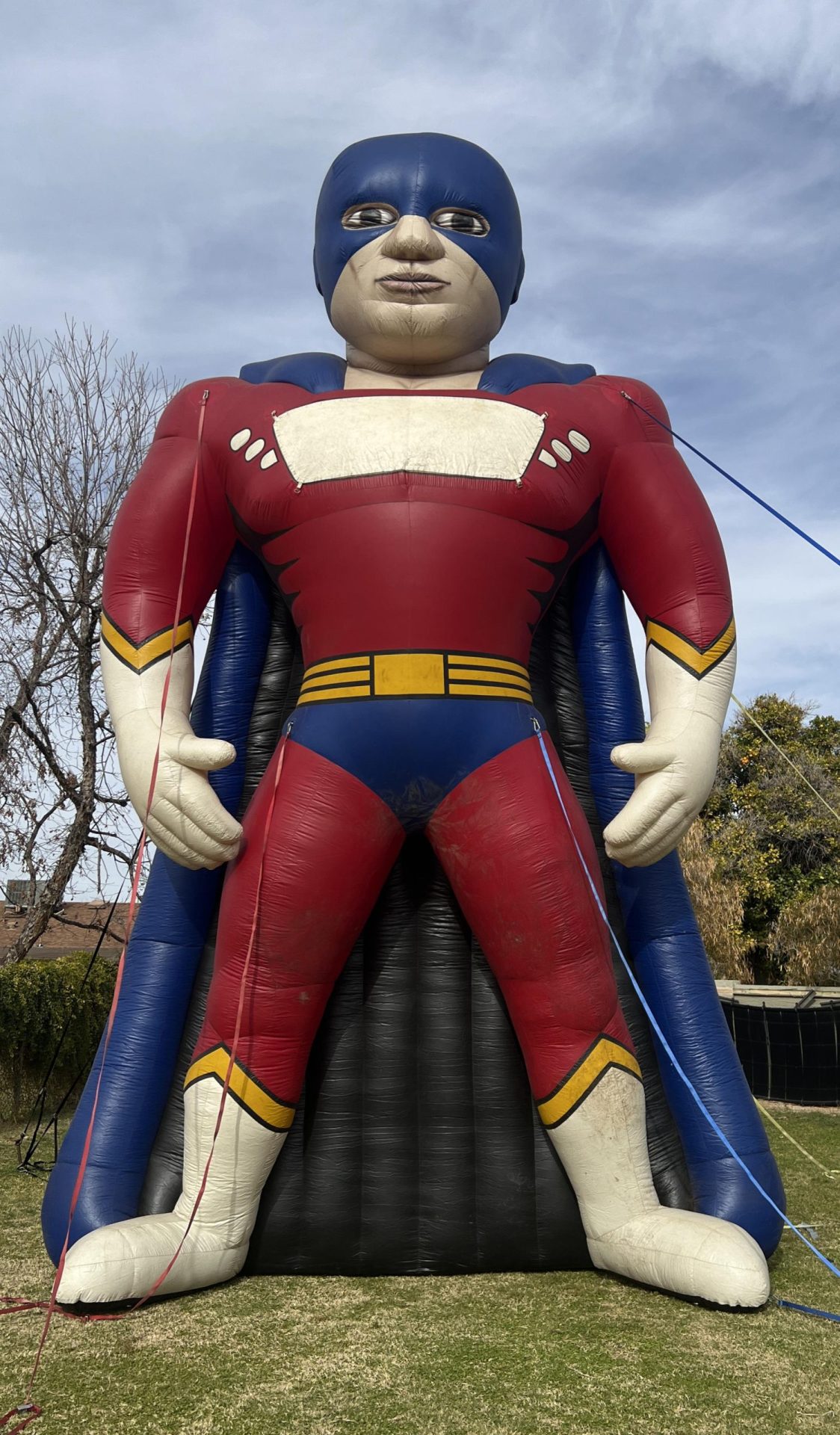
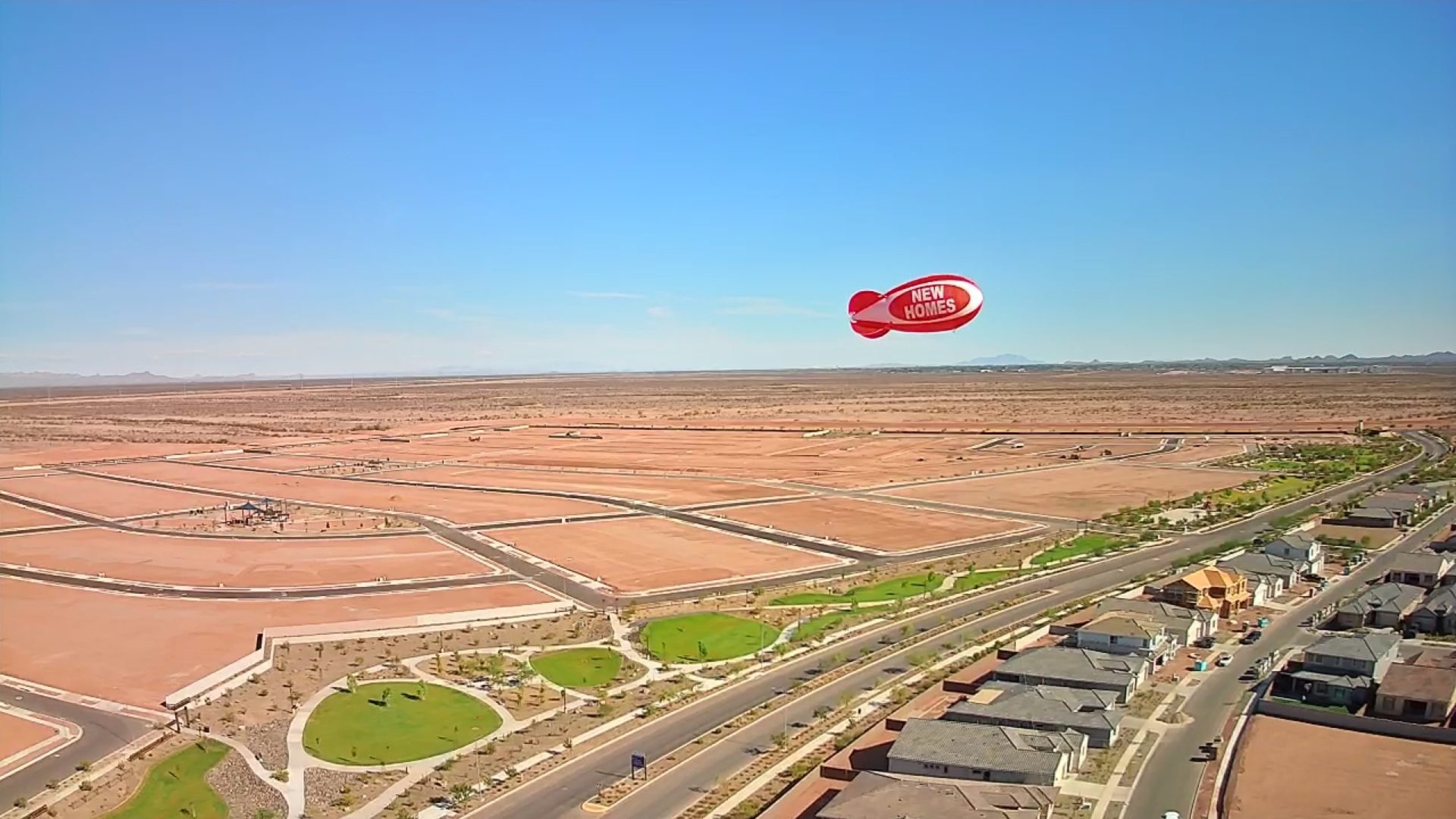
    Energy-efficient home marketing shown through a new certified townhome community grand opening

    Certified Communities Are Opening Across the Country

    Energy-efficient home marketing is having a real moment this month, and the clearest example just opened in Northern California. Arizona Balloon Company tracks stories like this closely because they shape how builders, developers, and dealers think about drawing traffic to a physical location. KB Home recently opened Meadowbrook, a new ENERGY STAR–certified townhome community in Campbell, California, offering three-story homes engineered for energy and water efficiency. Company leadership framed the launch around transparent pricing and buyer-driven personalization, positioning efficiency as a value proposition rather than a marketing add-on.

    The timing matters. Builders across the country are opening certified communities at a pace that suggests energy performance has shifted from a niche selling point to a baseline expectation among buyers. That shift changes what a grand opening needs to communicate, and it raises the stakes for how a community announces itself to a neighborhood, a city, and a regional market. A quiet ribbon-cutting no longer matches the scale of the claim a builder is making about their product.

    New Compliance Pathways Give Builders More to Talk About

    Just days before the Meadowbrook opening, the National Green Building Standard rolled out new alternative compliance pathways designed to translate existing ENERGY STAR, DOE Efficient New Homes, and code-compliance achievements directly into formal NGBS Green Certification tiers, from Bronze through Emerald. The change means builders who already meet recognized energy programs can now layer on a fuller sustainability certification without duplicating work, giving them a stronger, better-documented story to tell buyers.

    For home builders, that is a meaningful development. A certification tier is a concrete, third-party-verified claim, which is exactly what skeptical buyers are asking for. But a certificate on a wall or a badge on a listing page only reaches the people who are already reading the fine print. Builders that want the achievement to actually move traffic still need a way to put it in front of the people who are not reading anything at all yet.

    Energy-efficient home marketing shown through a new certified townhome community grand opening

    The Trust Gap Builders Are Racing to Close

    Consumer skepticism toward environmental claims has climbed steadily in recent years, with a large share of shoppers saying they distrust green marketing language on its face. That skepticism is precisely why regulators have kept revisiting environmental marketing guidance, and why certifications like ENERGY STAR, NGBS, and RESNET’s HERS Index carry so much weight with builders right now. A certified home gives a buyer something to verify. An unverified adjective does not.

    This is good news for builders who have done the work, but it also raises the bar for how that work gets communicated. A community that has earned a real certification has a stronger claim to make than most competitors, and stronger claims deserve more visible announcements. Burying a hard-won certification in a press release footnote wastes the credibility a builder just spent months earning.

    Certification Solves Credibility, Not Visibility

    Sustainable construction is also advancing on the materials and design side, with builders increasingly weighing insulation performance, glass facades, and renewable integration as standard planning inputs rather than upgrades. That progress is genuinely newsworthy inside the industry. Outside the industry, it competes with everything else happening on a Saturday morning: kids’ soccer, grocery runs, other new-home tours down the street. A certification announcement has to win attention before it can win trust.

    That is the gap between a good sustainability story and a good marketing outcome. The home builders opening ENERGY STAR and NGBS-certified communities this summer have real substance behind their claims. What decides whether a grand opening actually fills with visitors is whether the announcement is visible from more than a block away.

    Where Aerial Advertising Fits Into Green Building Marketing

    This is the connection worth drawing for the home building industry specifically. A certified, energy-efficient community is a physical location with a physical grand opening, a sales office, and a model home row that only works if people actually drive over and walk through it. Digital ads and certification badges build the case; they do not, on their own, pull a car off the main road. A large helium advertising balloon anchored above a new community entrance does something a listing page cannot: it makes the launch visible from the freeway, the school pickup line, and the neighboring subdivision, all at once, for the entire duration of the opening weekend.

    Builders launching certified communities have increasingly leaned on giant inflatables, entrance arches, and custom-branded blimps to turn a private construction milestone into a public event. It is a practical pairing: the certification supplies the credibility, and the aerial marketing supplies the reach. Neither substitutes for the other, but together they turn “we built something efficient” into “come see it this weekend.”

    What This Means for Your Marketing

    If your business has invested in genuine sustainability credentials, whether that is an ENERGY STAR rating, an NGBS certification tier, or a documented HERS Index score, the marketing question is no longer whether the claim is credible. It is whether enough people saw the claim before deciding where to spend their Saturday. Outdoor, location-based marketing exists precisely to solve that visibility gap, and it works best when it is timed to a real event: a grand opening, a model home debut, or a certification milestone worth celebrating publicly.

    Home builders, trade show exhibitors, and dealers all face a version of the same problem: a strong claim that nobody drives past. A giant balloon, an entrance arch, or an aerial marketing blimp turns a static sign into something people notice from a distance, remember, and photograph. For a certified green community especially, that visibility reinforces the message rather than distracting from it — the balloon gets people to the site, and the certification is what earns their trust once they arrive.

    As green building standards keep tightening and buyer skepticism keeps rising, the builders who win will be the ones who pair real substance with real visibility. Certification proves the claim. Aerial advertising makes sure the right people see it.

    Sources


  • Giant Rooftop Balloon for Model Homes in Fort Worth

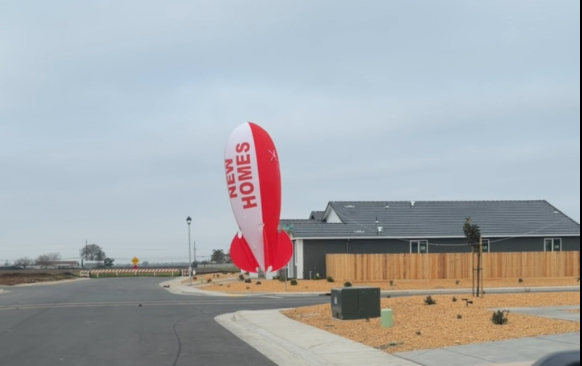
    When a home builder in North Texas asks me how to get more feet through a model-home door, my answer usually floats. I build a giant rooftop balloon for home builder model homes in Fort Worth and cities across the country from my shop in Glendale, Arizona — and in a market growing as fast as Cowtown, a 20-foot orange sphere hovering over a new community is one of the cheapest ways to turn a passing commuter into a walk-in.

    I’m Johnny Mulder, and I’ve been manufacturing polyurethane advertising balloons and blimps for builders and dealers for years. We don’t have a Fort Worth storefront — we make everything here in Arizona and ship it to you — but our balloons have flown over model-home villages for KB Home, Toll Brothers, Pulte, Lennar, Meritage, Beazer, and Century Communities. Here’s what I’ve learned about doing it right in a place like Fort Worth.

    Fort Worth just crossed a million people — and it’s a builder’s market

    This isn’t hype. In the U.S. Census Bureau estimates released in May 2025, Fort Worth’s population reached 1,008,106 as of July 1, 2024, crossing the one-million mark and landing it among the nation’s most populous cities — it added roughly 23,000 residents in a single year, surpassing Austin to become the fourth-largest city in Texas. Fort Worth and Jacksonville were the only two U.S. cities to cross the million threshold in that period.

    All those people need somewhere to live, and the model-home traffic is out west and north — Walsh Ranch off I-30, Ventana along the western edge near Benbrook Lake, Pecan Square and Harvest up in Northlake, Sendera Ranch in Haslet. These are big, spread-out master-planned communities where a buyer is driving past three or four builders’ sales centers at 45 mph. The one they remember is the one they could see from a half-mile out.

    Why a balloon beats another road sign

    A yard sign competes with fifty other yard signs. A 16-to-20-foot helium balloon lifted 30 feet in the air competes with nothing — it owns the skyline of your section. Here are the two technical things I tell every builder:

    1. Polyurethane, not PVC or foil

    Cheap import balloons are PVC or nylon. Under Texas sun they get brittle, chalky, and cloudy within a season. Every balloon I build is heavy-gauge polyurethane — it flexes in wind instead of splitting, holds UV-stable color, and shrugs off the heat. A polyurethane advertising balloon that’s cared for will fly for years, not weeks. That matters in North Texas, where a model park stays open for a long sales cycle.

    2. Helium retention and the physics of “how far can they see it”

    Polyurethane also holds helium far better than latex — a properly sealed sphere can stay aloft for weeks between top-offs rather than sagging overnight. And size is everything for visibility: a balloon’s attention-grabbing range scales directly with its diameter. Rather than take my word for it, try the calculator below and see how far your section’s balloon would carry over Fort Worth’s flat, open north-side terrain.

    Balloon Visibility Calculator

    See how far a giant balloon is visible over Fort Worth’s open terrain. Drag to change the balloon size.


    18 ft

    Visible from
    2.0 mi
    10,800 ft on a clear day

    That’s about
    36 football fields
    reaches a whole master-planned section

    Estimate only — a clear-day, elevated-balloon rule of thumb. Wind, haze, buildings, and trees reduce real-world range. Not FAA or engineering guidance.


    Handling Fort Worth weather

    North Texas throws two things at outdoor inflatables: spring wind and storm lines, and August heat. Both are manageable.

    For wind, we build in reinforced tether points and I recommend a three-point ground anchor for anything flying above 20 feet. The FAA’s guidance for tethered balloons and blimps is the practical ceiling to plan around — keep the tether under 150 feet above ground level (and well clear of any airport approach paths, which matters near Alliance and Meacham), and you stay inside the simplest rules. When a storm line is coming through, you walk the balloon down and re-launch after — a five-minute job. For heat, polyurethane is the right call again; it doesn’t soften and deform the way cheaper films do at 105°F.

    What it costs, and what you get

    I’m upfront on pricing because builders hate surprises. A stock advertising sphere in the 7-to-11-foot range is an entry-level buy; a 16-to-20-foot sphere with your logo and community name printed on it is a mid-range investment that you own outright — no monthly rental, no billboard lease. Compared to the cost of a single month of highway billboard space near the DFW loop, a custom balloon you keep for years is a rounding error. You can see current numbers on our price list, and the full lineup of advertising blimps if you want a shaped inflatable instead of a sphere.

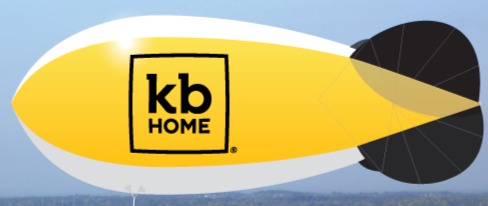
    The 14-foot custom blimp we built for KB Home is a good example — logo on both sides, printed in-house, shipped ready to fly. We do the same for auto dealers (we’ve done work for Mercedes and Audi stores), grand openings, and festivals. Everything is made in the USA in Glendale, Arizona, and freighted to your site anywhere — Fort Worth included.

    Frequently asked questions

    How much does a giant rooftop balloon for a Fort Worth model home cost?

    Stock spheres start at an entry-level price point, and a custom-printed 16-to-20-foot balloon with your builder logo and community name is a mid-range one-time purchase you own outright — far cheaper over a sales cycle than renting a billboard. See our current price list for exact figures.

    How far away can a rooftop balloon be seen?

    It scales with size. A 20-foot sphere lifted above a model park can catch a driver’s eye from well over a mile on a clear day over Fort Worth’s open north-side terrain. Use the calculator on this page to estimate the range for any balloon diameter.

    Will it survive North Texas wind and summer heat?

    Yes. We build in heavy-gauge polyurethane with reinforced tether points, and we recommend a three-point anchor for anything above 20 feet. Walk the balloon down ahead of a storm line and re-launch after. Polyurethane holds up to 105°F-plus heat without softening.

    Do you have a location in Fort Worth?

    No — we manufacture everything in Glendale, Arizona and ship nationwide, including to Fort Worth and the wider DFW Metroplex. You order, we print and build, and it arrives ready to fly. Reach out for a free quote to get started.

    Ready to put your community on the skyline? Visit arizonaballoon.com for a free quote on a custom balloon or blimp for your Fort Worth model homes.

  • Slow Sales? A Model Home Blimp Rental Gets Buyers In

    New-home sales slipped again this June, and builder confidence has now sat below 40 for fourteen straight months — a stretch the industry hasn’t seen since the foreclosure years. With affordability squeezing first-time buyers, builders everywhere are leaning on rate buydowns, price adjustments, and incentives just to get people through the door. But here’s the part that often gets overlooked in all the talk about mortgage rates: before a buyer can fall in love with your floor plan, they have to actually find your community. That’s exactly where a model home blimp rental earns its keep.

    model home blimp rental

    Why visibility matters more in a buyer’s market

    When demand is hot, foot traffic takes care of itself. When the market cools, every walk-through counts, and the builders winning right now are the ones making their model homes impossible to miss. A giant advertising balloon floating 30 or more feet above your subdivision does something no yard sign or banner can — it pulls the eye from a quarter-mile down the road and tells passing drivers, “turn here, something new is happening.” For a homebuilder competing on a busy arterial or tucked behind an established neighborhood, that kind of altitude is the difference between a curious glance and a missed lead.

    New home advertising balloons also signal momentum. A bright, professionally tethered blimp says your community is active, staffed, and worth a stop — a subtle but powerful cue when buyers are nervous about builders pausing or pulling back. It’s marketing that works around the clock, in the one place your buyers already are: their cars.

    Why polyurethane changes the math for builders with Model Home Blimp Rental

    Here’s where Arizona Balloon Company does something most advertising companies can’t. Since 1979, we’ve manufactured our helium balloons and blimps from proprietary polyurethane rather than the PVC most of the industry uses. Polyurethane is a lighter, tougher material, which means our balloons hold helium far more efficiently. In plain terms: they need significantly less gas to fly and stay aloft longer between fills. That efficiency is the reason we can offer short-term and weekend rentals at prices that actually pencil out for a builder — something competitors relying on helium-hungry PVC simply can’t match.

    So whether you want a blimp up for a single grand-opening weekend, a month-long push on a slow-moving phase, or a permanent fixture over your flagship model, the numbers work. You’re not paying for a tank of helium that leaks out by Sunday afternoon.

    Built for the work, trusted by serious organizations

    Arizona Balloon Company doesn’t just rent balloons — we manufacture and service them, so the product flying over your model home is engineered to take the heat, sun, and wind of an Arizona summer. The same construction quality has put our balloons and blimps in the hands of organizations like NASA, JPL, the U.S. Navy, ASU, and the NIH. When your advertising has to perform reliably day after day in front of your buyers, that track record matters.

    We work directly with home builders to match the right balloon or blimp to your site, whether that’s a classic blimp shape tethered over the sales office or a towering sphere that marks the community entrance. We handle the helium, the rigging, and the servicing, so your sales team can stay focused on closing.

    A homebuilder marketing idea that pays for itself

    In a stretch where builders are spending real money on rate buydowns and discounts, a model home blimp rental is one of the rare marketing ideas that’s both affordable and impossible to ignore. Instead of shaving another point off your margin, you’re capturing the drive-by traffic those incentives are designed to convert. More eyes on the community means more walk-throughs, and more walk-throughs means more chances to put your buydown offer in front of the right buyer.

    If sluggish traffic is making this season feel harder than it should, raising your visibility — literally — is one of the simplest levers you can pull. Arizona Balloon Company can get a balloon or blimp flying over your model home faster than you might expect, with rental terms that fit a single weekend or a full season.

    Ready to make your community the one buyers can’t drive past? Visit arizonaballoon.com to talk through options and get your model home noticed from blocks away.

  • Trade Show Exhibit Visibility Is the New B2B Battleground


    Trade Show Exhibit Visibility Is the New B2B Battleground

    Trade Show Exhibit Visibility Is the New B2B Battleground

    By Arizona Balloon Company (arizonaballoon.com) — June 27, 2026

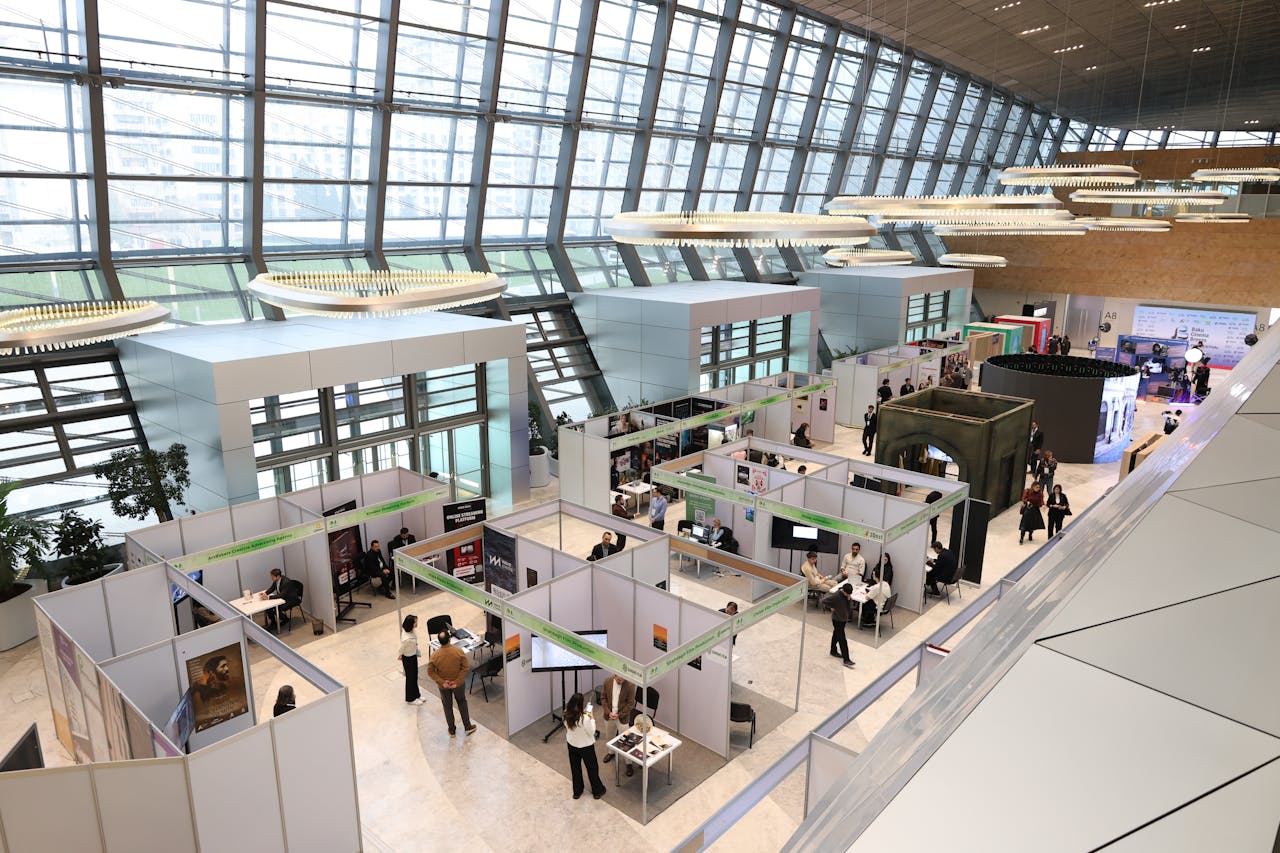
    trade show exhibit visibility with large branded display at convention floor

    CEIR 2026 Report: What the Data Shows

    Trade show exhibit visibility has emerged as a defining competitive factor in B2B marketing,
    according to the Center for Exhibition Industry Research’s newly released 2026 Marketing Spend
    Decision Report. The study, which tracks how exhibitors across the United States allocate marketing
    dollars across channels, confirms that face-to-face exhibitions continue to command the largest
    single share of B2B marketing budgets — outpacing digital advertising, content marketing, and
    paid search. For marketing managers and business owners evaluating where to concentrate resources
    this season, the findings carry significant strategic weight.

    Nancy Drapeau, IPC, CEIR’s Vice President of Research, summarized the headline finding directly:
    exhibitions remain a core investment for organizations where face-to-face engagement is central
    to marketing and sales, both before the pandemic and today. The report found that 40.8% of
    exhibitor marketing budgets flow to B2B exhibitions, making it the top channel by a wide margin.
    Equally telling, industry Net Promoter Scores have rebounded sharply — from a negative six in
    2021 to a positive 35 today — reflecting renewed confidence in the in-person event format.

    The U.S. trade show industry as a whole has reached an estimated $24.7 billion in revenue in 2026,
    growing at a compound annual rate of 12.8% since 2021. Attendance at major shows has returned to
    within 3.7% of 2019 levels, according to the CEIR Index, signaling that the post-pandemic recovery
    is effectively complete for flagship events.

    Despite the optimistic headline numbers, the CEIR report paints a more nuanced picture on the
    ground. Most exhibitors are holding their show participation steady rather than expanding it:
    47% plan to participate in the same number of events as last year, while 28% expect to add
    events to their schedule. Booth sizes have remained largely stable, with 83% of respondents
    indicating no plans to increase their footprint.

    What is shifting is where dollars go within the trade show budget. Exhibitors are concentrating
    spend on investments that demonstrably influence floor performance — booth design, pre-show
    outreach, and attendee engagement tools — while scrutinizing line items that are harder to tie
    to outcomes. Industry data from independent researchers supports this shift: exhibit design
    changes alone can improve booth stop rates by 30 to 45%, while proper lighting generates more
    than a twofold improvement in perceived brand quality. Yet the average exhibitor still allocates
    only 18 to 22% of their total show budget to design and presentation, suggesting a meaningful gap
    between what the data supports and what budgets reflect.

    For exhibitors working with Arizona Balloon Company,
    this trend reinforces a simple truth: the brands that invest in attention-commanding presence
    at and around the venue consistently outperform those relying on the booth alone.

    trade show exhibit visibility with large branded display at convention floor

    The Growing Pressure to Prove Trade Show ROI

    One of the most actionable themes running through the CEIR 2026 report is the intensifying
    expectation that trade show investments produce measurable returns. Approximately one in ten
    exhibitors is actively reassessing their event schedules in response to sales challenges and
    broader economic uncertainty. Those who remain committed to the channel are doing so with
    greater discipline: demanding clearer audience quality data from organizers, tighter lead-tracking
    capabilities, and stronger post-event reporting frameworks.

    Independent benchmarks reinforce this pressure. Cost-per-lead at B2B trade shows ranges from
    $112 to $186, making the channel cost-competitive with high-intent digital advertising for
    complex sales. However, only 6% of exhibitors report confidence in their ability to convert
    leads effectively on the show floor. The gap between traffic and conversion remains wide, and
    it starts with whether prospective buyers actually stop at the booth in the first place.

    Research consistently shows that 76% of trade show attendees arrive with a pre-planned list of
    booths they intend to visit. Pre-show marketing, combined with high-visibility presence on the
    day of the event, directly determines whether an exhibitor makes that list. Well-run programs
    that combine strategic booth investment with integrated pre- and post-show outreach report
    pipeline returns of four to six times total program spend.

    How to Stand Out When Every Exhibitor Is Competing Harder

    With show floors growing more competitive — more exhibitors, larger budgets, denser attendance —
    the challenge of breaking through is steeper than at any point in the past decade. Industry
    analysts note a sharp divide on modern convention floors: on one side, booths designed for an
    earlier era of static displays and passive brand exposure; on the other, exhibitors deploying
    immersive, narrative-driven environments that draw attendees in and keep them engaged.

    Experiential activations, modular storytelling environments, and prominent branded presence
    beyond the booth footprint are among the tactics gaining traction. Sponsorship models are
    shifting away from passive logo placements toward participatory formats — networking hubs,
    live demos, and branded zones that attendees associate with genuine value rather than advertising
    noise. The underlying logic is straightforward: in an environment where attention is the scarce
    resource, the exhibitors who command more of it generate more qualified conversations, and more
    qualified conversations produce more pipeline.

    Why Aerial Marketing Balloons Are a Trade Show Secret Weapon

    For exhibitors looking to maximize trade show exhibit visibility before a prospect even enters
    the building, giant helium advertising
    balloons
    and marketing blimps
    offer a tool that no in-booth investment can replicate: altitude. A large helium blimp tethered
    above or near a convention center entrance is visible from blocks away, driving attendee awareness
    and orienting foot traffic before a single badge is scanned. In markets where trade show venues
    are surrounded by competing hotel signage and ground-level advertising, aerial presence cuts
    through visual noise in a way that floor-level displays simply cannot.

    This matters because trade show ROI is partly a function of booth traffic volume — and booth
    traffic is partly a function of how many attendees know you are there before they walk the floor.
    Outdoor advertising blimps and inflatables extend the marketing perimeter of the trade show
    booth to the surrounding blocks, parking lots, and arrival corridors. They are particularly
    effective for exhibitors in industries where brand recognition drives pre-planned booth visits,
    because a visible aerial presence reinforces the brand in the minutes before an attendee enters
    the venue and consults their list.

    Custom advertising inflatables are also reusable across multiple events, making them a durable
    asset that amortizes well over a full show calendar. For companies exhibiting at three to five
    major events per year — a common cadence among mid-market B2B brands — the per-event cost of
    a helium blimp rental or owned inflatable compares favorably with temporary banner sponsorships
    that offer far less visual impact.

    What This Means for Your Marketing

    The CEIR 2026 report confirms what experienced trade show marketers already understand: the
    exhibitors winning on the show floor are not necessarily the ones with the largest booths or the
    biggest budgets. They are the ones who combine strategic location-based visibility with intentional
    pre-show outreach and post-show follow-up. In a climate where most exhibitors are holding spend
    flat and demanding clearer ROI from every line item, the brands that invest in differentiated
    presence — both on and off the floor — have a structural advantage.

    Location-based marketing is the piece most exhibitors underinvest in. A prospect walking from a
    shuttle stop to a convention center entrance is a warm audience with undivided attention, and that
    30-second window is one of the most undervalued touchpoints in the trade show marketing funnel.
    Giant helium advertising balloons and aerial marketing
    blimps
    from Arizona Balloon Company are specifically designed to capture that moment — placing
    your brand directly in a prospect’s field of view before any competitor gets the first interaction.

    For trade show exhibitors planning their 2026 season, the strategic question is no longer whether
    to invest in physical presence, but how to maximize the return on that presence at every touchpoint
    — from the parking lot to the show floor. Outdoor aerial marketing is one of the highest-visibility,
    lowest-cost-per-impression tools available, and it integrates seamlessly with booth design,
    sponsorship activations, and pre-show campaigns to create a coherent, attention-commanding
    brand experience across the entire event environment.

    Sources


  • Helium Shortage Advertising Balloons: What U.S. Businesses Need to Know in 2026


    Helium Shortage Advertising Balloons: What U.S. Businesses Need to Know in 2026

    Helium Shortage Advertising Balloons: What U.S. Businesses Need to Know in 2026

    By Arizona Balloon Company (arizonaballoon.com) — June 25, 2026

    helium shortage advertising balloons floating above a commercial property

    What Triggered the 2026 Helium Shortage

    The 2026 helium shortage advertising balloons operators and aerial marketers are now confronting did not arise gradually — it struck fast and hard. In late February and March 2026, U.S.-Israeli military strikes on Iran triggered a regional conflict that effectively closed the Strait of Hormuz, the narrow waterway handling roughly one-fifth of the world’s oil and LNG shipments. Iranian missile strikes on March 18 and 19 then damaged Qatar’s Pearl GTL facility at Ras Laffan Industrial City, a major gas-to-liquids plant where helium is extracted as a byproduct. According to industrial gas supplier WestAir, those strikes alone took an estimated 310 million cubic feet of annual helium production offline. Because Qatar had been the world’s second-largest helium producer, the damage to its infrastructure removed approximately one-third of global supply at a single stroke.

    Helium’s supply chain vulnerability had been building for years. The U.S. federal helium reserve, originally accumulated for military airships beginning in the 1920s, was gradually privatized and sold off following the Helium Privatization Act of 1996. New domestic projects from companies such as Pulsar Helium in Minnesota and Helix Exploration in Montana are underway, but industry analysts estimate meaningful volume relief remains 12 to 24 months away. Russia, which accounts for roughly 8 percent of global helium production, additionally imposed export controls requiring government authorization for helium shipments outside the Eurasian Economic Union through the end of 2027. The convergence of these factors created what analysts describe as the fifth global helium shortage in two decades — and by far the most severe in scale.

    How the U.S. Helium Market Is Being Hit Right Now

    The ripple effects reached American businesses almost immediately. Airgas, one of the country’s largest industrial gas distributors, declared force majeure on helium shipments effective March 17, 2026 — a legal clause releasing suppliers from delivery obligations during extraordinary disruptions. The company began prioritizing healthcare customers and announced it could fulfill only up to 50 percent of normal monthly allocations for some clients, while imposing a $13.50 surcharge per hundred cubic feet above contracted prices. Other distributors across the country followed with their own rationing measures and spot-price surcharges.

    Bulk helium prices in the United States reached $102,597 per metric ton in the first quarter of 2026, according to market tracking firm IMARC Group — reflecting steady upward pressure even before the full weight of the Qatari outage hit distribution pipelines. North American helium prices had already climbed 8.7 percent between December 2025 and March 2026 due to tighter local supply conditions stemming from reduced output at natural gas processing facilities and the ongoing impact of the closed federal reserve. The U.S. Geological Survey’s Mineral Commodity Summaries 2026 placed the estimated base price for Grade-A helium at approximately $330 per thousand cubic feet in 2025, before the surge — a figure that has moved substantially higher since the March disruptions.

    helium shortage advertising balloons floating above a commercial property

    Impact on the Helium Shortage Advertising Balloons Industry

    For the advertising balloon and marketing blimp sector, this shortage arrives at a challenging time. Businesses that rely on giant helium advertising balloons for grand openings, model home promotions, auto sales events, and trade show displays are now navigating both higher fill costs and constrained availability. Unlike MRI facilities and semiconductor fabs — which receive priority allocation from distributors — advertising and promotional uses of helium are considered non-critical and are typically last in line when rationing takes effect.

    Small and mid-size balloon retailers across the country have reported price increases passed directly to end consumers. A balloon shop owner in Michigan interviewed by local TV station WNEM described how the global supply disruption centered on Qatar was driving prices sharply higher just as graduation and wedding season demand peaks. In Canada, balloon store owners reported being unable to source helium at any price from their regular suppliers near the end of March. While the commercial advertising balloon segment operates on longer-term contracts and larger volume agreements than retail party stores, the structural tightness in supply affects the entire market. Businesses planning major outdoor promotional events in the second half of 2026 should consult their aerial marketing providers early to confirm helium availability and lock in current pricing before further surcharges are applied.

    How Long Will the Helium Shortage Last

    Industry analysts are not offering short-horizon relief. WestAir, which supplies industrial gases throughout California and Arizona, published an assessment in May 2026 concluding that recovery from the shortage will take years, not weeks, even if the Strait of Hormuz fully reopens and remains open. The Qatari facility damage requires extensive reconstruction before production resumes at pre-strike levels. Once production does restart, the gas must travel through a complex supply chain — from liquefaction and pressurization at origin, through shipping and distribution networks, to regional storage — a journey one University of Toronto logistics professor estimated could take one to two months even under optimal conditions.

    Demand dynamics compound the timeline. Global helium consumption is projected to double by 2035, driven by semiconductor fabrication, quantum computing infrastructure, and medical imaging. The U.S. Geological Survey estimates world recoverable helium resources outside the United States at 31.3 billion cubic meters, with the largest deposits in Qatar, Algeria, Russia, Canada, and China — all of which carry geopolitical risk or logistical constraints. New North American production from emerging companies is gradually entering the system, but analysts note that the helium sector requires years of permitting, drilling, and infrastructure buildout before new fields deliver commercially meaningful volumes.

    What Businesses Can Do to Stay Visible During the Shortage

    For marketing decision-makers, the helium shortage underscores both a near-term cost planning challenge and a strategic opportunity. Businesses that act quickly to secure helium-filled promotional assets — through rental agreements, scheduled service contracts, or advance booking with aerial marketing companies — can lock in better pricing before additional surcharges ripple through the supply chain. Working with an established provider that maintains its own supply relationships and inventory gives businesses a significant advantage over sourcing helium through retail or spot channels.

    It is also worth noting that large-format advertising blimps and tethered marketing airships are designed for repeat use with a single inflation, rather than the single-use model common with smaller balloon arrangements. A properly serviced advertising blimp can remain inflated and in use for extended periods, making each cubic foot of helium significantly more cost-efficient per impression than disposable balloon displays. In a constrained helium market, efficiency per fill becomes a meaningful factor in the return on investment calculation for outdoor marketing assets.

    Update: What Has Changed Since June 2026

    Updated October 1, 2026. The shortage did not ease over the summer. Here are the key events since this article was first published, and what they mean if you plan to fly a helium balloon or blimp in the coming months.

    Timeline of key events

    • March 21: QatarEnergy said it would cut helium exports by 14%. Qatar supplies about a third of the world’s helium, according to the U.S. Geological Survey (via the Associated Press).
    • March 25: Consultancy AKAP Energy estimated that about 30% of Qatar’s 2026 helium volume could be lost, equal to roughly 11% of global supply. About 200 specialised liquid-helium containers were stuck in Qatar with no clear route out (AGBI).
    • June 22: An explosion at the Ras Laffan gas complex during the restart killed at least 13 people and injured 66 (The National; gasworld).
    • June 30: QatarEnergy partially restarted its Helium2 plant. Experts said a wider recovery depends on LNG exports moving through the Strait of Hormuz again (gasworld).
    • July 10: China’s Ministry of Commerce and General Administration of Customs imposed an immediate ban on all helium exports, with no end date. China imports most of its helium, so the ban mainly stops re-exports (Rare Earth Exchanges).
    • August 14: Satellite thermal imaging showed Ras Laffan LNG train 5 had gone dark, while trains 6 and 7 appeared to be operating (gasworld).
    • August 14: Epignosis Insights reported spot helium at $1,000–1,200 per thousand cubic feet against contract prices of $500–550, with weekly price swings of 10–15% at Asian trading hubs.

    Practical tips for booking during the shortage

    • Ask how the quote treats helium. Find out whether the gas cost is fixed in the quote or billed at the price on the day of filling, and budget for a range rather than a single number.
    • Ask about fill volume and top-offs. Ask how many cubic feet the balloon or blimp needs, whether your local gas supplier can deliver that volume, and whether top-offs are included in a rental.
    • Fly on your highest-traffic days. If helium is tight, concentrate flights on sale events and weekends instead of flying every day.
    • Leave it up longer. One long placement uses less gas than deflating and refilling for several short ones. Check seams and valves regularly to limit leaks.

    What This Means for Your Marketing

    The 2026 helium shortage is a reminder that outdoor, location-based marketing assets are tied to real-world supply chains — and that planning cycles matter. Home builders, auto dealers, trade show exhibitors, and retail businesses that depend on large-format aerial displays to generate foot traffic and roadside visibility should treat helium availability the same way they treat print production lead times or digital ad inventory: as a finite resource that rewards advance planning. Waiting until the week before an event to source a giant inflatable or tethered blimp is a risk that the current market makes more costly than ever.

    At the same time, the shortage highlights why the value of helium advertising balloons per marketing dollar remains compelling even in a tighter cost environment. A single large balloon or tethered blimp visible from a major road generates tens of thousands of impressions per day at a cost that remains far below equivalent digital, print, or broadcast exposure. When helium is properly managed through a professional aerial marketing provider — including inflation efficiency, scheduled maintenance, and re-use across campaigns — the cost-per-impression argument holds even as raw helium costs rise.

    Businesses in high-visibility industries such as new home communities, auto dealerships, and trade show venues should consider locking in service agreements now rather than waiting for spot-market conditions to ease. Given the multi-year recovery timeline analysts are projecting, the window to secure favorable pricing on helium advertising balloons and aerial marketing blimps through established provider relationships is open today — and may not be as wide six months from now.

    Sources

  • Sustainable Outdoor Marketing Is Reshaping U.S. Brands in 2026


    Sustainable Outdoor Marketing Is Reshaping U.S. Brands in 2026

    Sustainable Outdoor Marketing Is Reshaping U.S. Brands in 2026

    By Arizona Balloon Company | arizonaballoon.com — June 22, 2026

    sustainable outdoor marketing campaign with eco-friendly brand signage at a live event

    Green Marketing Is Surging — and So Is Consumer Scrutiny

    Sustainable outdoor marketing has become one of the most competitive arenas in American business this year. The global green marketing sector is valued at approximately $58.68 billion in 2026, and the United States leads the charge, with sustainability influencing the purchasing decisions of roughly 82% of American consumers before they buy. That is not a niche demographic — it is the mainstream. Marketing managers who ignore this shift are ceding ground to competitors who have already adjusted their brand messaging, event strategies, and physical advertising footprint to reflect environmental responsibility.

    The momentum is real and documented. Sustainable products grew 2.7 times faster than conventional products over recent years, capturing a 32% share of overall market growth. Interest in the search term “eco-friendly” hit its highest point in five years as recently as mid-2025, according to Google Trends data cited by Shopify. Meanwhile, nearly 63% of companies have increased their sustainability-focused marketing budgets, and 75% of advertising campaigns now include some form of sustainability messaging. For business owners and marketing decision-makers, the strategic question has shifted from whether to pursue green marketing to how to do it credibly and cost-effectively.

    The payoff for brands that get it right is substantial. Sustainable brands grow 5.6 times faster than conventional competitors, and 74% of companies that pursue authentic eco-campaigns report positive outcomes. The data makes a compelling case for action — provided the messaging is grounded in verifiable practices rather than hollow slogans.

    The Trust Gap: Why Vague Eco-Claims Are Backfiring

    The single largest obstacle to capitalizing on the green marketing wave is a widening trust gap between brands and consumers. According to multiple independent surveys, only about one in five consumers currently believes the environmental claims made by brands. Approximately 57% of consumers distrust green marketing claims outright, and 59% suspect that companies routinely exaggerate their sustainability commitments. Regulators in the United States, United Kingdom, and Australia have all increased enforcement activity targeting misleading environmental advertising.

    This trend toward accountability accelerated in 2025 and has carried into 2026. High-severity greenwashing cases — those involving deliberate concealment of environmental violations — surged by more than 30% globally in 2024. North America and Europe together recorded a 27% increase in high-severity incidents. The Federal Trade Commission maintains guidelines requiring that environmental marketing claims be truthful and backed by reliable evidence, and state-level legal actions, such as the ExxonMobil lawsuit in Connecticut, are setting precedents that could redefine liability for misleading eco-advertising.

    The lesson for marketing teams is clear: vague descriptors like “green,” “natural,” or “eco-friendly” without supporting evidence are no longer a safe harbor. Brands that pair real environmental action with honest, specific marketing communication are the ones building durable customer loyalty. Third-party certifications, transparent progress reporting, and visible, locally rooted outdoor campaigns are emerging as the most credible approaches.

    sustainable outdoor marketing campaign with eco-friendly brand signage at a live event

    Outdoor Advertising Goes Green in 2026

    Within the broader marketing landscape, outdoor and out-of-home advertising is experiencing its own green transformation. The global outdoor advertising market was valued at approximately $43.3 billion in 2025 and is projected to reach $71.2 billion by 2034, growing at a compound annual rate of 5.5%. Much of that momentum is now intersecting with sustainability priorities. Major brands are switching to recyclable materials, energy-efficient LED displays, and solar-powered installations as standard practice rather than premium upgrades.

    Industry analysts at multiple research firms confirm that sustainability has become a defining factor in outdoor advertising strategy for 2026. Advertisers are responding to both regulatory sustainability requirements and growing demand from eco-conscious businesses for responsible media partnerships. The shift is also commercial: consumers recall outdoor placements more readily when the physical advertising medium itself signals environmental alignment with the brand’s values. A campaign that preaches green business practices while plastered on a wasteful or disposable structure sends a contradictory message.

    For brands in sectors such as home building, real estate development, and automotive retail, where large-format outdoor advertising has always driven foot traffic and grand-opening awareness, the pressure to align physical marketing tools with sustainability values is intensifying. The good news is that effective, high-visibility outdoor options exist that carry a far lighter environmental footprint than many traditional alternatives.

    How Helium Advertising Balloons Give Eco-Brands a Visible Edge

    One of the most practical and underutilized tools in sustainable outdoor marketing is also one of the oldest: the large-format inflatable. Helium advertising balloons and cold-air inflatables are manufactured from durable, long-lasting vinyl and polyester materials that are designed to be used repeatedly over many years, not discarded after a single event. Unlike printed banners that end up in landfills after a single campaign or disposable promotional items that contribute to waste streams, a quality advertising blimp or balloon can serve a brand across dozens of events with minimal additional resource consumption.

    The visibility advantages are immediate and measurable. A large helium balloon or aerial marketing blimp rises above the visual clutter of street-level signage, creating a landmark effect that draws customers from a wide radius. For a home builder hosting a model home opening, an eco-aligned company exhibiting at a trade show, or an auto dealer running a weekend event, the aerial signal is unmistakable. The advertising medium itself becomes a talking point — a physical demonstration that the brand is willing to invest in prominent, reusable, high-quality marketing infrastructure rather than disposable materials.

    Eco-conscious brands can further reinforce their green credentials by choosing inflatables printed with water-based inks, sourcing from manufacturers who provide documented material data sheets, and committing to a rental or lease model that keeps the same unit circulating rather than purchasing new displays for every event. This approach directly mirrors the circular economy principles that sustainability-minded consumers and regulators now reward.

    Practical Applications: From Home Builders to Auto Dealers

    The most active users of large-format outdoor inflatables are precisely the businesses that stand to benefit most from green marketing credibility. Home builders launching new communities face a growing base of buyers who research a developer’s environmental practices before signing a contract. A grand opening event anchored by a reusable helium blimp bearing eco-certified messaging — net-zero construction, solar-ready homes, green materials — creates a high-visibility, photogenic moment that travels through social media far beyond the event itself.

    Trade show exhibitors competing in sustainability-focused industries face similar pressure. Floor space at major expos is crowded and expensive. Brands that invest in eye-catching aerial inflatables above their booth draw attendees who would otherwise walk past. The visual dominance of a well-designed advertising blimp translates directly to more conversations, more lead captures, and better brand recall after the show.

    Auto dealers promoting hybrid and electric vehicle lines are another primary beneficiary. A large inflatable displayed above a dealership during an EV launch event visually signals that this location is worth visiting, reaching thousands of drivers passing by on adjacent roads. The longevity of the inflatable — the same unit can be deployed for every seasonal promotion — means the per-use cost drops sharply over time, making it one of the more cost-efficient formats in a dealership’s outdoor advertising toolkit. For businesses across all these verticals, the combination of high reach, reusability, and versatility makes aerial inflatables a logical fit within a sustainable marketing strategy.

    What This Means for Your Marketing

    The green marketing surge of 2026 is not simply a consumer trend to monitor; it is a strategic imperative that is reshaping where advertising budgets go, which media formats get selected, and how brands are held accountable for their messaging. For business owners and marketing managers, the immediate priority is to audit all outdoor and location-based marketing activities for consistency. Any brand positioning itself as eco-conscious but relying on disposable, single-use promotional materials is sending a mixed signal that increasingly sharp consumers will notice and that social media will amplify.

    Outdoor and location-based marketing remains one of the highest-impact channels available for driving foot traffic, event attendance, and brand recall. The key in 2026 is choosing formats that align with sustainability values rather than undermine them. Reusable large-format inflatables, repurposable banners with documented material sourcing, and event marketing tools designed for multi-year use all check the boxes that eco-aligned brands need. Helium advertising balloons from a reputable manufacturer or rental source represent exactly this type of investment — highly visible, reusable, and easy to brand consistently across multiple events and locations throughout the year.

    The most effective sustainable outdoor marketing programs in 2026 are combining authentic environmental commitments with bold physical visibility. Brands that can prove their green practices and then make themselves impossible to miss at a grand opening, trade show, or sales event are capturing both the attention and the loyalty of an increasingly discerning buyer base. The infrastructure for that kind of campaign does not need to be complicated — it needs to be genuine, visible, and built to last.

    Sources

  • Grand Opening Advertising Balloons Drive 2026 Retail Boom

    Grand Opening Advertising Balloons Drive 2026 Retail Boom

    By Arizona Balloon Company (arizonaballoon.com) — June 18, 2026

    grand opening advertising balloons displayed outside a new retail store during a 2026 launch event

    A Record Year for New Store Openings

    Grand opening advertising balloons are becoming a fixture of the retail landscape as the United States heads into one of its busiest years for new store launches in recent memory. Industry reports indicate that U.S. retailers are projected to open roughly 5,500 new locations in 2026, a wave of expansion fueled by national chains including Aldi, Dollar General, Burlington, Nordstrom Rack, and Barnes & Noble. For business owners and marketing decision-makers, that number represents both opportunity and a serious competitive challenge: thousands of new storefronts opening within months of one another, all competing for the same pool of local shoppers, drivers, and foot traffic.

    This surge is not limited to a single region or retail category. From suburban shopping centers to standalone pads near major intersections, new locations are opening at a pace that outstrips most local markets’ ability to absorb attention organically. That has pushed outdoor visibility tools, including advertising balloons, back into the spotlight as a practical way to cut through the noise on opening day and during the critical weeks that follow.

    Why Roadside Visibility Now Decides First-Month Sales

    Marketing experts following the 2026 expansion trend point to a simple but important reality: a new store’s first 30 to 90 days largely determine its long-term trajectory. Lease terms, staffing decisions, and inventory commitments are often made based on early sales performance, which means a slow opening can have consequences that last well beyond the launch event itself. With so many competing openings happening simultaneously, businesses can no longer assume that a sign in the window and a ribbon-cutting ceremony will generate sufficient walk-in traffic.

    Roadside and aerial visibility has become a measurable lever in this equation. A large inflatable visible from a highway exit or major arterial road communicates “something new is happening here” to thousands of passing drivers per day, often at a lower cost per impression than short-term digital ad buys in the same trade area. For a full overview of how the company approaches launch marketing, businesses can visit the Arizona Balloon Company homepage to see the range of products built for exactly this kind of high-volume launch season.

    grand opening advertising balloons displayed outside a new retail store during a 2026 launch event

    How Businesses Are Responding to the Competition for Attention

    As competition for local attention intensifies, retailers and franchise operators are increasingly layering outdoor advertising into launches that previously relied mostly on digital channels. Social media promotion and geotargeted ads remain central to most grand opening playbooks, but marketers report that physical, large-scale visual cues still play an outsized role in driving same-day walk-ins, particularly for shoppers who are not already following a brand online. Inflatable displays, custom balloons, and marketing blimps offer a way to physically mark a location as active and open, something a social post alone cannot do for someone driving past at 45 miles per hour.

    This is not a new tactic, but the scale of the 2026 expansion has renewed interest in doing it well rather than as an afterthought. Businesses are asking more detailed questions about sizing, branding customization, helium retention, and rental versus purchase options, treating the inflatable as a planned marketing asset rather than a last-minute decoration.

    Beyond Retail: Home Builders, Auto Dealers, and Trade Shows Face the Same Pressure

    While national retail chains are driving most of the 2026 headline numbers, the underlying pressure, too many openings competing for too little local attention, applies just as directly to home builders launching new model home communities, auto dealers running weekend sales events, and trade show exhibitors trying to stand out on a crowded show floor. Each of these groups depends on converting passing attention into a visit within a narrow window of time, and each has historically used balloons or inflatable signage to do it.

    For home builders specifically, a new community launch often competes with several other builders opening phases in the same submarket during the same selling season. A visible aerial marker at the entrance can be the difference between a prospective buyer noticing the turn-in or driving past it entirely. Businesses exploring options for community launches, dealership events, or exhibition booths can review available configurations, including advertising blimps built for sustained multi-week visibility, as part of planning for the remainder of the 2026 season.

    A Three-Phase Approach to Grand Opening Marketing

    Industry guidance circulating among marketing teams ahead of 2026’s expansion wave generally recommends breaking grand opening visibility into three phases rather than treating it as a single event. The first phase, pre-opening awareness, uses signage and smaller inflatables in the weeks leading up to launch to signal that a location is coming. The second phase, opening-day impact, concentrates the largest and most visible assets, balloons, blimps, or full inflatable arches, on the day itself to maximize walk-in traffic during the highest-attention window. The third phase, post-opening visibility, scales back to lighter, ongoing signage that keeps the location top-of-mind during the weeks when initial buzz typically fades and repeat-visit habits are still forming.

    This phased structure matters because grand opening foot traffic tends to spike sharply on day one and then decline quickly if there is no sustained visual reminder. Businesses that plan only for the opening weekend often see a hard drop-off in week two, precisely when many new locations are still trying to establish a routine customer base.

    Why Durability and Material Quality Matter More Than Ever

    As more businesses turn to inflatables during the same compressed launch season, material quality has become a practical concern rather than a minor detail. Standard PVC balloons can lose helium and shape relatively quickly, which is a meaningful issue for any business running a multi-week promotional campaign rather than a single-day event. Premium polyurethane construction, by comparison, is built to hold helium longer and withstand outdoor exposure, sun, wind, and repeated handling, over an extended campaign window. For businesses planning anything beyond a one-day event, the choice of material directly affects how long the investment stays effective without needing a refill or replacement mid-campaign.

    What This Means for Your Marketing

    The 2026 retail expansion boom is a useful reminder that outdoor, location-based marketing has not been replaced by digital channels, it has become a complement to them. When thousands of new locations are competing for attention within the same calendar year, the businesses that combine targeted digital promotion with high-visibility physical presence tend to convert more of that local awareness into actual foot traffic on opening day. A well-placed inflatable does something a banner ad cannot: it creates a physical landmark that drivers and pedestrians notice in real time, without requiring them to be looking at a screen.

    For home builders, auto dealers, trade show exhibitors, and general businesses planning launches, sales events, or seasonal promotions through the rest of 2026, the practical takeaway is to plan outdoor visibility the same way a marketing team plans a digital ad calendar: with a defined timeline, a clear visibility goal, and a budget that matches the length of the campaign. Businesses evaluating their options for an upcoming launch can review available helium advertising balloons and aerial marketing blimps to determine which format best fits the scale and duration of their event.

    Ultimately, the core lesson from this year’s expansion wave is straightforward: in a market with this much simultaneous competition for attention, visibility is not a detail to finalize the week before launch. It is a planning decision that deserves the same lead time as staffing, inventory, and signage.

    Sources

  • Grand Opening Advertising Balloons Fuel the 2026 Retail Boom


    Grand Opening Advertising Balloons Fuel the 2026 Retail Boom

    Grand Opening Advertising Balloons Fuel the 2026 Retail Boom

    By Arizona Balloon Company (arizonaballoon.com) — June 13, 2026

    grand opening advertising balloons at a retail store launch event

    U.S. Retail Expansion in 2026: The Numbers Behind the Boom

    Grand opening advertising balloons have become a critical tool in one of the busiest retail expansion years in recent memory. According to industry reports, U.S. retailers are on track to open approximately 5,500 new locations in 2026, driven by aggressive growth strategies from national chains, specialty retailers, and regional franchises alike. Brands across footwear, grocery, wholesale, and home goods sectors have publicly committed to multi-location rollouts, with names like Barnes & Noble, Nordstrom Rack, Costco, BJ’s Wholesale Club, and Academy Sports & Outdoors all announcing significant store counts for the year.

    This level of physical retail expansion has not been seen at scale for several years. After a period marked by closures and consolidation, the momentum has shifted decisively toward brick-and-mortar growth. For marketing managers and business owners, that means the competitive pressure to stand out at a grand opening has never been higher. When thousands of new stores are launching simultaneously across the country, simply opening the doors is not enough — businesses need tools that cut through the noise at street level.

    Retailers entering new markets are discovering that local awareness, not digital impressions, drives foot traffic on opening day. The most effective strategies combine pre-opening buzz with a high-impact physical presence on launch day and continued roadside visibility in the weeks that follow. Outdoor marketing solutions that work at the location itself have taken on renewed importance in this environment, and helium advertising balloons and custom marketing blimps are among the most cost-effective ways to own the visual space around a new retail location.

    The Outdoor Visibility Challenge for New Store Openings

    Opening a store in 2026 means entering a landscape where digital ads are saturating consumer attention. Marketing experts note that while digital targeting can reach people on their phones, outdoor advertising is what physically pulls them off the road and through the front door. New locations face a specific challenge: even customers who might want to visit do not yet know exactly where the store is, what it looks like, or when it opened. Local brand recognition must be built fast, often within the first two to four weeks of operation.

    Research consistently shows that a high percentage of consumer purchases — particularly for automotive, home goods, and food and beverage — are influenced by roadside exposure. A business that is invisible from the street relies entirely on other channels to generate traffic, which drives up customer acquisition costs. Grand opening marketing professionals increasingly recommend a three-phase approach: pre-opening awareness using teaser campaigns in the surrounding area, a high-impact opening day presence with maximum visual footprint, and sustained post-opening visibility to convert passing traffic into repeat customers.

    The challenge compounds for businesses opening in strip centers, mixed-use developments, or areas with heavy signage competition. In those environments, standard static signage can disappear into the visual landscape. Elevated, motion-attracting, and oversized displays give new locations a presence that registers at speed — from a car traveling 40 miles per hour, a large inflatable visible above rooftop lines is often the first clear signal that something new and worth investigating has arrived.

    grand opening advertising balloons at a retail store launch event

    Promotional Inflatables Market Is Growing to Meet Demand

    The broader promotional inflatables industry is expanding alongside the retail boom, reflecting rising demand for branded outdoor advertising tools. The global promotional inflatables market was valued at approximately $1.2 billion in 2026 and is projected to grow to nearly $1.87 billion by 2035, a compound annual growth rate of roughly 5.7 percent. In the United States, which accounts for more than a quarter of global market share, the adoption of promotional inflatables is being driven by demand across retail, automotive, healthcare, trade shows, and entertainment verticals.

    Market analysts point to several factors accelerating this growth. Lightweight materials and customizable designs have made inflatables more cost-effective to produce and redeploy. Reusable construction extends the return on investment across multiple campaigns and locations. The rise of experiential marketing — where consumers increasingly expect tangible, memorable brand interactions rather than digital-only messaging — has made large-format physical displays more valuable at exactly the moment when brands are opening new physical spaces.

    Manufacturers are also investing in more durable materials and longer-lasting helium retention. Premium polyurethane construction, used in domestically manufactured products, can require as little as one-sixth the helium of standard imported alternatives, reducing ongoing operating costs and extending the usable life of the inflatable across repeated deployments. These material improvements are making advertising inflatables a more attractive line item in grand opening marketing budgets that are already stretched across multiple channels.

    How Grand Opening Advertising Balloons and Blimps Deliver Results

    Advertising balloons and marketing blimps operate on a simple principle: size and elevation create attention at a distance. A helium blimp flying 50 to 150 feet above a business location is visible from multiple blocks in every direction, functioning as a passive, continuous advertisement for as long as it is airborne. Unlike a digital ad that disappears when the campaign budget runs out, a properly tethered blimp works around the clock without recurring media costs.

    For grand openings specifically, the visual signal of a large inflatable communicates to passing drivers and pedestrians that something notable is happening at that location today. It bridges the gap between consumers who have seen pre-opening advertising and those who are encountering the business for the first time from the road. Promotional blimps can be customized with full-color branding, logos, phone numbers, and messaging, delivering the equivalent of a large-format outdoor billboard at a fraction of the cost and with the added benefit of motion and altitude.

    Retail operators report that combining a grand opening advertising balloon campaign with social media documentation — photographing the inflatable display and sharing it across local channels — multiplies the visibility effect by giving the physical outdoor presence a digital reach. A large, striking inflatable is inherently photogenic and shareable, turning a single physical deployment into organic content across Instagram, Facebook, and local community groups. Custom advertising blimps from Arizona Balloon Company are designed with this multi-channel strategy in mind, offering bold graphic real estate that photographs well from both street level and aerial perspectives.

    Which Industries Are Leaning Into Aerial Marketing in 2026

    The 2026 retail expansion is concentrated in several sectors that are already among the strongest users of promotional inflatables. Auto dealerships have long relied on helium balloons and roof-mounted inflatables to draw weekend traffic to lot events and new-model launches. As dealerships open new locations or refresh existing ones to support growing EV inventory, outdoor advertising is central to their marketing mix. Home builders launching new communities face a similar challenge: attracting buyers to model homes in areas that may not yet appear prominently in GPS or local search results, making a highly visible aerial marker essential.

    Trade show exhibitors continue to use custom inflatables as booth identifiers and crowd-drawing tools, particularly in large convention halls where standing out from neighboring booths requires a display that reaches above standard booth heights. General retailers, fitness brands, food and beverage chains, and service businesses are all represented in the 2026 expansion wave, and each category benefits from the same core advantage: a helium-inflated display that makes a new location impossible to miss from the road.

    The promotional inflatables industry has historically tracked closely with broader marketing spend on experiential and event-based channels. As 2026 brings a surge in physical store openings, demand for grand opening advertising solutions is expected to remain elevated through the second half of the year and into 2027, as the next round of planned expansions moves from announcement to execution.

    What This Means for Your Marketing

    If your business is opening a new location, launching a community, exhibiting at a trade show, or running a grand sale event in 2026, the competitive environment demands a physical marketing presence that registers at street level. Digital campaigns build awareness, but outdoor visibility converts that awareness into foot traffic on the day it matters most. The businesses that win grand openings in a year with 5,500 competing launches are the ones that own the visual space around their location from the day before opening through the first full month of operation.

    Outdoor and location-based marketing has always delivered a cost-per-impression advantage over broadcast and paid digital channels. In the inflatable products industry, a single well-placed helium blimp or rooftop advertising balloon can generate thousands of daily impressions from vehicle traffic alone, with no recurring media fee after the initial investment. For businesses managing tight grand opening budgets, that efficiency matters. The key is planning early: custom inflatables typically require three to five weeks from order to delivery, and demand during peak retail opening seasons can extend lead times further.

    Arizona Balloon Company has supplied helium advertising balloons and custom marketing blimps to home builders, auto dealers, retailers, trade show exhibitors, and balloon companies nationwide for more than 45 years. Whether you need a single blimp for a one-day grand opening or a multi-unit rental fleet for a multi-location rollout, planning your outdoor advertising alongside your digital and print campaigns gives your business the complete market presence that turns a launch into a sustained traffic driver.

    Sources


  • U.S. Outdoor Advertising Revenue Growth Hits Record $2.12 Billion in Q1 2026


    U.S. Outdoor Advertising Revenue Growth Hits Record $2.12 Billion in Q1 2026


    U.S. Outdoor Advertising Revenue Growth Hits All-Time Record of $2.12 Billion in Q1 2026

    By Arizona Balloon Company (arizonaballoon.com) — June 9, 2026

    outdoor advertising revenue growth billboard and experiential marketing display

    A Record Quarter for Outdoor Advertising Revenue Growth

    Outdoor advertising revenue growth in the United States reached a historic milestone in the first quarter of 2026, with the Out of Home Advertising Association of America (OAAA) reporting an all-time Q1 high of $2.12 billion in total industry revenue. The figure represents a 7.1 percent increase compared to the same period in 2025 and extends the medium’s unbroken growth streak to 20 consecutive quarters. For marketing managers, business owners, and brand strategists, the data signals one undeniable trend: location-based, real-world advertising is not just surviving in a digital era — it is accelerating.

    The strong Q1 performance follows a record-setting 2025, during which the OOH industry generated $9.46 billion in annual revenue. The latest figures build on that foundation and suggest 2026 is on track to surpass it. For businesses that invest in physical, place-based visibility — from home builders and auto dealers to trade show exhibitors and retail chains — the timing is favorable. Consumer attention is demonstrably shifting back toward the physical environment, and advertisers across nearly every category are responding with increased outdoor budgets.

    For businesses looking to capitalize on this momentum with high-impact physical media, custom advertising balloons from Arizona Balloon Company offer a proven, attention-commanding format that fits seamlessly into an outdoor advertising strategy.

    What Is Driving Outdoor Advertising Revenue Growth in 2026

    Digital Out-of-Home (DOOH) formats are the primary engine behind the industry’s expansion, rising 12.9 percent year-over-year and accounting for 36 percent of total OOH revenue in Q1 2026. These programmatic, screen-based placements allow advertisers to update creative in real time, target audiences by time of day or weather condition, and measure campaign performance with greater precision than traditional static formats. The rapid adoption of DOOH by major national brands has elevated the perceived legitimacy of the broader OOH category, creating a rising tide effect that benefits all outdoor formats.

    Among specific OOH channel types, Transit advertising posted the highest growth in Q1 2026 at 18 percent over the prior year period. Street Furniture placements followed closely with an 11.5 percent increase. Billboard formats grew 4.8 percent, while Place-Based media expanded 3.3 percent. Across all major format categories, digital inventory posted gains — with double-digit growth across nearly every digital OOH segment. Printed OOH, sometimes described as a declining medium, still managed a 4.1 percent increase, underscoring that physical presence continues to deliver measurable value for advertisers.

    outdoor advertising revenue growth billboard and experiential marketing display

    Traditional Formats Hold Strong Alongside Digital Innovation

    A common misconception in marketing circles holds that traditional, non-digital outdoor formats are being displaced entirely by screens and programmatic inventory. The Q1 2026 OAAA data challenges that view. Printed OOH grew by 4.1 percent, and all major format categories reported positive results. The evidence suggests that physical, analog outdoor media continues to play a valuable and complementary role in the modern media mix, particularly for businesses that need to establish a visible, trusted presence in a specific geography.

    Physical outdoor formats carry a brand legitimacy that digital screens cannot fully replicate. A large-format presence in a high-traffic area signals investment, commitment, and scale — qualities that resonate especially with consumers making significant purchasing decisions, such as buying a home, selecting a contractor, or choosing an auto dealership. The OAAA data reinforces what experienced local and regional marketers have long understood: being visible in the real world builds the kind of brand trust that accelerates conversion downstream, whether online or in person.

    New Brands Entering the OOH Space in Q1 2026

    One of the more telling indicators from the Q1 2026 OAAA report is the wave of brands that made their first-ever appearance in OOH spending during the quarter. Eight brands were identified as new to Q1 OOH compared with the same period in 2025, including artificial intelligence companies Genspark, OpenAI, and Lambda, as well as established names such as Charter Communications, Citi, eBay, and Boehringer Ingelheim. The entry of AI-sector brands into physical outdoor media is particularly instructive: companies whose entire product exists in the digital world are now turning to real-world, location-based advertising to build awareness and credibility with a general consumer audience.

    This pattern reflects a broader understanding among sophisticated marketing teams that digital-only strategies have ceiling effects. Display advertising faces growing challenges from ad blockers, banner blindness, and platform saturation. OOH, by contrast, is non-skippable, non-blockable, and reaches consumers precisely when they are moving through the world and making decisions. The influx of new advertisers — particularly high-spending technology brands — drives up the overall perceived value of the OOH category and validates the investment for businesses of all sizes that have relied on outdoor formats for years.

    How Helium Advertising Balloons and Marketing Blimps Fit the Outdoor Surge

    The record outdoor advertising numbers released by the OAAA reflect demand for visibility in the physical world — a demand that helium advertising balloons and marketing blimps have served for decades. While the industry conversation often centers on digital screens and programmatic technology, the fundamental principle driving OOH growth is unchanged: brands need to be seen, remembered, and associated with specific locations. Inflatable aerial advertising achieves all three objectives at a fraction of the cost of a digital billboard campaign.

    For home builders, auto dealers, trade show exhibitors, and general businesses, a giant advertising blimp or a cluster of custom-shaped helium balloons creates an instant visual landmark. It draws attention from passing traffic, anchors a brand to a physical location, and communicates the message that something significant is happening at that address — a grand opening, a sale event, a model home tour, or a trade show presence. These are precisely the use cases that the broader OOH surge validates. Outdoor advertising works because people are physically present in the world, and aerial formats cut through ground-level visual clutter in ways that static signage cannot.

    Arizona Balloon Company’s aerial marketing blimps are manufactured, rented, and serviced to deliver this kind of high-impact visibility for businesses across every sector currently driving OOH growth. As the industry continues its record-setting trajectory, physical aerial formats represent a cost-effective and highly differentiated entry point into the outdoor advertising mix.

    What This Means for Your Marketing

    The OAAA’s Q1 2026 data is more than an industry benchmark — it is a strategic signal for marketing decision-makers. The 20 consecutive quarters of growth demonstrate that the consumer shift toward digital consumption has not diminished the effectiveness of outdoor and location-based media. If anything, outdoor advertising is proving to be a critical counterbalance in an era of digital oversaturation. For business owners planning their 2026 campaigns, the data supports a stronger allocation toward real-world visibility, particularly in the high-traffic locations where their target customers are already present.

    Experiential and location-based advertising formats are especially well-positioned for businesses with a strong geographic component to their sales process — home builders marketing model homes, auto dealers driving lot traffic, and trade show exhibitors competing for attention on a crowded show floor. The most effective outdoor strategies combine multiple physical touchpoints: signage, branded environments, and aerial elements that establish a visible identity across a wide radius. Helium advertising balloons from Arizona Balloon Company can serve as the anchor of that aerial layer, providing the kind of unmistakable, high-altitude visibility that no ground-level format can replicate.

    The record OOH revenue figures from Q1 2026 should encourage marketing managers to resist the temptation to shift all investment into digital channels. The brands winning in today’s advertising environment are those deploying integrated strategies that combine the targeting precision of digital with the undeniable physical impact of outdoor. An aerial marketing blimp above a grand opening event, a balloon arch at a trade show booth, or a giant custom shape floating above a home builder’s community — these are proven, measurable tools that belong in any serious outdoor advertising plan. The data supports the investment. The results speak for themselves.

    Sources


  • Auto Dealer Sales Strategy: What May 2026’s Market Shift Means


    Auto Dealer Sales Strategy: What May 2026’s Market Shift Means


    Auto Dealer Sales Strategy: What May 2026’s Market Shift Means

    By Arizona Balloon Company (arizonaballoon.com) — June 6, 2026

    Auto dealer sales strategy with vehicles on a dealership lot

    May 2026 Sales Results: A Modest Recovery

    Refining your auto dealer sales strategy has never been more urgent than right now, as the U.S. automotive retail market sends mixed signals heading into the summer. According to data published June 3, 2026, U.S. light-vehicle sales rose a modest 0.6% in May to approximately 1.48 million units — marking the first monthly year-over-year gain in 2026. The seasonally adjusted annual rate (SAAR) came in at 16.2 million vehicles, slightly ahead of analyst expectations. On paper, that sounds like a win. In practice, it requires a closer look before dealers start celebrating.

    Year-to-date sales through May remain down roughly 5% compared to the same period in 2025. A significant portion of May’s improvement was driven by fleet deliveries to rental car companies and commercial buyers, rather than retail consumers walking onto dealership lots. That distinction matters enormously for dealers whose revenue depends on retail foot traffic and financing margins.

    Among the brands reporting monthly sales, the results were sharply divided. Toyota remained the volume leader at 207,393 units, while Honda posted a strong 10.5% gain on record CR-V demand. Mazda surged 35% year-over-year — one of the biggest monthly gains in the industry. Meanwhile, Ford fell 14%, with F-Series deliveries dropping 13% due to ongoing supply disruptions tied to an aluminum supplier. Lincoln also declined 20.5%. The winners and losers in May tell a story not just about product mix, but about how well each brand is meeting consumers where they are financially.

    The Affordability Squeeze Dealers Can’t Ignore

    The structural challenges facing retail auto sales in 2026 are well documented, and May’s data reinforces them. The average transaction price held essentially flat at just over $46,000, and the average monthly payment now sits around $810. Interest rates remain in the mid-6% range, making financing a significant barrier for many buyers. Perhaps the most striking figure: nearly one in three trade-ins currently carries negative equity, meaning buyers owe more on their current vehicle than it is worth. That reality makes moving into a new vehicle a materially harder decision than it was two or three years ago.

    To combat softening retail demand, automakers have significantly escalated incentive spending, which climbed more than 20% from a year ago to an average of nearly $3,300 per vehicle. Electric vehicles remain the most heavily discounted segment, with incentives averaging more than $10,000 per unit following the expiration of the federal EV tax credit. Leasing is also rebounding, with more than 22% of new-vehicle transactions in May structured as leases — a reflection of consumers seeking lower monthly payments over vehicle ownership.

    For dealership operators and marketing managers, this environment creates a clear imperative: reaching budget-conscious, comparison-shopping consumers before competitors do. Dealers who rely solely on digital advertising and inbound web traffic risk invisibility at the local level, where many purchase decisions are ultimately triggered. Connecting with the high-visibility advertising balloons available from Arizona Balloon Company can give your lot the local presence that digital ads simply cannot replicate.

    Auto dealer sales strategy with vehicles on a dealership lot

    The Hybrid Surge Is Reshaping the Showroom Floor

    If there is a clear winner in May 2026, it is the hybrid vehicle segment. Toyota reported that electrified vehicles accounted for 57% of its May sales, with hybrids doing most of the heavy lifting. Honda posted record hybrid sales. Hyundai and Kia saw hybrid deliveries jump 90% and 179%, respectively, compared to a year earlier. Subaru also reported growing hybrid demand alongside improving EV numbers. The consumer message could not be clearer: buyers want better fuel economy and reduced operating costs, but many are not yet ready to commit fully to battery-electric vehicles.

    For dealerships carrying Toyota, Honda, Hyundai, or Kia franchises, this trend represents a genuine sales opportunity in an otherwise difficult market. The challenge is that competitors with the same inventory are chasing the same buyer pool. Promoting hybrid inventory prominently — both online and on the lot — becomes a differentiator. Dealers who can physically signal to passing traffic that they stock in-demand hybrid models have an advantage, particularly in high-traffic corridors where drive-by awareness directly influences weekend lot visits.

    Inventory Is Back — Now the Competition Heats Up

    One of the more consequential shifts in the 2026 market is the normalization of inventory. Total dealer inventory is sitting near 2.9 million vehicles nationally — a dramatic contrast to the shortage conditions that characterized 2021 through early 2023. For consumers, that means more choices and better negotiating leverage. For dealers, it means the era of selling vehicles at or above MSRP without meaningful effort is over. Competition for every retail sale has intensified across nearly every segment and price point.

    Not every brand is in the same position. Toyota, Honda, Kia, Lexus, and Audi continue to operate with tighter-than-average supplies, which preserves some margin protection. Brands including Ram, Jeep, Dodge, Chrysler, and Mitsubishi are sitting on considerably more inventory, which increases the urgency to move units through aggressive marketing and promotions. Dealers carrying overstocked nameplates face the most pressure to drive foot traffic and create buying urgency before carrying costs accumulate.

    Whether inventory is tight or plentiful, the competitive pressure in 2026 makes local market visibility a premium asset. Learn more about outdoor advertising solutions at arizonaballoon.com to see how aerial marketing products can help your dealership stand out along the roadways where your customers drive every day.

    Why Outdoor Visibility Is Critical for Auto Dealer Sales Strategy Right Now

    In a market defined by affordability concerns, rising incentives, and fierce competition for a selective buyer pool, an effective auto dealer sales strategy must go beyond digital channels. Lot traffic remains a leading indicator of retail sales conversion, and lot traffic is driven by physical visibility. A dealership that is easy to see, easy to find, and signals activity and promotions from a distance will consistently outperform a competitor that looks quiet or indistinct from the road.

    This is precisely where giant advertising blimps for car dealerships deliver outsized returns. Helium-filled advertising blimps and large-format inflatable balloons are visible from hundreds to thousands of feet away — far beyond what any sign, banner, or flag can achieve. They communicate scale, energy, and event activity at a glance, which is exactly the message a dealership wants to send during a sales event, new model launch, or end-of-month clearance push. In a summer selling season where every retail unit counts, the dealers who draw the most eyes to their lot are the ones most likely to convert drive-by awareness into showroom visits.

    Arizona Balloon Company supplies, rents, and services helium advertising balloons and marketing blimps specifically for dealerships, with products scaled for everything from weekend promotions to extended campaign deployments. Our team understands the automotive retail calendar and can help you match the right aerial product to your sales objectives.

    What This Means for Your Marketing

    May 2026’s auto sales data confirms that the market has stabilized but has not rebounded to the frictionless selling environment of recent years. Consumers are taking longer to make purchase decisions, are more price-sensitive than at any point since 2019, and are being pursued by every dealership in their market through overlapping digital channels. In this environment, the dealers who win will be those who combine smart digital targeting with high-impact physical presence — particularly along the high-traffic routes where their target buyers already travel.

    Outdoor and location-based marketing plays a defining role in that equation. A well-placed helium advertising balloon above your lot during a weekend hybrid promotion or a summer clearance event creates immediate local awareness that no online ad can replicate. It signals to the consumer who drives past your dealership three times a week that something is happening, that now is the time to stop in, and that your inventory is worth looking at. That kind of ambient, repeated impression is especially valuable when buyers are in a longer consideration phase and need multiple touchpoints before acting.

    As the summer selling season accelerates, dealerships that invest in both digital precision and physical visibility will be best positioned to capture the retail buyers who are genuinely in the market. Whether you are launching a new hybrid lineup, clearing aged inventory before Q3, or simply trying to maintain lot traffic against a crowded competitive set, aerial marketing blimps from Arizona Balloon Company are a proven, cost-effective tool for generating the local awareness that converts into showroom visits and signed deals.

    Sources