Category: News

  • Grand Opening Retail Marketing Is Going Experiential in 2026!


    Grand Opening Retail Marketing Is Going Experiential in 2026 — Here’s What Business Owners Need to Know

    Grand Opening Retail Marketing Is Going Experiential in 2026 — Here’s What Business Owners Need to Know

    By Arizona Balloon Company (arizonaballoon.com) — April 19, 2026

    Grand opening retail marketing event with crowd and signage outside a new store

    Physical Retail Is Making a Powerful Comeback

    Grand opening retail marketing has become one of the most strategically consequential investments a business can make in 2026. After years of speculation that e-commerce would render physical stores obsolete, the data tells a very different story. According to Shopify’s 2026 retail foot traffic analysis, retail foot traffic grew 2.8% year-over-year in December 2025 alone, helping push overall retail sales up 3.8% during the same period. More strikingly, 84.1% of retail transactions still take place inside physical stores — a figure that continues to hold firm even as digital commerce expands.

    The National Retail Federation’s 2026 outlook points to a convergence of forces reshaping how consumers engage with physical locations. Mall foot traffic in the first half of 2025 rose year-over-year, with indoor malls posting a 1.8% increase in visits and visit durations climbing 3.3% over the same period in 2024. Open-air shopping centers outperformed, recording gains above 10% in some months. The takeaway for business owners is straightforward: people are returning to physical retail, and they are staying longer.

    For new and established businesses alike, this presents a window of opportunity. Consumers are not just willing to visit stores — they are actively seeking them out. But capturing that attention on opening day, or during a re-launch, requires a deliberate marketing strategy rooted in visibility, experience, and community engagement.

    Experiential Grand Openings Are Setting the New Standard for Grand Opening Retail Marketing

    Research from Quad’s 2026 marketing trends survey found that 76% of Americans say they connect more deeply with brands through in-person retail experiences than through digital channels. That insight is reshaping how retail operators approach launch events. A grand opening is no longer a ribbon-cutting ceremony followed by a press release — it is a full-scale brand experience engineered to generate immediate foot traffic and lasting community goodwill.

    Retailers like Dick’s Sporting Goods are pushing the concept furthest, opening massive concept stores that include rock-climbing walls, golf simulators, and outdoor turf fields. Target launched its design-forward SoHo concept in December 2025 with rotating monthly activations, a curated Beauty Bar, and a Selfie Checkout — turning a routine store opening into a destination event. Even Netflix entered the physical retail space, debuting Netflix House at King of Prussia Mall in Pennsylvania in late 2025, offering immersive experiences tied to popular programming.

    The lesson is not that every business needs a climbing wall. The lesson is that a grand opening must give the surrounding community a specific, compelling reason to show up — and to talk about the event after they leave. Shopify’s grand opening research notes that successful launches include pre-opening buzz campaigns, exclusive promotions for early visitors, live entertainment, product demonstrations, and visual spectacle that encourages social sharing. Planning typically begins 60 to 90 days before the opening date, with the most intensive marketing push in the final two weeks.

    Grand opening retail marketing event with crowd and signage outside a new store

    Foot Traffic Data Tells a Compelling Story

    Beyond anecdote, a growing body of foot traffic data validates the urgency of investing in a strong physical opening presence. Placer.ai’s 2026 retail trend analysis found that digitally native brands — companies that were built entirely online — are now aggressively opening physical locations. Brands like Gymshark and Framebridge are entering brick-and-mortar retail specifically because in-store customers spend more per visit and develop stronger brand loyalty than online-only shoppers.

    Suburban markets are also emerging as prime territory for new store launches. Placer.ai noted that brands with strong suburban footprints were among the first to recover foot traffic after the pandemic, and that trend continues. Chains like Shake Shack, Chipotle, and Sweetgreen significantly expanded their suburban and drive-through presence through 2024 and 2025 to follow consumers who relocated away from urban cores. For new retailers selecting a grand opening site, suburban locations with strong drive-by visibility and accessible parking are increasingly outperforming traditional urban storefronts in both traffic volume and conversion rates.

    ICSC’s 2026 retail outlook confirms the direction: store growth is continuing, with off-price, beauty, grocery-anchored, and experience-driven categories leading new openings. The U.S. Census Bureau reported that e-commerce accounted for just 15.8% of total retail sales in Q3 2025, reinforcing that physical retail still commands the vast majority of consumer spending. For business owners planning a grand opening, that context matters: their new location is entering a market where the appetite for in-person commerce is growing, not shrinking.

    Why Outdoor Visibility Still Wins on Opening Day

    No amount of social media advertising replaces what happens on the street in front of your business on opening day. Studies on local retail discovery consistently show that roadside visibility, signage, and physical presence remain among the most effective triggers for walk-in and drive-by traffic. According to research cited by Retail Technology Insider, 84% of consumers search for local businesses online daily — but that digital discovery is most effective when it is reinforced by something visible and memorable at the physical location itself.

    This is where aerial marketing blimps and high-altitude visual anchors play a role that no digital channel can replicate. A properly positioned advertising blimp or giant helium balloon visible from a busy roadway or parking lot creates an unmissable landmark signal. It communicates that something significant is happening at that specific address — right now. For businesses in high-traffic corridors, near shopping centers, or along commuter routes, aerial visibility can dramatically increase the number of spontaneous stop-ins from drivers and pedestrians who were not previously aware of the business.

    The effect is compounded when aerial signage is paired with ground-level experiential marketing. A customer who sees a large blimp from the highway, pulls in because of curiosity, and is then greeted by a well-staffed, event-quality grand opening experience is far more likely to make a purchase and return than one who discovered the business through a digital ad alone. The combination of visual spectacle and in-person experience mirrors exactly what the most successful retail launches of 2025 and 2026 have demonstrated works.

    What a High-Impact Grand Opening Looks Like in 2026

    Based on best practices documented by GrowthFactor, Shopify, and V-Count’s mall traffic research, the anatomy of a successful 2026 grand opening follows a consistent pattern. Planning begins 60 to 90 days out, with site analysis, community outreach, and pre-launch marketing all running concurrently. In the final 30 days, social media countdown campaigns, local press outreach, influencer engagement, and email list building take center stage. The goal is to generate awareness and anticipation before a single door opens.

    On the event day itself, the most effective launches include a combination of tangible incentives for early arrivals — exclusive discounts, giveaways, or limited-edition products — alongside entertainment elements that extend dwell time and encourage social sharing. Live music, product demonstrations, community partnerships, and interactive installations all serve the same underlying purpose: to give attendees a story to tell. V-Count’s mall grand opening research emphasizes that cultural programming, in particular, draws visitors who would not normally attend a retail event, expanding the brand’s reach into new audience segments.

    Post-opening follow-through is equally important. Businesses that capture email addresses, encourage online reviews, and publish highlight content within 24 hours of their event consistently outperform those that treat the opening as a single-day push. The grand opening is not the finish line — it is the starting point for community relationship-building that pays dividends for months. For a comprehensive overview of helium advertising balloons and outdoor marketing tools that work before, during, and after launch events, Arizona Balloon Company offers a range of solutions purpose-built for high-visibility retail situations.

    What This Means for Your Marketing

    The most important strategic takeaway from 2026’s retail marketing landscape is that physical presence and outdoor visibility are not relics of a pre-digital era — they are competitive differentiators in an environment where every business is fighting for the same consumer attention online. Foot traffic is growing. Consumers are choosing experiences over transactions. And the businesses that capture attention at the curb, at the entrance, and in the parking lot are consistently outperforming those that rely entirely on digital channels to drive opening-day crowds.

    For business owners in the retail, auto dealership, homebuilder, and trade show sectors, this means grand opening marketing strategy must include a visible outdoor component that works independent of a smartphone screen. Helium advertising balloons and tethered marketing blimps provide that outdoor layer of visibility at a cost that is a fraction of paid digital advertising, while delivering an impression count that scales with traffic volume rather than ad budget. A single giant balloon or custom blimp flying 50 to 100 feet above a new retail location will be seen by every driver and pedestrian within a significant radius — repeatedly, over the course of days.

    The most effective grand opening campaigns in 2026 are combining location-based digital marketing with high-visibility outdoor spectacle to create a cohesive customer journey from awareness to in-store engagement. Business owners who build outdoor signage, aerial marketing, and experiential event elements into their opening budgets alongside social and email campaigns are reaching a broader audience, generating stronger first-week sales, and building faster community recognition than those who rely on any single channel alone. In a market where experiential retail is setting the new standard, the businesses that show up most visibly — on the ground and in the air — are the ones customers remember.

    Sources


  • NY Now Trade Show Sold: What It Means for Trade Show Exhibitor Marketing in 2026


    NY Now Trade Show Sold: What It Means for Trade Show Exhibitor Marketing in 2026


    NY Now Trade Show Sold: What the Acquisition Means for Trade Show Exhibitor Marketing in 2026

    By Arizona Balloon Company (arizonaballoon.com) — April 18, 2026

    trade show exhibitor marketing booth display with branded signage and balloons

    The NY Now Acquisition: What Happened

    For businesses engaged in trade show exhibitor marketing, the news out of New York this week carries real strategic weight. One of the oldest and most recognized wholesale marketplaces in the United States has changed hands. NY Now—a cornerstone of the gift, home, and lifestyle wholesale industry for over a century—has been acquired by Rockview Management Group (RMG), a newly formed entity that purchased the show from Emerald Holding, Inc. The deal was announced on April 13, 2026, and reported by Trade Show News Network on April 15, 2026.

    NY Now holds its events twice annually at the Jacob K. Javits Convention Center in New York City, connecting thousands of legacy and emerging brands with wholesale buyers from around the globe. The next scheduled event runs August 2–4, 2026. With the acquisition now complete, new leadership is already signaling a significant reimagining of how the show is run—and how exhibitors and buyers experience it.

    For brands currently planning their booth presence at wholesale and consumer trade shows, this kind of ownership transition is an important signal. Show floors under new management often see changes in layout, traffic flow, sponsorship opportunities, and the tools available to exhibitors. Understanding what is coming—and preparing your marketing presence accordingly—is exactly the kind of proactive thinking that separates high-performing exhibitors from the crowd. If you are evaluating your next trade show campaign, aerial marketing blimps and high-visibility balloon displays remain among the most cost-effective tools to dominate a show footprint before attendees ever walk through the doors.

    New Ownership and Vision for the Show Floor

    Rockview Management Group is led by three veteran industry executives. Dorothy Belshaw, who previously served as show director of NY Now and was recognized as the Trade Show News Network Outstanding Show Pro in 2021, takes on the role of co-owner and CEO. She brings 33 years of experience in the gift and trade show industry. Joining her are William Lacey, a CFO with over 30 years of experience in mergers and acquisitions, and Karen Olson, a veteran of 28 years in the gift and home industries known for driving successful brand transformations.

    RMG’s stated strategy includes expanding exhibitor resources, elevating customer experiences, and leveraging data-driven marketing techniques to support growth and engagement. The leadership team has promised a reimagined trade show floor and enhanced engagement opportunities for the August 2026 event. What that looks like in practice will likely be revealed over the coming months, but the intent is clear: NY Now is being repositioned as a modern, data-informed, community-centered marketplace—not simply a venue for showing product.

    trade show exhibitor marketing booth display with branded signage and balloons

    What Exhibitors Should Watch in the Months Ahead

    For brands and businesses planning to exhibit at NY Now or similar wholesale shows in 2026, the transition period between now and August offers a valuable window. New management teams typically open the floor—literally and figuratively—to fresh ideas about booth placement, sponsored zones, and entrance activations. Exhibitors who engage early with show organizers during this kind of transition often gain preferred positioning and access to new sponsorship categories before they are fully priced into the market.

    The new RMG leadership has specifically mentioned reimagining the trade show floor experience. In recent years, the most successful exhibitors at major wholesale and consumer shows have moved away from passive banner displays toward layered, multi-touchpoint marketing strategies—ones that begin outside the convention center and guide attendees inward. Outdoor signage, aerial displays, and street-level brand presence now function as essential pre-floor funnels, particularly in dense urban venues like the Javits Center in Manhattan, where foot and vehicle traffic is high before the doors open.

    Outdoor Visibility: Why It Still Wins at Trade Show Exhibitor Marketing

    In a trade show environment increasingly defined by digital engagement tools, AI-powered lead scoring, and immersive in-booth experiences, outdoor physical visibility remains one of the most cost-efficient and high-reach tactics available. A large helium advertising balloon or custom shaped blimp stationed outside a convention center creates a visible landmark that no digital ad can replicate—it is seen by everyone arriving by taxi, subway, or on foot, regardless of whether they have engaged with your brand digitally in advance.

    For the gift, home, and lifestyle categories served by NY Now, brand aesthetics are everything. Custom-shaped helium advertising balloons can be produced in product-specific shapes—a teapot, a house, a branded character—giving wholesale buyers a memorable impression of your brand before they ever reach your booth. These aerial displays also serve a practical wayfinding function in the crowded blocks around convention centers, helping buyers locate a specific exhibitor’s entrance or loading zone. For companies renting small or mid-sized booth spaces, exterior aerial presence can level the playing field against larger competitors with premium floor real estate.

    The NY Now ownership change arrives at a moment of broader transformation across the U.S. trade show industry. According to EMC Outdoor’s 2026 trade show marketing trends report, event planners expect higher budgets in 2026, with in-person attendance continuing to recover toward pre-pandemic levels. The CEIR Index shows attendance is within 3.7 percent of 2019 levels, though exhibitor revenue gaps remain. Companies are responding by spending more strategically and demanding clearer return on investment from their show participation.

    At the same time, the nature of booth design and sponsorship is shifting. Passive logo placements are losing ground to what industry observers are calling “servant sponsorships”—wellness lounges, branded networking hubs, charging stations, and other activations that enhance the attendee experience rather than interrupt it. Meanwhile, nearly 60 percent of event planners prefer in-person-only formats over virtual or hybrid, confirming that the live show floor is not going anywhere. The challenge for exhibitors is cutting through a more competitive, experience-driven environment with limited budgets and a stronger expectation of measurable results.

    Trade shows like NY Now, POSSIBLE Miami, and the B2B Marketing Expo Miami—all active in April and the coming months—reflect a market that is consolidating around quality of experience rather than quantity of floor space. Brands willing to invest in creative, multi-layered marketing presence, both inside and outside the venue, are best positioned to stand out.

    What This Means for Your Marketing

    The acquisition of NY Now by Rockview Management Group is a reminder that trade shows are living brands—they evolve, change management, and periodically reinvent themselves. For marketing managers and business owners who rely on trade shows as a primary lead generation channel, this is not a moment to wait and see. It is a moment to get ahead of the transition, establish relationships with the new show team, and position your brand for maximum visibility during a period when the competitive landscape is being reshuffled.

    For exhibitors in the gift, home, and lifestyle sectors—and equally for auto dealers, home builders, and general businesses that use consumer and B2B trade shows to generate leads—outdoor brand presence before the show opens is often the single highest-ROI marketing investment per dollar spent. Helium advertising balloons from Arizona Balloon Company offer a proven, weather-resistant, high-altitude solution that draws eyes from blocks away and can be customized to reflect your brand identity at any scale. Whether you need a standard round balloon, a product-shaped display, or a full-size tethered advertising blimp, these tools complement your in-booth strategy by creating awareness before buyers ever step onto the show floor.

    As trade shows continue to evolve toward more immersive and experiential formats, the brands that win will be those combining smart in-booth engagement with bold, unmissable outdoor presence. The NY Now transition signals that show floors are being redesigned for 2026 and beyond. Now is the time to ensure your marketing presence is designed for that same future—visible, memorable, and built to convert foot traffic into lasting buyer relationships.

    Sources


  • US Outdoor Advertising Spend 2026 Hits $4 Billion — What It Means for Your Business


    US Outdoor Advertising Spend 2026 Hits $4 Billion — What It Means for Your Business


    US Outdoor Advertising Spend 2026 Hits $4 Billion — What It Means for Local Business Owners

    By Arizona Balloon Company (arizonaballoon.com) — April 17, 2026

    outdoor advertising spend 2026 showing balloons and signage at a business event

    US Outdoor Advertising Spend 2026 Reaches a New Milestone

    US outdoor advertising spend in 2026 is projected to reach $4 billion, rising 4.1% year-over-year according to new data published by Guideline, a media intelligence platform that captures $110 billion in annual ad spend directly from holding companies and independent agencies. For business owners and marketing decision-makers, the headline is straightforward: out-of-home (OOH) advertising is not just surviving in the digital age — it is growing, and it remains the only non-pure-digital format expected to post any expansion at all in 2026.

    That distinction matters. While radio, print, and linear television are collectively forecast to contract by 3.5% this year, and even dominant digital performance channels are showing signs of audience fatigue, OOH advertising continues its steady, multi-year upward trajectory. US OOH ad spend has climbed from $3.4 billion in 2022 to a projected $4.0 billion in 2026 — consistent growth averaging roughly 4% annually, according to Guideline’s data.

    For operators in experiential and location-based advertising — including home builders, auto dealers, trade show exhibitors, and local businesses — this industry momentum offers important strategic validation. Brands and agencies are actively reallocating budgets toward formats that put messages in front of people in the physical world, and the numbers are moving in one clear direction.

    Traditional vs. Digital OOH: A Growing Split That Favors Physical Formats

    Beneath the headline $4 billion figure lies a notable internal tension within the OOH category. Digital out-of-home (DOOH) — screens, digital billboards, and programmatic placements — is projected to grow 14.5% in 2026, while traditional OOH formats are forecast to expand just 1.5%, according to the Guideline report. That nearly ten-to-one ratio might initially suggest that physical formats are fading. Look more closely, though, and a different picture emerges.

    In 2017, traditional OOH held a 93% share of total US outdoor ad spend. By 2025, that share had declined to roughly 80% — still the dominant majority of the market. DOOH growth is coming almost entirely from new, incremental budgets entering the outdoor category rather than from advertisers abandoning traditional formats. In other words, the market is getting bigger, and traditional physical advertising is holding its ground in absolute dollar terms.

    For businesses evaluating outdoor options, this context is critical. Physical, location-specific advertising formats — including banners, signage, and aerial displays — continue to represent the lion’s share of what advertisers actually invest in when they commit to outdoor campaigns. The growth story of DOOH does not diminish physical OOH; it expands the total pie that physical formats share.

    outdoor advertising spend 2026 showing balloons and signage at a business event

    The ROI Case for Physical Outdoor Advertising Has Never Been Stronger

    Beyond spend projections, the research on return on investment for outdoor advertising has grown substantially more compelling. Research from Keen Decision Systems released in late 2025 found that out-of-home advertising achieves a marginal ROI of $7.58 per incremental dollar invested, compared with an average of $5.52 across all media types. That positions OOH as one of the highest-performing channels in any diversified marketing mix.

    Consumer behavior data reinforces these numbers. According to industry research, 88% of adults notice outdoor advertising while walking or driving, and 76% of consumers report taking some form of action after seeing an OOH ad. Critically, 46% of OOH viewers follow up with a web search after seeing a physical ad, meaning outdoor formats serve as effective triggers for downstream digital activity. For small and mid-sized businesses with modest media budgets, outdoor advertising consistently delivers reach and response rates that larger digital channels struggle to match at comparable cost.

    The OAAA has also reinforced outdoor advertising’s positioning as “the human medium” — a shared, real-world experience that digital screens inside homes and devices cannot replicate. That framing resonates with marketing decision-makers who are increasingly concerned about ad fatigue, privacy restrictions on digital targeting, and declining organic reach across social platforms.

    Why Helium Advertising Balloons Are Well-Positioned in This Market

    Within the broader OOH landscape, advertising blimps and aerial marketing formats occupy a distinct and defensible niche. Unlike static billboards — which compete with dozens of nearby placements along any given corridor — a helium advertising balloon or custom marketing blimp commands immediate, unshared attention. The vertical dimension alone sets these formats apart: a large inflatable blimp floating above a grand opening, a new home community, or an auto dealership lot is visible from distances and angles no ground-level signage can match.

    The Guideline data showing OOH growth driven by incremental new budgets is particularly relevant here. Businesses that are entering outdoor advertising for the first time — or increasing their investment — are often looking for formats that deliver strong visual impact without requiring long-term infrastructure commitments. Helium advertising balloons and rental blimps offer exactly that combination: high visibility, rapid deployment, and flexible engagement terms. For a home builder opening a new subdivision, a car dealer running a weekend sales event, or a trade show exhibitor looking to draw traffic from across a convention floor, aerial formats provide a competitive edge that few other media formats can offer.

    Businesses interested in exploring these formats can learn more about available sizes, shapes, and deployment options through the advertising balloon product line at Arizona Balloon Company. From small cold-air inflatables to large helium-filled custom blimps, there are options suited to virtually every budget and venue type.

    Which Industries Are Driving OOH Growth — and Why It Matters

    The Guideline report offers specific sector-level detail on which industries are actively increasing OOH budgets. Non-health insurance, discount retail, banking, and pet food are identified as categories showing meaningful budget shifts toward outdoor placements. Airlines and software companies were also cited among verticals that moved incremental dollars into OOH during 2024 and 2025.

    These categories share a common profile: they operate in competitive, attention-scarce environments where brand visibility at the moment of a consumer’s physical presence — near a store, at an event, along a commute route — directly influences purchase decisions. That same logic applies forcefully to the industries that rely most heavily on location-specific outdoor advertising: home builders directing traffic to model home communities, auto dealers drawing buyers to weekend sales events, trade show exhibitors competing for floor traffic, and local businesses trying to stand out in neighborhood commercial corridors.

    The underlying consumer insight driving all of these decisions is straightforward: modern consumers spend approximately 70% of their waking hours outside the home, according to industry research cited by the Out of Home Advertising Association of America. Reaching those consumers at the right location and at the right moment — rather than competing in digital environments where attention is fragmented and ad fatigue is endemic — is increasingly the logic behind OOH budget growth across industries.

    What This Means for Your Marketing

    The Guideline data on US outdoor advertising spend reaching $4 billion in 2026 is not simply a market research milestone. It is a signal about where sophisticated marketing decision-makers are directing resources and why. OOH is growing precisely because it delivers something digital formats have struggled to replicate: unavoidable, real-world presence in the environments where your prospective customers are already spending their time. For business owners evaluating their marketing mix, the category’s consistent year-over-year growth despite general media market volatility is meaningful validation.

    For businesses operating in location-driven industries — real estate, automotive, retail, and events — this trend creates a clear strategic opportunity. Physical outdoor advertising formats that combine high visibility with flexible deployment can deliver exceptional results without the budget commitments or technical complexity of programmatic digital campaigns. Investing in helium advertising balloons or aerial marketing blimps puts your brand message at eye level — and above it — in the exact locations where buying decisions are made.

    The most effective marketing strategies in 2026 will blend digital and physical channels into coherent campaigns that reach consumers across multiple touchpoints. OOH advertising, and aerial formats in particular, serve as powerful anchors in that mix: they generate the initial awareness and foot traffic that digital follow-up can then convert. If your business is looking to increase its physical marketing presence heading into the second half of 2026, the market data and the ROI research both point in the same direction.

    Sources


  • Helium Supply Shortage 2026: What Business Owners and Marketers Need to Know Now


    Helium Supply Shortage 2026: What Business Owners and Marketers Need to Know Now

    Helium Supply Shortage 2026: What Business Owners and Marketers Need to Know Now

    By Arizona Balloon Company (arizonaballoon.com) — April 16, 2026

    helium supply shortage 2026 affecting advertising balloons and outdoor marketing

    What Triggered the 2026 Helium Supply Shortage Crisis

    The helium supply shortage 2026 traces directly to military conflict in the Middle East. In early March 2026, Iran struck Qatar’s Ras Laffan facility, the world’s largest liquefied natural gas plant. The damage forced QatarEnergy to issue a force majeure declaration on March 4, 2026, halting helium production and export at one stroke. Qatar had been responsible for roughly one-third of global helium supply, producing approximately 63 million cubic meters out of a worldwide total of 190 million in 2025. With the Strait of Hormuz blockaded, even the helium already processed cannot reach buyers. An estimated 200 specialized transport containers are stranded near the strait, unable to deliver their cargo to customers across Asia, Europe, and the Americas.

    Industry analysts describe this as the fifth significant helium supply disruption since 2006, but the largest by scale. The World Economic Forum has estimated that conflict-related disruptions have effectively removed approximately one-third of global helium supply from the market — a removal far larger than any equipment failure or scheduled maintenance outage the industry has previously absorbed. Recovery timelines are uncertain. Industry consultants have noted that even if the Strait of Hormuz were to reopen immediately, restarting Qatari production and working through the logistics backlog would likely take several months, with full normalization potentially extending into late 2026 or beyond.

    How Sharply Have Helium Supply Prices Risen in 2026

    The market reaction has been swift. Helium spot prices have roughly doubled since the Middle East disruption began. Prior to the crisis, North American helium prices had already climbed to approximately $68.99 per thousand cubic feet in March 2026, reflecting an 8.7 percent increase from December 2025 through March alone. Spot price estimates from rating agencies and commodity analysts suggest further spikes of 50 to 200 percent are possible in a severe, prolonged shortage scenario, while contract prices — typically more stable — could still rise 20 to 40 percent upon renegotiation.

    For businesses that had locked in long-term supply contracts before the crisis, the immediate pain has been cushioned. However, spot buyers and smaller companies purchasing helium without multi-year agreements face the full brunt of current price volatility. Rod Andersen, owner of Helium Enterprises in Wichita, Kansas, confirmed to regional media this week that prices are already moving: “We’re already feeling it, and we’re seeing prices go up.” The broader commodity context matters as well. Iran’s strike on aluminum smelters in the region has pushed aluminum prices to four-year highs simultaneously, compounding supply-chain cost pressures for businesses reliant on multiple industrial inputs.

    helium supply shortage 2026 affecting advertising balloons and outdoor marketing

    Who Gets Helium First in a Shortage

    When helium becomes scarce, suppliers and industrial gas distributors follow a well-established allocation hierarchy. Medical applications — specifically MRI machines and NMR systems that require cryogenic cooling at temperatures approaching absolute zero — receive top priority. Defense and aerospace applications rank immediately below. Semiconductor fabrication, which depends on helium for inert atmospheres during advanced lithography and for cooling systems, occupies a high but secondary tier. Bank of America analysts summarized the market dynamic plainly in a recent research note, observing that in high-value, mission-critical end markets, supply security is typically prioritized over price during periods of tightness, allowing suppliers to push pricing higher as customers compete to lock in long-term supply.

    At the bottom of the priority queue sit what the industry terms lower-value, more substitutable uses. Party balloons are the example cited most frequently. Advertising and promotional balloon applications, while serving a legitimate commercial purpose, generally fall into this lower-priority tier. Business owners relying on helium-inflated promotional products should understand that during an acute shortage, their suppliers may face allocation cuts or outright supply pauses before medical or semiconductor customers are affected. Planning ahead, securing supplier relationships early, and exploring alternative inflation gases where appropriate are practical responses to this reality.

    Where the United States Stands as the World’s Largest Helium Producer

    One meaningful piece of context for U.S.-based businesses: the United States remains the world’s largest helium producer, anchored by ExxonMobil’s LaBarge and Shute Creek facilities in Wyoming, which account for roughly 20 percent of global supply. Domestic producers including Pulsar Helium in Minnesota, Helix Exploration in Montana, Blue Star Helium in Colorado, and New Era Helium in New Mexico are also adding new capacity, though meaningful volume relief from these projects is estimated to be 12 to 24 months away from full commercial production.

    The closure of the federal helium reserve in Amarillo, Texas — a strategic stockpile sold down under the 1996 Helium Privatization Act — has left the United States without a government buffer to deploy in a crisis. What was once viewed as a sensible reduction of government involvement in commodity markets now looks strategically shortsighted, given that helium is now designated a critical resource for semiconductors, quantum computing, defense systems, and medical imaging. Large industrial gas distributors including Linde PLC, Air Products and Chemicals, and Air Liquide collectively control approximately 80 percent of refined helium distribution globally, and Wall Street analysts at JPMorgan, Wells Fargo, and Deutsche Bank have all identified tightening supply conditions as a financial positive for those companies — meaning higher contract prices for their industrial and commercial customers are anticipated.

    What This Means for Helium Advertising Balloons and Marketing Blimps

    For marketing managers and business owners who rely on helium advertising balloons or advertising blimps for outdoor visibility campaigns, the 2026 supply situation introduces several practical considerations worth addressing now rather than later.

    First, cost of goods for helium-inflated promotional products is likely to increase through at least mid-2026 and potentially into 2027 depending on how quickly Qatari production resumes and whether the Strait of Hormuz reopens to normal commerce. Businesses planning outdoor grand openings, trade show appearances, seasonal promotions, or community events that rely on large inflated displays should factor higher helium line items into their marketing budgets. Locking in contracts and pricing with reputable balloon and blimp service providers earlier rather than later offers some protection against spot-market volatility.

    Second, the current shortage underscores the value of working with an experienced provider who maintains established supplier relationships and inventory management practices. Companies that operate at scale — servicing home builders, auto dealers, trade show exhibitors, and other high-volume commercial clients — are better positioned to secure allocations than a business trying to source a single helium cylinder at short notice from a retail vendor. Professional providers also understand how to optimize helium usage per cubic foot of balloon volume, reducing overall consumption while maximizing visual impact.

    Third, it is worth noting that large-format cold-air inflatables — blimps, tube men, and inflatable product replicas powered by electric blowers rather than helium — remain entirely unaffected by helium pricing or supply constraints. For businesses whose primary goal is maximum visibility at a fixed location over an extended period, cold-air inflatables represent a cost-stable alternative worth evaluating alongside traditional helium options. A marketing provider well versed in both technologies can help determine the right mix for a specific campaign objective and site environment.

    What This Means for Your Marketing

    Supply shocks rarely stay contained. A helium shortage that begins in semiconductor fabs and MRI clinics eventually creates pricing pressure that reaches every commercial end user of the gas — including businesses that use inflated promotional displays to drive foot traffic, generate location awareness, and attract attention at events. The right response is not to abandon outdoor aerial marketing, but to plan it more strategically. Businesses that commit to promotional balloon or blimp campaigns now, before contract pricing moves again, are in a better position than those who defer and then find costs have shifted substantially.

    Outdoor and location-based marketing remains one of the highest-return visibility strategies available to local and regional businesses. A properly positioned helium advertising balloon visible from a major road or above a crowded event can generate thousands of impressions per hour at a cost per view that digital advertising channels rarely match at the local level. For home builders opening new communities, auto dealers running weekend sales events, and trade show exhibitors competing for floor attention, aerial visibility is not a discretionary luxury — it is a core traffic driver.

    The current environment makes working with an experienced, well-supplied provider more important than ever. Businesses that have established relationships with a professional aerial marketing company will have priority access to available helium stock and professional guidance on how to structure campaigns that deliver maximum impact within current market realities. Whether through traditional helium-inflated giant balloons and blimps or through cold-air inflatable alternatives, aerial marketing continues to deliver outdoor visibility that no other medium replicates.

    Sources


  • Auto Dealer Foot Traffic Strategies: How to Win the 2026 Car Buyer


    Auto Dealer Foot Traffic Strategies: How to Win the 2026 Car Buyer


    Auto Dealer Foot Traffic in 2026: Why High-Intent Buyers Demand a Smarter Lot Presence

    By Arizona Balloon Company (arizonaballoon.com) — April 15, 2026

    auto dealer foot traffic strategies at a car dealership lot in 2026

    Buyer Intent Is Strong—But Affordability Stands in the Way

    Generating auto dealer foot traffic is the defining challenge of 2026. A newly released TransUnion report titled “The Intent of Today’s Auto Shopper” finds that 39% of U.S. adults are actively considering or planning a vehicle purchase, and 83% of those prospects intend to complete their transaction within the next 12 months. That is a substantial pool of motivated, in-market consumers. The problem is converting that intent into a showroom visit and, ultimately, a sale.

    The barrier is price. The average list price of a new vehicle now sits near the $50,000 mark, and with interest rates still elevated above the Federal Reserve’s 2% target, monthly payments are out of reach for a sizable share of the buying public. According to Digital Dealer’s analysis of the TransUnion data, affordability was cited as the top reason for not purchasing by 53% of consumers who were not planning a near-term acquisition. The result is a bifurcated market: well-funded buyers who are ready to commit, and a far larger group of cost-conscious shoppers still sitting on the fence, waiting for the right message or the right incentive to push them toward a decision.

    For dealerships, this means that raw inventory availability and competitive pricing alone are no longer enough. Capturing this pent-up demand requires strategic, multi-channel marketing that gets buyers to your lot before they go to a competitor’s.

    The Digital-First Shopper Still Wants to Visit the Lot

    Much of the conversation in automotive marketing has shifted to digital channels: AI-powered lead nurturing, generative engine optimization (GEO), personalized dynamic ads, and omnichannel retailing. A recent Fullpath analysis found that traffic to dealership websites driven by large language models (LLMs) like ChatGPT and Gemini grew 15 times year-over-year between 2025 and 2026. More than 90% of auto purchase journeys now begin with a location-based search query, according to DesignRush’s 2026 automotive marketing report.

    These statistics are important, but they underscore a point that can get lost in the excitement around digital tools: today’s shopper still ultimately wants to visit the dealership in person. Research from DesignRush shows that more than 80% of new-vehicle buyers who completed the majority of their purchase steps online still reported high satisfaction with the in-person dealership experience, and they continued to value in-store time for test drives, sales interactions, and vehicle delivery. Digital advertising and AI tools move the buyer down the research funnel. Physical presence at the dealership closes the deal.

    That gap between digital intent and physical arrival is exactly where smart lot-level marketing makes its impact—and where many dealerships leave significant opportunity on the table.

    auto dealer foot traffic strategies at a car dealership lot in 2026

    Why Aerial Visibility Converts Curious Drivers into Showroom Visitors

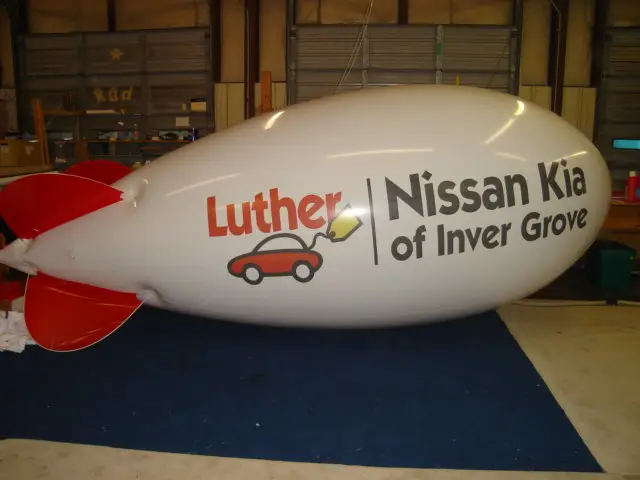
    When a shopper has done their digital research and is driving around a market area deciding which lot to enter, what they see from the road matters enormously. This is where aerial marketing blimps and cold-air advertising inflatables deliver a return that no click-through rate can replicate. A giant blimp tethered 50 to 80 feet above a dealership lot is visible for miles. It signals an event, an energy, and a presence that cuts through roadside clutter in a way that a roadside banner or a digital sign never can.

    Auto dealerships have been among the most consistent users of large-format inflatable advertising for decades, and for good reason. The dealership lot is a competitive corridor. Multiple brands, multiple franchises, and multiple independent retailers often operate within a few miles of one another. In that environment, the dealer who creates the greatest sense of excitement and visibility wins the foot traffic battle. A well-positioned helium blimp or a dramatic cold-air inflatable shaped like a car, truck, or mascot draws the eye of every driver passing by—including that 39% of U.S. adults who are actively in the market and just looking for a reason to pull in.

    Seasonal promotions, end-of-quarter clearance events, new model launches, and tax-season sales blitzes are all ideal moments to deploy aerial advertising. The National Automobile Dealers Association (NADA) noted in its April 2026 article on dealership success strategies that concentrated, high-impact promotional campaigns that create urgency and excitement are among the most effective tactics for generating immediate showroom visits. A blimp directly supports that strategy by making the promotional event unmissable from the road.

    What the Top 150 Dealership Groups Teach Us About Marketing Efficiency

    Automotive News released its 2026 Top 150 Dealership Groups report this week, and one of the most striking findings is that two-thirds of the top dealership groups grew new-vehicle sales in 2025, and 62 of those 101 growth-achieving groups accomplished it without opening a single new location. Growth came from better execution within existing stores, not from expansion. The report highlights disciplined pricing, a superior customer experience, and strong service department performance as the pillars of that store-level success.

    The implication for marketing managers is clear: you do not need more locations to grow market share. You need your existing location to perform better. That means improving the customer experience from the moment a buyer first sees your dealership from the road, all the way through financing and delivery. Marketing investment that drives more qualified visitors through the door amplifies every other operational improvement a dealership makes. A stronger service lane, a better-trained sales team, and a more transparent financing process all become more valuable when there are more buyers in the building to experience them.

    The smaller dealership groups in the Top 150 list outperformed larger national chains on a per-store basis, according to the Automotive News analysis. This finding reinforces the value of hyper-local, community-visible marketing tactics that make a single location feel dominant in its immediate geographic area.

    Omnichannel Marketing: Bridging the Gap Between Screen and Showroom

    The 2026 playbook for automotive retail is built on the concept of an omnichannel journey: reach the buyer online during their research phase, then create a physical reason to visit the lot. Dealer.com, backed by Cox Automotive, frames this as helping dealers “meet customers wherever they start and streamline operations for maximum efficiency.” Fullpath’s 2026 dealership marketing analysis adds that the dealerships gaining the most market share are combining AI-driven personalization online with differentiated in-person experiences when buyers arrive.

    Critically, the dealerships winning this game are not relying exclusively on digital channels. The Fullpath report notes that the tactics producing diminishing returns in 2026 are those that function purely in the digital space without a corresponding physical-world presence. Geo-fencing campaigns, for example, are designed to drive a prospect to a specific physical location. One case study from Darwill documented a dealership that used geo-fencing combined with personalized digital ads and recorded a 300% increase in foot traffic during the campaign window. But what the buyer found when they arrived at that lot—including how visible and welcoming the dealership appeared from the curb—determined whether the visit converted into a sale.

    The lesson is that digital and physical marketing are not competing strategies. They are complementary layers of a single customer journey. Dealerships that invest in both the digital top-of-funnel and the physical lot experience will outperform those that optimize only one side of that equation.

    What This Means for Your Marketing

    With 39% of U.S. adults actively considering a vehicle purchase and the majority of those buyers intending to transact within the next 12 months, the opportunity on dealership lots across the country is significant. The challenge is that affordability pressures and tariff uncertainty are keeping buyers cautious and comparison-shopping longer than usual. That reality places a premium on marketing strategies that create urgency, generate excitement, and make a specific dealership feel like the obvious destination when a buyer finally decides to act.

    Outdoor and location-based marketing tactics are particularly well-suited to this environment. When a buyer is close to a decision and driving the local market area, the dealership that is most visible and most energetic wins the visit. Helium advertising balloons and aerial marketing blimps have served the automotive retail industry as proven, high-visibility lot presence tools for this very reason. A blimp floating above a spring clearance event or a tax-refund season promotion signals activity, draws attention from passing traffic, and creates the kind of visual excitement that no digital ad can deliver at street level. In a market where buyers are actively shopping but hesitant to commit, creating a compelling reason to pull into your lot—rather than your competitor’s—can be the difference between a missed opportunity and a closed deal.

    Dealerships that pair strong digital marketing campaigns with equally strong physical lot presence will be best positioned to capture the high-intent 2026 buyer. Whether you are planning a new model launch event, a year-end clearance blitz, or a weekend sales spectacular, Arizona Balloon Company can help you deploy helium advertising balloons and aerial marketing blimps that make your dealership unmissable from the road. A more visible lot is a more visited lot—and a more visited lot is a more profitable one.

    Sources


  • Homebuilder Marketing Incentives Drive New Homes Month 2026


    Homebuilder Marketing Incentives Drive New Homes Month 2026 | Arizona Balloon Company


    Homebuilder Marketing Incentives Take Center Stage During New Homes Month 2026

    By Arizona Balloon Company (arizonaballoon.com) — April 14, 2026

    homebuilder marketing incentives new home community signage and outdoor advertising

    NAHB Launches New Homes Month with Industry-Wide Incentive Push

    Homebuilder marketing incentives are dominating industry conversation this April as the National Association of Home Builders (NAHB) officially kicked off New Homes Month with a sweeping statement on market strategy. In a press release published April 1, 2026, NAHB announced that the homebuilding industry is actively responding to affordability headwinds by constructing homes that balance price points with modern buyer expectations—and by aggressively promoting those homes to a cautious consumer base.

    NAHB Chairman Bill Owens, a home builder and remodeler from Worthington, Ohio, framed the moment clearly: homeownership remains a top priority for American families, and builders are positioned to deliver on that promise—but only if buyers know what is available. That challenge of awareness and visibility is precisely where targeted marketing becomes essential.

    According to data from the U.S. Census Bureau and the National Association of Realtors cited in the NAHB release, newly built homes are now typically priced at or below existing homes—an unusual and compelling market dynamic. Since 2022, median new home prices have declined approximately 5 percent, narrowing a gap that once made new construction a harder sell for budget-conscious buyers.

    Community count is another signal worth watching. Zonda, a leading housing market analytics firm, reports there are currently 17,372 actively selling communities tracked nationwide, up 2.6 percent from the same period last year. More communities in the pipeline means more locations competing for buyer attention—and more builders who need their signage, sales offices, and model homes to stand out.

    What Builders Are Offering: Homebuilder Marketing Incentives, Price Adjustments, and Innovative Designs

    The NAHB’s April 2026 data paints a detailed picture of just how aggressively builders are working to attract buyers. According to a recent NAHB survey, 64 percent of builders reported offering sales incentives, while 37 percent cut prices outright. This follows a trend that has now persisted for more than 11 consecutive months, with more than 60 percent of builders using some form of incentive each month since early 2025.

    The types of incentives vary widely. The most commonly deployed tools include mortgage rate buydowns, closing cost contributions, design center credits, and appliance packages on move-in ready homes. Some larger national builders have invested heavily: Lennar, for example, reported incentives averaging 13.3 percent of the sales price during recent quarters, while PulteGroup has more than doubled its per-sale incentive spending according to earlier market reports.

    Beyond financial inducements, builders are rethinking product design itself. NAHB data points to a multi-decade high in townhome market share, which reached 19 percent of single-family housing starts in recent quarters. Smaller footprints, flexible layouts, and energy-efficient features are being bundled into homes aimed at first-time and move-up buyers who have been priced out of existing home markets.

    For marketing decision-makers at homebuilding companies, the takeaway from this data is that the competition for buyer attention has become more intense—not less. With more communities opening, more incentives on the table from more builders, and buyers doing extensive research before visiting a single sales center, standing out both online and on-site is no longer optional. Builders who are winning are the ones investing in visibility at every stage of the buyer journey.

    Explore how giant advertising balloons for home builder communities can increase on-site foot traffic and brand visibility during your sales events.

    homebuilder marketing incentives new home community signage and outdoor advertising

    The Spring Selling Season and the Race to Convert Foot Traffic

    April is not just New Homes Month in name. It marks the peak of the spring selling season—the period when buyer activity concentrates most sharply and when the decisions builders make about marketing spend tend to have an outsized effect on annual performance. NAHB offered two free Shop Talks in April 2026 specifically focused on converting spring traffic into sales, including a session titled “One Team, One Experience: Turning Spring Traffic into Sales” and another titled “Inside the Funnel: Marketing Strategies That Move Buyers to a Yes.”

    The spring window is particularly critical in 2026 because mortgage rates have shown modest improvement. Zonda data from February 2026 noted that rates hovered between 5.99 and 6.17 percent throughout the month, a meaningful improvement from recent highs. When rates ease even slightly, buyers who have been sitting on the sidelines re-enter the market quickly—and the builders who capture that attention first tend to win the sale.

    This dynamic creates real urgency. A buyer who visits three communities on a Saturday afternoon is most influenced by the one that made the strongest first impression. That impression often begins before the buyer steps out of the car—it begins with what they see from the road.

    Why On-Site Visibility Is a Critical Piece of the Homebuilder Marketing Mix

    Digital marketing, AI-optimized content, and social media are all part of the modern homebuilder marketing toolkit. But for builders operating in competitive markets with multiple active communities in the same metro, physical presence at the community level remains one of the most efficient conversion tools available. A buyer who is already driving through a neighborhood—already in the mindset of imagining their life there—is one of the warmest prospects a sales team will ever encounter.

    This is where large-format aerial marketing plays a distinctive and measurable role. Helium advertising blimps and giant inflatable balloons tethered above model homes, grand opening events, and community entrances serve as high-altitude directional signals that digital advertising simply cannot replicate. They attract drive-by traffic, anchor the visual memory of a community, and communicate activity and energy at the point of sale.

    For homebuilders operating in markets like the Southwest, the Southeast, or the Midwest—where subdivision density is high and one community can look much like another from the road—an advertising blimp or large inflatable balloon visible from a mile away gives a builder a measurable edge in foot traffic. The NAHB’s emphasis on converting spring traffic into sales presupposes that traffic exists. Outdoor aerial marketing is one of the most cost-effective ways to generate it.

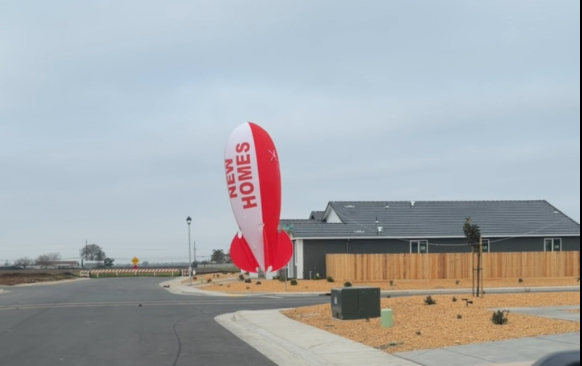
    Arizona Balloon Company supplies marketing blimps and helium advertising balloons specifically used by homebuilders nationwide for grand openings, model home launches, and ongoing weekend sales events. These are purpose-built tools for the kind of competitive, incentive-driven selling environment NAHB is describing in April 2026.

    What This Means for Your Marketing

    The story NAHB is telling this April is ultimately about differentiation. When 64 percent of builders are offering incentives and median new home prices have declined across the board, the financial gap between competitors has narrowed. Buyers will often choose the community that feels more active, more established, and more worth their time to visit. Outdoor visibility—what buyers see when they drive past your entry monument, your model home, or your sales center—is the first and often most decisive marketing impression you make.

    Location-based marketing tools like helium advertising balloons from Arizona Balloon Company are designed for exactly this competitive environment. A 17-foot or larger inflatable balloon tethered above a model home on a Saturday is visible for up to a mile in open suburban terrain. It signals that something is happening—that there is a reason to turn in. At a time when buyers are weighing multiple communities and making quick judgments, that signal has real monetary value.

    For marketing managers and sales directors at homebuilding companies, the recommendation heading into the remainder of New Homes Month and the spring selling season is straightforward: pair your digital and incentive strategy with a strong on-site visual presence. Run weekend balloon events at your highest-traffic communities. Use aerial marketing blimps to anchor your grand openings. Let buyers find you before they even know they are looking. The NAHB data is clear that the buyers are out there—your job is to make sure they find your community first.

    Sources


  • How Green Marketing Rules Are Reshaping Brand Visibility in 2026


    Sustainable Outdoor Advertising: How Green Marketing Rules Are Reshaping Brand Visibility in 2026

    Sustainable Outdoor Advertising: How Green Marketing Rules Are Reshaping Brand Visibility in 2026

    By Arizona Balloon Company (arizonaballoon.com) — April 13, 2026

    sustainable outdoor advertising with eco-friendly balloon displays at a green marketing event

    The Green Marketing Shift Hitting U.S. Brands Right Now

    Sustainable outdoor advertising has moved from a niche differentiator to a business necessity as the green marketing landscape undergoes its most significant regulatory and consumer-driven transformation in years. The global green marketing market is valued at approximately $58.68 billion in 2026 and is projected to reach $80.57 billion by 2035, according to Business Research Insights. In the United States alone, sustainability has been adopted in the marketing strategies of nearly 70 percent of Fortune 500 companies, and roughly 82 percent of American consumers report that they factor environmental responsibility into their purchasing decisions. For marketing managers and business owners, these figures are not abstract trends — they represent direct pressure on how brands must communicate, advertise, and prove their commitments in the marketplace.

    Interest in eco-friendly messaging hit a five-year high in June 2025 according to Google Trends data, and that momentum has continued into 2026. Sustainable brands are growing at approximately 5.6 times the rate of conventional competitors, with 74 percent of companies reporting positive outcomes from eco-focused campaigns. Yet, as the market grows, so does the scrutiny. A surge in greenwashing enforcement at the federal and state levels is reshaping what brands can say, where they can say it, and how they must back it up. The window for vague environmental claims is closing fast.

    Greenwashing Crackdown: New Rules Every Marketer Must Know

    Two major U.S. regulatory developments are driving the compliance conversation right now. First, California's SB 343 — the “Truth in Recycling” law — begins active enforcement in October 2026. Under this law, a product may only be labeled as recyclable if it meets a strict “double 60” threshold: the product must be accepted by recycling programs serving at least 60 percent of California residents and processed by facilities that recycle at least 60 percent of that material type. Since January 2024, companies have been required to maintain written documentation to substantiate recyclability claims, and those records must be made available to any member of the public upon request. Violations can result in civil penalties and consumer protection actions.

    Second, the proposed federal Packaging and Advertising Claims for Knowledge (PACK) Act has been advancing in Congress, seeking to establish national-level standards for recyclability and environmental claims on packaging. According to analysis by global law firm DLA Piper, the combination of SB 343 and the PACK Act signals “a fundamental shift from principles-based guidance to enforceable mandates.” Meanwhile, the FTC's Green Guides — last updated in 2012 — remain the primary federal reference for environmental marketing claims, though their future update under the current administration is still uncertain. Broad terms like “eco-friendly,” “green,” or “planet-safe” are increasingly under enforcement scrutiny unless they are precisely defined and backed by robust evidence.

    sustainable outdoor advertising with eco-friendly balloon displays at a green marketing event

    The Consumer Trust Gap and What It Means for Advertisers

    Regulatory action is accelerating partly because consumer skepticism has reached a critical level. Only one in five consumers currently believes that brands' claims about their environmental efforts are genuine, according to a survey cited by Shopify. Separately, 57 percent of consumers report that they distrust green marketing claims outright, and 59 percent believe companies regularly exaggerate their sustainability achievements. High-severity greenwashing cases globally increased by more than 30 percent in 2024, according to RepRisk data, while Europe and North America specifically saw a 27 percent rise in the most serious incidents. Companies accused of greenwashing face an average decline in consumer trust of 1.34 percent per incident, according to Harvard Business Review research — a meaningful erosion for any brand building long-term market share.

    The takeaway for marketing decision-makers is direct: the era of aspirational environmental messaging is over. Stakeholders at every level — regulators, investors, and everyday shoppers — are demanding verifiable proof, specific data, and transparent methodology. Marketing, legal, sustainability, and supply chain teams must now work in closer alignment than at any point in the past decade. For businesses that get this right, the reward is substantial: educated, eco-conscious buyers are more loyal, spend more, and advocate more loudly on behalf of brands they trust.

    How Sustainable Outdoor Advertising Fills the Credibility Gap

    Against this backdrop of regulatory pressure and consumer skepticism, smart marketing managers are reconsidering where and how their brands show up in the physical world. Sustainable outdoor advertising — promotional activity that minimizes environmental footprint while maximizing local visibility — is emerging as a strategic answer to the credibility gap. According to analysis from The Creative Stable, brands are increasingly choosing recyclable materials, energy-efficient digital screens, and lower-impact formats as industry standards evolve. Solar-powered installations and carbon-neutral campaign approaches are gaining traction as brands seek outdoor presence that aligns with their stated environmental values.

    Outdoor advertising carries a distinct advantage in a greenwashing-sensitive market: physical presence is inherently verifiable. Unlike a social media post or a website banner that can be toggled on and off, a visible street-level or aerial marketing display is a concrete expression of brand commitment. It is local, tangible, and seen by the community a business serves. That authenticity matters to consumers who have grown skeptical of digital-only sustainability claims. For home builders, auto dealers, trade show exhibitors, and event-driven businesses, outdoor formats offer both reach and demonstrable, place-based credibility.

    Helium Advertising Balloons and the Green Marketing Advantage

    When green marketing strategy calls for a high-impact, reusable, and locally visible advertising solution, helium advertising balloons and giant inflatable displays offer a surprisingly well-aligned option. Unlike printed vinyl banners — which research from the MDPI journal on sustainable outdoor advertising notes are largely non-recyclable due to their PVC composition and typically end up in landfills — high-quality helium advertising balloons and advertising blimps are built to be durable, reusable assets deployed campaign after campaign. A single blimp or tethered balloon can serve dozens of events over several years, dramatically reducing the per-use material waste compared to single-use printed formats.

    Reusability is a core principle of sustainable marketing strategy. The circular economy model — keeping products in service as long as possible — is one of the most widely endorsed approaches across sustainable marketing frameworks cited by DesignRush and others. An advertising blimp or giant helium balloon that is rented, deployed, and returned for refurbishment aligns naturally with that model. Additionally, these displays generate no electricity consumption during operation, no ongoing digital emissions, and no wasteful paper or ink production. For businesses in the green building, renewable energy, or eco-conscious retail sectors, visible aerial advertising is not only attention-grabbing — it is an honest reflection of a reuse-first brand philosophy.

    Home builders marketing green-certified communities, auto dealers promoting hybrid and EV inventory, and trade show exhibitors representing sustainable product lines all benefit from the combination of sky-high visibility and low-waste format. A helium advertising balloon above a sales event communicates scale and seriousness while avoiding the disposable single-use materials that increasingly attract regulatory and consumer scrutiny in traditional outdoor advertising formats.

    What This Means for Your Marketing

    The green marketing compliance wave of 2026 is not just a legal story — it is a strategic opportunity for businesses that act with transparency and choose their advertising formats deliberately. Marketing managers who align their outdoor campaigns with genuine environmental values will have a measurable advantage over competitors still relying on vague “eco-friendly” language. Start by auditing every environmental claim in your current marketing collateral against FTC Green Guide standards and California SB 343 requirements. Specificity, third-party verification, and documented proof are the new baseline, not a premium feature.

    For location-based and event-driven advertising, the format you choose sends its own message. Selecting reusable, durable, low-waste display tools — such as helium advertising balloons from Arizona Balloon Company — lets your physical marketing presence reinforce rather than undermine your sustainability story. A business that claims green values but wraps its storefront in single-use PVC banners every quarter faces an obvious credibility mismatch. Outdoor displays that are designed for repeat use, maintained professionally, and visible to the surrounding community project exactly the kind of consistency that builds consumer trust in a skeptical era.

    Finally, think geographically. Green-conscious consumers are concentrated in specific markets, and sustainable outdoor advertising is most powerful when it reaches those buyers where they are physically present — at the job site, the trade show floor, the dealership lot, or the community event. Aerial marketing formats are among the highest-visibility, lowest-recurring-waste options available at any budget level. As regulatory pressure on environmental claims tightens through 2026 and beyond, businesses that lead with verifiable, locally visible, and genuinely reusable marketing tools will be best positioned to earn and hold consumer trust.

    Sources


  • FIFA World Cup 2026 Is Triggering a Sports Event Outdoor Advertising Gold Rush | Arizona Balloon Company


    FIFA World Cup 2026 Is Triggering a Sports Event Outdoor Advertising Gold Rush | Arizona Balloon Company

    FIFA World Cup 2026 Is Triggering a Sports Event Outdoor Advertising Gold Rush

    By Arizona Balloon Company (arizonaballoon.com) | April 11, 2026

    sports event outdoor advertising at a major soccer stadium fan zone

    The Scale of the World Cup Advertising Opportunity

    Sports event outdoor advertising is entering an unprecedented era, and the trigger is the 2026 FIFA World Cup — the largest football tournament ever staged. With the competition kicking off in June across 16 host cities in the United States, Canada, and Mexico, brands of every size are racing to lock down visibility in and around fan zones, transit corridors, and city entertainment districts before inventory disappears. Arizona Balloon Company has been tracking how this moment is reshaping outdoor marketing priorities across the country.

    The sheer numbers are staggering. Analysts project that more than six billion people will follow the tournament, and over 6.5 million fans are expected to attend matches in person. The United States alone will host 78 of the 104 matches, spanning 11 cities including Los Angeles, Miami, Dallas, Atlanta, and the New York/New Jersey metro area. The final game is scheduled for July 19, 2026 at MetLife Stadium in East Rutherford, New Jersey. For marketing decision-makers, that footprint translates into an extended, city-scale captive audience that is extraordinarily difficult to replicate through any other single event.

    Out-of-Home Advertising Is Leading the Charge in Sports Event Outdoor Advertising

    While digital platforms and broadcast sponsorships continue to command large budgets, out-of-home advertising is emerging as the dominant medium for brands seeking to meet fans in the real world. Research from The Harris Poll found that 42% of consumers say they discuss sporting events with friends or family after seeing out-of-home advertisements, underscoring the word-of-mouth amplification that physical placements generate at scale. Furthermore, more than half of soccer fans report noticing brands that sponsor teams and events, and 55% say they are more likely to purchase from sponsors of their favorite team or athlete.

    Out-of-home formats in play range from large-format roadside bulletins and building wallscapes to digital screens at airports, transit station dominations, and branded buses. In cities like Philadelphia, sequential billboards along I-95 near the sports complex are already being packaged specifically for World Cup-adjacent campaigns. In every host market, premium locations near stadiums and fan zones are booking ahead of schedule, making early planning essential for any brand that wants meaningful placement during peak match days.

    sports event outdoor advertising at a major soccer stadium fan zone

    How Major Brands Are Activating Around the Tournament

    The roster of brands committing resources to World Cup activation reads like a Fortune 500 digest. Coca-Cola, a fixture at every FIFA World Cup since 1950, has launched a new anthem campaign. Adidas is running a four-week “adidas Football Festival” digital activation. Home Depot has unveiled a campaign spotlighting USMNT striker Ricardo Pepi and announced plans to bring outdoor viewing parties and DIY fan zones to multiple host cities across North America — tailoring each activation to the culture and community of the local market.

    Kia America has framed its FIFA partnership around its brand mission of inspiring movement, while Lay’s has activated as the official snack partner of the tournament. US Soccer itself is running its largest-ever national campaign, titled “Never Chase Reality,” focused on community identity and fan passion heading into the summer. These investments signal something important for smaller and mid-market brands: the ecosystem of fan activity surrounding this tournament extends far beyond official sponsors, and the window for independent brands to capture attention in host city environments is still wide open.

    Non-Sponsors Can Win Big by Thinking Locally and Physically

    One of the most important strategic insights emerging from marketing analysts this week is that official FIFA sponsorship is not required to benefit from the World Cup’s commercial energy. Brands can activate through out-of-home placements, digital media, ambassador strategies, and on-site experiences without using any FIFA intellectual property. Campaigns that focus on national pride, fan emotion, and shared experiences are widely used and legally sound.

    The practical implication is that local and regional businesses — not just global giants — have a genuine path to relevance. Fan zones, public viewing areas, and the entertainment districts surrounding each host venue will be packed for weeks. Pop-up experiential installations, interactive fan engagement zones, and large-format physical branding in high-traffic corridors are all viable strategies for brands operating on a fraction of a multinational’s budget. The key advantage of physical, location-based advertising is that it cannot be scrolled past, ad-blocked, or skipped. It exists in the same space as the fan, at exactly the moment their emotional engagement is highest.

    Where Helium Advertising Balloons Fit Into Sports Event Marketing

    For businesses seeking to stand out during festivals, sporting events, and large public gatherings, advertising blimps and helium marketing balloons offer a category of visibility that no ground-level format can match. When tens of thousands of fans are moving through a city neighborhood, a giant custom-branded balloon or tethered blimp floating above a business location, watch party venue, or fan zone entrance creates an unmissable landmark — visible from blocks away and attractive to smartphone cameras.

    This aerial advantage is particularly meaningful during events where street-level competition for eyeballs is intense. Traditional signage competes with dozens of other signs. A large helium advertising balloon operating at elevation has a clear sightline to an audience that ground-level formats simply cannot reach. For home builders promoting model home communities near tournament host cities, auto dealers adjacent to high-traffic event corridors, and general businesses operating near fan zones and watch party districts, the deployment window of the World Cup — six weeks, across multiple weekends — provides sustained exposure to an unusually dense and engaged foot traffic audience.

    Unlike digital out-of-home placements that require advance booking and often sell out in host markets, aerial advertising solutions can be deployed with considerably more flexibility. A custom blimp or giant advertising balloon can be positioned, repositioned, and redeployed as event schedules shift across match days, making them a tactically agile choice for businesses that want to capitalize on the tournament’s energy without committing to a fixed billboard contract months in advance.

    What This Means for Your Marketing

    The FIFA World Cup 2026 is not just a sports event — it is a six-week outdoor marketing environment that will transform the commercial landscape of 11 U.S. cities this summer. For marketing managers and business owners in or near host markets, the window to plan location-based activations is narrowing quickly. Premium out-of-home inventory near stadiums, fan zones, and transit hubs is already at a premium. The brands that will earn the most attention are those that show up physically, visibly, and repeatedly in the spaces where fans gather.

    Even businesses that are not formally sponsoring the tournament or located within a host city can benefit. Watch parties, local fan events, and the general surge in outdoor social activity that accompanies a global sporting event create demand for visible, attention-commanding brand presence across every market in the country. Outdoor activation strategies that emphasize height, color, scale, and movement — the defining attributes of helium advertising balloons and aerial marketing blimps — are uniquely suited to this kind of high-energy, high-density environment.

    The strategic lesson that applies equally to the World Cup and to every festival, race, air show, or sporting event that follows is this: the brands that win in live event environments are the ones fans can actually see. Physical, location-based advertising earns attention that no algorithm can deliver. If your business operates near event venues, sports parks, fairgrounds, or entertainment districts, now is the time to assess your outdoor visibility strategy and determine whether your current signage is working as hard as your market opportunity demands.

    Sources


  • FAA Launches eVTOL Air Taxi Pilot Program Across 26 States — What It Means for Aerial Marketing


    FAA Launches eVTOL Air Taxi Pilot Program Across 26 States — What It Means for Aerial Marketing

    FAA eVTOL Air Taxi Program Launches Across 26 States: What It Means for Aerial Marketing in 2026

    By Arizona Balloon Company (arizonaballoon.com) — April 10, 2026

    eVTOL air taxi marketing concept with electric aircraft over a U.S. city

    What Is the FAA’s eVTOL Integration Pilot Program?

    The FAA’s eVTOL air taxi marketing landscape shifted dramatically in March 2026 when U.S. Transportation Secretary Sean P. Duffy and the Federal Aviation Administration formally announced eight selected projects under the Advanced Air Mobility and Electric Vertical Takeoff and Landing Integration Pilot Program, known as the eIPP. The program, rooted in President Trump’s June 2025 “Unleashing Drone Dominance” executive order, is designed to accelerate the safe deployment of next-generation electric aircraft into the national airspace system — and it is moving faster than many in the industry anticipated.

    An eVTOL — short for electric vertical takeoff and landing — is an aircraft that lifts off and lands like a helicopter but typically cruises on wings like a conventional airplane. It runs on electric or hybrid-electric power, produces zero direct emissions, and operates far more quietly than traditional rotorcraft. Companies like Joby Aviation, Archer Aviation, Beta Technologies, and Wisk Aero have spent years developing and testing these vehicles. The eIPP now gives them a formal, government-sanctioned pathway to begin limited commercial operations before completing the full FAA type certification process.

    The FAA received more than 30 proposals from across the country and selected eight projects after evaluating them on the breadth of proposed operations, potential for generating regulatory data, and the strength of industry, government, and academic partnerships. According to the Department of Transportation, the American public will begin seeing real operations under this program as early as summer 2026.

    Which States and Companies Are Involved?

    The eight selected eIPP projects span 26 states and cover an unusually wide range of operational use cases. The Port Authority of New York and New Jersey is coordinating 12 operational concepts across New England, including eVTOL passenger flights from the Manhattan Heliport, with industry partners Archer, Beta, Electra, and Joby all participating. The Texas Department of Transportation is supporting a regional air taxi network connecting Dallas, Austin, San Antonio, and eventually Houston. Utah’s DOT is anchoring a multi-state effort covering the Pacific Northwest, the Rocky Mountains, and Oklahoma.

    Florida is running three phases of operations that include cargo delivery, passenger transportation, and medical response. Louisiana is testing cargo and personnel transportation into offshore energy locations in the Gulf of America. North Carolina is exploring both piloted medical operations within the state and autonomous flight extending into Virginia. Albuquerque, New Mexico, is focused on autonomous cargo operations through a partnership with Reliable Robotics. A Pennsylvania-led multistate collaborative is working across 13 states to restore regional air connectivity across rural corridors.

    The aircraft involved read like a who’s-who of the advanced air mobility industry: Archer’s Midnight, Joby’s S4, Beta’s Alia in both VTOL and CTOL configurations, Wisk’s Generation 6 autonomous air taxi, Electra’s EL9, and Elroy Air’s Chaparral cargo drone. Participating companies operate under Other Transaction Agreements that define precisely what each can and cannot do, with those agreements still being finalized. Operational flights could begin within 90 days of a signed OTA.

    eVTOL air taxi marketing concept with electric aircraft over a U.S. city

    Why This Matters for Business Owners Right Now

    For marketing managers and business decision-makers, the eIPP launch signals something important: aerial visibility is becoming a serious, mainstream conversation again. When a federal program authorizes electric aircraft to fly passengers over Manhattan, Dallas, and Miami within months, it confirms that the airspace above your customers is being actively developed as a commercial corridor. Businesses that operate in or near these pilot corridors — home builders showing off new subdivisions, auto dealers with large surface lots, and trade show exhibitors in convention-adjacent districts — should take note.

    The eIPP also brings a surge in public interest in anything airborne. Aviation trade publications, local news outlets in each of the 26 participating states, and national media have already devoted significant coverage to these flights. That elevated public attention to the skies creates a rare window for brands to capitalize on aerial advertising in ways that feel timely and culturally relevant rather than old-fashioned. Outdoor visibility tools that have existed for decades are suddenly contextually fresh.

    Businesses in the eVTOL and advanced air mobility space itself — from vertiport developers and charging infrastructure companies to regional airlines exploring last-mile connections — face their own marketing challenge: standing out in an emerging, crowded, and highly technical sector. Traditional digital advertising in this space is expensive and cluttered. Location-based, physical marketing at key sites such as airports, development corridors, trade shows, and real estate previews offers a measurable alternative.

    eVTOL Air Taxi Marketing and the Aerial Advertising Opportunity

    It may seem counterintuitive to use a helium-filled blimp to market a company building electric aircraft — but that is precisely what makes it effective. While eVTOL companies spend years navigating FAA certification before a single paying passenger boards one of their aircraft, advertising blimps and marketing airships are already flying, already visible, and already drawing crowds at the ground level where purchasing decisions happen.

    Trade shows and industry expos are a primary venue for eVTOL companies, component suppliers, software providers, and infrastructure developers to meet potential partners and customers. A large helium blimp or inflatable advertising balloon tethered at or near a convention center entrance does not require FAA certification, a pilot, or months of regulatory negotiation. It is visible from blocks away, draws foot traffic, and communicates scale — an important signal for companies trying to project market credibility in a sector where many competitors are still in the prototype stage.

    Auto dealers located near pilot corridors or in markets where air taxi routes are being proposed also stand to benefit. As vertiport infrastructure is discussed and developed near commercial districts and transit hubs, nearby businesses will see increased foot and vehicle traffic. A large outdoor helium advertising balloon stationed at the entrance of a dealership or development site anchors that location visually in a competitive landscape where signage alone often goes unnoticed. For home builders presenting master-planned communities near planned aerial transit corridors, aerial marketing tools communicate innovation and forward-thinking branding without requiring digital channels at all.

    What Comes Next: Summer 2026 and Beyond

    Industry analysts and aviation observers note that cargo flights are likely to come before passenger service under the eIPP. The autonomous freight operations — Reliable Robotics in Albuquerque, Elroy Air’s Chaparral drone in Louisiana, and Beta’s medical supply flights in Texas and Utah — involve a simpler liability landscape and do not depend on passenger-carrying type certification timelines. Revenue cargo operations under the program could be visible as early as the fourth quarter of 2026.

    For the passenger side, Joby Aviation has begun test flights with its first FAA-conforming prototype and expects to enter the final phase of FAA type certification — called Type Inspection Authorization testing — later this year. Archer is working through piloted VTOL testing on its second Midnight prototype. Neither company has full certification yet, and independent analysts have suggested timelines extending into 2027 or 2028 for complete approvals. The eIPP does not accelerate the underlying certification clock; it simply allows companies to build operational data and market presence in the interim.

    What that means for businesses watching from the sidelines is that the eVTOL sector will remain in a high-visibility, high-investment, pre-revenue phase for at least another 18 to 24 months. Companies in this space will be spending heavily on awareness, credibility, and market education campaigns. That window is precisely where differentiated, location-specific marketing tools — including large-format aerial and ground-based advertising — deliver the highest return on investment relative to crowded digital channels.

    What This Means for Your Marketing

    The FAA’s eIPP announcement has done something valuable for every business operating near an airport, trade show venue, or emerging urban transit corridor: it has put the sky back in the public’s imagination. As eVTOL flight tests begin making local news across 26 states this summer, consumers and business buyers alike will be looking up. Smart marketing managers recognize that public attention directed skyward is a moment to leverage — not wait out.

    For businesses in the eVTOL and advanced air mobility sector specifically, location-based marketing at trade shows, product launches, and vertiport groundbreaking events provides brand impressions that digital ads simply cannot replicate. A tethered helium advertising balloon or aerial marketing blimp from Arizona Balloon Company is visible from a quarter-mile away, requires no screens, no clicks, and no algorithm — just presence. In an industry where many competitors look identical on a conference floor or in a digital feed, physical scale commands attention.

    For general businesses, auto dealers, and home builders in markets where eVTOL routes are being proposed — including major hubs in Texas, Florida, New York, Arizona, and Utah — now is the time to think about outdoor visibility strategy. Traffic patterns near vertiports, regional airports, and transit hubs are expected to evolve significantly over the next three years. Businesses that establish strong physical presence at these locations early will benefit from association with growth corridors long before air taxi service becomes routine. Aerial and ground-level balloon advertising is one of the most cost-effective ways to claim that presence at scale.

    Sources


  • Polyurethane Advertising Blimps Cut Helium Use by 87% as Live Events Rebound | Arizona Balloon Company


    Polyurethane Advertising Blimps Cut Helium Use by 87% as Live Events Rebound | Arizona Balloon Company


    Polyurethane Advertising Blimps Cut Helium Costs by 87% as U.S. Live Events Surge

    By Arizona Balloon Company (arizonaballoon.com) — April 9, 2026

    Polyurethane advertising blimps floating above an outdoor event venue

    Industry Shift: Why Event Organizers Are Rethinking Helium Costs

    A significant development is reshaping how businesses approach outdoor event promotion in the United States: the rapid adoption of polyurethane advertising blimps as a cost-efficient alternative to traditional PVC promotional balloons. As industrial helium prices remain elevated and live events continue to surge post-pandemic, event organizers are finding that conventional vinyl balloons are increasingly difficult to justify on tighter marketing budgets. The industry is responding with advanced materials science that dramatically reduces the amount of helium needed to keep a blimp aloft for days at a time.

    In late March 2026, Arizona Balloon Company—a Glendale, Arizona manufacturer with over 45 years in the aerial advertising business—announced the launch of EventAdvertisingBlimp.com, a dedicated nationwide sales platform for its proprietary polyurethane event blimps. The move signals broader momentum in the balloon and airship industry toward materials-driven innovation as a practical response to supply-side helium challenges.

    The announcement arrives at a pivotal moment. Helium supply has been subject to notable volatility in recent years, driven in part by geopolitical factors affecting major producing regions. For event promoters running multi-day festivals, state fairs, touring campaigns, or seasonal retail promotions, that volatility translates directly into unpredictable operational costs that can erode marketing ROI.

    The Polyurethane Advantage: More Lift, Less Helium

    At the core of the news story is a straightforward engineering principle: polyurethane has significantly lower gas permeability than traditional PVC. Because gas molecules escape through the envelope more slowly, a polyurethane blimp retains helium longer between refills—dramatically reducing total helium consumption over the life of a campaign.

    According to Arizona Balloon Company owner Johnny Mulder, a standard 10-foot polyurethane blimp requires approximately 72 cubic feet of helium, while a conventional PVC blimp of similar outdoor performance may require 600 cubic feet or more. That reduction of up to 87% in helium usage can translate into substantial savings for events spanning multiple days or weekends. For a touring promotion moving from city to city, those savings compound quickly.

    The company’s current lineup ranges from 10 to 30 feet in length, covering the spectrum of use cases from retail grand openings and car dealership lots to large-scale outdoor festivals and trade show campuses. All units are manufactured in Glendale, Arizona and are available with custom digital printing, with lead times of one to three weeks for most custom orders.

    Polyurethane advertising blimps floating above an outdoor event venue

    Live Events Rebound Drives Demand for Aerial Advertising

    The timing of this product launch reflects a broader recovery across the U.S. events industry. Music festivals, sporting events, state fairs, rodeos, and outdoor retail promotions have all seen strong attendance rebounds in 2025 and into 2026. That recovery has reignited demand for high-visibility marketing solutions that work at scale in crowded outdoor environments—exactly the conditions where tethered aerial displays excel.

    Digital advertising, while ubiquitous, faces saturation problems in event environments. Attendees at festivals or fairgrounds are largely off their phones and moving through physical space. A brightly branded blimp floating 50 to 200 feet above a venue entrance or sponsor zone creates an unmistakable landmark that functions simultaneously as wayfinding signage, brand impression, and conversation starter. Arizona Balloon Company specifically recommends short, punchy messaging of two to five words—such as “ENTRANCE,” “PARKING,” or a sponsor’s name—for maximum legibility from a distance.

    Industry observers note that large-format aerial displays are also increasingly popular for guiding attendees through sprawling venues, reducing wayfinding confusion and improving the overall event experience. That dual function—marketing and logistics—gives tethered blimps a compelling value proposition beyond pure brand exposure.

    What This Means for the Balloon and Airship Industry

    For the broader balloon and airship industry, the Arizona Balloon Company announcement is part of a larger story about materials innovation driving commercial viability. While headlines in the lighter-than-air world have been dominated by large-scale cargo airship projects—such as LTA Research’s Pathfinder 1 and Hybrid Air Vehicles’ Airlander 10—the commercial advertising balloon segment has been quietly making practical advances of its own.

    According to market research published in early 2026, the global airship market is projected to reach $235 million in 2025 and grow at a compound annual rate of 8.8% through 2033, with advertising listed as one of the key application segments driving expansion. Within that context, the shift toward polyurethane construction in promotional blimps represents a meaningful reduction in one of the primary cost barriers that has historically limited adoption for smaller and mid-sized businesses.

    The availability of a nationwide e-commerce platform for these products also signals a maturation of the advertising balloon market. Rather than relying solely on regional relationships and direct sales calls, manufacturers are now meeting marketing decision-makers where they research purchases: online, with self-service tools like helium usage estimators and sizing guides that let buyers model costs before picking up the phone.

    For companies already operating in the balloon and blimp space—rental houses, event production companies, and regional advertising balloon vendors—this trend toward lower helium consumption per unit is significant. It expands the pool of clients for whom aerial advertising is financially practical, particularly those running longer campaigns or working with regional budgets that would have previously been priced out by helium costs alone.

    Best Use Cases: From Grand Openings to Trade Shows

    The applications most directly benefiting from polyurethane blimp technology align closely with the primary client segments that rely on aerial advertising as a core marketing tool. Homebuilders running model home grand openings and new community launches often need blimps in place for days or weeks at a stretch—exactly the scenario where 87% lower helium usage produces the largest absolute savings.

    Auto dealerships, another core segment for aerial advertising, similarly benefit from extended deployment windows. A blimp promoting a weekend sales event or a month-long clearance campaign needs to stay inflated and visible throughout—and the lower refill frequency of polyurethane construction reduces the labor and gas costs associated with maintenance.

    Trade show exhibitors operating in outdoor festival or fairground environments have a distinct set of needs: they need blimps that are visually striking from a distance, easy to transport between venues, and reliable across varying weather conditions. The lighter weight of polyurethane material and its extended helium retention make it a practical fit for exhibitors touring regional circuits throughout the spring and summer season.

    General retail businesses—from restaurant chains to home improvement stores—rounding out the client picture often have the most budget sensitivity of any segment. For these clients, the reduction in helium consumption directly determines whether aerial advertising is a viable option at all. Products that use dramatically less helium without sacrificing visibility are the key to unlocking this segment of the market.

    What This Means for Your Marketing

    The shift toward lower-cost aerial advertising materials is good news for any business that relies on outdoor, location-based visibility to drive traffic. If helium costs have previously discouraged you from running tethered balloon promotions for more than a day or two, the new generation of polyurethane blimps changes that calculation substantially. A promotion that once required a significant helium budget for a five-day event can now be planned with confidence—and the savings can be redirected toward additional custom printing, larger sizes, or multiple deployment locations.

    For marketing decision-makers in real estate, automotive, events, and retail, the strategic implication is clear: aerial advertising is becoming more accessible, not less. As digital ad environments grow noisier and outdoor event attendance rebounds, the physical presence of a branded blimp above your location cuts through in a way that no screen-based ad can replicate. The key is selecting the right product for your campaign length, venue size, and budget—and that starts with understanding how material choice affects total cost of ownership, not just purchase price.

    Arizona Balloon Company has specialized in helium advertising balloons and aerial marketing blimps for over four decades, serving homebuilders, auto dealers, trade show exhibitors, and event promoters across the United States. Whether you are planning a grand opening, a multi-day festival activation, or a seasonal retail push, their team offers sizing consultations and helium usage estimates to help you build a campaign that performs without overrunning your budget. Visit arizonaballoon.com to explore the full lineup of helium advertising balloons and aerial marketing blimps available for purchase, rental, or custom manufacturing.

    In conclusion, polyurethane advertising blimps are redefining the advertising landscape.

    Companies seeking innovative solutions will find polyurethane advertising blimps an ideal choice.

    As the trend grows, more brands are likely to invest in polyurethane advertising blimps.

    Ultimately, the choice of polyurethane advertising blimps is a forward-thinking strategy for marketers.

    By incorporating polyurethane advertising blimps, companies enhance their branding efforts effectively.

    The impact of using polyurethane advertising blimps can be measured through increased event participation.

    With their unique design, polyurethane advertising blimps attract audience attention instantly.

    The effective use of polyurethane advertising blimps can transform any marketing strategy.

    Thanks to advancements, polyurethane advertising blimps can now be utilized in innovative ways.

    The versatility of polyurethane advertising blimps makes them suitable for all types of marketing efforts.

    Marketers are embracing polyurethane advertising blimps as a versatile tool for various events.

    As demand rises, polyurethane advertising blimps are becoming a staple in promotional campaigns.

    The unique attributes of polyurethane advertising blimps make them an asset for marketers.

    When planning events, more organizers are considering polyurethane advertising blimps for their attention-grabbing potential.

    The innovation of polyurethane advertising blimps is changing the landscape of outdoor marketing.

    Businesses are discovering that polyurethane advertising blimps are not only effective but also environmentally friendly.

    Utilizing polyurethane advertising blimps allows companies to stand out in competitive markets.

    With the right strategy, polyurethane advertising blimps can significantly enhance brand visibility during events.

    Event organizers are increasingly turning to polyurethane advertising blimps for their outdoor promotions. The benefits of using polyurethane advertising blimps are becoming clearer as businesses seek cost-effective solutions.

    Sources