Auto Dealer Foot Traffic in 2026: Why High-Intent Buyers Demand a Smarter Lot Presence
By Arizona Balloon Company (arizonaballoon.com) — April 15, 2026

Buyer Intent Is Strong—But Affordability Stands in the Way
Generating auto dealer foot traffic is the defining challenge of 2026. A newly released TransUnion report titled “The Intent of Today’s Auto Shopper” finds that 39% of U.S. adults are actively considering or planning a vehicle purchase, and 83% of those prospects intend to complete their transaction within the next 12 months. That is a substantial pool of motivated, in-market consumers. The problem is converting that intent into a showroom visit and, ultimately, a sale.
The barrier is price. The average list price of a new vehicle now sits near the $50,000 mark, and with interest rates still elevated above the Federal Reserve’s 2% target, monthly payments are out of reach for a sizable share of the buying public. According to Digital Dealer’s analysis of the TransUnion data, affordability was cited as the top reason for not purchasing by 53% of consumers who were not planning a near-term acquisition. The result is a bifurcated market: well-funded buyers who are ready to commit, and a far larger group of cost-conscious shoppers still sitting on the fence, waiting for the right message or the right incentive to push them toward a decision.
For dealerships, this means that raw inventory availability and competitive pricing alone are no longer enough. Capturing this pent-up demand requires strategic, multi-channel marketing that gets buyers to your lot before they go to a competitor’s.
The Digital-First Shopper Still Wants to Visit the Lot
Much of the conversation in automotive marketing has shifted to digital channels: AI-powered lead nurturing, generative engine optimization (GEO), personalized dynamic ads, and omnichannel retailing. A recent Fullpath analysis found that traffic to dealership websites driven by large language models (LLMs) like ChatGPT and Gemini grew 15 times year-over-year between 2025 and 2026. More than 90% of auto purchase journeys now begin with a location-based search query, according to DesignRush’s 2026 automotive marketing report.
These statistics are important, but they underscore a point that can get lost in the excitement around digital tools: today’s shopper still ultimately wants to visit the dealership in person. Research from DesignRush shows that more than 80% of new-vehicle buyers who completed the majority of their purchase steps online still reported high satisfaction with the in-person dealership experience, and they continued to value in-store time for test drives, sales interactions, and vehicle delivery. Digital advertising and AI tools move the buyer down the research funnel. Physical presence at the dealership closes the deal.
That gap between digital intent and physical arrival is exactly where smart lot-level marketing makes its impact—and where many dealerships leave significant opportunity on the table.
Why Aerial Visibility Converts Curious Drivers into Showroom Visitors
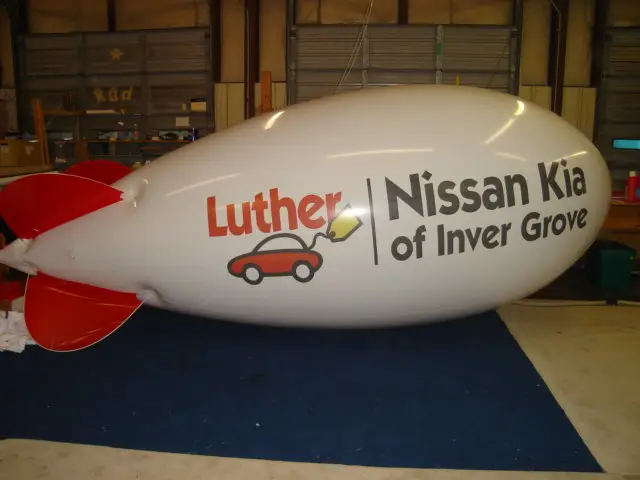
When a shopper has done their digital research and is driving around a market area deciding which lot to enter, what they see from the road matters enormously. This is where aerial marketing blimps and cold-air advertising inflatables deliver a return that no click-through rate can replicate. A giant blimp tethered 50 to 80 feet above a dealership lot is visible for miles. It signals an event, an energy, and a presence that cuts through roadside clutter in a way that a roadside banner or a digital sign never can.
Auto dealerships have been among the most consistent users of large-format inflatable advertising for decades, and for good reason. The dealership lot is a competitive corridor. Multiple brands, multiple franchises, and multiple independent retailers often operate within a few miles of one another. In that environment, the dealer who creates the greatest sense of excitement and visibility wins the foot traffic battle. A well-positioned helium blimp or a dramatic cold-air inflatable shaped like a car, truck, or mascot draws the eye of every driver passing by—including that 39% of U.S. adults who are actively in the market and just looking for a reason to pull in.
Seasonal promotions, end-of-quarter clearance events, new model launches, and tax-season sales blitzes are all ideal moments to deploy aerial advertising. The National Automobile Dealers Association (NADA) noted in its April 2026 article on dealership success strategies that concentrated, high-impact promotional campaigns that create urgency and excitement are among the most effective tactics for generating immediate showroom visits. A blimp directly supports that strategy by making the promotional event unmissable from the road.
What the Top 150 Dealership Groups Teach Us About Marketing Efficiency
Automotive News released its 2026 Top 150 Dealership Groups report this week, and one of the most striking findings is that two-thirds of the top dealership groups grew new-vehicle sales in 2025, and 62 of those 101 growth-achieving groups accomplished it without opening a single new location. Growth came from better execution within existing stores, not from expansion. The report highlights disciplined pricing, a superior customer experience, and strong service department performance as the pillars of that store-level success.
The implication for marketing managers is clear: you do not need more locations to grow market share. You need your existing location to perform better. That means improving the customer experience from the moment a buyer first sees your dealership from the road, all the way through financing and delivery. Marketing investment that drives more qualified visitors through the door amplifies every other operational improvement a dealership makes. A stronger service lane, a better-trained sales team, and a more transparent financing process all become more valuable when there are more buyers in the building to experience them.
The smaller dealership groups in the Top 150 list outperformed larger national chains on a per-store basis, according to the Automotive News analysis. This finding reinforces the value of hyper-local, community-visible marketing tactics that make a single location feel dominant in its immediate geographic area.
Omnichannel Marketing: Bridging the Gap Between Screen and Showroom
The 2026 playbook for automotive retail is built on the concept of an omnichannel journey: reach the buyer online during their research phase, then create a physical reason to visit the lot. Dealer.com, backed by Cox Automotive, frames this as helping dealers “meet customers wherever they start and streamline operations for maximum efficiency.” Fullpath’s 2026 dealership marketing analysis adds that the dealerships gaining the most market share are combining AI-driven personalization online with differentiated in-person experiences when buyers arrive.
Critically, the dealerships winning this game are not relying exclusively on digital channels. The Fullpath report notes that the tactics producing diminishing returns in 2026 are those that function purely in the digital space without a corresponding physical-world presence. Geo-fencing campaigns, for example, are designed to drive a prospect to a specific physical location. One case study from Darwill documented a dealership that used geo-fencing combined with personalized digital ads and recorded a 300% increase in foot traffic during the campaign window. But what the buyer found when they arrived at that lot—including how visible and welcoming the dealership appeared from the curb—determined whether the visit converted into a sale.
The lesson is that digital and physical marketing are not competing strategies. They are complementary layers of a single customer journey. Dealerships that invest in both the digital top-of-funnel and the physical lot experience will outperform those that optimize only one side of that equation.
What This Means for Your Marketing
With 39% of U.S. adults actively considering a vehicle purchase and the majority of those buyers intending to transact within the next 12 months, the opportunity on dealership lots across the country is significant. The challenge is that affordability pressures and tariff uncertainty are keeping buyers cautious and comparison-shopping longer than usual. That reality places a premium on marketing strategies that create urgency, generate excitement, and make a specific dealership feel like the obvious destination when a buyer finally decides to act.
Outdoor and location-based marketing tactics are particularly well-suited to this environment. When a buyer is close to a decision and driving the local market area, the dealership that is most visible and most energetic wins the visit. Helium advertising balloons and aerial marketing blimps have served the automotive retail industry as proven, high-visibility lot presence tools for this very reason. A blimp floating above a spring clearance event or a tax-refund season promotion signals activity, draws attention from passing traffic, and creates the kind of visual excitement that no digital ad can deliver at street level. In a market where buyers are actively shopping but hesitant to commit, creating a compelling reason to pull into your lot—rather than your competitor’s—can be the difference between a missed opportunity and a closed deal.
Dealerships that pair strong digital marketing campaigns with equally strong physical lot presence will be best positioned to capture the high-intent 2026 buyer. Whether you are planning a new model launch event, a year-end clearance blitz, or a weekend sales spectacular, Arizona Balloon Company can help you deploy helium advertising balloons and aerial marketing blimps that make your dealership unmissable from the road. A more visible lot is a more visited lot—and a more visited lot is a more profitable one.
Sources
- Digital Dealer: “The 2026 Auto Shopper: Key Trends Driving Vehicle Sales” (March 20, 2026)
- Automotive News: “2026 Top 150 Dealer Groups Grew Sales With, Without Adding Stores” (April 12, 2026)
- NADA: “7 Ways Technology Helps Auto Dealerships Succeed” (April 13, 2026)
- Fullpath: “The Dealership Marketing Playbook for 2026” (March 5, 2026)
- DesignRush: “10 Automotive Marketing Strategies to Drive Growth in 2026”
- Cox Automotive: “New-Vehicle Sales Pace Forecast — March 2026” (April 2, 2026)
- Darwill: “Prospect Marketing Improves Traffic” (Case Study)