Category: News

  • Sports Event Marketing Lessons from the FIFA World Cup 2026


    Sports Event Marketing Lessons from the FIFA World Cup 2026

    Sports Event Marketing Lessons from the FIFA World Cup 2026

    By Arizona Balloon Company (arizonaballoon.com) — June 3, 2026

    sports event marketing outdoor brand activation at large festival or stadium

    The World Cup Brand Activation Surge Hitting U.S. Markets

    Sports event marketing is having its biggest moment in a generation, and the FIFA World Cup 2026 is the catalyst driving it. With the tournament officially kicking off on June 11, 2026, and 78 of the 104 total matches scheduled to be played on U.S. soil, American businesses of every size are facing a rare and compacted window of consumer attention unlike anything seen since the 1994 World Cup. For marketing decision-makers, understanding how national and regional brands are positioning themselves in the weeks immediately surrounding this event offers a practical playbook for capitalizing on festival and sports-driven foot traffic.

    According to reports tracking brand activity around the tournament, advertisers ranging from beverage giants to home improvement retailers are rolling out multi-channel campaigns combining television spots, digital content, and critically, on-the-ground physical activations at fan festivals and public viewing events. The scale of investment is significant: global sponsorship tiers for the 2026 World Cup are estimated to cost top-tier partners in the range of $100 million, according to Sports Business Journal reporting cited by Goal.com. But the activation strategies being deployed — outdoor installations, branded festival zones, and high-visibility physical presence near stadiums and fan parks — are directly applicable to businesses operating at far more modest budgets.

    Why Major Brands Are Going All-In on Sports Event Marketing Outdoor Activations

    The story of the 2026 World Cup is not simply one of television advertising. A broad coalition of sponsors and regional partners are investing heavily in physical, location-based visibility. Home Depot, one of FIFA’s official supporters and suppliers, described its activation strategy as centered around “community-focused activations” designed to connect the brand with passionate fanbases in each host city. Michelob ULTRA, the official beer sponsor, introduced a custom MVP trophy to amplify in-venue and at-venue brand presence. Lay’s, Pepsi, Coca-Cola, Budweiser, Powerade, and Celsius all launched campaigns that include experiential and outdoor components alongside their broadcast media buys.

    The rationale is straightforward. Nielsen data, cited by brand analysts covering the tournament, indicates that 76 percent of soccer fans globally fall into the Millennial or Gen Z demographic, and 64 percent actively track sponsors and express a preference for sponsor brands when making purchase decisions. These consumers are physically present at events. They are walking fan zones, crowding into outdoor viewing parties, and gathering in public spaces around host city stadiums. Reaching them requires a presence beyond the screen — it requires being visible in the physical environment where they are actually standing.

    sports event marketing outdoor brand activation at large festival or stadium

    The Local Business Opportunity Inside the World Cup Moment

    While the headline sponsorships belong to multinationals, the World Cup is generating a broad ecosystem of consumer gatherings that present direct marketing opportunities for regional and local businesses. Each of the 11 U.S. host cities — including New York, Dallas, Los Angeles, Miami, Seattle, Boston, Kansas City, Philadelphia, San Francisco, Atlanta, and Houston — will host official fan festivals and a large number of unofficial gatherings, according to event marketing analysis from EMW Global. Bars, restaurants, auto dealers, home builders with model home communities near stadium corridors, and retailers positioned along fan travel routes all have a direct and immediate audience in their geographic area.

    The principle extends well beyond World Cup host cities. Any major regional sports event, concert festival, air show, or outdoor fair generates the same dynamic on a local scale: concentrated consumer foot traffic at a predictable time and place, with attendees in a receptive, celebratory frame of mind. Businesses that establish strong physical brand visibility in advance of and during these gatherings consistently outperform competitors who rely exclusively on digital channels during the event window. Arizona Balloon Company has documented this pattern repeatedly across its client base, particularly among auto dealers and home builders who position high-visibility advertising tools at the approaches to major event venues and exhibition grounds.

    The Aerial Advertising Advantage at Festivals and Sports Events

    One of the most effective and cost-efficient outdoor marketing formats for sports and festival environments is aerial advertising — specifically, helium-inflated advertising balloons and tethered marketing blimps positioned at high visibility points near event venues, parking areas, and major approach corridors. Unlike static signage, which blends into the visual environment at ground level, a large inflated blimp or custom-shaped advertising balloon floats well above the competing clutter of banners, flags, tents, and temporary structures that typify any major outdoor event.

    The visibility advantage is measurable. A properly deployed helium advertising blimp can be seen from distances of a mile or more, making it one of the few marketing formats that actively draws consumer attention toward a location rather than waiting for a consumer to pass by. For businesses near World Cup fan zones, regional sports complexes, or outdoor festival grounds, this directional visibility function is enormously practical: it tells consumers at a distance exactly where to go. Auto dealerships along stadium corridors have used this approach to capture World Cup traffic. Home builders with model communities near event venues use large balloons to convert passing festival-goers into property tour visitors. General retail and food-service businesses see measurable upticks in foot traffic on event days when aerial advertising is in place.

    What the Data Says About Fan Engagement and Sponsor Recall

    The investment brands are making in physical outdoor activations for the 2026 World Cup reflects a body of evidence about how fans engage with marketing in event environments. Clear Channel Outdoor and Footballco announced a partnership earlier in 2026 specifically designed to extend World Cup content to digital billboard networks reaching 65 million adults weekly across the United States, recognizing that out-of-home visibility during a major sports event drives a category of consumer attention that digital advertising alone cannot replicate. The partnership is positioned to deliver real-time tournament content alongside brand messaging in key host markets and nationally.

    For smaller businesses without access to digital billboard networks, the calculus is equally compelling. The physical activation model works at every scale. A company investing in a large custom advertising balloon for a local festival or regional sporting event is applying the same strategic logic as a Fortune 500 brand erecting a branded fan zone outside a World Cup stadium — use physical presence to generate awareness and foot traffic in a high-density consumer environment. The cost difference is dramatic; the underlying principle is identical. Event attendees are present, engaged, and far more receptive to brand messages encountered in the physical world than they are during their normal daily routines.

    What This Means for Your Marketing

    The FIFA World Cup 2026 brand activation story is a concentrated illustration of a principle that applies at every level of the market: sports and festival events create predictable concentrations of consumers in specific physical locations, and brands that establish visible physical presence in those locations capture attention and foot traffic that pure digital marketing cannot reach. Whether your business is located in a World Cup host city or in a mid-sized market that hosts a regional county fair, a college football game, or a NASCAR event, the strategic opportunity is the same. The question is whether you are visible in the environment where your customers are actually standing.

    Outdoor location-based marketing during event periods delivers disproportionate returns because the competitive field thins dramatically. Most local competitors will not invest in high-visibility outdoor marketing tied to a specific event window. The businesses that do — particularly those using aerial formats that rise above ground-level visual clutter — benefit from a near-monopoly on the physical attention of attendees approaching, parking near, or leaving major event venues. This is not a strategy reserved for large brands. It is accessible to any business willing to plan ahead and deploy the right equipment at the right time and place.

    If your business is positioned near any major festival, sporting event, or seasonal outdoor gathering this summer, now is the time to evaluate your outdoor visibility strategy. Helium advertising balloons and aerial marketing blimps from Arizona Balloon Company are available for purchase, rental, and custom fabrication, with product lines designed specifically for high-traffic outdoor event environments. Contact the team at arizonaballoon.com to discuss which format best fits your event footprint, budget, and brand visibility goals.

    Sources


  • eVTOL Air Taxi Marketing Takes Flight in NYC


    eVTOL Air Taxi Marketing Takes Flight in NYC

    eVTOL Air Taxi Marketing Takes Flight in NYC

    By Arizona Balloon Company (arizonaballoon.com) — June 2, 2026

    eVTOL air taxi marketing demonstration flight over urban skyline

    What Happened: Joby Aviation's Historic NYC Flight Campaign

    eVTOL air taxi marketing entered a new era in late April 2026 when Joby Aviation completed the first-ever point-to-point electric vertical takeoff and landing air taxi demonstration flights in New York City history. The week-long campaign, which ran from April 23 through May 1, connected John F. Kennedy International Airport to multiple Manhattan heliports—including the West 30th Street and East 34th Street heliports in Midtown—with flights completing the JFK-to-Manhattan route in under ten minutes.

    The flights were conducted under Joby's 2026 Electric Skies Tour, a national public showcase timed to coincide with the United States' 250th anniversary. The New York City leg followed an earlier Bay Area campaign that featured a landmark flight over the Golden Gate Bridge. Joby's aircraft (N545JX) flew with pilots and demonstrated the acoustics, performance metrics, and urban integration capabilities central to the company's commercial service ambitions.

    The New York City Economic Development Corporation (NYCEDC), the Port Authority of New York and New Jersey, and vertiport operator VertiPorts by Atlantic—a subsidiary of Atlantic Aviation—all participated as ground-level infrastructure partners, hosting landings, charging operations, and passenger ground handling at Downtown Skyport and Midtown heliports.

    The FAA eIPP: A National Framework Now in Motion

    The New York flights did not occur in a vacuum. They are directly connected to the U.S. Department of Transportation and Federal Aviation Administration's eVTOL Integration Pilot Program (eIPP), announced March 9, 2026. The program selected eight projects spanning 26 states, with operations expected to begin by summer 2026.

    The Port Authority of New York and New Jersey is a winning eIPP applicant and worked directly with Joby to enable the April-May demonstration flights. The eIPP was created under a June 2025 executive order directing the FAA to fast-track advanced air mobility aircraft into the national airspace system. Participating companies—including Joby, Archer Aviation, BETA Technologies, Wisk Aero, Elroy Air, Electra, and Reliable Robotics—are allowed to fly pre-certified aircraft at Class B and C airports for cargo and, in some cases, passenger-carrying operations before full FAA type certification is issued.

    The FAA stated publicly that the American public would start seeing eIPP operations by summer 2026. For business owners, this is the signal that advanced aerial vehicles are no longer a research-phase concept—they are arriving at airports near major U.S. metro areas now.

    eVTOL air taxi marketing demonstration flight over urban skyline

    Brand Visibility in the Age of Urban Air Mobility

    The Joby Electric Skies Tour was as much a marketing event as it was a technical demonstration. By flying at JFK, over the Hudson River, and into Manhattan heliports, Joby created enormous earned media coverage and public curiosity. Thousands of New Yorkers watched the quiet, multi-rotor aircraft navigate a city skyline that had never seen this type of aircraft before.

    This is a lesson in the power of aerial visibility. When something new enters the sky above a major metropolitan area, people look up. Cameras come out. Social media fills with footage. Press releases travel across national wires. For marketing decision-makers in the eVTOL and advanced air mobility industry—whether those are vertiport developers, electric aircraft manufacturers, aerospace suppliers, or urban mobility infrastructure firms—the NYC flights demonstrated something important: the sky is one of the most high-impact brand impression surfaces available.

    Trade shows, public launch events, congressional hearings, and investor days connected to the eVTOL sector are now attracting mainstream media attention. Brands associated with this space have an unprecedented opportunity to place their names in front of large, economically engaged audiences. Outdoor and aerial marketing, historically associated with major sports events or automotive launches, now applies with full force to the advanced air mobility vertical.

    The Aerial Advertising Opportunity for eVTOL Industry Businesses

    Companies operating in or adjacent to the eVTOL industry—from aerospace suppliers and avionics firms to urban real estate developers building vertiport-adjacent properties—face a specific marketing challenge: their audiences are geographically dispersed, technically sophisticated, and attend high-density events like the Paris Air Show, EAA AirVenture in Oshkosh, regional eIPP launch ceremonies, investor conferences, and government briefings.

    These event environments are exactly where aerial marketing blimps and custom advertising inflatables deliver their highest return on visibility. A large-format helium blimp or custom-shaped inflatable positioned outside a convention center or airport venue creates instant landmark status. Attendees photograph it, reference it in directions, and associate the floating brand with the high-innovation energy of the surrounding event.

    Consider the eIPP operational launches expected this summer across 26 states. Many of these will involve ribbon-cutting events, media days, or community outreach moments at regional airports, transportation hubs, and government facilities. Businesses that serve the eVTOL ecosystem and want to reach engineers, investors, regulators, and aviation journalists at these moments would do well to think about outdoor presence—not just digital advertising.

    For companies that rent or purchase helium advertising balloons, the eVTOL sector's growing calendar of public-facing events represents a growing inventory of opportunities to claim visible, physical real estate in premium event environments. Unlike digital impressions, a balloon or blimp 50 feet in the air at a major eVTOL showcase cannot be scrolled past.

    What Comes Next: Summer 2026 and Beyond

    The momentum behind the NYC flights reflects a broader acceleration timeline. The FAA's eIPP projects are expected to begin revenue-generating cargo flights by summer 2026 across multiple states. Archer Aviation is building out operations teams and infrastructure for its Midnight eVTOL in several eIPP projects, with an eye toward commercial passenger service in the second half of 2026. BETA Technologies was selected to participate in seven of the eight eIPP launch programs, covering cargo and medical transport across 26 states.

    On the infrastructure side, the NYCEDC has committed to upgrading multiple city-owned heliports for eVTOL operations. Geotechnical drilling for the Blue Highways multi-modal hub at Downtown Skyport was scheduled to begin in May 2026. Skyports Infrastructure managed aircraft operations and charging logistics at Manhattan's Downtown Skyport throughout the Joby campaign—a sign that the operational supply chain for urban air mobility is maturing rapidly.

    For marketing and business development professionals tracking this space, the near-term calendar is dense: more Electric Skies Tour stops from Joby, eIPP operational launches at regional airports, and likely additional public demonstrations from Archer and BETA throughout the summer. Each of these events represents a concentrated audience of aviation decision-makers, press, investors, and local officials—exactly the audience premium outdoor advertising is designed to reach.

    What This Means for Your Marketing

    The Joby Aviation NYC flights confirmed what many industry observers had anticipated: 2026 is the year eVTOL moves from demonstration to early operations, and it is doing so with major public-facing events designed to build trust and brand recognition. If your company operates anywhere near the eVTOL or advanced air mobility ecosystem—as a supplier, infrastructure developer, real estate partner, investor relations firm, or logistics operator—your marketing strategy needs to account for the growing volume of high-attendance, outdoor-accessible events this sector generates.

    Outdoor event marketing in aviation contexts rewards scale and visibility. A custom helium blimp or large-format inflatable at a vertiport launch, an eIPP ribbon-cutting ceremony, or an aerospace trade show positions your brand at eye level with the professionals making purchasing and investment decisions. Arizona Balloon Company specializes in manufacturing, renting, selling, and servicing helium advertising balloons and aerial marketing blimps for exactly these kinds of high-stakes, high-visibility marketing moments.

    Location-based marketing still dominates awareness in industries where relationships are built face-to-face and trust is earned in person. The eVTOL sector—with its national tour events, airport-adjacent ceremonies, and trade show presence—is a sector where showing up physically, prominently, and memorably matters. Whether your target audience is gathering at an eIPP launch in Albuquerque, a congressional briefing in Washington, D.C., or an industry expo in Las Vegas, an aerial marketing blimp above the venue ensures your brand is the first thing they see when they arrive.

    Sources


  • Spring Housing Market 2026: For Home Builders and Marketers


    Spring Housing Market 2026: What Home Builders and Marketers Need to Know Now


    Spring Housing Market 2026: What Home Builders and Marketers Need to Know Now

    By Arizona Balloon Company (arizonaballoon.com) — May 7, 2026

    spring housing market 2026 new home community aerial view

    Why May Is the Most Competitive Month in the Spring Housing Market 2026

    The spring housing market 2026 is entering its most active window, and new data from the National Association of Realtors (NAR) confirms that May is historically the single most competitive month of the year for home sales. According to NAR’s May Market Dynamics study, month-over-month existing-home sales typically increase by 10.7% in May , driven in large part by families timing their moves to coincide with the end of the school year. That same seasonality study found that homes historically spend an average of just 30 days on the market in May — tied with June for the lowest figure all year. For home builders, developers, and real estate marketing decision-makers, this compressed selling window means that visibility and foot traffic to model homes and new communities have never mattered more.

    Published on May 5, 2026, TheStreet’s analysis of the NAR report notes that while the market has been self-correcting in late 2025 and early 2026 , May 2026 is still expected to produce elevated buyer competition — particularly for well-marketed properties in strong regional markets. The core message for builders and sellers: the buyers are out there, they are motivated, and they are making decisions fast. As we approach the spring housing market 2026, understanding local trends becomes essential.

    Inventory Is Rising but the Market Is Still Competitive

    Alongside the strong seasonal demand story, broader 2026 housing market data paints a picture of gradual rebalancing — favorable for buyers in some respects, but still demanding for sellers who price aggressively. Housing economists note that the market is the most balanced it has been in almost a decade, using NAR month-supply data as a benchmark . That balance is being driven by more listings hitting the market as the “lock-in effect” fades — meaning homeowners who had been reluctant to give up their low pandemic-era mortgage rates are finally listing.

    Experts project that home sales nationwide will increase by approximately 14% in 2026 , a meaningful recovery from several years of subdued transaction volume. At the same time, analysts warn that it is “not off to the races” yet, given that persistent high prices and mortgage rates continue to constrain affordability . Mortgage rates are broadly expected to remain above 6% for most of the year, keeping some potential buyers on the sidelines even as supply improves.

    spring housing market 2026 new home community aerial view

    Home Builders Are Competing Hard — and Winning With Incentives

    One of the defining dynamics of the spring housing market 2026 is the aggressive posture of production home builders. Builders sitting on recently completed homes are more willing to make deals, cutting prices and offering incentives to clear quick move-in inventory . Rate buydowns — where builders pay upfront costs to lower a buyer’s effective mortgage rate — have become a standard sales tool. According to J.P. Morgan research, homebuilders are continuing to offer rate buydowns in a bid to clear inventory, and this strategy, combined with a rising wealth effect, may be enough to shift demand meaningfully higher .

    The competitive pressure among builders is not just financial — it is also geographic and visual. Model home communities and new subdivisions are competing for the attention of buyers who may be driving through multiple neighborhoods in a single weekend. In this environment, the ability to stop traffic and generate on-site visibility is a direct driver of sales velocity.

    Visibility on the Ground: How Outdoor Marketing Moves New Homes

    In a market where buyers are making fast decisions and multiple builders are competing for the same pool of prospects, ground-level visibility is a critical differentiator. aerial marketing blimps and cold-air advertising blimps have long been a proven tool for home builders precisely because they work at the moment of purchase intent — when a buyer is physically driving through a neighborhood, comparing communities, and deciding where to stop.

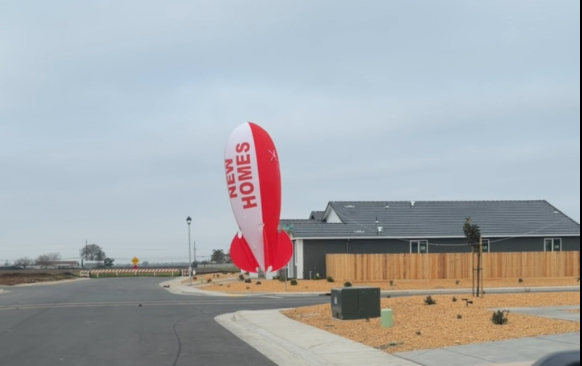
    A large helium blimp or cold-air advertising balloon tethered above a model home entrance can be seen from a mile or more away, functioning as a directional beacon that pulls traffic off main roads and into the sales center. Unlike digital advertising, which reaches buyers who may be hours or days away from a purchase decision, an outdoor aerial display speaks directly to buyers who are already in the car, already in the market, and already in your neighborhood. giant advertising balloons are reusable, require no media buy, and can be deployed on weekends when foot traffic and model home tours are at their peak — precisely the window when the spring housing market is most active.

    For home builders managing multiple communities across a metro area, a fleet of advertising inflatables allows simultaneous branding across several locations without the recurring cost of digital or print campaigns. The visual impact is immediate, and the brand impression — a large, colorful balloon with your community name and a compelling call to action — stays with a buyer long after they have driven past.

    Regional Variations: Where Buyers Have the Most Leverage

    Not all markets are responding to the spring 2026 rebalancing in the same way, and marketing strategies should reflect local conditions. Home prices are falling the most along the West Coast and Sun Belt, where there remains a surplus of new homes following the pandemic-era construction boom . In these markets, builders face the stiffest competition and have the greatest need for differentiated marketing that drives traffic to specific communities rather than relying on broad digital reach.

    By contrast, the Northeast U.S. is projected to be among the hottest housing markets in 2026 , where tighter inventory means sellers and builders have more pricing power but still need to generate urgency among qualified buyers. In both scenarios — oversupplied Sun Belt markets and tight Northeast markets — outdoor visibility marketing plays a role: in soft markets, it draws traffic to communities that need foot traffic; in hot markets, it reinforces brand presence and creates the sense of activity and demand that motivates fence-sitting buyers to act.

    The potential for surging foreclosures tied to the termination of FHA mortgage mitigation programs adds another layer of complexity , which means builders and real estate professionals in affected areas may need to work harder to project stability and confidence to prospective buyers. A visible, well-branded community presence — including outdoor marketing — contributes to that perception.

    What This Means for Your Marketing

    The spring housing market 2026 is a window of genuine opportunity for prepared builders and developers — but that window is short. NAR data confirms that May and June are the fastest-moving months of the year, and buyers making weekend tours are forming impressions quickly. Marketing that operates at the point of physical presence — at the entrance to your model home, at the intersection nearest your community, and along the drive-by corridors where buyers are comparing options — is the highest-leverage investment you can make right now.

    Outdoor location-based marketing is uniquely suited to the real estate sales cycle. Unlike social media campaigns or search ads, which require a buyer to be actively searching online, a well-positioned helium advertising balloon or aerial marketing blimp from Arizona Balloon Company reaches buyers at the exact moment they are physically present in your market. That is the moment of maximum intent — and maximum influence. Pairing digital lead generation with a strong on-site physical presence creates a full-funnel approach that consistently outperforms either channel alone.

    As inventory continues to grow and competition among builders intensifies through the summer, the communities that win will be those that generate the most foot traffic to model homes. Investing in reusable, high-visibility outdoor marketing assets now — before the peak of the spring season passes — is one of the most cost-effective moves a builder or real estate marketer can make in the current environment. Plan your community grand openings, weekend sales events, and model home launches around aerial displays that stop traffic and drive walkthroughs when motivated buyers are actively making decisions.

    Sources


  • 5,500 New Stores in 2026: What Grand Opening Retail Marketing Must Do Now


    5,500 New Stores in 2026: What Grand Opening Retail Marketing Must Do Now


    5,500 New Stores in 2026: What Grand Opening Retail Marketing Must Do Now

    By Arizona Balloon Company | arizonaballoon.com — May 4, 2026

    Grand opening retail marketing event with crowd and balloons outside a new store

    The Brick-and-Mortar Boom Is Real — and Growing

    Despite years of predictions about the death of the physical store, grand opening retail marketing is more relevant in 2026 than it has been in over a decade. According to Coresight Research, more than 5,500 new stores are forecast to open across the United States this year — a 4.4% increase over 2025 — as retailers double down on the in-store experience as a brand-building tool that digital channels simply cannot replicate. Retailers ranging from discount giants to direct-to-consumer brands are racing to plant flags in communities, and every single one of them faces the same first-week challenge: getting people through the door.

    A sweeping report published by Retail Brew in April 2026 found that nearly 78% of retailers are making moderate or significant investments in physical store infrastructure. The report surveyed operators across formats and found that physical stores are increasingly being viewed not as transaction points, but as brand embassies — places where loyalty is earned and community identity is formed. That strategic shift changes what a grand opening needs to accomplish, and it raises the stakes for the marketing that surrounds it.

    Major retailers are putting serious capital behind this conviction. Target’s CFO announced approximately $1 billion in planned 2026 investment in new store openings and remodels. Dollar General outlined more than 4,700 real estate projects for the year. Discount grocer Aldi has committed to opening more than 180 new U.S. stores in 2026 as part of a broader $9 billion expansion strategy. Off-price retailer Ross Stores is targeting 110 new locations. The physical retail buildout is accelerating — and with it, the need for attention-grabbing grand opening marketing at the local level.

    Brand Perception Now Outranks Conversion as a Grand Opening Retail Marketing Goal

    One of the most consequential findings from the Retail Brew “State of Stores” report is the shift in why retailers are opening stores in the first place. When surveyed on their primary motivations, 62% of retail operators said the goal was to improve brand perception, while 60% cited driving foot traffic and 58% pointed to building customer loyalty. Conversion — the act of completing a sale on day one — ranked last at 32%.

    This reordering of priorities has direct implications for how brands plan and execute their grand openings. If the measure of success is perception and loyalty rather than immediate transactions, then the marketing surrounding a grand opening must create a memorable community moment, not just a promotional event. The audience that shows up on day one is not just a customer pool — it is a source of social proof, word-of-mouth, and long-term brand association.

    For business owners and marketing managers planning a new location launch, this data should reframe the entire budget conversation. Investing in high-visibility, high-impact opening-day marketing that creates genuine buzz — the kind that gets people talking and sharing — delivers a return that extends well past grand opening weekend. The opening event sets the store’s community identity for months and, in many cases, years.

    Grand opening retail marketing event with crowd and balloons outside a new store

    Experiential Grand Openings: The New Competitive Standard

    The concept of experiential retail — creating in-store environments that engage multiple senses and invite genuine participation — has moved from a differentiating advantage to a baseline expectation. Research published by the accio.com experiential retail tracker in April 2026 projects that the global experiential retail market will grow from $114.6 billion in 2024 to $543.45 billion by 2035, a compound annual growth rate of 15.2%. That trajectory reflects a fundamental consumer shift: shoppers are increasingly making brick-and-mortar visits intentional choices, not default habits.

    Grand opening events at mall properties have evolved accordingly. Operators are now staging cultural festivals, commissioning live art installations, hosting gaming tournaments, and building out multi-day programming schedules to turn a store launch into a destination event that attracts visitors who might not have been planning to shop at all. V-Count’s 2026 guide to shopping mall grand openings describes the single most important marketing event in a retail destination’s life as one that combines spectacle with structure — giving visitors a compelling reason to show up while giving operators the data to understand who arrived and why.

    Meanwhile, Quad’s 2026 marketing trends report confirms that 76% of Americans report a deeper connection to brands through in-person retail experiences than through digital touchpoints. This is the insight that separates operators who treat a grand opening as a one-day promotion from those who treat it as the opening chapter of a long-term brand relationship. Grand opening retail marketing that creates a genuine event — one that looks, sounds, and feels different from a normal shopping trip — is far more likely to convert first-time visitors into loyal customers.

    Why Outdoor Visibility Is the First Battle in Grand Opening Retail Marketing

    Before a single customer walks through the door, they have to notice the store exists. In a competitive retail environment where 5,500 locations are competing for attention across the country, outdoor visibility at the local level becomes one of the most important weapons in a grand opening marketing plan. The challenge is that most new stores open in environments where they are surrounded by competing signage, established businesses, and high-speed traffic — all of which work against discovery.

    This is precisely where aerial marketing blimps and large-format helium advertising balloons deliver an advantage that ground-level signage cannot match. A tethered blimp or a rooftop balloon display is visible from distances that no banner or A-frame sign can reach. Drivers on nearby arterials, shoppers in adjacent parking lots, and pedestrians a block away are all drawn by the visual signal above the roofline. The message is simple and unmistakable: something is happening here, right now, and you should come see it.

    For retailers launching in high-traffic suburban corridors — the same type of locations where discount grocers, off-price retailers, and specialty stores are concentrating their 2026 openings — aerial visibility is particularly valuable. A new location that might otherwise be lost in a strip center or power center instantly becomes identifiable from a distance. That first impression, made before a customer even parks, begins the brand-building process that retailers have now identified as the primary value of physical store investment.

    Foot Traffic Strategy: What the Data Says for 2026

    Mall foot traffic has been on an upward trend throughout 2025 and into 2026. Data from Capital One Shopping showed indoor mall visits up 1.8% in the first half of 2025 compared to the prior year, with visit durations rising 3.3% — a sign that when shoppers do make the trip, they are staying longer. The NRF has cited a convergence of mixed-use entertainment, dining, and experiential retail as the engine behind this recovery, with properties like Netflix House at King of Prussia mall in Pennsylvania representing a new generation of retail destination design.

    Physical stores still capture approximately 84% of total U.S. retail sales, according to analysis published by Retail Strategies in April 2026. This figure underscores a point that sometimes gets lost in coverage of e-commerce growth: the majority of consumer spending still happens in person. The retailers winning in 2026 are not choosing between digital and physical — they are using physical presence to reinforce digital brand equity, drive loyalty program enrollment, and create the kind of sensory engagement that no website can replicate.

    For business owners preparing a grand opening, the foot traffic data supports a clear strategy: create an opening event compelling enough to pull people out of their daily routines. In 2026, that bar is higher than it was five years ago, because consumers now have more choices about how and where to spend time. The marketing surrounding a grand opening must signal, loudly and visibly, that this opening is an event worth rearranging a schedule for. That signal has to work at the street level, at the parking lot level, and from the highway — which is exactly the problem that outdoor advertising tools like helium balloons and marketing blimps are designed to solve.

    What This Means for Your Marketing

    The 2026 data on brick-and-mortar expansion delivers a clear mandate for any business planning a grand opening or a major retail event: the opening moment is not a one-day sales promotion. It is a community introduction, a brand statement, and a foot traffic generator whose effects compound over weeks and months. Retailers that invest in creating genuinely memorable, high-visibility opening experiences are outperforming those that rely on flyers, social posts, and price discounts alone.

    Outdoor and location-based marketing plays a foundational role in that strategy — and it starts before a single digital ad is served. When a new store opens in a suburban corridor, shopping center, or standalone pad site, the competition for attention is intense. Helium advertising balloons and aerial marketing blimps create a visible, above-the-roofline presence that drives spontaneous foot traffic from passersby who had no prior awareness of the new location. That first wave of walk-in traffic — people who saw something interesting from the road and decided to check it out — is often the most valuable: they arrive with curiosity rather than a specific purchase list, making them highly susceptible to brand impression and loyalty conversion.

    For retailers, home builders hosting model home grand openings, auto dealers launching new inventory events, or any business marking a significant opening milestone, the lesson from 2026 retail research is consistent: spectacle matters, visibility matters, and first impressions compound. The marketing budget allocated to grand opening day should be treated as a long-term brand investment, not a short-term promotional line item. Combining digital awareness campaigns with high-impact outdoor tools — including aerial inflatables visible from a quarter mile or more — gives opening-day events the reach and memorability that the current retail environment demands.

    Sources


  • Trade Show Booth Visibility in 2026: What Exhibitors Need to Know Now


    Trade Show Booth Visibility in 2026: What Exhibitors Need to Know Now

    Trade Show Booth Visibility in 2026: What Exhibitors Need to Know Now

    By Arizona Balloon Company — May 2, 2026

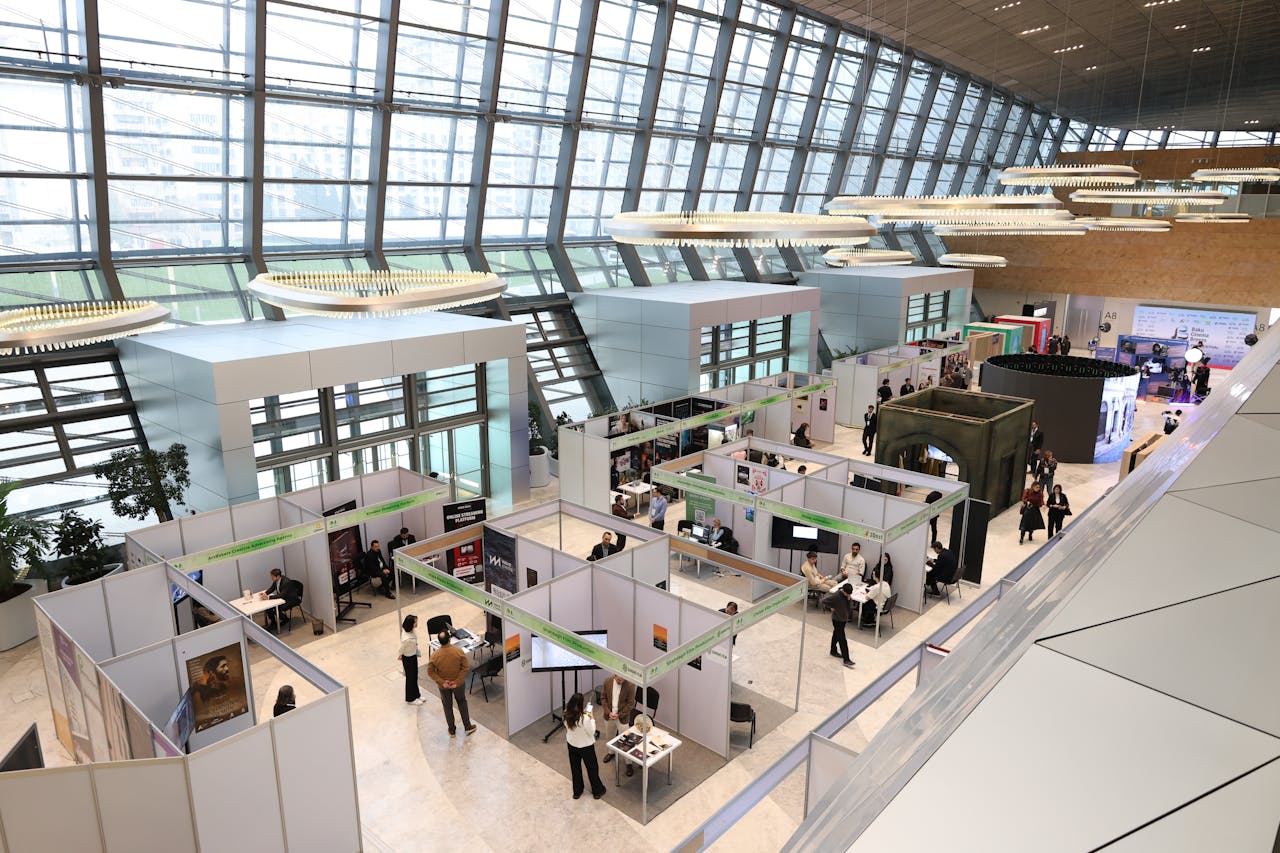
    trade show booth visibility at a large U.S. convention floor in 2026

    Trade Show Attendance Is Back—and Competition Is Fierce

    Trade show booth visibility has never been more difficult to earn—or more valuable. As 2026 unfolds, the U.S. trade show industry has staged a remarkable recovery. Attendance at major events is running only about 3.7 percent below 2019 pre-pandemic levels, according to the CEIR Index, and event planners are reporting higher budgets for in-person experiences. Nearly 60 percent of marketing decision-makers now say they prefer in-person-only events over virtual or hybrid formats, a clear signal that the show floor is once again the premier arena for B2B brand building.

    But recovery has brought a new problem: the floor is crowded again. Whether your company exhibits at a regional packaging show, a healthcare technology summit, or a retail innovation conference like Shoptalk 2026, standing out among hundreds of competing booths is an urgent operational challenge, not just a design preference. Exhibitors who treat booth presence as a last-minute logistics task rather than a strategic marketing investment are already falling behind.

    Events such as CES, HIMSS, and PACK EXPO East—which drew thousands of professionals to Philadelphia in March 2026—illustrate the stakes. At shows of that scale, a brand that fails to command attention from across the convention floor risks spending a significant budget to generate very little pipeline. Forward-thinking exhibitors are responding by rethinking every element of their presence, from booth design and technology to pre-show outdoor signage. Learn how Arizona Balloon Company helps brands maximize their event footprint with high-visibility aerial marketing tools.

    The Static Booth Is Dead: Immersive Experiences Win the Floor

    Industry analysts and event marketing professionals have reached a clear consensus heading into 2026: the static, display-only booth no longer moves the needle. Research compiled by EMC Outdoor finds that attendees who have a booth experience aligned with their professional goals are about 85 percent more likely to return to an exhibitor's presence—yet only 40 percent of attendees say they have ever had such an experience. That gap is the opportunity every smart exhibitor should be chasing.

    What is working on today's show floors? Kinetic LED architecture, hospitality-style lounge areas, hands-on product interaction zones, and narrative-driven booth journeys that guide a visitor from pain point to solution. At Shoptalk 2026, brands like Whatnot streamed live e-commerce selling directly from the booth, inviting attendees to participate in real time on their phones. Optimizely partnered with an algorithmic perfumery to create personalized scents on demand, tying the activation directly to its software's core value proposition of personalization. These are not gimmicks; they are strategic experiences designed to create memorable, shareable brand moments.

    The broader trade show trends report from Event Marketer confirms that themed entrances, immersive storytelling, and sponsor-powered architectural moments are becoming baseline expectations at the most competitive shows. Brands that still rely on a banner stand and a bowl of candy are functionally invisible to the new generation of B2B buyer.

    trade show booth visibility at a large U.S. convention floor in 2026

    How Aerial Signage Solves the Trade Show Booth Visibility Problem

    Inside the convention hall, the competition for eyeballs is intense. Outside—in the parking areas, entrance corridors, and surrounding streets—that competition largely disappears. This is where helium advertising balloons and marketing blimps deliver a return that few other exhibit investments can match.

    A giant custom-shaped advertising balloon or a tethered promotional blimp positioned at the entrance of a convention center or outdoor event venue does something no booth display can: it creates a landmark. Attendees navigating a sprawling event campus notice aerial signage from hundreds of feet away. The brand name is visible before a potential customer even enters the building. For exhibitors at outdoor trade shows, RV expos, agricultural fairs, home builder showcases, and auto industry events, this pre-arrival visibility is among the most cost-effective brand impressions available.

    Advertising blimps are particularly effective at creating what event marketers call a “peak moment”—a high-impact sensory experience that attendees remember and associate with a specific brand. Unlike a floor graphic or a hanging banner inside a crowded hall, a blimp floating 30 to 50 feet in the air encounters no visual competition. It owns the sky above the event. For exhibitors investing tens of thousands of dollars in booth design and staffing, adding aerial signage outside the venue is a logical multiplier of that investment.

    AI and Personalization Are Raising the Bar for Exhibitors

    One of the most significant shifts in 2026 trade show marketing is the mainstreaming of artificial intelligence across the event lifecycle. AI adoption among professional event planners reached approximately 50 percent in 2025, according to a PCMA trends report cited by EMC Outdoor, and 2026 is the year those tools are moving from pilot programs to standard practice.

    AI-powered attendee matching, predictive lead scoring, real-time personalization engines, and post-event CRM nurture streams tied directly to booth interaction data are no longer the exclusive province of Fortune 500 brands. Platforms like Cvent are embedding these capabilities into standard packages, meaning that even mid-market exhibitors are expected to deploy technology that demonstrates clear return on investment in pipeline terms.

    The practical implication for marketing managers is that the bar for booth engagement has been raised from “did we get badge scans?” to “did we generate measurable pipeline?” Executives are demanding business cases backed by engagement data before approving event budgets. Exhibitors who can combine high-tech data collection inside the booth with high-visibility brand signage outside the venue will be positioned to make the strongest case for continued investment.

    Don't Forget the Perimeter: Outdoor Event Marketing Matters

    The conversation about 2026 trade show trends has focused heavily on the show floor itself—booth design, technology, sustainability, and data. Less discussed, but increasingly important, is the outdoor perimeter of the event. Convention centers, fairgrounds, and exposition parks attract thousands of visitors who arrive by car, rideshare, and public transit. That arrival journey is prime real estate for brand impressions that most exhibitors completely ignore.

    Outdoor advertising options at or near event venues include banners, vehicle wraps, and temporary signage—but none commands attention the way aerial signage does. A custom-shaped advertising balloon designed to match a company's brand colors and logo can be seen from major roads approaching the venue, from overflow parking areas, and from adjacent hotels where out-of-town attendees are staying. This means brand exposure begins hours before a competitor's booth graphics are ever seen.

    Sustainability trends noted by industry publications also favor reusable, durable outdoor marketing assets. Unlike single-use printed banners that end up in landfills after one show, quality helium balloons and inflatable advertising blimps are designed for repeated use across multiple events and seasons, making them an environmentally responsible choice that also offers strong cost-per-impression economics.

    What This Means for Your Marketing

    The 2026 trade show season is delivering a clear message for exhibitors and event marketing managers: differentiation requires a multi-layered strategy. Inside the hall, brands must create immersive, personalized, data-driven experiences. Outside the venue, they need to establish a visible presence before the first attendee walks through the doors. Relying on a booth alone—however well-designed—leaves a significant share of the potential audience untouched.

    Location-based and outdoor marketing tools are experiencing a resurgence precisely because they cut through the digital noise that saturates every other marketing channel. When thousands of industry professionals are converging on a single physical location, placing a landmark brand signal at that location is one of the highest-ROI moves available to any marketing budget. Helium advertising balloons and aerial marketing blimps accomplish this with a combination of scale, visibility, and brand customization that no ground-level signage can replicate.

    For trade show exhibitors planning their 2026 event calendar, the recommendation is straightforward: audit your current event presence for both inside and outside the venue. If your outdoor presence is nonexistent—as it is for the vast majority of exhibitors—you are leaving brand impressions on the table at every show you attend. Adding a tethered advertising blimp or a custom-shaped balloon to your event toolkit is one of the most immediate, visible, and cost-effective ways to fix that gap and ensure your brand is the one attendees remember when they walk in the door.

    Sources


  • Outdoor Advertising’s Human Medium Moment: What the $4B OOH Surge Means for Your Business

    <mark class=”rank-math-highlight” style=”background-color: #fee894″><mark class=”rank-math-highlight” style=”background-color: #fee894″>Outdoor Advertising’s “Human Medium” Moment:</mark></mark> What the $4B OOH Surge Means for Your Business

    Outdoor Advertising’s “Human Medium” Moment: What the $4B OOH Surge Means for Your Business

    By Arizona Balloon Company | May 1, 2026

    outdoor advertising human medium OOH marketing display at street level

    OAAA Declares OOH the “Human Medium” Ahead of Dallas Conference

    The outdoor advertising human medium industry is rallying around a powerful new identity just as US out-of-home spend crosses a major milestone. The Out of Home Advertising Association of America (OAAA) has unveiled the full agenda for its 2026 OOH Media Conference — taking place May 11 through 13 in Dallas — and with it, a refreshed industry positioning that brands out-of-home as the “human medium,” the one advertising channel that is shared, physical, unskippable, and woven into everyday life. For marketing managers and business owners investing in outdoor advertising human medium strategies, the timing of this declaration could not be more relevant.

    The OAAA’s April 24, 2026 announcement brought together a marquee lineup of speakers, including serial entrepreneur Emma Grede, co-founder of SKIMS and Good American; John Morgan, founder of Morgan & Morgan and a prominent investor in OOH; Rishad Tobaccowala, Senior Advisor at Publicis Groupe; and leaders from Google, Zillow, National Geographic, and UTA. The Dallas Cowboys Cheerleaders are set to close out the first night of programming — a fitting symbol of the live spectacle that defines out-of-home at its best.

    OAAA President and CEO Anna Bager framed the conference’s purpose plainly: brand marketers, agency executives, media decision-makers, and technology leaders are converging in Dallas to align on what comes next for a medium that is growing in both scale and strategic importance. The conference also introduces an inaugural OAAA Honors Circle to recognize exceptional achievement across the disciplines that shape out-of-home advertising.

    US Out-of-Home Ad Spend Reaches $4 Billion in 2026

    The conference backdrop is a market in genuine expansion. US out-of-home advertising spend is projected to reach $4 billion in 2026, a 4.1% year-over-year increase, according to new data released by Guideline, the media intelligence platform that captures more than $110 billion in annual ad spend directly from holding companies and independent agencies. This figure continues a steady climb from $3.4 billion in 2022, through $3.7 billion in 2024, and $3.9 billion in 2025.

    What makes this moment particularly meaningful is the context. According to Guideline’s analysis, OOH is now the only non-pure-digital advertising format forecast to grow at all in 2026. Traditional media categories — radio, print, and linear television — are collectively projected to contract by 3.5%. Performance digital formats such as search, social, connected TV, and retail media are forecast to grow 6.7%. OOH sits between them, growing steadily and holding a distinct position: it is the only mass-reach, real-world medium that is expanding its total revenue base year over year.

    For businesses evaluating where to place their advertising dollars, this trajectory carries a clear signal. Outdoor media is not retreating. It is consolidating its role as a core, measurable part of the modern media mix — and the industry is investing heavily in the measurement infrastructure and creative frameworks to prove it.

    outdoor advertising human medium OOH marketing display at street level

    Traditional Formats Versus Digital OOH: A Widening Split

    Within the overall OOH growth story, a significant divergence is underway. Guideline’s data shows traditional out-of-home formats — static billboards, printed displays, physical signage — are forecast to grow just 1.5% in 2026. Digital out-of-home, meanwhile, is projected to expand by 14.5%. That nearly ten-to-one differential reflects a structural shift that has been reshaping outdoor media for nearly a decade.

    In 2017, traditional OOH held a 93% share of total US outdoor advertising expenditure. By 2025, that figure had fallen to 80%, with digital formats climbing from 7% to 20% over the same period. According to Guideline, 55% of all US OOH revenue growth between 2024 and 2025 came directly from digital out-of-home formats. The programmatic infrastructure supporting this growth has expanded rapidly, with major platform acquisitions and partnerships announced throughout late 2025 and early 2026 extending programmatic access to millions of screens globally.

    However, Guideline’s data also reveals a structural tension that marketing planners should not overlook. Despite consistent absolute growth, OOH’s share of total US media spend has slipped from 3.1% in 2022 to 2.7% in 2025. The category is growing in dollars but losing share in a market growing faster around it. This makes format selection, creative impact, and location strategy more important than ever for OOH advertisers — not less.

    Why Helium Advertising Balloons Thrive in the Human Medium Era

    The OAAA’s “human medium” positioning centers on a straightforward principle: out-of-home advertising is inherently shared. Unlike digital media consumed privately on screens, outdoor advertising human medium is experienced simultaneously by large groups of people in the physical spaces where they live, work, commute, and make purchasing decisions. This is precisely the environment where helium advertising balloons and cold-air inflatables generate outsized results for local and regional businesses.

    Consider the primary clients served by outdoor and experiential advertising: home builders opening new communities, auto dealers running weekend sales events, trade show exhibitors competing for floor traffic, and general businesses launching new locations or seasonal promotions. In every one of these scenarios, the advertiser needs to capture attention in a shared physical space where the audience is already present and already moving. A giant helium blimp or a towering cold-air advertising balloon does not ask a consumer to stop scrolling. It simply exists in the sky or above a roofline, visible for a half-mile radius, unskippable in exactly the way the OAAA describes the best OOH formats.

    Research from Keen Decision Systems, released in late 2025, found that out-of-home advertising achieves a marginal return on investment of $7.58 per incremental dollar invested — well above the cross-media average of $5.52. While that figure reflects the OOH category broadly, the dynamics apply with particular force to location-specific, high-visibility formats like advertising blimps and inflatables, which concentrate their impression delivery in a defined geographic area where purchase intent already exists.

    The advertising blimps and marketing inflatables offered by Arizona Balloon Company operate squarely within the spirit of the human medium framework. They are bold, unmissable, and community-scale — exactly the qualities that OOH industry leaders are citing as differentiators in an increasingly automated, algorithm-driven media landscape.

    ROI Data and Budget Flows Reshaping Outdoor Media Planning

    Guideline’s source-of-volume analysis identifies which advertising budgets are flowing into OOH. Between 2024 and 2025, television contributed the largest net increase to OOH’s budget pool — $248 million — as brands reallocated from linear TV toward media with stronger measurable reach. Industry verticals including banking, airlines, and software were among the specific sectors shifting budgets into outdoor formats during this period.

    Separate research published by OAAA and Winterberry Group adds a compelling data point for any business owner evaluating outdoor media. The study found that 98% of marketers now incorporate out-of-home into purchase-driven initiatives, with investment in the channel expected to rise further over the next two years. The study frames OOH as a driver of discovery, engagement, and conversion across the full customer journey — not simply a brand-awareness vehicle.

    For small and mid-sized businesses that cannot compete with national brands on programmatic digital spend, this is meaningful news. The human medium frame is not just a positioning exercise for large media owners. It is a reminder that showing up physically, visibly, and boldly at the point where a consumer is making a decision — driving past a new subdivision, pulling into an auto mall, walking a trade show floor — is one of the highest-leverage advertising actions a local business can take. Budget flows at the national level are validating what experienced local advertisers have always known.

    What This Means for Your Marketing

    The OAAA’s “human medium” positioning and the $4 billion OOH spend milestone are not abstract industry statistics. They reflect a measurable shift in how marketing decision-makers are thinking about reach, attention, and human connection in a media landscape saturated by digital automation. For home builders, auto dealers, trade show exhibitors, and local businesses competing for customers in physical spaces, the core lesson is straightforward: presence in the real world is becoming more valuable, not less, as digital channels become noisier and harder to cut through.

    Outdoor and experiential advertising works because it is woven into the environments where people make decisions. A potential homebuyer driving a new community on a Saturday morning, a car shopper walking a dealer lot, a trade show attendee navigating a busy exhibition hall — these are consumers with high purchase intent in a defined location. Reaching them requires physical visibility, not another screen. That is exactly the strategic gap that helium advertising balloons and aerial marketing blimps are built to fill: they create unmissable, location-specific impressions that stop people, generate conversations, and drive traffic at the moment and place it matters most.

    As you plan your outdoor advertising strategy for the remainder of 2026, consider how the “human medium” framework applies to your specific business context. What shared physical spaces do your best customers pass through? Where are the decision-making moments that happen in the real world rather than on a screen? Outdoor and experiential formats — from towering cold-air inflatables to tethered helium blimps — are purpose-built for those moments. The national OOH industry is investing billions to prove their value. The insight for local advertisers is that the case was already made every time a giant balloon above a grand opening turned heads and drove foot traffic that no digital ad could replicate.

    Sources

  • Helium Supply Shortage 2026: What It Means for Businesses Using Advertising Balloons


    Helium Supply Shortage 2026: What It Means for Businesses Using Advertising Balloons


    Helium Supply Shortage 2026: What It Means for U.S. Businesses Using Advertising Balloons

    By Arizona Balloon Company — arizonaballoon.com — April 30, 2026

    Helium supply shortage impact on advertising balloons and marketing blimps

    What Triggered the 2026 Helium Supply Shortage

    A worsening helium supply shortage is sending shockwaves through industrial gas markets across the United States, and the disruption is now broad enough to affect businesses of every size — including those that rely on helium advertising balloons and aerial marketing tools for outdoor promotion. The immediate cause traces back to the Middle East: Iran’s drone strikes on Qatar’s Ras Laffan industrial port in early March 2026 forced QatarEnergy to declare force majeure and halt liquefied natural gas output, automatically cutting helium production along with it. Because helium is extracted as a byproduct of natural gas processing, when the primary facility goes offline, so does the helium stream.

    Qatar produced roughly 63 million cubic meters of helium in 2025 — close to one-third of the global supply of approximately 190 million cubic meters. The Ras Laffan facility is the world’s largest single LNG liquefaction complex, and its disruption eliminated a critical node in a supply chain that was already operating under strain. According to research from The Oregon Group published in April 2026, this marks what analysts believe could be the fifth major global helium supply disruption since 2006, this time driven by military conflict rather than equipment failure.

    The cascading effect was rapid. With no secondary logistics routes for helium from Qatar through the Persian Gulf — and the Strait of Hormuz facing potential restriction — global spot prices surged. Fitch Ratings issued warnings that spot helium prices could spike between 50% and 200% in severe shortage scenarios, while longer-term contract prices could rise 20% to 40% upon renegotiation.

    U.S. Helium Prices Are on the Rise

    North American helium prices were already trending upward before the Qatar disruption. According to IMARC Group data, prices in North America reached $68.99 per thousand cubic meters in March 2026 — an 8.7% increase from December 2025 levels. The U.S. Geological Survey’s Mineral Commodity Summaries 2026 places the base price for Grade-A helium at approximately $12 per cubic meter (or $330 per thousand cubic feet) in 2025, with suppliers posting additional surcharges on top of that base figure.

    The ongoing closure of the Federal Helium Reserve in Amarillo, Texas — a strategic stockpile that for decades helped buffer U.S. markets against supply swings — has left the domestic market more exposed to global volatility. New domestic projects from companies such as Pulsar Helium (Minnesota), Helix Exploration (Montana), Blue Star Helium (Colorado), and New Era Helium (New Mexico) are gradually adding supply, but analysts note that meaningful volume relief from these new sources is still 12 to 24 months away.

    Airgas, one of the largest U.S. industrial gas distributors, had already restricted deliveries to multiple hospital systems by up to 50% by late March 2026, according to reporting cited by management consulting firm Santiago & Company. This rationing behavior signals that even domestic buyers are beginning to feel the squeeze.

    Helium supply shortage impact on advertising balloons and marketing blimps

    Allocation Hierarchy: Who Gets Helium First in a Shortage

    Understanding how helium is allocated during a shortage matters for any business that depends on it. When supply tightens severely, distributors follow a predictable priority order. Medical applications — particularly MRI machines, which consume the largest single share of global helium — receive the highest protection. Defense and aerospace come next. Semiconductor fabrication follows, though chipmakers account for 20 to 25% of global annual helium consumption and are growing rapidly due to AI infrastructure buildout.

    At the lower end of the priority ladder sit uses that are considered more discretionary or where substitutes exist. Welding, leak detection in non-critical applications, and party balloons typically face the sharpest cuts first during a severe shortage. Marketing-grade balloon helium falls into a similar tier. This does not mean commercial-grade helium for large inflatable advertising products disappears overnight — industrial balloon helium and party-grade helium occupy somewhat different supply streams — but it does mean that prices for all grades are pulled upward when overall supply contracts.

    Businesses and marketing managers planning campaigns that rely on helium-filled inflatables should factor current market conditions into their timelines and budgets, and work with experienced vendors who have established supplier relationships and can navigate allocation challenges on their behalf.

    The U.S. as a Strategic Helium Supplier

    The crisis carries a silver lining for the United States. The country remains the world’s largest helium producer, with ExxonMobil’s LaBarge/Shute Creek facility in Wyoming alone accounting for roughly 20% of global supply. As Qatar’s share of the global market shrinks due to conflict-related disruptions, and as Russia continues to face sanctions that restrict its helium exports, U.S. producers are emerging as the preferred alternative for buyers across Asia and Europe.

    South Korea, which sourced nearly 65% of its helium from Qatar in 2025, is now reportedly paying spot premiums to access U.S.-origin supply. Northeast Asia spot prices reached $152.70 per thousand cubic feet in March 2026, a 21.5% premium over December levels and the steepest regional price increase globally. This demand surge toward U.S. helium could paradoxically tighten domestic availability further as more American-origin gas gets redirected to export contracts.

    The U.S. Department of Defense has set a target of maintaining a six-month strategic helium reserve in response to the crisis. Meanwhile, 22 countries now require special export licenses for helium, citing national security concerns. These policy shifts reflect just how critical helium has become as a geopolitical commodity, well beyond its reputation as a gas for party balloons and parade floats.

    How the Helium Supply Shortage Affects Advertising Balloons and Marketing Blimps

    For marketing managers and business owners, the practical question is straightforward: will the helium supply shortage affect the cost or availability of helium advertising balloons and marketing blimps? The answer is yes — but the impact is manageable with the right partner and the right approach.

    Large-format helium advertising balloons used in commercial and real estate marketing — such as the cold-air and helium blimps deployed above new home communities, car dealerships, and retail grand openings — require industrial-grade helium. While industrial helium commands a lower purity specification than the ultra-high-purity grades used in semiconductor manufacturing, all helium grades share the same upstream supply chain. When that chain constricts, every grade is affected to some degree.

    The most direct effect on marketing campaigns is cost escalation. As helium prices rise in North American spot markets, vendors who do not have long-term supply agreements may pass those costs on to customers. This makes it more important than ever to work with an established aerial marketing vendor that has contracted supply relationships in place rather than purchasing helium on an ad hoc basis. For businesses that own their own blimps or large inflatables, now may be a good time to assess your current helium inventory, check your vendor’s supply situation, and consider locking in pricing where possible.

    It is also worth noting that cold-air inflatables — large tethered balloons filled with ambient air rather than helium — are entirely unaffected by helium pricing and availability. For many ground-level and rooftop marketing applications, advertising blimps and cold-air inflatables provide the same visual impact and brand visibility as helium-filled units, without any dependency on the helium supply chain. Experienced balloon marketing companies typically offer both options, allowing clients to choose the right tool for each campaign based on site conditions, height requirements, and budget.

    What This Means for Your Marketing

    Supply disruptions in commodity markets rarely stay contained to the industries directly affected. When helium prices climb and availability tightens, the natural response for some businesses is to scale back outdoor and aerial marketing. That instinct can actually create a competitive opportunity for businesses that stay the course. If your competitors pull back on high-visibility marketing tools like giant inflatables, rooftop blimps, and aerial signage during a supply crunch, your continued presence becomes more noticeable by comparison. Outdoor, location-based marketing works on the principle of standing out — and a moment when others retreat is a moment to be seen.

    For home builders, auto dealers, trade show exhibitors, and retail businesses, the visual power of helium advertising balloons and aerial marketing blimps remains one of the most cost-effective ways to generate drive-by traffic and foot traffic. Even in a higher-cost helium environment, the return on investment from a well-deployed inflatable over a new subdivision, a dealership grand opening, or a trade show floor is substantial compared with digital or print alternatives that compete for attention in increasingly saturated channels.

    The most practical step for marketing decision-makers right now is to plan campaigns in advance, communicate early with your aerial marketing vendor about timelines, and ask specifically about helium supply commitments. Companies with established distributor relationships and flexible product offerings — including cold-air alternatives — will be best positioned to keep your campaigns on schedule regardless of how the global helium market evolves over the coming months.

    Sources


  • Auto Dealer Lot Traffic Surges 45% With AI Video Ads — What Every Dealer Needs to Know


    Auto Dealer Lot Traffic Surges 45% With AI Video Ads — What Every Dealer Needs to Know


    Auto Dealer Lot Traffic Jumps 45% as AI Video Ads Reshape Car Dealership Marketing in 2026

    By Arizona Balloon Company — arizonaballoon.com | April 29, 2026

    Auto dealer lot traffic with advertising balloons and flags at a car dealership

    Cars.com AI Campaign Drives 45% Lift in Auto Dealer Lot Traffic

    Auto dealer lot traffic received a measurable boost from an unexpected source this spring: artificial intelligence-generated video advertising. On April 27, 2026, Cars.com Inc. (NYSE: CARS) published fresh performance data from its new AI-powered video ad solution, revealing that a 30-day live campaign run between March and April 2026 produced a 45% increase in influenced dealership foot traffic, a 35% rise in website visitors, and a 47% lift in influenced vehicle sales compared to the prior period. The campaign generated nearly 10,000 unique video assets — each built automatically from individual VIN-level inventory data — and served those ads to buyers already actively searching for vehicles on the platform.

    The technology works by ingesting dealer inventory feeds and auto-generating short-form video ads rendered in OEM-compliant templates, then distributing them across social platforms including TikTok, Instagram, and Facebook. Sold vehicles are automatically removed from rotation, keeping creative current without manual intervention. Cars.com describes its approach as combining real-time shopper demand signals with closed-loop attribution, allowing dealers to trace media spend directly to physical lot visits and units sold — a measurement challenge that has frustrated automotive marketers for years.

    For dealership principals and marketing managers, the headline number — 45% more people walking onto the lot — is significant. However, understanding the full picture of what drove those visits, and how physical location marketing amplifies digital efforts, is critical before reallocating budgets. Learn how advertising blimps and aerial marketing tools from Arizona Balloon Company work alongside digital strategies to convert curious shoppers into lot visitors.

    The 2026 Auto Sales Market: Competitive and Cost-Conscious

    The Cars.com data lands at a moment when the U.S. auto market is navigating real headwinds. Cox Automotive projects total new-vehicle sales of 15.8 million units in 2026, a decline of roughly 2.4% from 2025 levels, with fleet sales expected to drop even more sharply. S&P Global Mobility pegged the March 2026 seasonally adjusted annual rate at approximately 16.0 million units — well below the 17.9 million pace recorded in March 2025, when consumers rushed to purchase vehicles ahead of anticipated tariff impacts.

    Affordability is a central pressure. The average monthly cost of private car ownership climbed from roughly $750 to over $1,000 by the end of 2025, according to Cox Automotive’s chief economist. Front-end per-vehicle retail margins hit a multi-year low in December 2025. Meanwhile, the top 150 dealership groups collectively grew their share of the U.S. new-vehicle market — meaning smaller independent dealers face intensifying competition from larger, better-resourced groups that can invest heavily in emerging ad technologies. In this environment, every tool that demonstrably moves shoppers from online research to the physical lot carries outsized strategic value.

    Why Digital Alone Is Not Enough for Dealerships in 2026

    The automotive marketing landscape has shifted firmly toward omnichannel execution. According to a 2026 guide published by ACV Auctions, buyers now move fluidly between search engines, social platforms, dealership websites, email, and SMS before ever visiting a showroom. Dealerships that unify messaging and promotions across those touchpoints are seeing stronger appointment show rates and better retention. AI tools are accelerating this integration: predictive lead scoring, automated communications, and inventory-based creative now allow smaller teams to operate with the reach and personalization previously available only to enterprise groups.

    Yet industry analysts and marketing practitioners consistently flag a gap between digital engagement and physical conversion. A 2026 dealership marketing guide from Vertical Impression notes that a reactive, digital-only strategy is no longer sufficient, and that the dealers winning in 2026 are investing across paid, owned, and physical channels simultaneously. Out-of-home (OOH) advertising — including programmatic digital billboards, signage on the lot, and aerial displays — remains a foundational layer for top-of-mind awareness and directional guidance when buyers are in proximity to the dealership. Outdoor advertising captures attention from a wide audience and can direct foot traffic to the lot in ways digital advertising cannot replicate once a buyer is already in the car and driving.

    Auto dealer lot traffic with advertising balloons and flags at a car dealership

    How Aerial Advertising Drives Auto Dealer Lot Traffic at the Point of Decision

    Digital ads create awareness and intent — but the moment a potential buyer is driving past a dealership strip, physical visibility determines whether they pull in. This is where helium advertising balloons and tethered marketing blimps deliver a return that no digital channel can replicate: instant, high-altitude visibility at the precise location where the purchase decision happens.

    For auto dealers, aerial advertising tools solve a specific problem. Dealer rows — commonly found on commercial corridors with multiple competing franchises — create visual noise at ground level. Flags and banners compete for attention. A helium blimp floating 50 to 150 feet above the lot rises above that clutter and signals activity, energy, and a sales event to drivers approaching from blocks away. The visual cue works like a landmark, making the lot easier to find and creating the impression of an active, high-traffic environment — which itself draws more traffic through social proof.

    Timed to complement digital campaigns, aerial advertising can dramatically amplify their conversion rate. When a shopper sees a VIN-specific video ad on Instagram for a truck in their price range, then drives by the dealership and spots a blimp or balloon cluster above the lot, the two-touch sequence reinforces both brand recall and urgency. This coordinated approach — digital reach plus physical presence — mirrors the omnichannel playbook that is now standard among the top-performing dealer groups. Arizona Balloon Company has supplied helium advertising balloons and aerial marketing blimps to auto dealers across the United States, helping dealerships stand out during weekend sales events, new model launches, and inventory clearance periods.

    Practically, helium advertising balloons and blimps are among the lowest cost-per-impression outdoor advertising tools available to a dealership. A single large blimp or balloon cluster, visible from a major road, generates repeated impressions from the same commuters and local residents every day it is deployed — with no recurring media cost beyond the rental or purchase. For dealers working with compressed front-end margins in 2026, that efficiency matters.

    What This Means for Your Marketing

    The Cars.com AI video campaign results confirm what multi-channel marketing research has suggested for years: combining high-reach digital media with strong physical location presence produces compounding returns. A 45% increase in influenced lot visits from a 30-day campaign is a result that no dealership marketing manager should ignore. The underlying mechanism — serving inventory-specific video to active in-market shoppers — eliminates much of the waste in traditional broadcast advertising. But the data also implies that digital reach alone is not closing the loop; influenced foot traffic still requires the physical dealership experience to convert.

    For auto dealers building their 2026 marketing mix, the strategic implication is straightforward: invest in digital tools that build intent, and invest equally in physical lot presence that converts intent into visits. Out-of-home advertising, dealership events, and aerial visibility tools — including helium advertising balloons and aerial marketing blimps from Arizona Balloon Company — fill the gap between a buyer who has decided to visit your lot and one who actually pulls in. During high-stakes selling windows such as spring inventory pushes, tax-refund season, and year-end clearance events, that final conversion layer can be the difference between a record month and a missed opportunity.

    Marketing decision-makers should also consider the timing dimension. Cars.com’s campaign ran March through April — precisely when seasonal demand typically rises, inventory turns begin to accelerate, and foot traffic data shows dealerships can capture the highest volume of uncommitted walk-in shoppers. Deploying a helium blimp or balloon cluster during those same windows, coordinated with a digital push, positions the dealership to capture both online intent and drive-by curiosity simultaneously. Contact Arizona Balloon Company to discuss rental and purchase options sized to your dealership’s lot and visibility needs.

    Sources


  • Builder Confidence Falls to 34: What It Means for Your Homebuilder Marketing Strategy in 2026


    Builder Confidence Falls to 34: What It Means for Your Homebuilder Marketing Strategy in 2026


    Builder Confidence Falls to 34: What the April 2026 NAHB Data Means for Your Homebuilder Marketing Strategy

    By Arizona Balloon Company — April 28, 2026

    homebuilder marketing strategy aerial signage new home community

    NAHB Builder Confidence Drops to 34 in April 2026

    The latest NAHB/Wells Fargo Housing Market Index makes clear that sharpening your homebuilder marketing strategy is not optional in the current environment — it is urgent. Builder confidence fell four points in April 2026 to a reading of 34, a level that signals a majority of builders view current market conditions as unfavorable. The three component readings paint a consistent picture: current sales conditions dropped four points to 37, sales expectations for the next six months fell seven points to 42, and traffic of prospective buyers declined three points to 22.

    The buyer traffic sub-index is especially telling for marketing and sales professionals. A reading of 22 means that the flow of prospective shoppers walking into model homes and sales centers is deeply suppressed. Foot traffic is the first step in the conversion funnel for new home communities, and when it dries up, pipeline pressure ripples through every downstream metric — appointments, deposits, and closings.

    The April HMI was released against a backdrop of persistent affordability headwinds, lingering tariff-related cost uncertainty, and cautious consumer sentiment. For marketing decision-makers at homebuilding companies, the data is a clear signal: you cannot rely on organic demand to fill your sales office. Communities that invest in active, visible outreach will have a measurable advantage over those that do not. Learn more about outdoor and aerial marketing solutions at arizonaballoon.com.

    Zonda Data: New Home Sales Down 7% in March

    The NAHB sentiment data is reinforced by Zonda’s March 2026 New Home Market Update, published April 22. Zonda, which tracks approximately 85% of the production new home market across the United States, reported that new home contract sales came in at a seasonally adjusted annualized rate of 656,588 in March — a decline of 7.2% both month-over-month and year-over-year. On a non-seasonally adjusted basis, 61,744 homes sold in March, down 7.4% from a year ago.

    Zonda’s chief economist Ali Wolf attributed the decline to three compounding forces that struck simultaneously in March: an erosion of consumer confidence tied to geopolitical instability, upward pressure on mortgage interest rates driven by inflation expectations, and rising energy costs that squeezed household budgets. The result was that foot traffic and sales volume came in below expectations for roughly half of the builders surveyed by Zonda, even as the traditional spring selling season was expected to provide a tailwind.

    There are 17,477 actively selling communities tracked by Zonda nationally, up 2.3% from a year ago. More communities competing for a shrinking pool of active buyers means that the quality and visibility of each community’s marketing footprint matters more than ever.

    homebuilder marketing strategy aerial signage new home community

    Incentives and Competition Intensify Across the Market

    One of the most significant competitive dynamics playing out in April 2026 is the widespread use of builder incentives. The April NAHB HMI survey found that 36% of builders cut prices during the month, with an average reduction of 5%. That figure is actually down slightly from 37% in March, suggesting the rate of price cutting may be stabilizing, but the level remains historically elevated.

    Beyond price reductions, builders are offering mortgage rate buydowns, closing cost assistance, and design upgrade packages to convert hesitant shoppers into committed buyers. Zonda’s data also shows that national quick move-in (QMI) inventory — homes that can be occupied within roughly 90 days — totaled 32,332 units in March, down 4.3% year-over-year but still 71.3% above 2019 levels. Builders are carrying significant move-in-ready inventory that needs to be absorbed.

    In this environment, the communities that win will be those that combine compelling financial incentives with strong on-the-ground visibility. A buyer who never discovers a community cannot be converted by even the most generous rate buydown.

    Why Standing Out On-Site Has Never Been More Critical

    National homebuilder marketing budgets increasingly skew toward digital — search advertising, social media, email automation, and AI-optimized content. These channels are valuable, but they compete for attention in an environment where consumers are exposed to thousands of digital messages per day. Industry experts have noted that buyers today encounter somewhere between 4,000 and 10,000 advertising impressions daily, making it exceptionally difficult for any single online message to break through.

    Driving physical visits to a community requires both digital discovery and location-based awareness. A prospective buyer may see a digital ad on their phone, but it is often a visible, compelling physical presence at the community entrance or along a high-traffic corridor that triggers the impulse to pull in and explore. This is where out-of-home and aerial marketing tools create value that digital channels cannot replicate.

    Midwestern markets such as Columbus, Indianapolis, and Kansas City are outperforming national trends according to NAHB chief economist Robert Dietz, and new community openings are occurring across the Sun Belt even as those markets work through oversupply. In every geography, the fundamental challenge is the same: give motivated buyers a reason to visit your location today, not next weekend.

    How Advertising Balloons Help Homebuilders Drive Foot Traffic

    For homebuilders looking to generate on-site traffic in a compressed market, helium advertising balloons and aerial marketing inflatables offer one of the highest-visibility, lowest-cost-per-impression tools available in location-based marketing. A large helium blimp or shape balloon tethered above a model home or community entrance is visible from distances of a mile or more, creating a landmark that draws drive-by traffic from arterial roads and highways without requiring a consumer to be actively searching online.

    For grand opening events, weekend sales events, and incentive campaign launches, aerial inflatables generate the kind of real-world urgency and excitement that no banner ad can produce. They signal to potential buyers in the immediate trade area that something is happening at that location right now, which aligns perfectly with the QMI and move-in-ready inventory that builders are currently motivated to sell quickly.

    Builders using aerial marketing tools as part of a coordinated campaign — pairing a physical balloon presence with digital retargeting of prospects in the surrounding zip codes — report stronger weekend open-house attendance and shorter days on market for their most price-sensitive inventory. In a market where each sale requires more effort, as Builders FirstSource noted in its 2026 housing outlook, reducing friction in the discovery phase is a measurable competitive advantage.

    What This Means for Your Marketing

    The April 2026 NAHB data and Zonda’s March sales figures together confirm that the homebuilding market is in a period of compressed demand that requires active, multi-channel marketing to sustain traffic and sales velocity. Financial incentives alone are not enough to drive conversions if prospective buyers are not physically arriving at your communities. Homebuilders who are investing in location-based visibility — whether through grand opening events, model home marketing weekends, or ongoing aerial signage at community entrances — are giving their sales teams a larger pool of prospects to work with.

    Outdoor and aerial marketing tools work especially well when layered on top of digital campaigns. Digital advertising identifies and retargets interested buyers; physical visibility captures the impulse shopper who is already driving through your trade area but has not yet been reached by a screen. Aerial marketing blimps and large helium advertising balloons are purpose-built for exactly this kind of community-level traffic generation, and they are scalable — deployable for a single weekend event or maintained on a long-term basis at an actively selling location.

    With community counts up 2.3% nationally and buyer traffic readings near multi-year lows, the builders and community marketers who commit to being more visible — not less — will be best positioned to capture the share of motivated buyers who are actively in the market right now. The spring selling season is underway. Buyers are out there. The question is whether they can find your community before they find a competitor’s.

    Sources


  • Earth Week 2026: Reshaping Sustainable Outdoor Marketing


    Earth Week 2026: Reshaping Sustainable Outdoor Marketing

    Earth Week 2026: Greenwashing Backlash Is Reshaping Sustainable Outdoor Marketing Strategy

    By Arizona Balloon Company — April 27, 2026

    sustainable outdoor marketing with eco-friendly aerial advertising displays

    Earth Week 2026 and the Greenwashing Wake-Up Call

    This week’s Earth Day coverage has put a sharp spotlight on a problem that marketing managers can no longer afford to ignore: the widening gap between what brands claim about their environmental commitments and what they actually do. For businesses investing in sustainable outdoor marketing, that gap is both a threat and an opportunity. Across the United States, Earth Week 2026 arrived with a wave of eco-branded campaigns, tree-planting pledges, and limited “green edition” product launches—most of which experts and consumers are greeting with skepticism rather than applause.

    A February 2026 analysis by a coalition of environmental organizations including Beyond Fossil Fuels, Friends of the Earth US, and Stand.earth examined more than 150 climate-related claims from major companies. The findings were stark: 74 percent of the industry claims reviewed were unproven, and 36 percent cited no supporting evidence at all. As one analyst summarized, the trick is bundling low-impact sustainability work alongside high-impact operations and marketing the combined package as a climate solution. Consumers, regulators, and journalists are increasingly calling this out—and the reputational damage for brands caught overstating their green credentials is swift and significant.

    For marketing decision-makers, this is not just a PR story. It is a direct signal about where credibility lives in 2026, and what kinds of marketing investments will build lasting brand equity versus what will invite backlash. Explore Arizona Balloon Company’s full range of marketing solutions to see how durable, reusable aerial displays fit into a credible, high-visibility strategy.

    The Consumer Trust Gap: Why 57% of Shoppers Are Skeptical

    The numbers behind consumer sentiment on green marketing are sobering. According to data from Kantar’s Sustainability Sector Index, 57 percent of consumers report having encountered false or misleading information about brands’ sustainable practices. Only about one in five consumers believe that major companies are genuinely taking meaningful action on climate and environmental issues. That distrust has real commercial consequences: 78 percent of buyers have switched brands over sustainability concerns, while 82 percent report greater trust in brands they perceive as environmentally responsible.

    What these two data points together reveal is a high-stakes credibility divide. Brands that communicate sustainability claims with specificity and transparency earn measurable loyalty advantages. Brands that rely on vague language—terms like “eco-friendly,” “natural,” or “green”—without substantiation are exposed to growing regulatory and consumer scrutiny. California’s SB 343 “Truth in Recycling” law, with enforcement deadlines arriving in October 2026, and the proposed federal PACK Act signal that environmental marketing claims are moving from aspirational messaging into legally auditable territory across the United States.

    For home builders, auto dealers, trade show exhibitors, and event-driven businesses, the lesson is clear: green marketing in 2026 must be grounded in verifiable action, not seasonal campaigns. The Earth Week news cycle amplifies this message every April, but the underlying consumer expectation is now a year-round standard. Businesses that build their marketing around tangible, observable practices—not just verbal commitments—will be better positioned to earn and retain customer trust.

    sustainable outdoor marketing with eco-friendly aerial advertising displays

    Sustainable Outdoor Advertising Is Going Mainstream in 2026

    The outdoor advertising industry is experiencing its own sustainability transformation alongside this broader green marketing shift. Industry analysts project the global outdoor advertising market will reach $45.9 billion in 2026, growing to $68.56 billion by 2033. Within that growth story, sustainability has emerged as a competitive differentiator rather than a niche concern. Brands are actively seeking outdoor marketing formats that reduce waste, minimize environmental footprint, and signal genuine commitment to responsible business practices—not just for Earth Week, but as a year-round posture.

    According to multiple 2026 industry reports, outdoor advertisers are increasingly adopting energy-efficient technologies such as LED displays, solar-powered signage, and materials designed for extended durability and reuse. The driving force is a dual pressure: consumer-facing demand for visible environmental accountability, and regulatory pressure from jurisdictions pushing stricter standards for environmental claims made in advertising. For marketers operating in high-visibility, location-based channels, this means that the format of outdoor advertising—not just its message—is now part of the brand’s sustainability story.

    How Helium Advertising Balloons Support Authentic Green Marketing

    Against this backdrop, helium advertising balloons and aerial marketing blimps offer businesses in the green and sustainable marketing space a format that aligns with the authenticity the current moment demands. Unlike single-use printed materials, disposable banners, or energy-intensive digital billboard systems, high-quality advertising balloons are designed for repeated deployments. A well-maintained helium blimp or giant advertising balloon can be deployed across dozens of events, grand openings, and trade show appearances—delivering a cost-per-impression that decreases with each use while generating zero ongoing energy consumption once inflated.

    For home builders showcasing new communities, auto dealers running sales events, and trade show exhibitors competing for attention on crowded floors, the reusability of aerial advertising is not just a cost advantage—it is a verifiable sustainability credential. When a business can point to a durable, reusable marketing asset that has been in active use for multiple seasons, it is demonstrating exactly the kind of tangible, observable commitment that 2026 consumers and regulators are asking for. That narrative is far more defensible than a seasonal digital campaign with a green color palette.

    The high-altitude visibility of advertising blimps and large-format balloons also eliminates a common sustainability trade-off in outdoor marketing: the need for multiple smaller signs, printed handouts, or repeated physical installations to achieve equivalent reach. A single aerial display visible from a quarter-mile radius can replace dozens of ground-level materials—reducing both material consumption and logistical footprint for the advertiser.

    What Green-Minded Businesses Should Do Right Now

    The Earth Week 2026 greenwashing conversation points toward a set of actionable principles for marketing managers who want to position their organizations credibly in the sustainability space. First, move away from vague environmental language and toward specific, observable claims. The IMD Business School’s 2026 sustainability analysis put it directly: sustainability in 2026 is shifting from marketing story to operating system. The brands winning consumer trust are those that embed environmental accountability into actual product and operational decisions—not those that add green messaging to unchanged business practices.

    Second, evaluate every marketing channel and format for its own environmental footprint. The Arbor Day Foundation’s 2026 consumer research, conducted with The Harris Poll, found that half of consumers now actively seek environmental information before making a purchase. When your marketing formats are themselves demonstrably durable, reusable, and low-waste, that information is already visible to the consumers you are trying to reach. A helium advertising blimp deployed at a new home community opening, a trade show, or a grand opening communicates not just the advertiser’s message but also something about the advertiser’s values through the choice of format itself.

    Third, build marketing calendars that go beyond Earth Week. One of the clearest patterns in the 2026 greenwashing backlash is consumer frustration with brands that appear to care about the environment only in April. Businesses that invest in year-round, reusable, high-visibility outdoor marketing tools are structurally positioned to avoid this criticism—because their commitment is demonstrated by the equipment in the field, not by the messaging on the calendar.

    What This Means for Your Marketing

    Earth Week 2026 has made one thing unmistakably clear for U.S. marketing managers and business owners: authenticity in sustainable marketing is no longer optional, and it is no longer purely a messaging challenge. Consumers and regulators are looking at the substance behind the claims—what formats you use, how long they last, what footprint they leave, and whether your environmental commitments show up in your actual operations rather than just your April campaigns. Businesses in sectors like home building, real estate, automotive, and event marketing that choose durable, reusable outdoor marketing tools are making a choice that speaks for itself.

    Location-based, outdoor marketing remains one of the highest-impact channels for businesses targeting customers at the moment of decision—at a new community, a dealership, a trade show floor, or a grand opening. The key in 2026 is choosing formats that deliver both the attention and the authenticity your target audience is increasingly demanding. Helium advertising balloons and aerial marketing blimps, designed and manufactured for repeated use across dozens of deployments, represent exactly the kind of tangible, observable sustainability commitment that resonates with today’s more discerning consumer.

    If your business is looking to elevate its outdoor presence with a marketing format that aligns with green values, delivers unmatched visibility, and generates a per-event cost that decreases over time, the investment in aerial marketing blimps or large-format advertising balloons is worth a close look this season. The Earth Week conversation will move on, but the consumer expectations it reflects are permanent features of the 2026 marketing landscape.

    Lastly, sustainable outdoor marketing should align with overall business goals for maximum impact. Continuous improvement in sustainable outdoor marketing practices is essential for long-term success. Case studies showcasing successful sustainable outdoor marketing can serve as valuable references for other businesses. Incorporating customer feedback into sustainable outdoor marketing can refine brand strategies and messaging. Through sustainable outdoor marketing, brands can demonstrate their commitment to environmental stewardship.

    Sources