Energy-Efficient Home Marketing Takes Center Stage as New Certified Communities Open
Arizona Balloon Company (arizonaballoon.com) — July 24, 2026
Certified Communities Are Opening Across the Country
Energy-efficient home marketing is having a real moment this month, and the clearest example just opened in Northern California. Arizona Balloon Company tracks stories like this closely because they shape how builders, developers, and dealers think about drawing traffic to a physical location. KB Home recently opened Meadowbrook, a new ENERGY STAR–certified townhome community in Campbell, California, offering three-story homes engineered for energy and water efficiency. Company leadership framed the launch around transparent pricing and buyer-driven personalization, positioning efficiency as a value proposition rather than a marketing add-on.
The timing matters. Builders across the country are opening certified communities at a pace that suggests energy performance has shifted from a niche selling point to a baseline expectation among buyers. That shift changes what a grand opening needs to communicate, and it raises the stakes for how a community announces itself to a neighborhood, a city, and a regional market. A quiet ribbon-cutting no longer matches the scale of the claim a builder is making about their product.
New Compliance Pathways Give Builders More to Talk About
Just days before the Meadowbrook opening, the National Green Building Standard rolled out new alternative compliance pathways designed to translate existing ENERGY STAR, DOE Efficient New Homes, and code-compliance achievements directly into formal NGBS Green Certification tiers, from Bronze through Emerald. The change means builders who already meet recognized energy programs can now layer on a fuller sustainability certification without duplicating work, giving them a stronger, better-documented story to tell buyers.
For home builders, that is a meaningful development. A certification tier is a concrete, third-party-verified claim, which is exactly what skeptical buyers are asking for. But a certificate on a wall or a badge on a listing page only reaches the people who are already reading the fine print. Builders that want the achievement to actually move traffic still need a way to put it in front of the people who are not reading anything at all yet.

The Trust Gap Builders Are Racing to Close
Consumer skepticism toward environmental claims has climbed steadily in recent years, with a large share of shoppers saying they distrust green marketing language on its face. That skepticism is precisely why regulators have kept revisiting environmental marketing guidance, and why certifications like ENERGY STAR, NGBS, and RESNET’s HERS Index carry so much weight with builders right now. A certified home gives a buyer something to verify. An unverified adjective does not.
This is good news for builders who have done the work, but it also raises the bar for how that work gets communicated. A community that has earned a real certification has a stronger claim to make than most competitors, and stronger claims deserve more visible announcements. Burying a hard-won certification in a press release footnote wastes the credibility a builder just spent months earning.
Certification Solves Credibility, Not Visibility
Sustainable construction is also advancing on the materials and design side, with builders increasingly weighing insulation performance, glass facades, and renewable integration as standard planning inputs rather than upgrades. That progress is genuinely newsworthy inside the industry. Outside the industry, it competes with everything else happening on a Saturday morning: kids’ soccer, grocery runs, other new-home tours down the street. A certification announcement has to win attention before it can win trust.
That is the gap between a good sustainability story and a good marketing outcome. The home builders opening ENERGY STAR and NGBS-certified communities this summer have real substance behind their claims. What decides whether a grand opening actually fills with visitors is whether the announcement is visible from more than a block away.
Where Aerial Advertising Fits Into Green Building Marketing
This is the connection worth drawing for the home building industry specifically. A certified, energy-efficient community is a physical location with a physical grand opening, a sales office, and a model home row that only works if people actually drive over and walk through it. Digital ads and certification badges build the case; they do not, on their own, pull a car off the main road. A large helium advertising balloon anchored above a new community entrance does something a listing page cannot: it makes the launch visible from the freeway, the school pickup line, and the neighboring subdivision, all at once, for the entire duration of the opening weekend.
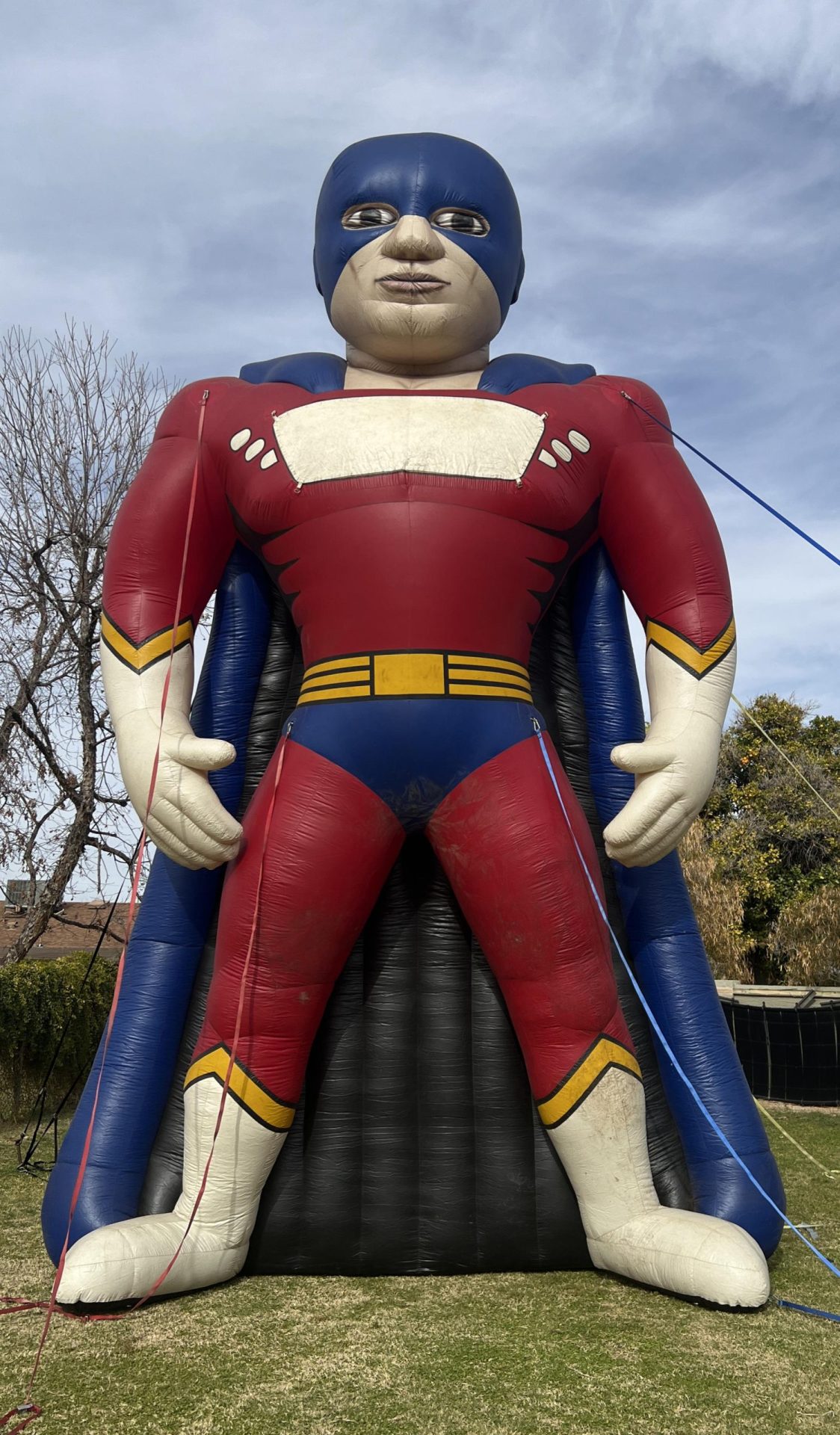
Builders launching certified communities have increasingly leaned on giant inflatables, entrance arches, and custom-branded blimps to turn a private construction milestone into a public event. It is a practical pairing: the certification supplies the credibility, and the aerial marketing supplies the reach. Neither substitutes for the other, but together they turn “we built something efficient” into “come see it this weekend.”
What This Means for Your Marketing
If your business has invested in genuine sustainability credentials, whether that is an ENERGY STAR rating, an NGBS certification tier, or a documented HERS Index score, the marketing question is no longer whether the claim is credible. It is whether enough people saw the claim before deciding where to spend their Saturday. Outdoor, location-based marketing exists precisely to solve that visibility gap, and it works best when it is timed to a real event: a grand opening, a model home debut, or a certification milestone worth celebrating publicly.
Home builders, trade show exhibitors, and dealers all face a version of the same problem: a strong claim that nobody drives past. A giant balloon, an entrance arch, or an aerial marketing blimp turns a static sign into something people notice from a distance, remember, and photograph. For a certified green community especially, that visibility reinforces the message rather than distracting from it — the balloon gets people to the site, and the certification is what earns their trust once they arrive.
As green building standards keep tightening and buyer skepticism keeps rising, the builders who win will be the ones who pair real substance with real visibility. Certification proves the claim. Aerial advertising makes sure the right people see it.
Sources
- KB Home opens Meadowbrook – Green Home Builder
- 2025 NGBS introduces alternative compliance pathways – Green Home Builder
- 4 sustainable construction trends to watch for in 2026 – Trellis
- The Future of Energy-Efficient Buildings & Net-Zero Homes – PatentPC