Trade Show Exhibit Visibility Is the New B2B Battleground
By Arizona Balloon Company (arizonaballoon.com) — June 27, 2026
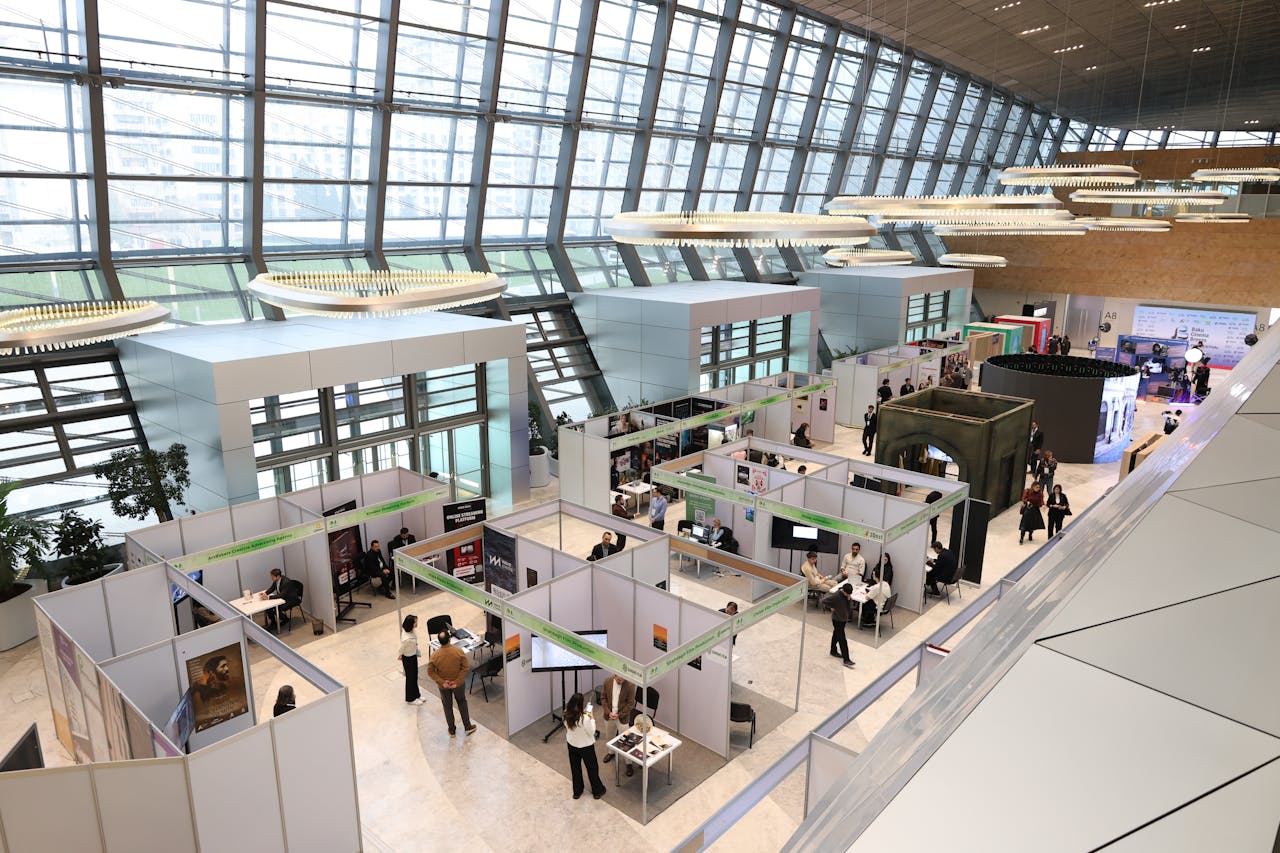
CEIR 2026 Report: What the Data Shows
Trade show exhibit visibility has emerged as a defining competitive factor in B2B marketing,
according to the Center for Exhibition Industry Research’s newly released 2026 Marketing Spend
Decision Report. The study, which tracks how exhibitors across the United States allocate marketing
dollars across channels, confirms that face-to-face exhibitions continue to command the largest
single share of B2B marketing budgets — outpacing digital advertising, content marketing, and
paid search. For marketing managers and business owners evaluating where to concentrate resources
this season, the findings carry significant strategic weight.
Nancy Drapeau, IPC, CEIR’s Vice President of Research, summarized the headline finding directly:
exhibitions remain a core investment for organizations where face-to-face engagement is central
to marketing and sales, both before the pandemic and today. The report found that 40.8% of
exhibitor marketing budgets flow to B2B exhibitions, making it the top channel by a wide margin.
Equally telling, industry Net Promoter Scores have rebounded sharply — from a negative six in
2021 to a positive 35 today — reflecting renewed confidence in the in-person event format.
The U.S. trade show industry as a whole has reached an estimated $24.7 billion in revenue in 2026,
growing at a compound annual rate of 12.8% since 2021. Attendance at major shows has returned to
within 3.7% of 2019 levels, according to the CEIR Index, signaling that the post-pandemic recovery
is effectively complete for flagship events.
Where Exhibitor Budgets Are Going in 2026
Despite the optimistic headline numbers, the CEIR report paints a more nuanced picture on the
ground. Most exhibitors are holding their show participation steady rather than expanding it:
47% plan to participate in the same number of events as last year, while 28% expect to add
events to their schedule. Booth sizes have remained largely stable, with 83% of respondents
indicating no plans to increase their footprint.
What is shifting is where dollars go within the trade show budget. Exhibitors are concentrating
spend on investments that demonstrably influence floor performance — booth design, pre-show
outreach, and attendee engagement tools — while scrutinizing line items that are harder to tie
to outcomes. Industry data from independent researchers supports this shift: exhibit design
changes alone can improve booth stop rates by 30 to 45%, while proper lighting generates more
than a twofold improvement in perceived brand quality. Yet the average exhibitor still allocates
only 18 to 22% of their total show budget to design and presentation, suggesting a meaningful gap
between what the data supports and what budgets reflect.
For exhibitors working with Arizona Balloon Company,
this trend reinforces a simple truth: the brands that invest in attention-commanding presence
at and around the venue consistently outperform those relying on the booth alone.
The Growing Pressure to Prove Trade Show ROI
One of the most actionable themes running through the CEIR 2026 report is the intensifying
expectation that trade show investments produce measurable returns. Approximately one in ten
exhibitors is actively reassessing their event schedules in response to sales challenges and
broader economic uncertainty. Those who remain committed to the channel are doing so with
greater discipline: demanding clearer audience quality data from organizers, tighter lead-tracking
capabilities, and stronger post-event reporting frameworks.
Independent benchmarks reinforce this pressure. Cost-per-lead at B2B trade shows ranges from
$112 to $186, making the channel cost-competitive with high-intent digital advertising for
complex sales. However, only 6% of exhibitors report confidence in their ability to convert
leads effectively on the show floor. The gap between traffic and conversion remains wide, and
it starts with whether prospective buyers actually stop at the booth in the first place.
Research consistently shows that 76% of trade show attendees arrive with a pre-planned list of
booths they intend to visit. Pre-show marketing, combined with high-visibility presence on the
day of the event, directly determines whether an exhibitor makes that list. Well-run programs
that combine strategic booth investment with integrated pre- and post-show outreach report
pipeline returns of four to six times total program spend.
How to Stand Out When Every Exhibitor Is Competing Harder
With show floors growing more competitive — more exhibitors, larger budgets, denser attendance —
the challenge of breaking through is steeper than at any point in the past decade. Industry
analysts note a sharp divide on modern convention floors: on one side, booths designed for an
earlier era of static displays and passive brand exposure; on the other, exhibitors deploying
immersive, narrative-driven environments that draw attendees in and keep them engaged.
Experiential activations, modular storytelling environments, and prominent branded presence
beyond the booth footprint are among the tactics gaining traction. Sponsorship models are
shifting away from passive logo placements toward participatory formats — networking hubs,
live demos, and branded zones that attendees associate with genuine value rather than advertising
noise. The underlying logic is straightforward: in an environment where attention is the scarce
resource, the exhibitors who command more of it generate more qualified conversations, and more
qualified conversations produce more pipeline.
Why Aerial Marketing Balloons Are a Trade Show Secret Weapon
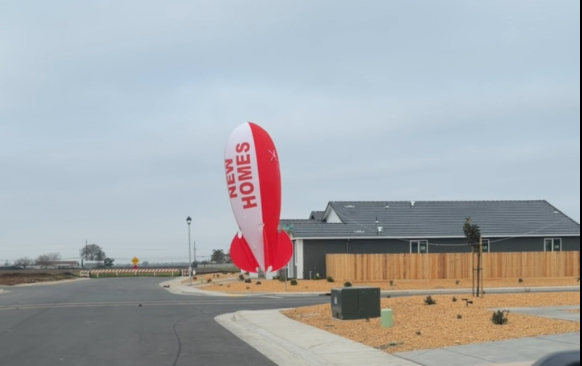
For exhibitors looking to maximize trade show exhibit visibility before a prospect even enters
the building, giant helium advertising
balloons and marketing blimps
offer a tool that no in-booth investment can replicate: altitude. A large helium blimp tethered
above or near a convention center entrance is visible from blocks away, driving attendee awareness
and orienting foot traffic before a single badge is scanned. In markets where trade show venues
are surrounded by competing hotel signage and ground-level advertising, aerial presence cuts
through visual noise in a way that floor-level displays simply cannot.
This matters because trade show ROI is partly a function of booth traffic volume — and booth
traffic is partly a function of how many attendees know you are there before they walk the floor.
Outdoor advertising blimps and inflatables extend the marketing perimeter of the trade show
booth to the surrounding blocks, parking lots, and arrival corridors. They are particularly
effective for exhibitors in industries where brand recognition drives pre-planned booth visits,
because a visible aerial presence reinforces the brand in the minutes before an attendee enters
the venue and consults their list.
Custom advertising inflatables are also reusable across multiple events, making them a durable
asset that amortizes well over a full show calendar. For companies exhibiting at three to five
major events per year — a common cadence among mid-market B2B brands — the per-event cost of
a helium blimp rental or owned inflatable compares favorably with temporary banner sponsorships
that offer far less visual impact.
What This Means for Your Marketing
The CEIR 2026 report confirms what experienced trade show marketers already understand: the
exhibitors winning on the show floor are not necessarily the ones with the largest booths or the
biggest budgets. They are the ones who combine strategic location-based visibility with intentional
pre-show outreach and post-show follow-up. In a climate where most exhibitors are holding spend
flat and demanding clearer ROI from every line item, the brands that invest in differentiated
presence — both on and off the floor — have a structural advantage.
Location-based marketing is the piece most exhibitors underinvest in. A prospect walking from a
shuttle stop to a convention center entrance is a warm audience with undivided attention, and that
30-second window is one of the most undervalued touchpoints in the trade show marketing funnel.
Giant helium advertising balloons and aerial marketing
blimps from Arizona Balloon Company are specifically designed to capture that moment — placing
your brand directly in a prospect’s field of view before any competitor gets the first interaction.
For trade show exhibitors planning their 2026 season, the strategic question is no longer whether
to invest in physical presence, but how to maximize the return on that presence at every touchpoint
— from the parking lot to the show floor. Outdoor aerial marketing is one of the highest-visibility,
lowest-cost-per-impression tools available, and it integrates seamlessly with booth design,
sponsorship activations, and pre-show campaigns to create a coherent, attention-commanding
brand experience across the entire event environment.
Sources
-
Smart Meetings: CEIR 2026 Marketing Spend Decision Report (May 11, 2026)
-
ShowHero Insights: State of Trade Shows 2026 (April 27, 2026)
-
IBISWorld: Trade Show & Event Planning in the US Industry Analysis, 2026
-
PurExhibits: Trade Show Statistics 2026 (May 18, 2026)
-
EMC Outdoor: 7 Trade Show Marketing Trends That Will Define Success in 2026
-
Event Marketer: Big, Bold, and Data-Driven — Trade Show Trends Fueling 2026