Tag: convention advertising

  • Trade Show Marketing Rebounds as Miami Show Posts 17% Attendance Gain

    Trade Show Marketing Rebounds as Miami Show Posts 17% Attendance Gain

    Trade Show Marketing Rebounds as Miami Show Posts 17% Attendance Gain

    By Arizona Balloon Company (arizonaballoon.com) | October 3, 2026

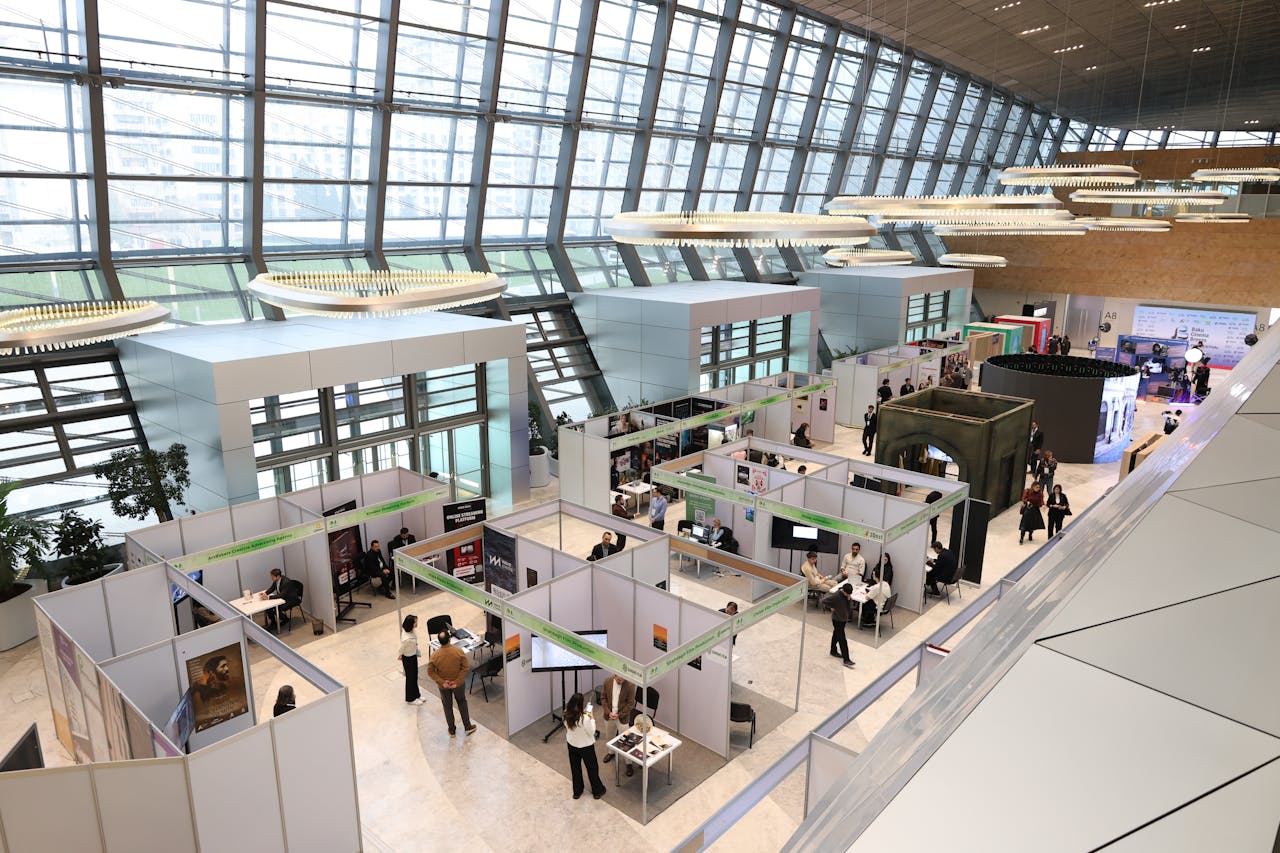
    Crowded exhibition hall showing trade show marketing in action

    Trade Show Marketing Gets a Boost in Miami

    Trade show marketing received a welcome data point this week. The Trade Show News Network reported on October 1 that the 30th anniversary edition of the Americas Food & Beverage Show & Conference, held September 14-16 at the Miami Beach Convention Center, drew 11,700 attendees and 990 exhibitors from 115 countries and territories. On-site attendance rose 17% over 2025, and the exhibitor count grew 10%.

    For business owners deciding where to spend event budgets, growth at this scale suggests that buyers are still willing to travel for face-to-face meetings. It also means more competition for attention on the floor. Companies that exhibit at shows like this one can pair booth presence with eye-catching signage, such as the custom promotional balloons and blimps built by Arizona Balloon Company, to be seen from farther away.

    Inside the Numbers: Pavilions, Buyers and Brand Activations

    The show ran 22 international pavilions and 51 sessions across its conference program, Center Stage and Beverage Stage. The largest pavilion was “A Taste of the States,” produced by the National Association of State Departments of Agriculture. It covered 22,000 square feet, 11% more than the previous year, and featured a record 172 U.S. food and beverage companies from 12 states and nine cooperatives.

    Buyer programs were a major draw. The NASDA Buyers Mission brought 32 sponsored international buyers and nine colleagues from 23 countries to meet 48 U.S. suppliers. A broader program with the USDA’s Foreign Agricultural Service engaged more than 460 additional international buyers from 21 countries, plus the Caribbean.

    Exhibitors also leaned on live activations. Demonstrations covered cooking, cocktails and cake decorating, and one consulting firm sent a branded robot walking through the beverage corridor. These examples show how much exhibitors now invest in movement, sampling and spectacle to pull visitors into a booth.

    Crowded exhibition hall showing trade show marketing in action

    The Bigger Picture: An Uneven Industry Recovery

    The Miami results arrive alongside a more cautious industry outlook. At CEIR Predict 2026, held September 10-11 in Oxon Hill, Maryland, Tourism Economics senior economist Tariq Khan said the exhibition industry reached 95.1% of 2019 performance levels in early 2026. Only 46% of individual events have fully recovered, and attendance remains 7.1% below pre-pandemic levels. Oxford Economics projects roughly 2.1% growth in 2026, with a return to 2019 levels by 2028.

    Khan advised organizers to treat benchmarks as a starting point and to study their own sector. That advice applies to exhibitors too. A strong show in one industry says little about the next, so marketing managers should check attendance and buyer data for each event before committing budget.

    Other speakers at CEIR Predict pointed to rising travel costs, visa delays that can exceed a year for some international participants, and added scrutiny of discretionary spending. These pressures make it more important that every exhibit dollar produces measurable engagement.

    Why Attention Is the Scarce Resource on the Show Floor

    CEIR research cited at the conference found that 95% of exhibitors and attendees say face-to-face experiences deliver value that other channels do not. Yet American Marketing Association CEO Bennie F. Johnson said chief marketing officers want more from events than a booth, a bag insert and an email blast. He also said audience data may now be worth more than exhibition space, and that trust and community matter more than raw reach or booth size.

    The takeaway for exhibitors is that a booth by itself no longer guarantees traffic. With nearly 1,000 exhibitors competing in a single Miami hall, visibility, a clear message and a reason to stop are what turn foot traffic into conversations.

    Where Helium Balloons and Blimps Fit Event Programs

    Many trade show exhibitors work within height limits, fixed floor plans and tight setup windows, so overhead branding is one of the few ways to rise above neighboring booths. Where venue rules and rigging permissions allow, helium advertising balloons can carry a logo above eye level and help attendees find a booth across a crowded hall. Larger advertising blimps serve outdoor activations, parking-lot events, and show-adjacent promotions in places where overhead visibility is permitted.

    This is an industry observation rather than a finding from the Miami coverage. The reported emphasis on demos, robots and branded experiences points to the same underlying need: standing out physically in a space where every competitor is trying to do the same. Exhibitors should always confirm venue and local regulations before planning any overhead or outdoor display.

    What Exhibitors Should Watch Next

    The 31st edition of the Americas Food & Beverage Show is scheduled for September 27-29, 2027, at the Miami Beach Convention Center. In the meantime, the CEIR findings suggest three things worth tracking: whether attendance gaps narrow, whether inflation and travel costs keep pressing on budgets, and whether organizers continue to build programming around buyer matching and data.

    Economist Tara Sinclair noted that strong new-business formation means tomorrow’s exhibitors may not yet appear in organizers’ databases. For established companies, that is a reminder that the competition for attention will keep changing, and that distinctive, memorable branding becomes more valuable as new entrants arrive.

    What This Means for Your Marketing

    The latest data points to a trade show environment that is growing in some sectors and still recovering in others. Treat each event as its own investment: review attendance trends, identify who the buyers are, and decide in advance how your booth will earn attention before a visitor ever reaches your table.

    Location-based tactics deserve a place in that plan. Outdoor and overhead visuals, such as helium advertising balloons or aerial marketing blimps, give attendees a landmark to navigate toward and give your brand a presence beyond the booth footprint. Used alongside live demonstrations and data capture, they can support the engagement CMOs say they want from in-person events.

    Finally, measure what you do. Track booth visits, leads and follow-up meetings against your spend, so you can tell which visibility tactics earn their place in next year’s budget.

    Sources

  • Trade Show Exhibit Visibility Is the New B2B Battleground


    Trade Show Exhibit Visibility Is the New B2B Battleground

    Trade Show Exhibit Visibility Is the New B2B Battleground

    By Arizona Balloon Company (arizonaballoon.com) — June 27, 2026

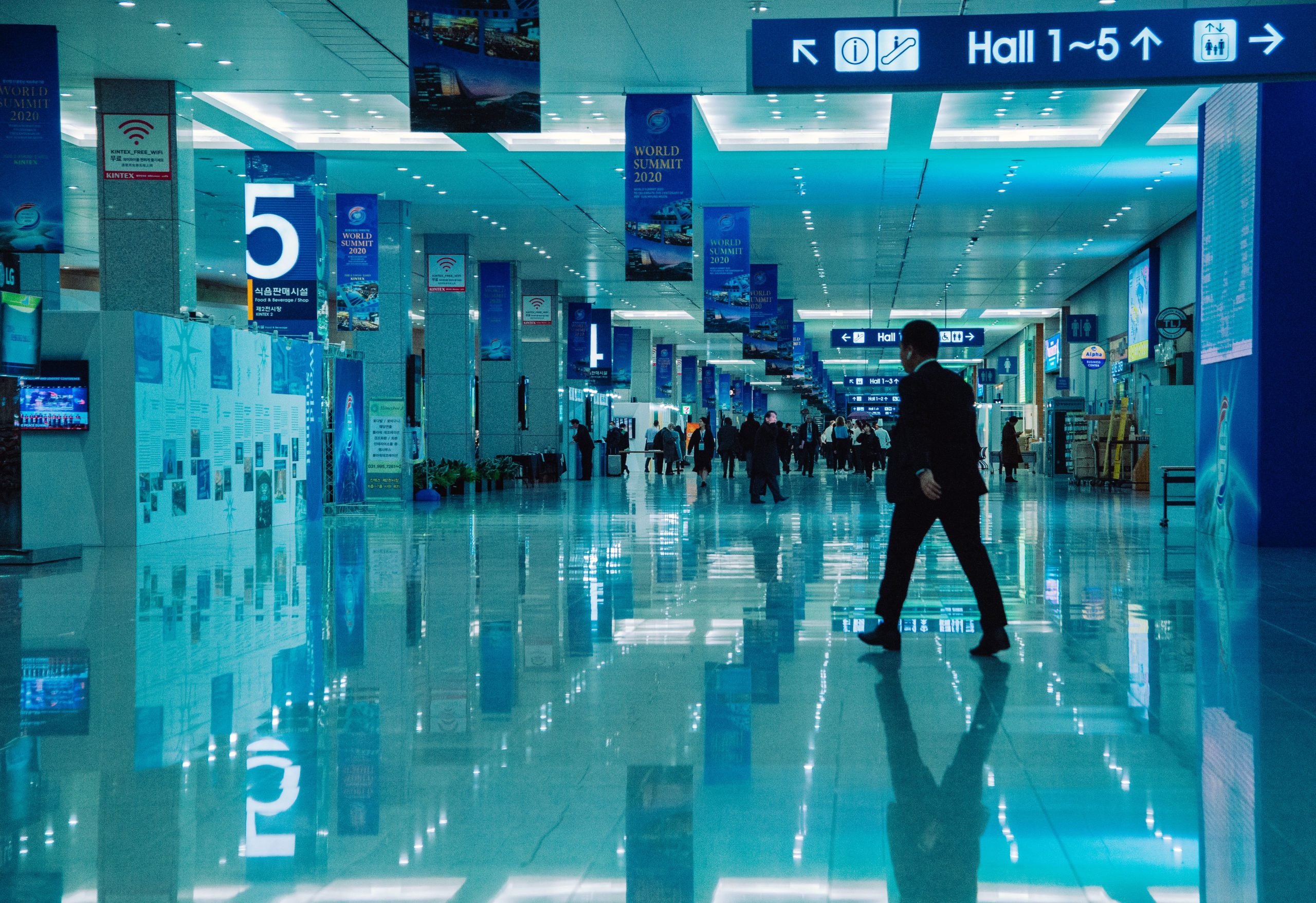
    trade show exhibit visibility with large branded display at convention floor

    CEIR 2026 Report: What the Data Shows

    Trade show exhibit visibility has emerged as a defining competitive factor in B2B marketing,
    according to the Center for Exhibition Industry Research’s newly released 2026 Marketing Spend
    Decision Report. The study, which tracks how exhibitors across the United States allocate marketing
    dollars across channels, confirms that face-to-face exhibitions continue to command the largest
    single share of B2B marketing budgets — outpacing digital advertising, content marketing, and
    paid search. For marketing managers and business owners evaluating where to concentrate resources
    this season, the findings carry significant strategic weight.

    Nancy Drapeau, IPC, CEIR’s Vice President of Research, summarized the headline finding directly:
    exhibitions remain a core investment for organizations where face-to-face engagement is central
    to marketing and sales, both before the pandemic and today. The report found that 40.8% of
    exhibitor marketing budgets flow to B2B exhibitions, making it the top channel by a wide margin.
    Equally telling, industry Net Promoter Scores have rebounded sharply — from a negative six in
    2021 to a positive 35 today — reflecting renewed confidence in the in-person event format.

    The U.S. trade show industry as a whole has reached an estimated $24.7 billion in revenue in 2026,
    growing at a compound annual rate of 12.8% since 2021. Attendance at major shows has returned to
    within 3.7% of 2019 levels, according to the CEIR Index, signaling that the post-pandemic recovery
    is effectively complete for flagship events.

    Despite the optimistic headline numbers, the CEIR report paints a more nuanced picture on the
    ground. Most exhibitors are holding their show participation steady rather than expanding it:
    47% plan to participate in the same number of events as last year, while 28% expect to add
    events to their schedule. Booth sizes have remained largely stable, with 83% of respondents
    indicating no plans to increase their footprint.

    What is shifting is where dollars go within the trade show budget. Exhibitors are concentrating
    spend on investments that demonstrably influence floor performance — booth design, pre-show
    outreach, and attendee engagement tools — while scrutinizing line items that are harder to tie
    to outcomes. Industry data from independent researchers supports this shift: exhibit design
    changes alone can improve booth stop rates by 30 to 45%, while proper lighting generates more
    than a twofold improvement in perceived brand quality. Yet the average exhibitor still allocates
    only 18 to 22% of their total show budget to design and presentation, suggesting a meaningful gap
    between what the data supports and what budgets reflect.

    For exhibitors working with Arizona Balloon Company,
    this trend reinforces a simple truth: the brands that invest in attention-commanding presence
    at and around the venue consistently outperform those relying on the booth alone.

    trade show exhibit visibility with large branded display at convention floor

    The Growing Pressure to Prove Trade Show ROI

    One of the most actionable themes running through the CEIR 2026 report is the intensifying
    expectation that trade show investments produce measurable returns. Approximately one in ten
    exhibitors is actively reassessing their event schedules in response to sales challenges and
    broader economic uncertainty. Those who remain committed to the channel are doing so with
    greater discipline: demanding clearer audience quality data from organizers, tighter lead-tracking
    capabilities, and stronger post-event reporting frameworks.

    Independent benchmarks reinforce this pressure. Cost-per-lead at B2B trade shows ranges from
    $112 to $186, making the channel cost-competitive with high-intent digital advertising for
    complex sales. However, only 6% of exhibitors report confidence in their ability to convert
    leads effectively on the show floor. The gap between traffic and conversion remains wide, and
    it starts with whether prospective buyers actually stop at the booth in the first place.

    Research consistently shows that 76% of trade show attendees arrive with a pre-planned list of
    booths they intend to visit. Pre-show marketing, combined with high-visibility presence on the
    day of the event, directly determines whether an exhibitor makes that list. Well-run programs
    that combine strategic booth investment with integrated pre- and post-show outreach report
    pipeline returns of four to six times total program spend.

    How to Stand Out When Every Exhibitor Is Competing Harder

    With show floors growing more competitive — more exhibitors, larger budgets, denser attendance —
    the challenge of breaking through is steeper than at any point in the past decade. Industry
    analysts note a sharp divide on modern convention floors: on one side, booths designed for an
    earlier era of static displays and passive brand exposure; on the other, exhibitors deploying
    immersive, narrative-driven environments that draw attendees in and keep them engaged.

    Experiential activations, modular storytelling environments, and prominent branded presence
    beyond the booth footprint are among the tactics gaining traction. Sponsorship models are
    shifting away from passive logo placements toward participatory formats — networking hubs,
    live demos, and branded zones that attendees associate with genuine value rather than advertising
    noise. The underlying logic is straightforward: in an environment where attention is the scarce
    resource, the exhibitors who command more of it generate more qualified conversations, and more
    qualified conversations produce more pipeline.

    Why Aerial Marketing Balloons Are a Trade Show Secret Weapon

    For exhibitors looking to maximize trade show exhibit visibility before a prospect even enters
    the building, giant helium advertising
    balloons
    and marketing blimps
    offer a tool that no in-booth investment can replicate: altitude. A large helium blimp tethered
    above or near a convention center entrance is visible from blocks away, driving attendee awareness
    and orienting foot traffic before a single badge is scanned. In markets where trade show venues
    are surrounded by competing hotel signage and ground-level advertising, aerial presence cuts
    through visual noise in a way that floor-level displays simply cannot.

    This matters because trade show ROI is partly a function of booth traffic volume — and booth
    traffic is partly a function of how many attendees know you are there before they walk the floor.
    Outdoor advertising blimps and inflatables extend the marketing perimeter of the trade show
    booth to the surrounding blocks, parking lots, and arrival corridors. They are particularly
    effective for exhibitors in industries where brand recognition drives pre-planned booth visits,
    because a visible aerial presence reinforces the brand in the minutes before an attendee enters
    the venue and consults their list.

    Custom advertising inflatables are also reusable across multiple events, making them a durable
    asset that amortizes well over a full show calendar. For companies exhibiting at three to five
    major events per year — a common cadence among mid-market B2B brands — the per-event cost of
    a helium blimp rental or owned inflatable compares favorably with temporary banner sponsorships
    that offer far less visual impact.

    What This Means for Your Marketing

    The CEIR 2026 report confirms what experienced trade show marketers already understand: the
    exhibitors winning on the show floor are not necessarily the ones with the largest booths or the
    biggest budgets. They are the ones who combine strategic location-based visibility with intentional
    pre-show outreach and post-show follow-up. In a climate where most exhibitors are holding spend
    flat and demanding clearer ROI from every line item, the brands that invest in differentiated
    presence — both on and off the floor — have a structural advantage.

    Location-based marketing is the piece most exhibitors underinvest in. A prospect walking from a
    shuttle stop to a convention center entrance is a warm audience with undivided attention, and that
    30-second window is one of the most undervalued touchpoints in the trade show marketing funnel.
    Giant helium advertising balloons and aerial marketing
    blimps
    from Arizona Balloon Company are specifically designed to capture that moment — placing
    your brand directly in a prospect’s field of view before any competitor gets the first interaction.

    For trade show exhibitors planning their 2026 season, the strategic question is no longer whether
    to invest in physical presence, but how to maximize the return on that presence at every touchpoint
    — from the parking lot to the show floor. Outdoor aerial marketing is one of the highest-visibility,
    lowest-cost-per-impression tools available, and it integrates seamlessly with booth design,
    sponsorship activations, and pre-show campaigns to create a coherent, attention-commanding
    brand experience across the entire event environment.

    Sources