Arizona Balloon Company (arizonaballoon.com) — July 15, 2026
The Psychology Behind Trade Show Booth Attraction
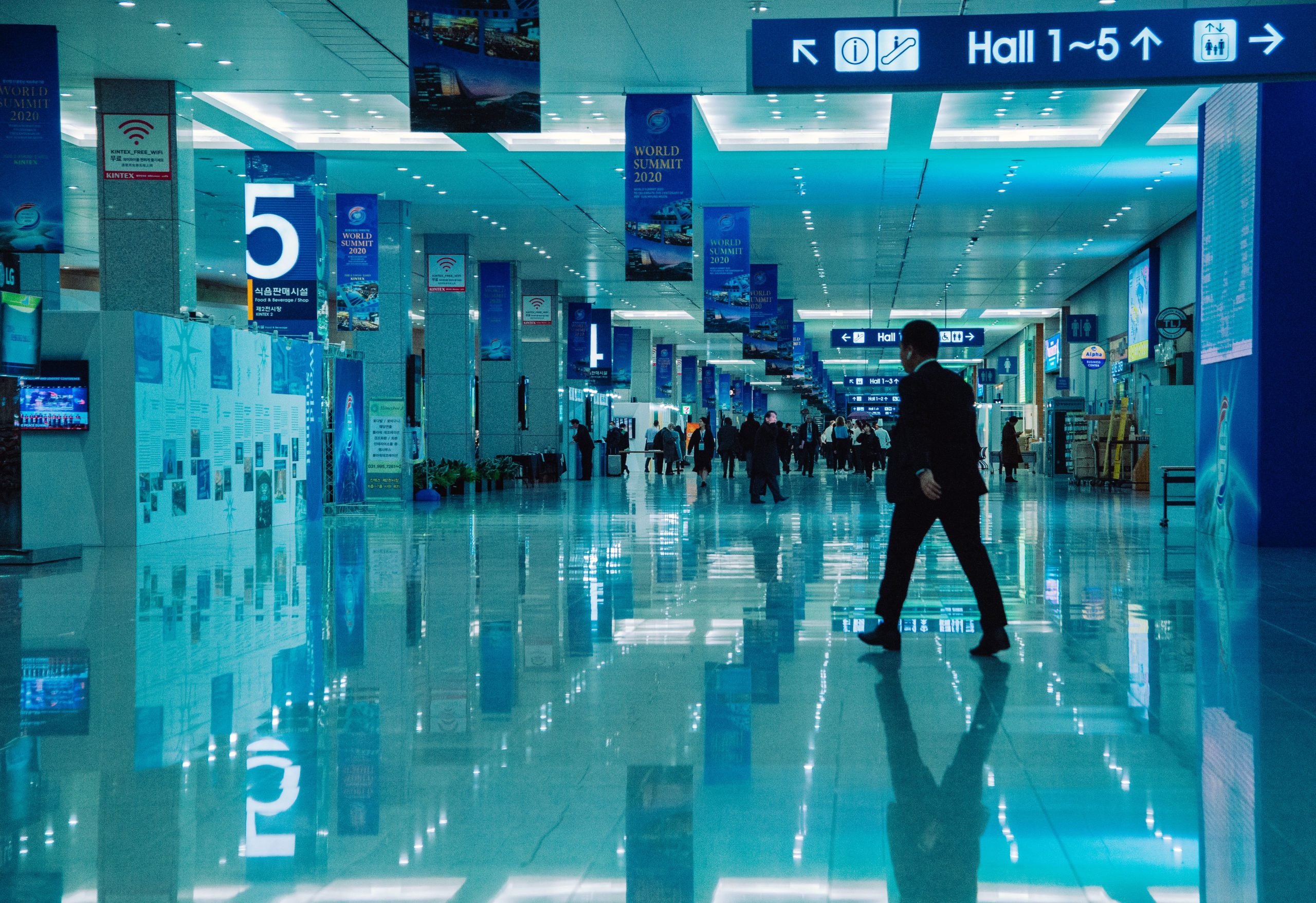
A new industry report published this week is reframing how exhibitors think about trade show booth attraction. Rather than treating booth design as a purely aesthetic exercise, the research argues that attendees make subconscious, split-second decisions about which exhibits deserve their attention — decisions rooted in psychology, not just visual polish. According to the analysis, within seconds of entering a crowded hall, attendees are already filtering out most of what surrounds them, and only a handful of booths ever break through that filter.
For Arizona Balloon Company, which works with exhibitors, home builders, and auto dealers across the country, the findings confirm something the outdoor advertising industry has long understood: attention is earned in the first few seconds, and it is earned through contrast, movement, and scale — not just clever signage at eye level.
Why Cluttered Booths Lose the Crowd
The report highlights a common exhibitor mistake: trying to say everything at once. Multiple headlines, dense product walls, and competing graphics create cognitive overload rather than curiosity, causing attendees to walk past rather than stop. The recommended fix is a simplified visual hierarchy — one clear focal point that tells attendees where to look first.
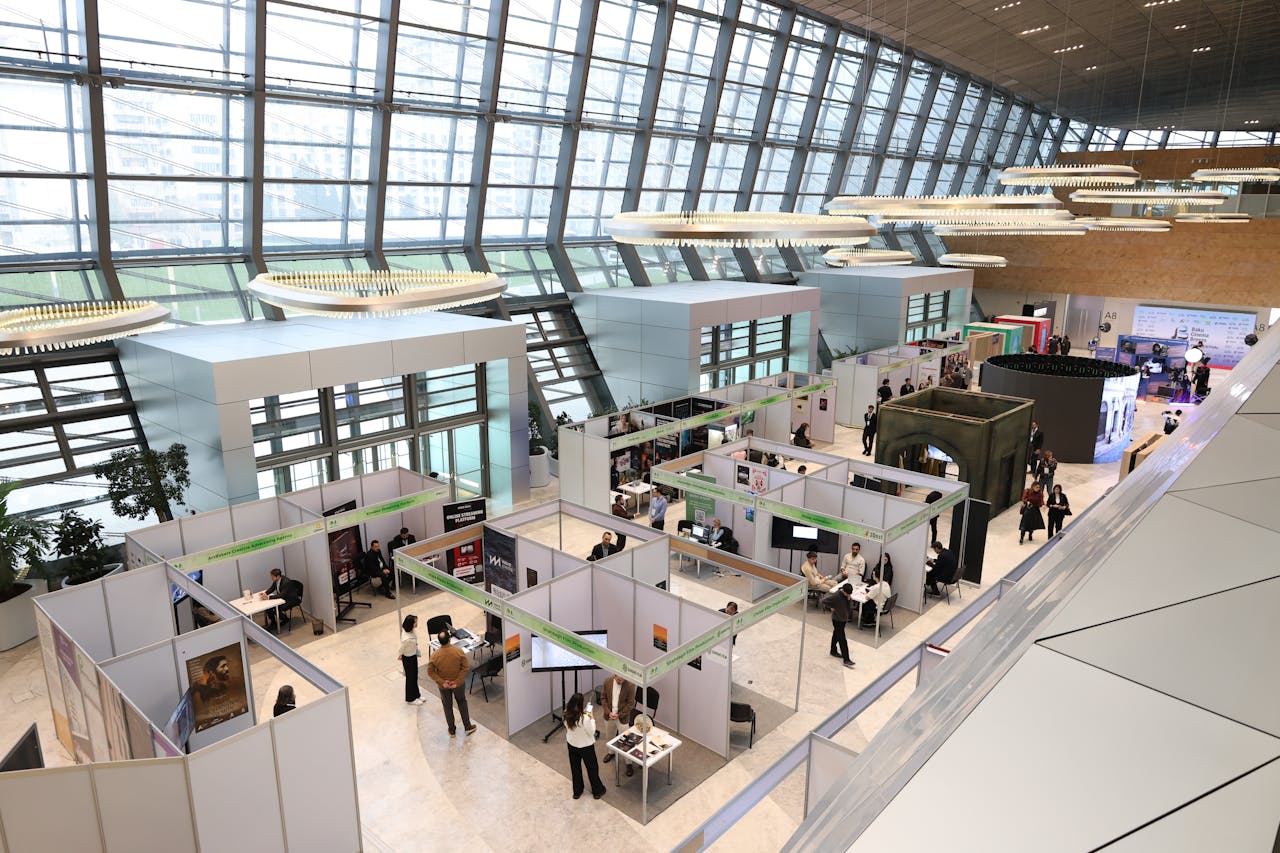
This is where many booths struggle physically as well as visually. Once a show floor fills up, ground-level signage competes with neighboring booths, foot traffic, and sightline obstructions. A single standout element rising above the crowd solves the hierarchy problem before attendees ever reach the aisle. Exhibitors exploring options for that kind of standout element often look at custom helium advertising balloons as a way to create one unmistakable focal point above an otherwise busy floor.
Visibility From a Distance: The Overlooked Advantage
Much of the current research focuses on close-range design — lighting, materials, staff placement, and entrance flow. Those factors matter once an attendee is already within a few feet of a booth. But the studies largely leave out a critical earlier stage: how a booth gets noticed from across the hall in the first place. Before attendees can respond to intentional lighting or a welcoming layout, they first have to look in that direction at all.
Large-format visuals solve exactly that problem. Because they occupy vertical space well above the sightline clutter of neighboring booths, they cut through the visual noise the report describes, giving attendees a reason to walk toward a specific aisle instead of drifting past it.
How Helium Balloons and Blimps Fit Into the New Playbook
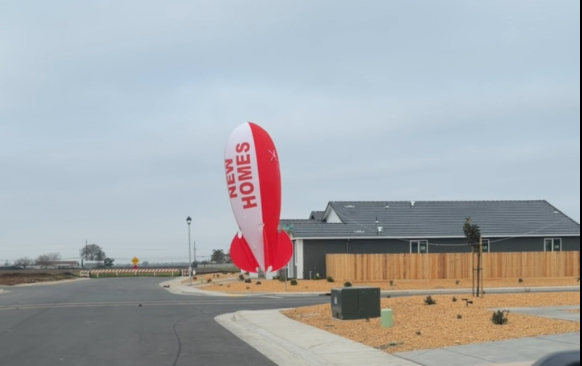
Trade show marketers looking to apply this behavioral research practically have a straightforward tool available: aerial branding. Helium advertising balloons, inflatable arches, and tethered marketing blimps give exhibitors a way to claim visual real estate that ground-level competitors cannot match. Because these displays are visible from nearly anywhere on the show floor, they function as a wayfinding signal — attendees who saw a company’s name before the show, or who spot the balloon from across the hall, are far more likely to seek out that booth specifically rather than discover it by chance.
This aligns directly with the report’s point about pre-show familiarity driving in-person engagement. A branded balloon visible during setup, or a blimp circling near a convention center, extends that recognition beyond the show floor itself.
Pre-Show Familiarity and the Mere Exposure Effect
One of the more actionable findings involves what psychologists call the “mere exposure effect” — people respond more positively to things they have already seen, even briefly. The report notes that exhibitors who promote their booth number and location ahead of time, through email, social media, or signage, see stronger foot traffic because attendees arrive already primed to look for them.
Outdoor and aerial marketing extends this principle geographically. A blimp or rooftop balloon near a convention center, hotel corridor, or airport route can generate that same familiarity before attendees ever step onto the show floor, reinforcing brand recall the moment they walk in.
What This Means for Your Marketing
For trade show exhibitors, the takeaway from this research is not that booth psychology replaces outdoor and location-based marketing — it’s that the two work together. A well-designed booth interior earns engagement once attendees arrive; a highly visible exterior element earns the walk-over in the first place. Businesses investing heavily in interior design details like lighting and traffic flow should treat visibility from a distance as an equally important, earlier stage of the same funnel.
This is particularly relevant for home builders, auto dealers, and trade show exhibitors competing in crowded convention centers or outdoor lots, where hundreds of competitors are vying for the same limited attention span. Aerial marketing gives these businesses a way to be seen first, before an attendee or drive-by customer has even decided where to walk or park.
Companies weighing how to apply these insights to an upcoming show or dealership event can explore helium advertising balloons as a cost-effective way to extend reach beyond eye-level signage and reinforce the pre-show familiarity effect described in the research.
Trade show exhibit visibility has emerged as a defining competitive factor in B2B marketing,
according to the Center for Exhibition Industry Research’s newly released 2026 Marketing Spend
Decision Report. The study, which tracks how exhibitors across the United States allocate marketing
dollars across channels, confirms that face-to-face exhibitions continue to command the largest
single share of B2B marketing budgets — outpacing digital advertising, content marketing, and
paid search. For marketing managers and business owners evaluating where to concentrate resources
this season, the findings carry significant strategic weight.
Nancy Drapeau, IPC, CEIR’s Vice President of Research, summarized the headline finding directly:
exhibitions remain a core investment for organizations where face-to-face engagement is central
to marketing and sales, both before the pandemic and today. The report found that 40.8% of
exhibitor marketing budgets flow to B2B exhibitions, making it the top channel by a wide margin.
Equally telling, industry Net Promoter Scores have rebounded sharply — from a negative six in
2021 to a positive 35 today — reflecting renewed confidence in the in-person event format.
The U.S. trade show industry as a whole has reached an estimated $24.7 billion in revenue in 2026,
growing at a compound annual rate of 12.8% since 2021. Attendance at major shows has returned to
within 3.7% of 2019 levels, according to the CEIR Index, signaling that the post-pandemic recovery
is effectively complete for flagship events.
Where Exhibitor Budgets Are Going in 2026
Despite the optimistic headline numbers, the CEIR report paints a more nuanced picture on the
ground. Most exhibitors are holding their show participation steady rather than expanding it:
47% plan to participate in the same number of events as last year, while 28% expect to add
events to their schedule. Booth sizes have remained largely stable, with 83% of respondents
indicating no plans to increase their footprint.
What is shifting is where dollars go within the trade show budget. Exhibitors are concentrating
spend on investments that demonstrably influence floor performance — booth design, pre-show
outreach, and attendee engagement tools — while scrutinizing line items that are harder to tie
to outcomes. Industry data from independent researchers supports this shift: exhibit design
changes alone can improve booth stop rates by 30 to 45%, while proper lighting generates more
than a twofold improvement in perceived brand quality. Yet the average exhibitor still allocates
only 18 to 22% of their total show budget to design and presentation, suggesting a meaningful gap
between what the data supports and what budgets reflect.
For exhibitors working with Arizona Balloon Company,
this trend reinforces a simple truth: the brands that invest in attention-commanding presence
at and around the venue consistently outperform those relying on the booth alone.
The Growing Pressure to Prove Trade Show ROI
One of the most actionable themes running through the CEIR 2026 report is the intensifying
expectation that trade show investments produce measurable returns. Approximately one in ten
exhibitors is actively reassessing their event schedules in response to sales challenges and
broader economic uncertainty. Those who remain committed to the channel are doing so with
greater discipline: demanding clearer audience quality data from organizers, tighter lead-tracking
capabilities, and stronger post-event reporting frameworks.
Independent benchmarks reinforce this pressure. Cost-per-lead at B2B trade shows ranges from
$112 to $186, making the channel cost-competitive with high-intent digital advertising for
complex sales. However, only 6% of exhibitors report confidence in their ability to convert
leads effectively on the show floor. The gap between traffic and conversion remains wide, and
it starts with whether prospective buyers actually stop at the booth in the first place.
Research consistently shows that 76% of trade show attendees arrive with a pre-planned list of
booths they intend to visit. Pre-show marketing, combined with high-visibility presence on the
day of the event, directly determines whether an exhibitor makes that list. Well-run programs
that combine strategic booth investment with integrated pre- and post-show outreach report
pipeline returns of four to six times total program spend.
How to Stand Out When Every Exhibitor Is Competing Harder
With show floors growing more competitive — more exhibitors, larger budgets, denser attendance —
the challenge of breaking through is steeper than at any point in the past decade. Industry
analysts note a sharp divide on modern convention floors: on one side, booths designed for an
earlier era of static displays and passive brand exposure; on the other, exhibitors deploying
immersive, narrative-driven environments that draw attendees in and keep them engaged.
Experiential activations, modular storytelling environments, and prominent branded presence
beyond the booth footprint are among the tactics gaining traction. Sponsorship models are
shifting away from passive logo placements toward participatory formats — networking hubs,
live demos, and branded zones that attendees associate with genuine value rather than advertising
noise. The underlying logic is straightforward: in an environment where attention is the scarce
resource, the exhibitors who command more of it generate more qualified conversations, and more
qualified conversations produce more pipeline.
Why Aerial Marketing Balloons Are a Trade Show Secret Weapon
For exhibitors looking to maximize trade show exhibit visibility before a prospect even enters
the building, giant helium advertising
balloons and marketing blimps
offer a tool that no in-booth investment can replicate: altitude. A large helium blimp tethered
above or near a convention center entrance is visible from blocks away, driving attendee awareness
and orienting foot traffic before a single badge is scanned. In markets where trade show venues
are surrounded by competing hotel signage and ground-level advertising, aerial presence cuts
through visual noise in a way that floor-level displays simply cannot.
This matters because trade show ROI is partly a function of booth traffic volume — and booth
traffic is partly a function of how many attendees know you are there before they walk the floor.
Outdoor advertising blimps and inflatables extend the marketing perimeter of the trade show
booth to the surrounding blocks, parking lots, and arrival corridors. They are particularly
effective for exhibitors in industries where brand recognition drives pre-planned booth visits,
because a visible aerial presence reinforces the brand in the minutes before an attendee enters
the venue and consults their list.
Custom advertising inflatables are also reusable across multiple events, making them a durable
asset that amortizes well over a full show calendar. For companies exhibiting at three to five
major events per year — a common cadence among mid-market B2B brands — the per-event cost of
a helium blimp rental or owned inflatable compares favorably with temporary banner sponsorships
that offer far less visual impact.
What This Means for Your Marketing
The CEIR 2026 report confirms what experienced trade show marketers already understand: the
exhibitors winning on the show floor are not necessarily the ones with the largest booths or the
biggest budgets. They are the ones who combine strategic location-based visibility with intentional
pre-show outreach and post-show follow-up. In a climate where most exhibitors are holding spend
flat and demanding clearer ROI from every line item, the brands that invest in differentiated
presence — both on and off the floor — have a structural advantage.
Location-based marketing is the piece most exhibitors underinvest in. A prospect walking from a
shuttle stop to a convention center entrance is a warm audience with undivided attention, and that
30-second window is one of the most undervalued touchpoints in the trade show marketing funnel.
Giant helium advertising balloons and aerial marketing
blimps from Arizona Balloon Company are specifically designed to capture that moment — placing
your brand directly in a prospect’s field of view before any competitor gets the first interaction.
For trade show exhibitors planning their 2026 season, the strategic question is no longer whether
to invest in physical presence, but how to maximize the return on that presence at every touchpoint
— from the parking lot to the show floor. Outdoor aerial marketing is one of the highest-visibility,
lowest-cost-per-impression tools available, and it integrates seamlessly with booth design,
sponsorship activations, and pre-show campaigns to create a coherent, attention-commanding
brand experience across the entire event environment.
Trade Show Attendance Has Rebounded—But the Stakes Are Higher
Achieving strong trade show booth visibility has never been more competitive than it is in 2026. After years of disruption, major U.S. trade shows are operating close to pre-pandemic attendance levels. Events such as CES in Las Vegas, HIMSS in healthcare IT, and PACK EXPO in manufacturing have all reported near-full recoveries, and exhibitor investment has followed. But the return of crowds has not made standing out easier—if anything, the noise level on the show floor has intensified.
Industry analysts tracking the Center for Exhibition Industry Research (CEIR) Index note that while attendance is now only about 3.7 percent below 2019 levels, exhibitor revenue gaps have been slower to close. Companies are bringing leaner teams to shows, spending more deliberately, and demanding clearer returns on every marketing dollar. In that environment, getting noticed quickly—before an attendee walks past—is no longer optional. It is the whole game.
The United States hosts roughly 13,000 trade shows annually, according to industry estimates, making it the most active exhibition market in the world. That volume gives exhibitors constant opportunity, but it also means that a forgettable booth presence is quietly expensive. The brands gaining ground in 2026 are those that treat a trade show not as a three-day event but as a multi-month marketing campaign anchored by a standout physical presence.
Booth Design Trends Dominating the 2026 Floor
Exhibit marketing in 2026 is moving away from passive, product-on-a-table displays and toward experiences that pull attendees in and hold their attention. The top-performing booths this year combine multisensory elements—directional audio, branded scent, and motion-triggered digital content—with intentional spatial design that creates calm contrast amid the surrounding chaos. Attendees who feel comfortable linger longer, and longer dwell time directly improves lead quality.
Dynamic signage has become a central investment. Flexible LED tiles and lightweight screen panels now allow booth walls to function as moving canvases, with messaging that can shift based on time of day or audience flow. Yet even the best digital display has a hard ceiling: it only reaches the people who are already standing in front of it. For exhibitors competing in large convention halls where one brand’s booth looks like the next, the most critical design challenge is attracting foot traffic before a prospect ever gets close enough to see a screen. That is where height and visibility above the crowd line become strategic assets, not aesthetic choices.
Branding experts consistently emphasize that attendees should be able to understand who an exhibitor is and what they offer within seconds of noticing the booth—ideally from across the hall. Visual consistency across signage, colors, and messaging plays a role, but so does the physical elevation of brand elements. The exhibitors who claim space overhead, rather than only at eye level, are using one of the most direct ways to cut through a visually saturated environment. Learn more about high-visibility solutions at our advertising blimps page and explore how aerial branding works for trade show and event environments.
The Height Advantage: Why Aerial Signage Cuts Through the Noise
One of the clearest insights from 2026 booth design research is that height functions as a signal. When a brand element rises above the crowd line—whether it is a multi-story LED tower, an overhead banner, or a floating inflatable—it communicates presence and confidence before a single conversation starts. The eye naturally tracks upward in a crowded environment, making elevated branding one of the few forms of exhibit marketing that works at a distance and at close range simultaneously.
For outdoor trade shows, festival-adjacent events, open-lot expos, and convention center entrances, helium advertising balloons and tethered marketing blimps provide exactly this kind of above-the-crowd brand presence. A custom-printed balloon bearing a company’s logo can be seen from hundreds of feet away—drawing traffic toward the exhibit location before attendees even consult a venue map. Unlike digital installations that require proximity to deliver their message, aerial inflatables work continuously at maximum range from the moment they are inflated.
The practical advantages align well with the cost-consciousness that defines 2026 exhibit spending. Helium advertising balloons require no power source, no technical staff to operate, and no complex setup logistics. They are reusable across multiple shows, consistent with the sustainability and modularity trends reshaping the exhibit industry this year. For a regional business or mid-size exhibitor competing against larger booths, aerial signage is one of the highest-visibility investments available at a comparatively modest price point.
Personalization and Experience Replace Passive Displays
The B2B buyer attending trade shows in 2026 has been shaped by consumer platforms that deliver hyper-personalized experiences on demand. Generic product demos no longer satisfy attendees who arrive with specific goals and limited time. Research consistently shows that when an attendee’s event experience aligns with their objectives, they are dramatically more likely to return and more likely to convert into a qualified lead after the show.
For exhibitors, this means the pre-show, on-site, and post-show phases need to function as a unified campaign rather than three separate activities. Artificial intelligence has moved from novelty to mainstream workflow in event marketing: AI adoption among event planners jumped to roughly 50 percent in 2025, and 2026 is the year these tools are becoming standard practice for lead scoring, attendee matching, and personalized follow-up. Exhibitors who map their full conference marketing funnel from six weeks before to six weeks after the event are consistently outperforming those who treat the show floor as the entire campaign.
Sustainability and Modularity as Competitive Differentiators
Sustainability has crossed from aspiration to expectation on the U.S. trade show floor. Modular and reusable booth structures are saving exhibitors an estimated 20 percent on carbon footprint and cost year over year, according to industry tracking. Leading operators are replacing disposable signage with bamboo frames, LED panels, and digital handouts. For many enterprise exhibitors, sustainable booth design is no longer a brand statement—it appears as a baseline requirement in event RFPs.
Modular systems also answer a practical operational need: exhibitors attending multiple shows per year need booth components that travel well, reconfigure to different footprints, and maintain brand consistency without being rebuilt from scratch each time. The shift away from single-use display materials mirrors a broader industry movement toward strategic, long-term exhibit investment rather than event-by-event spending. Reusable helium advertising inflatables fit directly into this framework—built to last across dozens of deployments, lightweight to ship, and immediately recognizable as a brand asset from show to show.
What This Means for Your Marketing
The defining challenge of trade show marketing in 2026 is not budget—industry planners report that budgets are actually growing, with nearly 60 percent of respondents preferring in-person-only events over virtual or hybrid formats. The challenge is differentiation. With attendance near pre-pandemic levels and exhibitor competition intensifying, the businesses that win on the floor are those that make themselves impossible to miss before an attendee is close enough to read a sign or watch a demo. Outdoor and location-based visibility tools are not supplementary to a trade show strategy—they are the top of the funnel.
For marketing decision-makers in industries like home building, automotive, and product manufacturing, trade shows remain one of the highest-ROI venues for face-to-face engagement with qualified buyers. Maximizing that ROI starts with driving traffic to the booth, and traffic follows attention. Helium advertising balloons and tethered aerial marketing blimps provide the kind of above-the-crowd visibility that no banner stand or digital display can replicate at range. A custom-branded inflatable floating 20 to 30 feet above a convention entrance or outdoor expo lot creates a visual landmark that attendees navigate toward—often before the show officially opens.
Whether you exhibit at regional consumer shows, national industry conventions, or outdoor seasonal expos, aerial signage solutions deserve a place in your pre-show and on-site marketing plan. The exhibitors pulling ahead in 2026 are combining immersive booth experiences with maximum approach visibility. Investing in both dimensions—what people see up close and what draws them from a distance—is the complete strategy that the current trade show landscape rewards.
Trade Show Attendance Is Back—and Competition Is Fierce
Trade show booth visibility has never been more difficult to earn—or more valuable. As 2026 unfolds, the U.S. trade show industry has staged a remarkable recovery. Attendance at major events is running only about 3.7 percent below 2019 pre-pandemic levels, according to the CEIR Index, and event planners are reporting higher budgets for in-person experiences. Nearly 60 percent of marketing decision-makers now say they prefer in-person-only events over virtual or hybrid formats, a clear signal that the show floor is once again the premier arena for B2B brand building.
But recovery has brought a new problem: the floor is crowded again. Whether your company exhibits at a regional packaging show, a healthcare technology summit, or a retail innovation conference like Shoptalk 2026, standing out among hundreds of competing booths is an urgent operational challenge, not just a design preference. Exhibitors who treat booth presence as a last-minute logistics task rather than a strategic marketing investment are already falling behind.
Events such as CES, HIMSS, and PACK EXPO East—which drew thousands of professionals to Philadelphia in March 2026—illustrate the stakes. At shows of that scale, a brand that fails to command attention from across the convention floor risks spending a significant budget to generate very little pipeline. Forward-thinking exhibitors are responding by rethinking every element of their presence, from booth design and technology to pre-show outdoor signage. Learn how Arizona Balloon Company helps brands maximize their event footprint with high-visibility aerial marketing tools.
The Static Booth Is Dead: Immersive Experiences Win the Floor
Industry analysts and event marketing professionals have reached a clear consensus heading into 2026: the static, display-only booth no longer moves the needle. Research compiled by EMC Outdoor finds that attendees who have a booth experience aligned with their professional goals are about 85 percent more likely to return to an exhibitor's presence—yet only 40 percent of attendees say they have ever had such an experience. That gap is the opportunity every smart exhibitor should be chasing.
What is working on today's show floors? Kinetic LED architecture, hospitality-style lounge areas, hands-on product interaction zones, and narrative-driven booth journeys that guide a visitor from pain point to solution. At Shoptalk 2026, brands like Whatnot streamed live e-commerce selling directly from the booth, inviting attendees to participate in real time on their phones. Optimizely partnered with an algorithmic perfumery to create personalized scents on demand, tying the activation directly to its software's core value proposition of personalization. These are not gimmicks; they are strategic experiences designed to create memorable, shareable brand moments.
The broader trade show trends report from Event Marketer confirms that themed entrances, immersive storytelling, and sponsor-powered architectural moments are becoming baseline expectations at the most competitive shows. Brands that still rely on a banner stand and a bowl of candy are functionally invisible to the new generation of B2B buyer.
How Aerial Signage Solves the Trade Show Booth Visibility Problem
Inside the convention hall, the competition for eyeballs is intense. Outside—in the parking areas, entrance corridors, and surrounding streets—that competition largely disappears. This is where helium advertising balloons and marketing blimps deliver a return that few other exhibit investments can match.
A giant custom-shaped advertising balloon or a tethered promotional blimp positioned at the entrance of a convention center or outdoor event venue does something no booth display can: it creates a landmark. Attendees navigating a sprawling event campus notice aerial signage from hundreds of feet away. The brand name is visible before a potential customer even enters the building. For exhibitors at outdoor trade shows, RV expos, agricultural fairs, home builder showcases, and auto industry events, this pre-arrival visibility is among the most cost-effective brand impressions available.
Advertising blimps are particularly effective at creating what event marketers call a “peak moment”—a high-impact sensory experience that attendees remember and associate with a specific brand. Unlike a floor graphic or a hanging banner inside a crowded hall, a blimp floating 30 to 50 feet in the air encounters no visual competition. It owns the sky above the event. For exhibitors investing tens of thousands of dollars in booth design and staffing, adding aerial signage outside the venue is a logical multiplier of that investment.
AI and Personalization Are Raising the Bar for Exhibitors
One of the most significant shifts in 2026 trade show marketing is the mainstreaming of artificial intelligence across the event lifecycle. AI adoption among professional event planners reached approximately 50 percent in 2025, according to a PCMA trends report cited by EMC Outdoor, and 2026 is the year those tools are moving from pilot programs to standard practice.
AI-powered attendee matching, predictive lead scoring, real-time personalization engines, and post-event CRM nurture streams tied directly to booth interaction data are no longer the exclusive province of Fortune 500 brands. Platforms like Cvent are embedding these capabilities into standard packages, meaning that even mid-market exhibitors are expected to deploy technology that demonstrates clear return on investment in pipeline terms.
The practical implication for marketing managers is that the bar for booth engagement has been raised from “did we get badge scans?” to “did we generate measurable pipeline?” Executives are demanding business cases backed by engagement data before approving event budgets. Exhibitors who can combine high-tech data collection inside the booth with high-visibility brand signage outside the venue will be positioned to make the strongest case for continued investment.
Don't Forget the Perimeter: Outdoor Event Marketing Matters
The conversation about 2026 trade show trends has focused heavily on the show floor itself—booth design, technology, sustainability, and data. Less discussed, but increasingly important, is the outdoor perimeter of the event. Convention centers, fairgrounds, and exposition parks attract thousands of visitors who arrive by car, rideshare, and public transit. That arrival journey is prime real estate for brand impressions that most exhibitors completely ignore.
Outdoor advertising options at or near event venues include banners, vehicle wraps, and temporary signage—but none commands attention the way aerial signage does. A custom-shaped advertising balloon designed to match a company's brand colors and logo can be seen from major roads approaching the venue, from overflow parking areas, and from adjacent hotels where out-of-town attendees are staying. This means brand exposure begins hours before a competitor's booth graphics are ever seen.
Sustainability trends noted by industry publications also favor reusable, durable outdoor marketing assets. Unlike single-use printed banners that end up in landfills after one show, quality helium balloons and inflatable advertising blimps are designed for repeated use across multiple events and seasons, making them an environmentally responsible choice that also offers strong cost-per-impression economics.
What This Means for Your Marketing
The 2026 trade show season is delivering a clear message for exhibitors and event marketing managers: differentiation requires a multi-layered strategy. Inside the hall, brands must create immersive, personalized, data-driven experiences. Outside the venue, they need to establish a visible presence before the first attendee walks through the doors. Relying on a booth alone—however well-designed—leaves a significant share of the potential audience untouched.
Location-based and outdoor marketing tools are experiencing a resurgence precisely because they cut through the digital noise that saturates every other marketing channel. When thousands of industry professionals are converging on a single physical location, placing a landmark brand signal at that location is one of the highest-ROI moves available to any marketing budget. Helium advertising balloons and aerial marketing blimps accomplish this with a combination of scale, visibility, and brand customization that no ground-level signage can replicate.
For trade show exhibitors planning their 2026 event calendar, the recommendation is straightforward: audit your current event presence for both inside and outside the venue. If your outdoor presence is nonexistent—as it is for the vast majority of exhibitors—you are leaving brand impressions on the table at every show you attend. Adding a tethered advertising blimp or a custom-shaped balloon to your event toolkit is one of the most immediate, visible, and cost-effective ways to fix that gap and ensure your brand is the one attendees remember when they walk in the door.
For businesses engaged in trade show exhibitor marketing, the news out of New York this week carries real strategic weight. One of the oldest and most recognized wholesale marketplaces in the United States has changed hands. NY Now—a cornerstone of the gift, home, and lifestyle wholesale industry for over a century—has been acquired by Rockview Management Group (RMG), a newly formed entity that purchased the show from Emerald Holding, Inc. The deal was announced on April 13, 2026, and reported by Trade Show News Network on April 15, 2026.
NY Now holds its events twice annually at the Jacob K. Javits Convention Center in New York City, connecting thousands of legacy and emerging brands with wholesale buyers from around the globe. The next scheduled event runs August 2–4, 2026. With the acquisition now complete, new leadership is already signaling a significant reimagining of how the show is run—and how exhibitors and buyers experience it.
For brands currently planning their booth presence at wholesale and consumer trade shows, this kind of ownership transition is an important signal. Show floors under new management often see changes in layout, traffic flow, sponsorship opportunities, and the tools available to exhibitors. Understanding what is coming—and preparing your marketing presence accordingly—is exactly the kind of proactive thinking that separates high-performing exhibitors from the crowd. If you are evaluating your next trade show campaign, aerial marketing blimps and high-visibility balloon displays remain among the most cost-effective tools to dominate a show footprint before attendees ever walk through the doors.
New Ownership and Vision for the Show Floor
Rockview Management Group is led by three veteran industry executives. Dorothy Belshaw, who previously served as show director of NY Now and was recognized as the Trade Show News Network Outstanding Show Pro in 2021, takes on the role of co-owner and CEO. She brings 33 years of experience in the gift and trade show industry. Joining her are William Lacey, a CFO with over 30 years of experience in mergers and acquisitions, and Karen Olson, a veteran of 28 years in the gift and home industries known for driving successful brand transformations.
RMG’s stated strategy includes expanding exhibitor resources, elevating customer experiences, and leveraging data-driven marketing techniques to support growth and engagement. The leadership team has promised a reimagined trade show floor and enhanced engagement opportunities for the August 2026 event. What that looks like in practice will likely be revealed over the coming months, but the intent is clear: NY Now is being repositioned as a modern, data-informed, community-centered marketplace—not simply a venue for showing product.
What Exhibitors Should Watch in the Months Ahead
For brands and businesses planning to exhibit at NY Now or similar wholesale shows in 2026, the transition period between now and August offers a valuable window. New management teams typically open the floor—literally and figuratively—to fresh ideas about booth placement, sponsored zones, and entrance activations. Exhibitors who engage early with show organizers during this kind of transition often gain preferred positioning and access to new sponsorship categories before they are fully priced into the market.
The new RMG leadership has specifically mentioned reimagining the trade show floor experience. In recent years, the most successful exhibitors at major wholesale and consumer shows have moved away from passive banner displays toward layered, multi-touchpoint marketing strategies—ones that begin outside the convention center and guide attendees inward. Outdoor signage, aerial displays, and street-level brand presence now function as essential pre-floor funnels, particularly in dense urban venues like the Javits Center in Manhattan, where foot and vehicle traffic is high before the doors open.
Outdoor Visibility: Why It Still Wins at Trade Show Exhibitor Marketing
In a trade show environment increasingly defined by digital engagement tools, AI-powered lead scoring, and immersive in-booth experiences, outdoor physical visibility remains one of the most cost-efficient and high-reach tactics available. A large helium advertising balloon or custom shaped blimp stationed outside a convention center creates a visible landmark that no digital ad can replicate—it is seen by everyone arriving by taxi, subway, or on foot, regardless of whether they have engaged with your brand digitally in advance.
For the gift, home, and lifestyle categories served by NY Now, brand aesthetics are everything. Custom-shaped helium advertising balloons can be produced in product-specific shapes—a teapot, a house, a branded character—giving wholesale buyers a memorable impression of your brand before they ever reach your booth. These aerial displays also serve a practical wayfinding function in the crowded blocks around convention centers, helping buyers locate a specific exhibitor’s entrance or loading zone. For companies renting small or mid-sized booth spaces, exterior aerial presence can level the playing field against larger competitors with premium floor real estate.
Broader Industry Trends Shaping 2026 Events
The NY Now ownership change arrives at a moment of broader transformation across the U.S. trade show industry. According to EMC Outdoor’s 2026 trade show marketing trends report, event planners expect higher budgets in 2026, with in-person attendance continuing to recover toward pre-pandemic levels. The CEIR Index shows attendance is within 3.7 percent of 2019 levels, though exhibitor revenue gaps remain. Companies are responding by spending more strategically and demanding clearer return on investment from their show participation.
At the same time, the nature of booth design and sponsorship is shifting. Passive logo placements are losing ground to what industry observers are calling “servant sponsorships”—wellness lounges, branded networking hubs, charging stations, and other activations that enhance the attendee experience rather than interrupt it. Meanwhile, nearly 60 percent of event planners prefer in-person-only formats over virtual or hybrid, confirming that the live show floor is not going anywhere. The challenge for exhibitors is cutting through a more competitive, experience-driven environment with limited budgets and a stronger expectation of measurable results.
Trade shows like NY Now, POSSIBLE Miami, and the B2B Marketing Expo Miami—all active in April and the coming months—reflect a market that is consolidating around quality of experience rather than quantity of floor space. Brands willing to invest in creative, multi-layered marketing presence, both inside and outside the venue, are best positioned to stand out.
What This Means for Your Marketing
The acquisition of NY Now by Rockview Management Group is a reminder that trade shows are living brands—they evolve, change management, and periodically reinvent themselves. For marketing managers and business owners who rely on trade shows as a primary lead generation channel, this is not a moment to wait and see. It is a moment to get ahead of the transition, establish relationships with the new show team, and position your brand for maximum visibility during a period when the competitive landscape is being reshuffled.
For exhibitors in the gift, home, and lifestyle sectors—and equally for auto dealers, home builders, and general businesses that use consumer and B2B trade shows to generate leads—outdoor brand presence before the show opens is often the single highest-ROI marketing investment per dollar spent. Helium advertising balloons from Arizona Balloon Company offer a proven, weather-resistant, high-altitude solution that draws eyes from blocks away and can be customized to reflect your brand identity at any scale. Whether you need a standard round balloon, a product-shaped display, or a full-size tethered advertising blimp, these tools complement your in-booth strategy by creating awareness before buyers ever step onto the show floor.
As trade shows continue to evolve toward more immersive and experiential formats, the brands that win will be those combining smart in-booth engagement with bold, unmissable outdoor presence. The NY Now transition signals that show floors are being redesigned for 2026 and beyond. Now is the time to ensure your marketing presence is designed for that same future—visible, memorable, and built to convert foot traffic into lasting buyer relationships.
The Big Shift: Trade Show Booth Marketing Enters a New Era
Trade show booth marketing in the United States is undergoing one of its most significant transformations in decades. According to a detailed analysis by EMC Outdoor published in late 2025, the traditional booth-and-badge model that defined exhibition strategy for a generation is rapidly becoming obsolete. Attendees now arrive with consumer-grade expectations shaped by platforms like Amazon and Netflix—they want friction-free experiences, personalized agendas, and measurable value from every hour invested on the show floor. For marketing managers and business owners heading into the 2026 trade show season, understanding these shifts is not optional; it is the foundation of a competitive exhibitor strategy.
The broader context is encouraging. Major U.S. shows have largely recovered from pandemic-era disruptions. According to industry analysts at Taylor Corporation, events such as CES in Las Vegas, HIMSS in healthcare IT, and PACK EXPO in manufacturing have reported attendance figures approaching pre-pandemic levels. Exhibitors are returning with a sharper focus, prioritizing qualified lead generation over sheer foot traffic volume. Meanwhile, in-person events continue to dominate marketer preferences, with nearly 60 percent of event planners favoring fully in-person formats over virtual or hybrid alternatives.
For businesses that exhibit at trade shows—from tech companies to home builders—the window to adapt is now. Winning in 2026 requires a holistic strategy that begins well before setup day and extends long after the show floor goes dark. It also requires thinking beyond the booth itself, including how your brand registers in the convention center parking lot, at nearby hotels, and along the traffic corridors your audience travels to reach the event. That is where advertising blimps and aerial marketing inflatables are earning a second look from savvy exhibitors.
Seven Trends Defining Trade Show Booth Marketing in 2026
Industry reporting from EMC Outdoor, Event Marketer, and MOO Business Services identifies a converging set of forces reshaping how exhibitors approach their show presence this year.
Hyper-personalization is now the baseline. Research cited by EMC Outdoor shows that attendees are roughly 85 percent more likely to return to an event when their experience aligns with their specific goals—yet only about 40 percent say they have ever had such an experience. That gap is the single largest opportunity on the current trade show floor. Generic product demos and passive signage are no longer competitive. Exhibitors who map every touchpoint—from pre-show email outreach to on-site booth interactions to post-show nurture sequences—are seeing measurably better engagement and pipeline outcomes.
Artificial intelligence is moving from novelty to operational standard. AI adoption among event planners jumped to approximately 50 percent in 2025, according to data referenced by EMC Outdoor. In 2026, AI-powered attendee matching, predictive lead scoring, and real-time sentiment analysis are transitioning from competitive advantages to baseline expectations. Exhibitors still relying on badge-scan counts as their primary metric are losing executive support and budget allocation to teams that can connect show activity directly to CRM pipeline data.
Immersive, multi-sensory booth experiences are replacing static displays. Event Marketer’s forward-looking analysis highlights a broad shift toward kinetic LED architecture, themed entrance experiences, and brand storytelling that engages attendees through multiple senses. Companies that treat their booth as a narrative environment—not just a product showcase—are consistently generating longer dwell times and stronger post-show recall.
Brand co-marketing partnerships are growing. In 2026, exhibitors are increasingly joining forces to build larger, bolder event presences that neither could achieve alone. Cross-promotional activations, co-branded giveaways, and shared social media campaigns are extending reach well beyond individual booth footprints.
Sustainability is a competitive differentiator. More than 80 percent of trade show attendees report that sustainability matters to them when evaluating exhibitors, and nearly three-quarters say they favor events with strong environmental commitments. Modular, reusable booth designs and transparent carbon-impact reporting are moving from aspirational to expected.
Event budgets are rising, but scrutiny is intensifying. Budget growth is real heading into 2026, but so is executive accountability. Companies that treat trade show participation as a strategic investment—with documented success metrics and contingency plans—are winning budget approvals. Those presenting attendance as an expense line are losing them.
Pre-show and post-show strategy matter as much as the booth itself. The SmartBrief editorial team noted a decisive industry shift toward what they describe as a “story-first approach”—building a cohesive brand narrative that runs from pre-event outreach through on-site activation and into post-show relationship nurturing. The booth is one chapter, not the whole book.
Outdoor and Aerial Visibility: Standing Out Beyond the Trade Show Booth
One of the most consistent challenges trade show exhibitors face is visibility outside the convention hall. Tens of thousands of attendees move through hotel districts, parking structures, shuttle routes, and open-air plazas surrounding major U.S. convention venues. The battle for attention does not begin at the booth; it begins the moment your audience steps off a plane or pulls into the venue parking lot.
This is precisely where helium advertising balloons and tethered marketing blimps have proven effective for exhibitors targeting high-traffic convention environments. A large-format inflatable deployed above a convention center parking area or at a nearby hotel functions as a persistent, high-altitude brand impression that requires no foot traffic inside the venue to deliver its message. Unlike digital ads that compete for fractional seconds of screen attention, an aerial inflatable is visible from a quarter mile or more in any direction, operating continuously for the duration of the show.
For brands participating in crowded shows where hundreds of exhibitors compete for the same audience, aerial marketing inflatables offer a layer of differentiation that no floor-level signage can replicate. They are particularly well-suited to outdoor activation zones, parking-lot brand camps, and off-site hospitality events that have become a growing part of major trade show strategy. As exhibitors look beyond the booth itself for competitive edge, outdoor aerial advertising is a logical and cost-effective addition to the overall show marketing toolkit.
ROI Accountability Is Now the Price of Entry for Exhibitors
The era of measuring trade show success by raw badge scans is effectively over. According to EMC Outdoor’s 2026 trade show marketing analysis, companies still citing scan counts as their primary metric are actively losing executive support. The expectation now is end-to-end measurement: pre-event account-based targeting, AI-powered meeting scheduling, curated on-site peak moments, and post-event automated nurture sequences tied to specific booth and session behaviors.
Event platforms are enabling a new level of lead intelligence, with scoring models built on session attendance, booth dwell time, and interaction data that feed directly into CRM systems for immediate sales prioritization. For marketing managers tasked with defending trade show budgets to C-suite stakeholders, this shift toward data-driven accountability is demanding new internal competencies—or new agency partnerships—capable of closing the loop between show-floor activity and revenue pipeline.
The CEIR Index cited by industry sources shows that U.S. trade show attendance is now only 3.7 percent below 2019 levels, a strong recovery signal. However, exhibitor revenue gaps remain larger, driven in part by companies sending smaller delegations and scrutinizing every line item on the show budget. The exhibitors gaining ground are those who can demonstrate clear, documented ROI from every dollar invested—including their marketing and visibility spend surrounding the event.
Sustainability Moves from Buzzword to Trade Show Brand Differentiator
Sustainability strategy at trade shows has crossed a meaningful threshold in 2026. It is no longer a reputational nicety reserved for green-focused brands; it is a purchasing and sponsorship criterion for a growing share of event attendees and corporate buyers. Event Marketer’s forward-looking editorial identified sustainability as one of the most consequential emerging trends on the 2026 show floor, with carpet recycling programs, modular and reusable booth systems, and carbon-neutral catering all gaining measurable traction among leading exhibitors.
For exhibitors evaluating their show presence, the practical implication is straightforward: materials, booth design, giveaways, and even shipping logistics are now visible elements of brand identity. Attendees are paying attention, and so are corporate sponsors who are beginning to treat strong green initiatives as a deal qualifier rather than a bonus consideration.
At the same time, sustainability considerations are opening new conversations about the lifecycle impact of traditional single-use promotional materials. Reusable, high-visibility marketing assets—including large-format inflatables that can be deployed across multiple shows and events over several years—align naturally with the direction in which trade show sustainability strategy is heading. The shift toward durable, multi-event assets is both an environmental and a financial argument for forward-thinking exhibitors.
What This Means for Your Marketing
The 2026 trade show landscape rewards exhibitors who think in systems, not moments. The most effective strategies combine pre-show digital targeting with on-site brand experiences that register at multiple levels—inside the booth, outside the convention hall, and across the hospitality ecosystem surrounding the event. If your current trade show plan begins and ends at the booth, you are competing with one hand behind your back against brands building full-funnel show ecosystems.
Location-based marketing is a particularly underutilized lever for trade show exhibitors. Convention center environs—parking lots, adjacent streets, hotel drop-off zones, and outdoor plazas—represent high-value impression inventory that most exhibitors leave completely blank. Deploying helium advertising balloons or aerial marketing blimps in these outdoor zones creates continuous brand exposure that works independently of whether a given attendee ever enters your booth. For companies with strong brand recognition in their industry, aerial visibility around a major trade show can generate the kind of top-of-mind awareness that converts to booth visits and post-show conversations.
As trade show budgets rise and executive accountability increases, the brands that will win are those treating every marketing dollar as a trackable investment with a measurable outcome. That discipline applies to outdoor and aerial marketing just as it does to digital. The difference is that a well-positioned inflatable blimp above a convention parking lot is impossible to scroll past—and that kind of guaranteed impression, at scale, is increasingly difficult to find anywhere else in the modern marketing mix.