
Auto Dealer Lot Traffic Surges 45% With AI Video Ads — What Every Dealer Needs to Know
Auto Dealer Lot Traffic Jumps 45% as AI Video Ads Reshape Car Dealership Marketing in 2026
By Arizona Balloon Company — arizonaballoon.com | April 29, 2026
Cars.com AI Campaign Drives 45% Lift in Auto Dealer Lot Traffic
Auto dealer lot traffic received a measurable boost from an unexpected source this spring: artificial intelligence-generated video advertising. On April 27, 2026, Cars.com Inc. (NYSE: CARS) published fresh performance data from its new AI-powered video ad solution, revealing that a 30-day live campaign run between March and April 2026 produced a 45% increase in influenced dealership foot traffic, a 35% rise in website visitors, and a 47% lift in influenced vehicle sales compared to the prior period. The campaign generated nearly 10,000 unique video assets — each built automatically from individual VIN-level inventory data — and served those ads to buyers already actively searching for vehicles on the platform.
The technology works by ingesting dealer inventory feeds and auto-generating short-form video ads rendered in OEM-compliant templates, then distributing them across social platforms including TikTok, Instagram, and Facebook. Sold vehicles are automatically removed from rotation, keeping creative current without manual intervention. Cars.com describes its approach as combining real-time shopper demand signals with closed-loop attribution, allowing dealers to trace media spend directly to physical lot visits and units sold — a measurement challenge that has frustrated automotive marketers for years.
For dealership principals and marketing managers, the headline number — 45% more people walking onto the lot — is significant. However, understanding the full picture of what drove those visits, and how physical location marketing amplifies digital efforts, is critical before reallocating budgets. Learn how advertising blimps and aerial marketing tools from Arizona Balloon Company work alongside digital strategies to convert curious shoppers into lot visitors.
The 2026 Auto Sales Market: Competitive and Cost-Conscious
The Cars.com data lands at a moment when the U.S. auto market is navigating real headwinds. Cox Automotive projects total new-vehicle sales of 15.8 million units in 2026, a decline of roughly 2.4% from 2025 levels, with fleet sales expected to drop even more sharply. S&P Global Mobility pegged the March 2026 seasonally adjusted annual rate at approximately 16.0 million units — well below the 17.9 million pace recorded in March 2025, when consumers rushed to purchase vehicles ahead of anticipated tariff impacts.
Affordability is a central pressure. The average monthly cost of private car ownership climbed from roughly $750 to over $1,000 by the end of 2025, according to Cox Automotive’s chief economist. Front-end per-vehicle retail margins hit a multi-year low in December 2025. Meanwhile, the top 150 dealership groups collectively grew their share of the U.S. new-vehicle market — meaning smaller independent dealers face intensifying competition from larger, better-resourced groups that can invest heavily in emerging ad technologies. In this environment, every tool that demonstrably moves shoppers from online research to the physical lot carries outsized strategic value.
Why Digital Alone Is Not Enough for Dealerships in 2026
The automotive marketing landscape has shifted firmly toward omnichannel execution. According to a 2026 guide published by ACV Auctions, buyers now move fluidly between search engines, social platforms, dealership websites, email, and SMS before ever visiting a showroom. Dealerships that unify messaging and promotions across those touchpoints are seeing stronger appointment show rates and better retention. AI tools are accelerating this integration: predictive lead scoring, automated communications, and inventory-based creative now allow smaller teams to operate with the reach and personalization previously available only to enterprise groups.
Yet industry analysts and marketing practitioners consistently flag a gap between digital engagement and physical conversion. A 2026 dealership marketing guide from Vertical Impression notes that a reactive, digital-only strategy is no longer sufficient, and that the dealers winning in 2026 are investing across paid, owned, and physical channels simultaneously. Out-of-home (OOH) advertising — including programmatic digital billboards, signage on the lot, and aerial displays — remains a foundational layer for top-of-mind awareness and directional guidance when buyers are in proximity to the dealership. Outdoor advertising captures attention from a wide audience and can direct foot traffic to the lot in ways digital advertising cannot replicate once a buyer is already in the car and driving.

How Aerial Advertising Drives Auto Dealer Lot Traffic at the Point of Decision
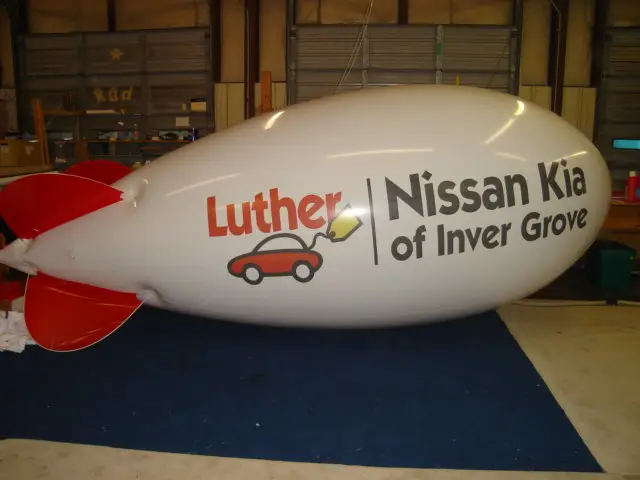
Digital ads create awareness and intent — but the moment a potential buyer is driving past a dealership strip, physical visibility determines whether they pull in. This is where helium advertising balloons and tethered marketing blimps deliver a return that no digital channel can replicate: instant, high-altitude visibility at the precise location where the purchase decision happens.
For auto dealers, aerial advertising tools solve a specific problem. Dealer rows — commonly found on commercial corridors with multiple competing franchises — create visual noise at ground level. Flags and banners compete for attention. A helium blimp floating 50 to 150 feet above the lot rises above that clutter and signals activity, energy, and a sales event to drivers approaching from blocks away. The visual cue works like a landmark, making the lot easier to find and creating the impression of an active, high-traffic environment — which itself draws more traffic through social proof.
Timed to complement digital campaigns, aerial advertising can dramatically amplify their conversion rate. When a shopper sees a VIN-specific video ad on Instagram for a truck in their price range, then drives by the dealership and spots a blimp or balloon cluster above the lot, the two-touch sequence reinforces both brand recall and urgency. This coordinated approach — digital reach plus physical presence — mirrors the omnichannel playbook that is now standard among the top-performing dealer groups. Arizona Balloon Company has supplied helium advertising balloons and aerial marketing blimps to auto dealers across the United States, helping dealerships stand out during weekend sales events, new model launches, and inventory clearance periods.
Practically, helium advertising balloons and blimps are among the lowest cost-per-impression outdoor advertising tools available to a dealership. A single large blimp or balloon cluster, visible from a major road, generates repeated impressions from the same commuters and local residents every day it is deployed — with no recurring media cost beyond the rental or purchase. For dealers working with compressed front-end margins in 2026, that efficiency matters.
What This Means for Your Marketing
The Cars.com AI video campaign results confirm what multi-channel marketing research has suggested for years: combining high-reach digital media with strong physical location presence produces compounding returns. A 45% increase in influenced lot visits from a 30-day campaign is a result that no dealership marketing manager should ignore. The underlying mechanism — serving inventory-specific video to active in-market shoppers — eliminates much of the waste in traditional broadcast advertising. But the data also implies that digital reach alone is not closing the loop; influenced foot traffic still requires the physical dealership experience to convert.
For auto dealers building their 2026 marketing mix, the strategic implication is straightforward: invest in digital tools that build intent, and invest equally in physical lot presence that converts intent into visits. Out-of-home advertising, dealership events, and aerial visibility tools — including helium advertising balloons and aerial marketing blimps from Arizona Balloon Company — fill the gap between a buyer who has decided to visit your lot and one who actually pulls in. During high-stakes selling windows such as spring inventory pushes, tax-refund season, and year-end clearance events, that final conversion layer can be the difference between a record month and a missed opportunity.
Marketing decision-makers should also consider the timing dimension. Cars.com’s campaign ran March through April — precisely when seasonal demand typically rises, inventory turns begin to accelerate, and foot traffic data shows dealerships can capture the highest volume of uncommitted walk-in shoppers. Deploying a helium blimp or balloon cluster during those same windows, coordinated with a digital push, positions the dealership to capture both online intent and drive-by curiosity simultaneously. Contact Arizona Balloon Company to discuss rental and purchase options sized to your dealership’s lot and visibility needs.
Sources
- Cars.com AI Video Ad Solution — 45% Foot Traffic Lift, 47% Sales Lift (April 27, 2026) — StockTitan / PRNewswire
- Cox Automotive 2026 U.S. Auto Sales Outlook — 15.8 Million Units Projected — Cox Automotive Inc.
- Cox Automotive 2026 Strategic Themes and Sales Forecast — Cox Automotive Inc.
- March 2026 U.S. Auto Sales — S&P Global Mobility
- Automotive Digital Marketing Trends for 2026 — ACV Auctions
- How to Market a Car Dealership in 2026: The Complete Guide — Vertical Impression
- Top 150 Dealership Groups 2026 — Automotive News