Helium Advertising Balloons Face Continued Price Pressure as Qatar Restarts Production
Arizona Balloon Company (arizonaballoon.com) — July 4, 2026
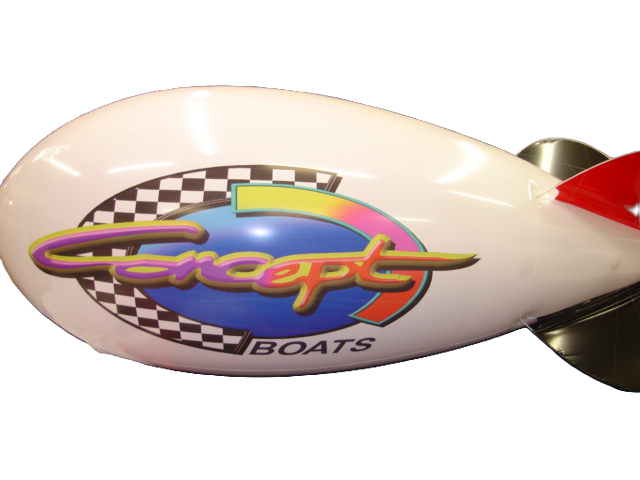
Qatar’s Helium2 Plant Partial Restart: What Happened
Businesses that rely on helium advertising balloons got a small but meaningful piece of news this week: Qatar’s state-owned QatarEnergy has partially restarted production at its Helium2 plant in Ras Laffan Industrial City, according to industry outlet gasworld. The restart follows the return to operation of some liquefied natural gas trains, since helium is produced as a byproduct of LNG processing. Industry sources estimate the plant is currently running at less than 30 percent of normal capacity — reportedly using just one of four fill bays — meaning any relief to the market will be gradual, not immediate.
The restart comes months after Iranian strikes on Ras Laffan in March 2026 knocked out a significant share of global helium supply and forced QatarEnergy to declare force majeure on contracts. For companies like Arizona Balloon Company, which manufactures and rents advertising blimps for home builders, trade shows, and auto dealers nationwide, that disruption has been felt directly in helium costs and availability over the past several months.
Why This Matters for Helium Advertising Balloons
Qatar accounts for roughly 30 percent of the world’s helium capacity, and more than 80 percent of that output comes from the Helium 1 and Helium 2 facilities inside Ras Laffan. When that supply went offline, ripple effects hit every industry that depends on helium — from MRI machines and semiconductor fabrication to the party and events sector, and yes, the businesses that fly promotional balloons and blimps over dealerships, grand openings, and model home communities.
The restart timeline remains uncertain. Experts note that a fuller recovery depends less on the plant itself and more on confidence in safe passage through the Strait of Hormuz, the shipping corridor Qatar relies on to move liquefied natural gas — and its helium byproduct — to global markets. QatarEnergy has told customers it expects to restore about 50 percent of production capacity within a month of stable strait passage, and roughly 80 percent within two months.

The Bigger Picture: A Year of Helium Disruption
This is the fifth major global helium shortage in twenty years, and industry consultants have described 2026 as a potential “Helium Shortage 5.0.” The chain of events began on March 2, when Iranian drone and missile strikes damaged production infrastructure at Ras Laffan, prompting QatarEnergy to halt output and declare force majeure two days later. A second round of strikes on March 18–19 deepened the damage. The situation was complicated further on June 21, when an explosion and fire at the Barzan gas facility inside Ras Laffan injured dozens during restart operations — a stark reminder that recommissioning a complex of this scale carries real operational risk, even as the broader conflict has cooled.
Helium distributors across the U.S. have responded by rationing supply, prioritizing healthcare customers, and adding surcharges to whatever volumes they can deliver. Several major suppliers invoked force majeure clauses of their own earlier this year, and industry analysts have said contract renegotiations are coming in well above prior pricing.
What Business Owners Should Expect on Pricing
For marketing managers planning aerial campaigns, the practical takeaway is patience paired with flexibility. Even with Qatar’s plant partially back online, helium supply is expected to remain tight and pricing elevated for months, not weeks. Businesses that budget for helium advertising balloons or blimp rentals this summer and fall should build in some cushion for surcharges, and should expect vendors to communicate more proactively about availability windows than they may have in past years.
At the same time, this is not a moment to abandon aerial advertising. Outdoor visibility remains one of the most cost-effective ways to draw attention to a physical location, and the businesses that plan ahead — rather than waiting until the week of an event — are the ones least likely to be caught short.
How the Advertising Balloon Industry Is Adapting
Manufacturers and rental providers have spent much of 2026 adjusting to tighter helium supplies. Some have shifted customers toward products engineered for slower helium loss, such as polyurethane blimps, which retain lift longer than standard PVC inflatables and require fewer top-off visits over a multi-week campaign. Others are encouraging clients to consider weekend or short-duration rental programs instead of long-term installations, matching helium use — and cost — more closely to the days when foot traffic is actually highest, such as grand openings or model-home tour weekends.
What This Means for Your Marketing
Outdoor, location-based marketing has always worked because it puts a brand physically in front of the people most likely to walk through the door — shoppers driving past a grand opening, families touring a new home community, or fans headed into a stadium lot. That fundamental advantage hasn’t changed, even as helium costs have. What has changed is the need to plan a little further in advance and to work with a vendor who can be transparent about current supply conditions.
For home builders, auto dealers, and trade show exhibitors weighing whether to move forward with an aerial campaign this year, the smartest approach is usually a hybrid one: book early, ask vendors directly about their current helium sourcing and pricing, and consider concentrating helium advertising balloons around the highest-traffic days of a promotion rather than running them continuously.
Businesses that want a lower-commitment way to test aerial marketing while supply conditions remain unsettled may also want to ask about weekend rental programs or durable polyurethane options, which stretch helium further over the life of a campaign than standard inflatables.
Sources
- gasworld: Full restart of Qatar’s Helium2 hinges on Strait of Hormuz stability
- The National: At least 13 killed and 66 injured in explosion at Qatar’s Ras Laffan gas hub
- OilPrice.com: Explosion at Qatar’s Ras Laffan LNG Injures Dozens
- gasworld: QatarEnergy confirms explosion during Ras Laffan restart
- WestAir: 2026 Helium Shortage — Why Recovery Will Take Years, Not Weeks