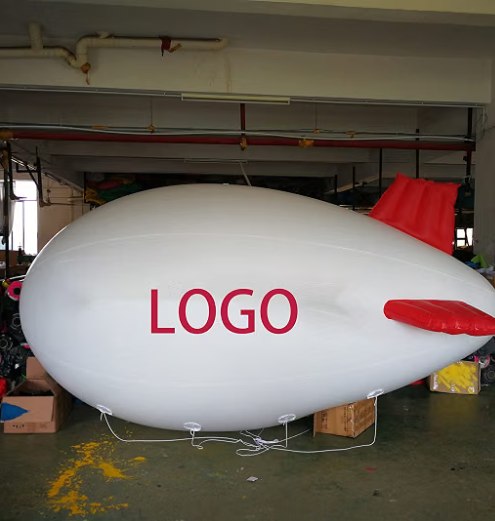
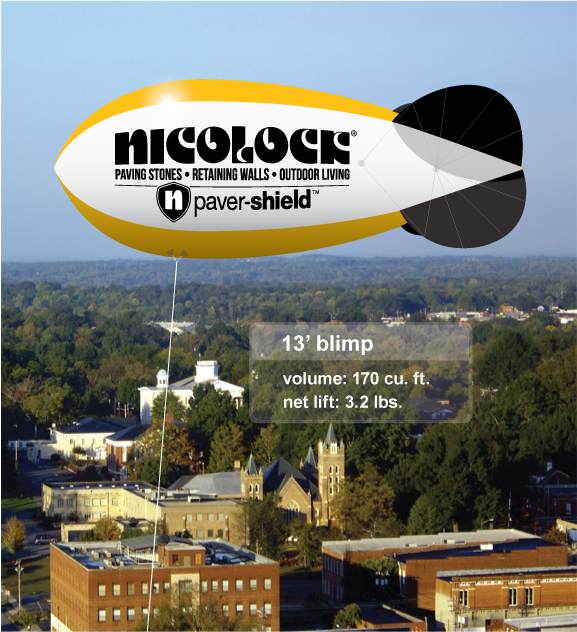
Blimp advertising is back in the national conversation after Rockstar Games put a Goodyear airship in Vice City livery into the sky as part of its real-world promotion for Grand Theft Auto VI. Reports on October 12 said the airship was flying south from Ohio, and the coverage has continued this week as Rockstar published photos of it over Miami. For business owners, it is a high-profile example of how a single aerial asset can anchor a much larger campaign. Companies that already use helium-filled advertising products will recognize the logic.
According to GTABoom, the ship is Goodyear’s Wingfoot Three, tail number N3A, and it can be tracked live on FlightAware. Posts from airship watchers suggested it was repositioning to Pompano Beach, where Goodyear keeps its only permanent Florida airship base. The same report notes that neither Rockstar nor Goodyear had published an official route. It also points out that the aircraft is a semi-rigid Zeppelin NT rather than a traditional blimp, and that only six of that type fly worldwide, three of them with Goodyear in the United States.
How the Blimp Fits a City-Scale Campaign
The airship is one piece of a broader push. Gfinity Esports reports that the game launches on November 19, 2026, and that Miami Beach was set to carry subtle GTA 6 branding on beach chairs and umbrellas starting October 15. Murals have also appeared in cities such as New York and Paris. Another report describes promotional banner planes, stadium advertising, and a one-game rebrand of the Miami Heat.
NoobFeed notes that Rockstar shared photos of the blimp flying over Miami on its official social accounts. The images, it says, look almost like in-game screenshots, with the airship hovering above buildings and streets. That detail matters for marketers: the aircraft was not only seen by people on the ground, it also became a ready-made photo subject for social media.
Why Aerial Media Still Cuts Through
Digital ads compete with an endless feed. An airship overhead competes with almost nothing. It is large, slow, and visible from a long distance, so viewers have time to notice it and work out who is behind it. Local reporting on Goodyear flights over the years has repeatedly described crowds stopping to look up and film, which is the kind of earned attention that paid impressions struggle to replicate.
The Vice City campaign shows a second advantage: physical media can feed digital channels. People who see the ship in person post about it, trackers follow it online, and gaming and local news outlets write it up. A well-placed aerial asset gives audiences a reason to share the brand without being asked.
Lessons for Builders, Dealers, and Exhibitors
Few businesses will book a Goodyear-scale airship, but the principle scales down. Helium advertising balloons and marketing blimps offer the same core benefits at a fraction of the size: height, motion, and a large branded surface visible from a distance. For home builders, a tethered aerial display above a new community can make a sales center easy to find from the road. For auto dealers, an overhead balloon signals a sales event before drivers can read a storefront sign. For trade show exhibitors, an indoor blimp or balloon draws traffic to a booth across a crowded hall.
Large-scale outdoor campaigns can draw scrutiny. Gadget Review reports that Rockstar’s “Welcome to Vice City” sign at the Kaseya Center carries a reported placement deal of $975,000, and that Miami-Dade commissioners have clashed over the partnership, citing concerns about the city’s image. Those figures are reported rather than confirmed by the companies involved.
The takeaway for smaller advertisers is practical. High-visibility placements invite public reaction, so brand messaging and local permissions deserve planning. Aerial advertising also operates under airspace and local-use rules, which vary by location and equipment type, so any program should be confirmed with the relevant authorities before launch.
What This Means for Your Marketing
The most useful lesson from this campaign is coordination. The airship works because it shows up alongside ground-level touchpoints in the same market, all pointing at one launch date. Location-based marketing is strongest when an outdoor asset has a specific job, such as announcing a grand opening, marking a sales weekend, or directing foot traffic to a venue, rather than floating without a call to action.
Local businesses can apply the same approach on a practical budget. Pick a high-traffic location, set a defined event window, and pair the display with social posts, signage, and a clear offer. Encourage visitors to photograph and share it, since the Vice City example shows how much of a campaign’s reach comes from people capturing the sight themselves.
If you are weighing options for a launch, grand opening, or trade show, explore aerial marketing blimps and compare sizes, tethering needs, and lead times against your event calendar. Planning early leaves room for custom artwork and logistics.
The 54th Albuquerque International Balloon Fiesta opened Saturday, Oct. 3, 2026, and runs through Oct. 11 at Balloon Fiesta Park. For businesses that rely on helium advertising balloons, the event works as a nine-day demonstration of how lighter-than-air objects hold public attention. Visit Albuquerque describes more than 500 balloons lifting off during the festival. The Santa Fe New Mexican reported that roughly 550 balloonists took part in the opening mass ascension.
The event has grown considerably since it began in 1972 with 13 balloons at an Albuquerque mall. It is now widely described as the largest balloon gathering in the world. Companies that build, rent, and operate aerial advertising products, such as the Arizona Balloon Company and its custom helium advertising balloons, watch it closely. The crowds show how strongly people respond to large, colorful aircraft overhead.
A 94-Balloon Helium Flight Joins the Field
Most balloons at the fiesta are hot air balloons that use propane burners for lift. This year a different kind of craft flew alongside them. Santa Fe native Jonathan Trappe launched a gas cluster balloon, with 94 individual helium balloons attached to a gondola. The New Mexican reported that it was the first of its type to fly in the fiesta and one of only a handful in the world. Observers compared it to the animated film Up. The flight also recalled a 1937 flight by balloonist Jean Piccard.
The contrast is a useful reminder for marketers. Hot air balloons need a burner crew and a fuel supply, while helium lift is what lets tethered promotional balloons and larger advertising blimps stay aloft without a flame. Trappe landed in Arizona the same day, according to the report, which shows how far a helium craft can travel.
Weather, Wires and Operational Risk
The fiesta also showed the operational side of aerial work. The New Mexican noted that winds allowed liftoff on opening day this year, unlike last year. Organizers were aware of a couple of balloons that touched power lines, and New Mexico State Police reported seven balloon-related incidents. No injuries were reported.
Organizers said they make launch decisions session by session based on current conditions. The forecast for the rest of the week called for no rain and highs from the mid-70s to low 80s.
For any business that uses an aerial advertising product, the lesson is the same. Wind, weather, and nearby obstacles such as power lines drive scheduling and site selection. Experienced operators plan around them.
Why Crowds Look Up and Film It
The New Mexican’s coverage captured how audiences behaved. Spectators held cellphones high to capture the launches, and a 5-year-old pointed out each balloon as it rose. After one balloon landed on a residential street, neighbors came out in their pajamas to help, then applauded.
Those moments reflect what advertisers value most: attention that feels voluntary and gets shared. People photograph a floating object and post it, and any brand or message printed on the envelope travels with the image. That kind of earned reach is difficult to create with static signage alone.
What Aerial Advertising Means for Your Industry
Aerial advertising is an established part of outdoor marketing, and the fiesta shows why it persists. Several of the industries that use it can apply the same principles:
Home builders: A tethered balloon above a model home or new community is visible from nearby roads, which helps with grand openings and weekend traffic.
Auto dealers: Sales events use height and motion to stand out from a lot full of vehicles.
Trade show exhibitors: Overhead branding draws attention across a crowded exhibit hall.
Balloon and blimp companies: Large events like the fiesta show buyers what is possible, which can raise interest in custom shapes and sizes.
The fiesta does not prove results for any one campaign, and it is a festival rather than a retail setting. It does show how people respond when large aircraft fill the sky, and that response is the basis of the case for helium advertising balloons and marketing blimps.
What This Means for Your Marketing
Location-based marketing works best when the medium suits the site. The fiesta succeeds because the sky is the attraction, and a business can borrow that logic on a smaller scale. Pick a high-traffic spot, such as a development entrance, a dealership frontage, or an exhibit floor. Then use height, color, and motion to stand out against a flat background.
Plan for conditions too. As the fiesta shows, wind and obstacles shape what is practical on a given day. Decide in advance who will manage setup, tethering, and takedown, and build backup dates into your event schedule. Clear branding that reads from a distance matters more than detail, because most viewers see an aerial display from far away and for a short time.
If you are weighing options for an upcoming opening, sale, or exhibit, helium advertising balloons and aerial marketing blimps can be matched to your site, budget, and timeline. Compare sizes, expected visibility, and rental or purchase terms before committing, and measure results, such as foot traffic or inquiries, so you can judge what the display is worth.
“`html
Biodegradable Advertising Balloons: What’s New
Biodegradable Advertising Balloons: A New Breakthrough
Byline: Arizona Balloon Company (arizonaballoon.com) — August 25, 2026
A Green Breakthrough in Balloon Materials
Researchers at Imperial College London have announced a development that could reshape how the world thinks about balloon materials: a fully biodegradable balloon nicknamed the “Bioloon.” According to reporting this week, the project’s creators, including PhD student Juliana Cumming, went through hundreds of trials and setbacks before landing on a formulation the team hopes to bring to market within two years. For an industry built on rubber, latex, and synthetic film, the announcement is being described as a genuine green makeover — and it lands at a moment when biodegradable advertising balloons and other sustainable inflatables are becoming a bigger conversation among manufacturers, event planners, and the businesses that rely on them. Anyone who follows helium advertising balloon and blimp manufacturing closely will recognize this as part of a longer arc: materials science slowly catching up to decades of environmental criticism aimed at the balloon category.
Why This Matters Beyond Party Supplies
It would be easy to file this under novelty science news, but the implications reach further than birthday parties and celebrations. Balloons have faced mounting scrutiny over litter, wildlife entanglement, and single-use plastic waste, and several U.S. states and municipalities already restrict mass balloon releases. A viable, market-ready biodegradable material would give manufacturers — including those producing commercial-grade custom advertising balloons — a credible answer to sustainability questions from clients, landlords, and city permitting offices. It also gives marketing decision-makers something concrete to point to when a customer or community group raises environmental objections to large-scale inflatable campaigns.
The Environmental Pressure Facing the Balloon Industry
Balloon releases and disposable latex products have long drawn criticism from environmental groups, and that pressure has only intensified as consumers and regulators pay closer attention to plastics and rubber waste. The Imperial College team’s work directly targets that criticism by engineering a balloon that breaks down naturally rather than lingering in landfills, waterways, or coastlines. While the research is still in the commercialization phase, its existence signals that investors and scientists see real demand for greener alternatives across the entire balloon category, not just the party and event segment.
Material Innovation and the Advertising Balloon Business
Commercial and advertising balloons already operate differently from single-use party balloons. Reputable manufacturers use durable, reusable materials designed for repeated inflation and multi-week or multi-month promotional campaigns rather than one-time release. Even so, breakthroughs like the Bioloon put pressure on the entire supply chain to keep improving. Manufacturers that produce reusable, long-life advertising inflatables are already positioned ahead of the disposable end of the market, but continued innovation in biodegradable and lower-impact materials gives the whole industry more credibility with environmentally conscious clients, from home builders to auto dealers.
Polyurethane vs. PVC vs. Biodegradable: Where Things Stand Today
For businesses evaluating a helium display, material choice already matters for cost and performance, not just sustainability. Polyurethane balloons and blimps typically retain helium far longer than standard PVC, reducing refill frequency and total helium spend over a rental period. Biodegradable materials like the one described this week are aimed at a different problem — end-of-life waste — rather than in-flight performance, and it will likely take time before they match the durability marketers expect from a multi-week campaign. In the near term, expect reusable, high-retention materials to remain the practical choice for advertising applications, with biodegradable options developing alongside them as a complementary, lower-waste option for shorter-term or single-use scenarios.
What Business Owners Should Watch Next
Marketing managers weighing outdoor advertising options don’t need to wait on lab breakthroughs to make responsible choices today. Asking vendors about material composition, helium efficiency, and reusability is a reasonable step, and it is likely to become a more common question as environmental awareness around balloons grows. Over the next two years, keep an eye on whether biodegradable materials reach commercial scale and whether they get adapted for larger, reusable formats suited to advertising rather than single-use party products.
What This Means for Your Marketing
Outdoor, location-based marketing continues to earn its place in a media mix precisely because it is hard to ignore — a tethered blimp above a model home or a branded sphere over a dealership lot delivers visibility that digital ads simply cannot replicate at street level. As environmental questions around balloon materials get more attention, businesses that invest in durable, reusable, low-helium-loss equipment are better positioned to answer those questions honestly, rather than defending single-use products.
For home builders, trade show exhibitors, and auto dealers, the practical takeaway is straightforward: choose vendors who build for reuse and helium efficiency, and treat sustainability as part of the pitch, not an afterthought. A grand opening, model-home weekend, or trade show booth doesn’t need to choose between high visibility and responsible materials.
Businesses exploring outdoor campaigns can review options for helium advertising balloons built on reusable, efficient materials designed to perform over repeated deployments rather than a single event.
By Johnny Mulder — owner of Arizona Balloon Company, building polyurethane advertising blimps and balloons in Glendale, Arizona since 1979 (clients include NASA, JPL, and the U.S. Navy).
Grand Opening Advertising Balloons Drive 2026 Retail Boom
By Arizona Balloon Company (arizonaballoon.com) — June 18, 2026
A Record Year for New Store Openings
Grand opening advertising balloons are becoming a fixture of the retail landscape as the United States heads into one of its busiest years for new store launches in recent memory. Industry reports indicate that U.S. retailers are projected to open roughly 5,500 new locations in 2026, a wave of expansion fueled by national chains including Aldi, Dollar General, Burlington, Nordstrom Rack, and Barnes & Noble. For business owners and marketing decision-makers, that number represents both opportunity and a serious competitive challenge: thousands of new storefronts opening within months of one another, all competing for the same pool of local shoppers, drivers, and foot traffic.
This surge is not limited to a single region or retail category. From suburban shopping centers to standalone pads near major intersections, new locations are opening at a pace that outstrips most local markets’ ability to absorb attention organically. That has pushed outdoor visibility tools, including advertising balloons, back into the spotlight as a practical way to cut through the noise on opening day and during the critical weeks that follow.
Why Roadside Visibility Now Decides First-Month Sales
Marketing experts following the 2026 expansion trend point to a simple but important reality: a new store’s first 30 to 90 days largely determine its long-term trajectory. Lease terms, staffing decisions, and inventory commitments are often made based on early sales performance, which means a slow opening can have consequences that last well beyond the launch event itself. With so many competing openings happening simultaneously, businesses can no longer assume that a sign in the window and a ribbon-cutting ceremony will generate sufficient walk-in traffic.
Roadside and aerial visibility has become a measurable lever in this equation. A large inflatable visible from a highway exit or major arterial road communicates “something new is happening here” to thousands of passing drivers per day, often at a lower cost per impression than short-term digital ad buys in the same trade area. For a full overview of how the company approaches launch marketing, businesses can visit the Arizona Balloon Company homepage to see the range of products built for exactly this kind of high-volume launch season.
How Businesses Are Responding to the Competition for Attention
As competition for local attention intensifies, retailers and franchise operators are increasingly layering outdoor advertising into launches that previously relied mostly on digital channels. Social media promotion and geotargeted ads remain central to most grand opening playbooks, but marketers report that physical, large-scale visual cues still play an outsized role in driving same-day walk-ins, particularly for shoppers who are not already following a brand online. Inflatable displays, custom balloons, and marketing blimps offer a way to physically mark a location as active and open, something a social post alone cannot do for someone driving past at 45 miles per hour.
This is not a new tactic, but the scale of the 2026 expansion has renewed interest in doing it well rather than as an afterthought. Businesses are asking more detailed questions about sizing, branding customization, helium retention, and rental versus purchase options, treating the inflatable as a planned marketing asset rather than a last-minute decoration.
Beyond Retail: Home Builders, Auto Dealers, and Trade Shows Face the Same Pressure
While national retail chains are driving most of the 2026 headline numbers, the underlying pressure, too many openings competing for too little local attention, applies just as directly to home builders launching new model home communities, auto dealers running weekend sales events, and trade show exhibitors trying to stand out on a crowded show floor. Each of these groups depends on converting passing attention into a visit within a narrow window of time, and each has historically used balloons or inflatable signage to do it.
For home builders specifically, a new community launch often competes with several other builders opening phases in the same submarket during the same selling season. A visible aerial marker at the entrance can be the difference between a prospective buyer noticing the turn-in or driving past it entirely. Businesses exploring options for community launches, dealership events, or exhibition booths can review available configurations, including advertising blimps built for sustained multi-week visibility, as part of planning for the remainder of the 2026 season.
A Three-Phase Approach to Grand Opening Marketing
Industry guidance circulating among marketing teams ahead of 2026’s expansion wave generally recommends breaking grand opening visibility into three phases rather than treating it as a single event. The first phase, pre-opening awareness, uses signage and smaller inflatables in the weeks leading up to launch to signal that a location is coming. The second phase, opening-day impact, concentrates the largest and most visible assets, balloons, blimps, or full inflatable arches, on the day itself to maximize walk-in traffic during the highest-attention window. The third phase, post-opening visibility, scales back to lighter, ongoing signage that keeps the location top-of-mind during the weeks when initial buzz typically fades and repeat-visit habits are still forming.
This phased structure matters because grand opening foot traffic tends to spike sharply on day one and then decline quickly if there is no sustained visual reminder. Businesses that plan only for the opening weekend often see a hard drop-off in week two, precisely when many new locations are still trying to establish a routine customer base.
Why Durability and Material Quality Matter More Than Ever
As more businesses turn to inflatables during the same compressed launch season, material quality has become a practical concern rather than a minor detail. Standard PVC balloons can lose helium and shape relatively quickly, which is a meaningful issue for any business running a multi-week promotional campaign rather than a single-day event. Premium polyurethane construction, by comparison, is built to hold helium longer and withstand outdoor exposure, sun, wind, and repeated handling, over an extended campaign window. For businesses planning anything beyond a one-day event, the choice of material directly affects how long the investment stays effective without needing a refill or replacement mid-campaign.
What This Means for Your Marketing
The 2026 retail expansion boom is a useful reminder that outdoor, location-based marketing has not been replaced by digital channels, it has become a complement to them. When thousands of new locations are competing for attention within the same calendar year, the businesses that combine targeted digital promotion with high-visibility physical presence tend to convert more of that local awareness into actual foot traffic on opening day. A well-placed inflatable does something a banner ad cannot: it creates a physical landmark that drivers and pedestrians notice in real time, without requiring them to be looking at a screen.
For home builders, auto dealers, trade show exhibitors, and general businesses planning launches, sales events, or seasonal promotions through the rest of 2026, the practical takeaway is to plan outdoor visibility the same way a marketing team plans a digital ad calendar: with a defined timeline, a clear visibility goal, and a budget that matches the length of the campaign. Businesses evaluating their options for an upcoming launch can review available helium advertising balloons and aerial marketing blimps to determine which format best fits the scale and duration of their event.
Ultimately, the core lesson from this year’s expansion wave is straightforward: in a market with this much simultaneous competition for attention, visibility is not a detail to finalize the week before launch. It is a planning decision that deserves the same lead time as staffing, inventory, and signage.
Industry Shift: Why Event Organizers Are Rethinking Helium Costs
A significant development is reshaping how businesses approach outdoor event promotion in the United States: the rapid adoption of polyurethane advertising blimps as a cost-efficient alternative to traditional PVC promotional balloons. As industrial helium prices remain elevated and live events continue to surge post-pandemic, event organizers are finding that conventional vinyl balloons are increasingly difficult to justify on tighter marketing budgets. The industry is responding with advanced materials science that dramatically reduces the amount of helium needed to keep a blimp aloft for days at a time.
In late March 2026, Arizona Balloon Company—a Glendale, Arizona manufacturer with over 45 years in the aerial advertising business—announced the launch of EventAdvertisingBlimp.com, a dedicated nationwide sales platform for its proprietary polyurethane event blimps. The move signals broader momentum in the balloon and airship industry toward materials-driven innovation as a practical response to supply-side helium challenges.
The announcement arrives at a pivotal moment. Helium supply has been subject to notable volatility in recent years, driven in part by geopolitical factors affecting major producing regions. For event promoters running multi-day festivals, state fairs, touring campaigns, or seasonal retail promotions, that volatility translates directly into unpredictable operational costs that can erode marketing ROI.
The Polyurethane Advantage: More Lift, Less Helium
At the core of the news story is a straightforward engineering principle: polyurethane has significantly lower gas permeability than traditional PVC. Because gas molecules escape through the envelope more slowly, a polyurethane blimp retains helium longer between refills—dramatically reducing total helium consumption over the life of a campaign.
According to Arizona Balloon Company owner Johnny Mulder, a standard 10-foot polyurethane blimp requires approximately 72 cubic feet of helium, while a conventional PVC blimp of similar outdoor performance may require 600 cubic feet or more. That reduction of up to 87% in helium usage can translate into substantial savings for events spanning multiple days or weekends. For a touring promotion moving from city to city, those savings compound quickly.
The company’s current lineup ranges from 10 to 30 feet in length, covering the spectrum of use cases from retail grand openings and car dealership lots to large-scale outdoor festivals and trade show campuses. All units are manufactured in Glendale, Arizona and are available with custom digital printing, with lead times of one to three weeks for most custom orders.
Live Events Rebound Drives Demand for Aerial Advertising
The timing of this product launch reflects a broader recovery across the U.S. events industry. Music festivals, sporting events, state fairs, rodeos, and outdoor retail promotions have all seen strong attendance rebounds in 2025 and into 2026. That recovery has reignited demand for high-visibility marketing solutions that work at scale in crowded outdoor environments—exactly the conditions where tethered aerial displays excel.
Digital advertising, while ubiquitous, faces saturation problems in event environments. Attendees at festivals or fairgrounds are largely off their phones and moving through physical space. A brightly branded blimp floating 50 to 200 feet above a venue entrance or sponsor zone creates an unmistakable landmark that functions simultaneously as wayfinding signage, brand impression, and conversation starter. Arizona Balloon Company specifically recommends short, punchy messaging of two to five words—such as “ENTRANCE,” “PARKING,” or a sponsor’s name—for maximum legibility from a distance.
Industry observers note that large-format aerial displays are also increasingly popular for guiding attendees through sprawling venues, reducing wayfinding confusion and improving the overall event experience. That dual function—marketing and logistics—gives tethered blimps a compelling value proposition beyond pure brand exposure.
What This Means for the Balloon and Airship Industry
For the broader balloon and airship industry, the Arizona Balloon Company announcement is part of a larger story about materials innovation driving commercial viability. While headlines in the lighter-than-air world have been dominated by large-scale cargo airship projects—such as LTA Research’s Pathfinder 1 and Hybrid Air Vehicles’ Airlander 10—the commercial advertising balloon segment has been quietly making practical advances of its own.
According to market research published in early 2026, the global airship market is projected to reach $235 million in 2025 and grow at a compound annual rate of 8.8% through 2033, with advertising listed as one of the key application segments driving expansion. Within that context, the shift toward polyurethane construction in promotional blimps represents a meaningful reduction in one of the primary cost barriers that has historically limited adoption for smaller and mid-sized businesses.
The availability of a nationwide e-commerce platform for these products also signals a maturation of the advertising balloon market. Rather than relying solely on regional relationships and direct sales calls, manufacturers are now meeting marketing decision-makers where they research purchases: online, with self-service tools like helium usage estimators and sizing guides that let buyers model costs before picking up the phone.
For companies already operating in the balloon and blimp space—rental houses, event production companies, and regional advertising balloon vendors—this trend toward lower helium consumption per unit is significant. It expands the pool of clients for whom aerial advertising is financially practical, particularly those running longer campaigns or working with regional budgets that would have previously been priced out by helium costs alone.
Best Use Cases: From Grand Openings to Trade Shows
The applications most directly benefiting from polyurethane blimp technology align closely with the primary client segments that rely on aerial advertising as a core marketing tool. Homebuilders running model home grand openings and new community launches often need blimps in place for days or weeks at a stretch—exactly the scenario where 87% lower helium usage produces the largest absolute savings.
Auto dealerships, another core segment for aerial advertising, similarly benefit from extended deployment windows. A blimp promoting a weekend sales event or a month-long clearance campaign needs to stay inflated and visible throughout—and the lower refill frequency of polyurethane construction reduces the labor and gas costs associated with maintenance.
Trade show exhibitors operating in outdoor festival or fairground environments have a distinct set of needs: they need blimps that are visually striking from a distance, easy to transport between venues, and reliable across varying weather conditions. The lighter weight of polyurethane material and its extended helium retention make it a practical fit for exhibitors touring regional circuits throughout the spring and summer season.
General retail businesses—from restaurant chains to home improvement stores—rounding out the client picture often have the most budget sensitivity of any segment. For these clients, the reduction in helium consumption directly determines whether aerial advertising is a viable option at all. Products that use dramatically less helium without sacrificing visibility are the key to unlocking this segment of the market.
What This Means for Your Marketing
The shift toward lower-cost aerial advertising materials is good news for any business that relies on outdoor, location-based visibility to drive traffic. If helium costs have previously discouraged you from running tethered balloon promotions for more than a day or two, the new generation of polyurethane blimps changes that calculation substantially. A promotion that once required a significant helium budget for a five-day event can now be planned with confidence—and the savings can be redirected toward additional custom printing, larger sizes, or multiple deployment locations.
For marketing decision-makers in real estate, automotive, events, and retail, the strategic implication is clear: aerial advertising is becoming more accessible, not less. As digital ad environments grow noisier and outdoor event attendance rebounds, the physical presence of a branded blimp above your location cuts through in a way that no screen-based ad can replicate. The key is selecting the right product for your campaign length, venue size, and budget—and that starts with understanding how material choice affects total cost of ownership, not just purchase price.
Arizona Balloon Company has specialized in helium advertising balloons and aerial marketing blimps for over four decades, serving homebuilders, auto dealers, trade show exhibitors, and event promoters across the United States. Whether you are planning a grand opening, a multi-day festival activation, or a seasonal retail push, their team offers sizing consultations and helium usage estimates to help you build a campaign that performs without overrunning your budget. Visit arizonaballoon.com to explore the full lineup of helium advertising balloons and aerial marketing blimps available for purchase, rental, or custom manufacturing.
In conclusion, polyurethane advertising blimps are redefining the advertising landscape.
Companies seeking innovative solutions will find polyurethane advertising blimps an ideal choice.
As the trend grows, more brands are likely to invest in polyurethane advertising blimps.
Ultimately, the choice of polyurethane advertising blimps is a forward-thinking strategy for marketers.
By incorporating polyurethane advertising blimps, companies enhance their branding efforts effectively.
The impact of using polyurethane advertising blimps can be measured through increased event participation.
With their unique design, polyurethane advertising blimps attract audience attention instantly.
The effective use of polyurethane advertising blimps can transform any marketing strategy.
Thanks to advancements, polyurethane advertising blimps can now be utilized in innovative ways.
The versatility of polyurethane advertising blimps makes them suitable for all types of marketing efforts.
Marketers are embracing polyurethane advertising blimps as a versatile tool for various events.
As demand rises, polyurethane advertising blimps are becoming a staple in promotional campaigns.
The unique attributes of polyurethane advertising blimps make them an asset for marketers.
When planning events, more organizers are considering polyurethane advertising blimps for their attention-grabbing potential.
The innovation of polyurethane advertising blimps is changing the landscape of outdoor marketing.
Businesses are discovering that polyurethane advertising blimps are not only effective but also environmentally friendly.
Utilizing polyurethane advertising blimps allows companies to stand out in competitive markets.
With the right strategy, polyurethane advertising blimps can significantly enhance brand visibility during events.
Event organizers are increasingly turning to polyurethane advertising blimps for their outdoor promotions. The benefits of using polyurethane advertising blimps are becoming clearer as businesses seek cost-effective solutions.