Blimp Advertising Takes Off: Rockstar’s Vice City Goodyear Blimp Over Miami
By Arizona Balloon Company (arizonaballoon.com) | October 24, 2026
A Vice City Airship Heads for Florida
Blimp advertising is back in the national conversation after Rockstar Games put a Goodyear airship in Vice City livery into the sky as part of its real-world promotion for Grand Theft Auto VI. Reports on October 12 said the airship was flying south from Ohio, and the coverage has continued this week as Rockstar published photos of it over Miami. For business owners, it is a high-profile example of how a single aerial asset can anchor a much larger campaign. Companies that already use helium-filled advertising products will recognize the logic.
According to GTABoom, the ship is Goodyear’s Wingfoot Three, tail number N3A, and it can be tracked live on FlightAware. Posts from airship watchers suggested it was repositioning to Pompano Beach, where Goodyear keeps its only permanent Florida airship base. The same report notes that neither Rockstar nor Goodyear had published an official route. It also points out that the aircraft is a semi-rigid Zeppelin NT rather than a traditional blimp, and that only six of that type fly worldwide, three of them with Goodyear in the United States.
How the Blimp Fits a City-Scale Campaign
The airship is one piece of a broader push. Gfinity Esports reports that the game launches on November 19, 2026, and that Miami Beach was set to carry subtle GTA 6 branding on beach chairs and umbrellas starting October 15. Murals have also appeared in cities such as New York and Paris. Another report describes promotional banner planes, stadium advertising, and a one-game rebrand of the Miami Heat.
NoobFeed notes that Rockstar shared photos of the blimp flying over Miami on its official social accounts. The images, it says, look almost like in-game screenshots, with the airship hovering above buildings and streets. That detail matters for marketers: the aircraft was not only seen by people on the ground, it also became a ready-made photo subject for social media.

Why Aerial Media Still Cuts Through
Digital ads compete with an endless feed. An airship overhead competes with almost nothing. It is large, slow, and visible from a long distance, so viewers have time to notice it and work out who is behind it. Local reporting on Goodyear flights over the years has repeatedly described crowds stopping to look up and film, which is the kind of earned attention that paid impressions struggle to replicate.
The Vice City campaign shows a second advantage: physical media can feed digital channels. People who see the ship in person post about it, trackers follow it online, and gaming and local news outlets write it up. A well-placed aerial asset gives audiences a reason to share the brand without being asked.
Lessons for Builders, Dealers, and Exhibitors
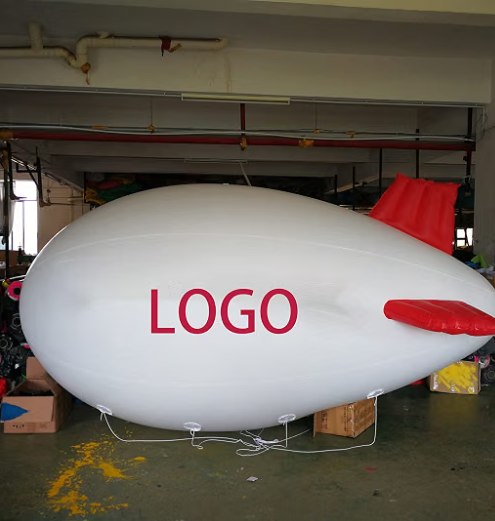
Few businesses will book a Goodyear-scale airship, but the principle scales down. Helium advertising balloons and marketing blimps offer the same core benefits at a fraction of the size: height, motion, and a large branded surface visible from a distance. For home builders, a tethered aerial display above a new community can make a sales center easy to find from the road. For auto dealers, an overhead balloon signals a sales event before drivers can read a storefront sign. For trade show exhibitors, an indoor blimp or balloon draws traffic to a booth across a crowded hall.
Industry observers have also noted that event-driven outdoor advertising with inflatables tends to see steady interest, though buyers need to plan around weather and avoid relying on novelty alone. Teams that want a custom option can review advertising blimps built for brand visibility or browse helium advertising balloons for events and storefronts.
The Cost and Controversy Question
Large-scale outdoor campaigns can draw scrutiny. Gadget Review reports that Rockstar’s “Welcome to Vice City” sign at the Kaseya Center carries a reported placement deal of $975,000, and that Miami-Dade commissioners have clashed over the partnership, citing concerns about the city’s image. Those figures are reported rather than confirmed by the companies involved.
The takeaway for smaller advertisers is practical. High-visibility placements invite public reaction, so brand messaging and local permissions deserve planning. Aerial advertising also operates under airspace and local-use rules, which vary by location and equipment type, so any program should be confirmed with the relevant authorities before launch.
What This Means for Your Marketing
The most useful lesson from this campaign is coordination. The airship works because it shows up alongside ground-level touchpoints in the same market, all pointing at one launch date. Location-based marketing is strongest when an outdoor asset has a specific job, such as announcing a grand opening, marking a sales weekend, or directing foot traffic to a venue, rather than floating without a call to action.
Local businesses can apply the same approach on a practical budget. Pick a high-traffic location, set a defined event window, and pair the display with social posts, signage, and a clear offer. Encourage visitors to photograph and share it, since the Vice City example shows how much of a campaign’s reach comes from people capturing the sight themselves.
If you are weighing options for a launch, grand opening, or trade show, explore aerial marketing blimps and compare sizes, tethering needs, and lead times against your event calendar. Planning early leaves room for custom artwork and logistics.