Author: Veena Furtado

  • Trade Show Booth Visibility Becomes a Bigger Challenge as Shows Sell Out

    Trade Show Booth Visibility: Why Sold-Out Shows Demand Bigger Marketing

    Trade Show Booth Visibility Becomes a Bigger Challenge as Shows Sell Out

    Arizona Balloon Company (arizonaballoon.com) — August 4, 2026

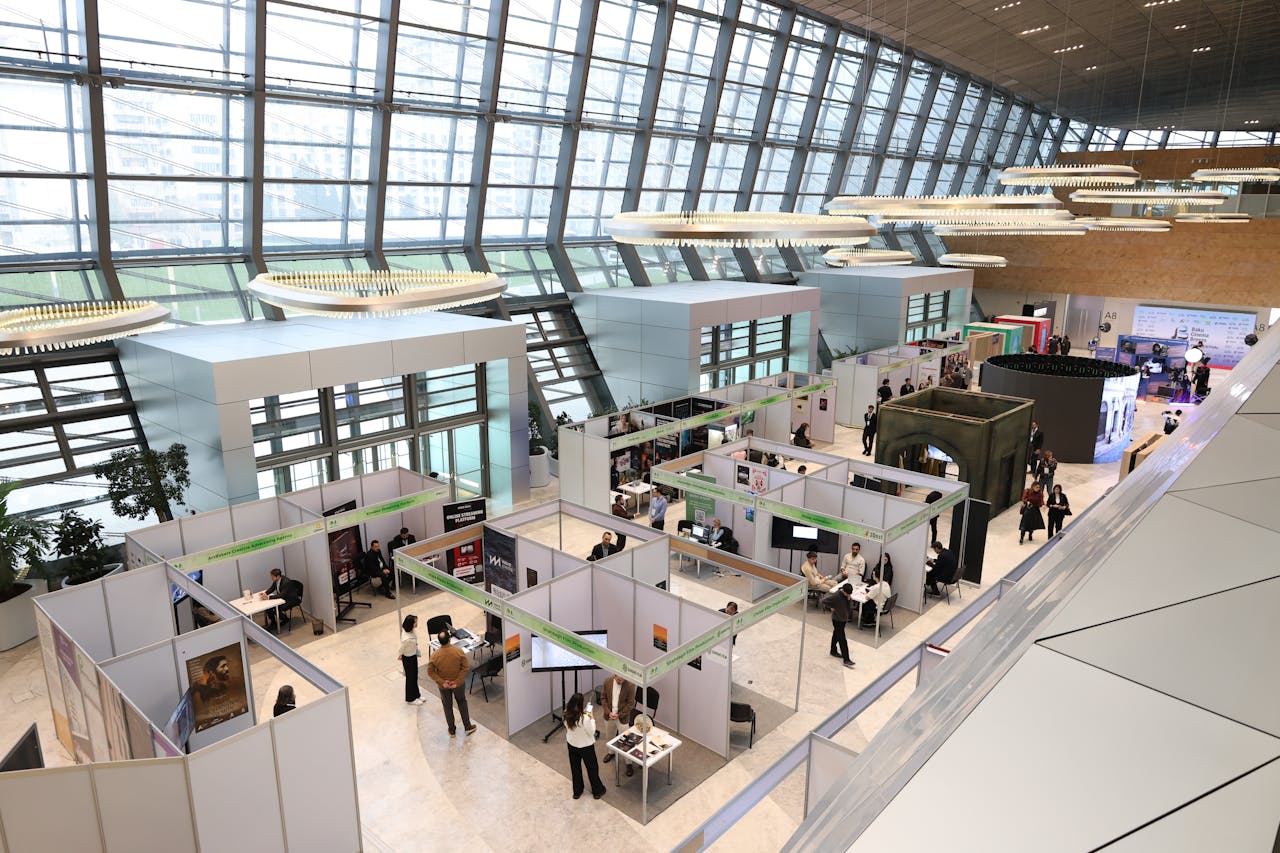
    trade show booth visibility at a crowded exhibitor hall

    A Sold-Out Trade Show Signals Rising Competition

    Trade show booth visibility is becoming a harder problem to solve as major U.S. exhibitions report record turnout. The Atlanta Shoe Market (TASM), one of the footwear industry’s key trade events, is heading into another sold-out edition on August 15-17, 2026, with roughly 1,100 registered exhibitors representing 1,800 brands. Retailer registrations are also climbing, up about 5 percent from the prior show, according to TASM executive director Laura Conwell O’Brien. The exhibitor waitlist has swelled past 60 brands, driven largely by international vendors looking for a foothold in the U.S. market.

    For companies that plan trade show appearances as part of their annual marketing calendar, this kind of growth is a signal worth paying attention to. When more exhibitors compete for the same buyer traffic, a well-placed booth is no longer enough on its own. Businesses that want their presence noticed are increasingly investing in strategies that extend visibility beyond the four walls of a standard booth space, a shift that companies exploring helium advertising balloons are already putting into practice.

    What Record Exhibitor Demand Means for Booth Visibility

    TASM’s growth is not an isolated case. Industry-wide data shows event budgets are expected to rise in 2026, with a strong majority of planners preferring in-person formats over virtual or hybrid alternatives. That preference is filling exhibition halls even as some venues undergo renovation and expansion to keep pace, as is the case at TASM’s host site, the Cobb Convention Center. The venue is adding a junior ballroom, eleven meeting rooms, and an executive boardroom totaling 24,000 square feet, with construction expected to wrap by early 2027.

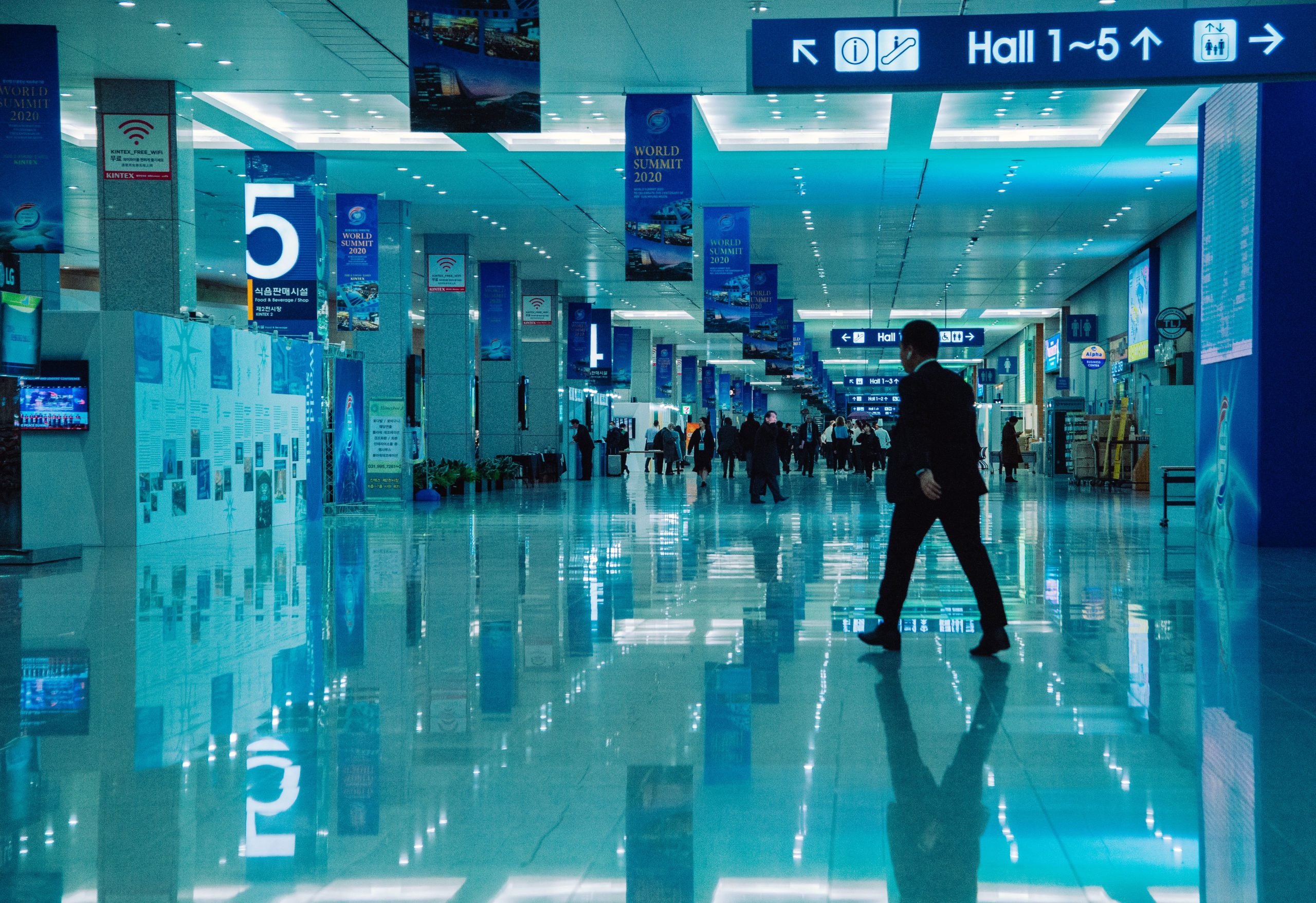
    More exhibitors and steady attendee recovery sound like good news for the trade show economy overall, and largely they are. But for individual businesses on the floor, it means the visual competition for attendee attention is intensifying every season. A booth that once stood out in a half-full hall can now be lost in a sea of nearly identical 10×10 and 10×20 displays.

    trade show booth visibility at a crowded exhibitor hall

    Crowded Floors Make Standing Out Harder

    Booth design experts have long pointed to visual impact as one of the top factors in attracting foot traffic. Roughly 48 percent of exhibitors report that eye-catching displays are what pull attendees in, ahead of giveaways or staff outreach. That statistic matters more in a sold-out hall than in a half-empty one, because the number of competing visual signals on the floor rises in direct proportion to the number of booths.

    At the same time, buyers are arriving at shows with more pre-show research already done and more specific agendas in hand. That shift rewards exhibitors who can be spotted quickly from a distance, rather than those who rely on attendees stumbling past a table. A visitor working from a mental checklist of “must-see” booths needs a clear landmark to navigate by, not just a logo at eye level.

    Why Elevated Marketing Is Gaining Ground

    This is where elevated, above-the-crowd marketing has started to earn a place in exhibitor budgets. Helium balloons, arches, and tethered inflatables give a booth a visual anchor that is visible from across a hall or a parking lot, well before an attendee is close enough to read signage. Unlike floor-level graphics, an elevated marker does not compete for space with neighboring booths; it simply rises above them.

    Home builders, auto dealers, and trade show exhibitors already use this tactic at open houses, lot events, and expo floors for the same underlying reason: attention is won at a distance, then converted at the table. As exhibitor counts climb at shows like TASM, that principle applies with even more force. A branded balloon column or a small marketing blimp positioned above a booth can do the work of getting attendees to look up and walk over, freeing booth staff to focus on the conversations that actually close business.

    Advice from Event Marketing Insiders

    Event marketing analysts covering the 2026 season have made a similar point in broader terms: booth design is only half the equation for winning attention on a crowded floor, and open sightlines paired with vibrant, easily recognizable displays are what separate a memorable booth from a forgettable one. That advice lines up closely with what TASM’s own exhibitor growth suggests — as competition for buyer attention rises, visual differentiation stops being optional and starts being a baseline requirement for exhibitors who want to be found.

    Planning Ahead for 2027 and Beyond

    With Cobb Convention Center’s expansion targeted for completion by early 2027, TASM organizers expect the show’s current sold-out format to hold steady until then. That gives exhibitors a predictable runway to plan ahead rather than scrambling each season. Businesses that book premium visual marketing assets, from balloon displays to marketing blimps, well in advance tend to secure better placement and pricing than those who wait until the week of the show.

    What This Means for Your Marketing

    The lesson from TASM’s sold-out edition applies far beyond footwear. Any business that exhibits at trade shows, hosts a grand opening, or runs a lot event should expect the floor, and the parking lot outside it, to get more crowded before it gets less crowded. Outdoor and location-based marketing tools are built for exactly this environment because they solve the one problem floor-level signage cannot: visibility from a distance, in every direction, without competing for eye-level real estate.

    For home builders promoting a new community, auto dealers running a weekend sales event, or trade show exhibitors trying to stand out among a thousand other booths, the same principle holds. A visible landmark above the crowd draws foot traffic before a single conversation begins. That is the core value proposition behind aerial marketing blimps and helium balloon displays: they turn a location into something people notice from across a room, a lot, or a street.

    As event budgets rise and shows continue selling out through 2026 and into 2027, the businesses that plan their visual marketing early, rather than treating it as a last-minute add-on, are the ones most likely to convert a crowded floor into a strong lead list.

    Sources

  • Experiential Outdoor Advertising: What the Run Club Boom Means for Local Marketers

    Experiential Outdoor Advertising: What the Run Club Boom Means for Local Marketers

    Experiential Outdoor Advertising: What the Run Club Boom Means for Local Marketers

    By Arizona Balloon Company (arizonaballoon.com) | August 3, 2026

    Experiential outdoor advertising balloon display drawing a crowd at a community event

    The Run Club Boom Signals a New Era of Experiential Outdoor Advertising

    A new report published this week by out-of-home media giant OUTFRONT Media highlights a trend that marketers can’t afford to ignore: run clubs have become one of the fastest-growing social activities in the country, and brands are following the crowds into the real world. This shift is a clear signal that experiential outdoor advertising is moving from a nice-to-have tactic to a central strategy for reaching consumers who are actively choosing in-person connection over screen time. According to the report, younger participants in particular are seeking group activities that build community, with the vast majority reporting improved wellbeing and stronger social bonds after joining a running group.

    For businesses that already invest in physical, location-based marketing, this is validating news. Whether it’s a helium balloon and blimp advertising company like Arizona Balloon Company or a local retailer, the takeaway is the same: people are gathering in parks, along race routes, and outside neighborhood businesses, and those gathering points are becoming premium advertising real estate.

    Why This Story Matters for Marketing Decision-Makers

    Marketing managers and business owners often default to digital ad spend because it’s easy to track. But the data behind this story suggests a meaningful shift is underway. Community running events have grown several times over in just one year, and consumers are intentionally seeking out real-world experiences instead of passive scrolling. That means the businesses showing up physically, at the events, on the routes, and in the neighborhoods where people gather, are the ones building the strongest brand recall.

    One case cited in the report involved a regional marathon that used strategically placed transit and street-level advertising during a 60-day campaign window. The race saw a significant jump in registrations, with thousands of participants scanning ads or reporting they learned about the event through out-of-home placements. It’s a clear demonstration that physical, in-the-moment advertising still drives measurable action, not just impressions.

    Experiential outdoor advertising balloon display drawing a crowd at a community event

    Where Helium Balloons and Marketing Blimps Fit Into IRL Advertising

    Community races, run clubs, and neighborhood gatherings share one thing in common with trade shows, dealership lots, and new home communities: they are outdoor, foot-traffic-heavy environments where visibility matters most. This is exactly the environment where giant helium advertising balloons and marketing blimps perform best. Unlike a static banner or a digital ad competing for a swipe, an oversized balloon or blimp floating above a crowd is visible for blocks, drawing attention long before a person reaches the actual booth, dealership, or storefront.

    As the run club trend illustrates, people are craving tangible, in-person moments. A branded balloon character, cold-air inflatable, or tethered blimp adds exactly that kind of tangible presence to an otherwise ordinary event, turning a sponsorship logo into a memorable physical landmark.

    Trade Shows and Local Events: The Same Playbook

    Trade show exhibitors face a version of this same challenge every time they set foot on a crowded convention floor or an outdoor expo lot. Attention is scarce, competitors are everywhere, and a table sign rarely cuts through. The lesson from the community-event data is directly transferable: exhibitors who add height, motion, or a striking visual, such as a rooftop balloon or an inflatable product replica, consistently pull more foot traffic than those relying on printed signage alone.

    Auto Dealers and Home Builders Can Apply the Same Strategy

    Auto dealers and home builders are two of the industries best positioned to capitalize on this experiential shift. A model home community or a dealership lot functions much like a race-day environment: a defined physical space where a business wants passersby to stop, look, and remember the brand. Large inflatable arrows, giant balloon dancers, and rooftop blimps have long served this purpose for car lots and new home sales offices, and the renewed consumer appetite for real-world experiences only strengthens the case for keeping that kind of visual marketing in the budget.

    Measurable Results Are Driving the Shift Back to Physical Media

    Perhaps the most important detail in this week’s report is the emphasis on measurability. Physical advertising placements tied to community events produced trackable outcomes, including QR code scans and self-reported awareness, giving brands hard numbers to justify the spend. That same measurement mindset applies to balloon and blimp campaigns at local events, dealership promotions, and grand openings, where foot traffic counts, lead scans, and sales conversions can all be tracked back to the physical activation.

    What This Means for Your Marketing

    The broader lesson for business owners is that outdoor, location-based marketing is regaining ground precisely because consumers are spending more of their free time offline and in community settings. Whether that’s a weekend run club, a neighborhood festival, or a busy dealership lot on a Saturday afternoon, the businesses that show up with a strong physical presence are the ones people remember and talk about.

    For home builders, auto dealers, and trade show exhibitors alike, this is a good moment to revisit how much visual impact a location actually has. A sign at eye level competes with dozens of other signs. A giant balloon or an aerial blimp does not. It stands above the noise, quite literally, and gives a brand a landmark that people can spot from a distance and navigate toward.

    Businesses looking to translate this trend into results don’t need to reinvent their strategy from scratch. Adding helium advertising balloons or aerial marketing blimps to an existing event, grand opening, or ongoing lot promotion is a low-lift way to capture the same kind of attention that’s driving results at community races and local gatherings nationwide.

    Sources

  • Helium Price Drop: What It Means for Advertising Balloons

    Helium Price Drop: What It Means for Advertising Balloons

    Helium Price Drop: What It Means for Advertising Balloons

    By Arizona Balloon Company (arizonaballoon.com) | August 2, 2026

    Helium price drop shown through deflating and inflating balloon supply chart concept for marketing businesses

    Helium Price Drop: The July 2026 Numbers

    A meaningful helium price drop has appeared in the latest monthly market data, offering the first real relief to helium-dependent businesses since the Qatar supply crisis rattled the industry earlier this year. According to newly published pricing data, North American helium prices fell roughly 9.7% in July 2026, while Northeast Asia saw a 14.7% decline and Europe dropped about 9.1% over the same period. For business owners who rely on helium for events, trade shows, or promotional displays, this marks the clearest signal yet that the worst of the pricing pressure may be easing. Companies like Arizona Balloon Company have been monitoring these shifts closely because helium cost directly affects the price of every inflated advertising balloon program nationwide.

    From Shortage to Relief: What Changed

    To understand why this price drop matters, it helps to remember how severe the disruption was. Military strikes on Qatar’s Ras Laffan Industrial City in early March 2026 knocked out roughly one-third of global helium production, since helium is captured as a byproduct of liquefied natural gas processing there. Qatar’s output normally accounts for a large share of the world’s traded helium supply, so the outage triggered force majeure declarations from major industrial gas suppliers, rationing to non-critical customers, and sharp surcharges that rippled down to party stores, event companies, and marketing firms across the country. Recent industry reporting now indicates that stabilizing operations at Qatar’s North Field, combined with disciplined contract procurement in North America, have allowed prices to settle closer to their late-2025 levels for the first time since the crisis began.

    Helium price drop shown through deflating and inflating balloon supply chart concept for marketing businesses

    What Drove the Price Correction

    Several factors converged to bring prices down. New helium production capacity has been coming online outside the traditional Qatar-U.S. axis, including commercial output from South Africa’s Renergen project and early-stage development in Saskatchewan, Montana, and Colorado. At the same time, buyers who panic-bought inventory during the peak of the shortage have worked through those stockpiles, easing short-term demand. Industry analysts also point to more disciplined long-term contract procurement in North America, which has insulated domestic buyers from some of the volatility still affecting Asian and Middle Eastern markets.

    Why the Market Remains Fragile

    Despite the encouraging numbers, experts caution against assuming the crisis is fully resolved. Qatar’s Ras Laffan facility has faced ongoing complications during its restart process, and the Strait of Hormuz — the only export route for Middle Eastern helium — has seen repeated periods of disrupted shipping throughout 2026. Because helium cannot be stockpiled in large volumes at most production or distribution sites, any renewed disruption in the Gulf region could quickly reverse the recent price relief. Businesses that plan helium-dependent marketing campaigns should treat the current pricing environment as a window of opportunity rather than a permanent new normal.

    What This Means for the Balloon and Blimp Industry

    For companies in the helium advertising balloon and marketing blimp space, this price movement is directly relevant. Helium is the single largest variable input cost behind fuel, labor, and equipment maintenance for giant advertising balloons, cold-air inflatables, and tethered marketing blimps. When wholesale helium prices spike, that cost is typically passed along through higher rental rates or surcharges on filled units. A sustained price drop gives balloon and blimp operators more room to hold steady pricing for clients, while also making it more feasible to plan larger seasonal campaigns — such as grand openings, model home showcases, and dealership lot promotions — without the fear of last-minute helium surcharges eating into the marketing budget.

    What This Means for Your Marketing

    Outdoor, location-based marketing has always competed on visibility, and few tools deliver visibility as efficiently as a giant balloon or an aerial blimp hovering above a busy road or a packed trade show floor. With helium pricing pressure easing, now is a practical time for home builders, auto dealers, and trade show exhibitors to lock in campaigns that were paused or scaled back during the shortage. A single tethered balloon or inflatable arch can be seen from a quarter mile away, drawing foot traffic that digital ads simply cannot generate in a local market.

    Businesses that plan ahead tend to benefit the most from favorable pricing windows like this one. Rather than waiting until peak season — spring home-buying months, major auto sales events, or convention season — to book helium-dependent displays, forward-thinking marketing managers are locking in rental agreements now while supply conditions remain relatively stable. This is especially true for multi-location businesses coordinating balloon displays across several sites at once, where bulk scheduling can further reduce per-unit costs.

    Whether the goal is a single grand-opening event or a recurring seasonal campaign, working with an experienced supplier matters as much as the helium price itself. Arizona Balloon Company helps businesses plan and execute campaigns using helium advertising balloons sized and scheduled to match current market conditions, so marketing budgets stretch further without sacrificing the visual impact that drives walk-in traffic.

    Sources

  • Auto Dealer Marketing Strategy Shifts as Vehicle Prices Hit Record Highs

    Auto Dealer Marketing Strategy Shifts as Vehicle Prices Hit Record Highs

    Auto Dealer Marketing Strategy Shifts as Vehicle Prices Hit Record Highs

    By Arizona Balloon Company (arizonaballoon.com) | July 27, 2026

    Auto dealer marketing strategy dashboard used by dealership managers to plan local advertising

    Record Prices Are Forcing a New Auto Dealer Marketing Strategy

    A new auto dealer marketing strategy is taking shape across the United States as new-vehicle prices hit record levels and shoppers become far more selective about where they spend. According to a Q2 2026 industry report released by automotive analytics firm Catalyst IQ, new vehicle prices reached an average of $52,016 in the second quarter, up more than $1,200 from the prior quarter. Despite the higher price tags, demand held steady, and dealers who reacted quickly to local market shifts protected their margins better than those relying on decades-old, one-size-fits-all advertising approaches. For a closer look at how dealerships are turning heads locally, visit Arizona Balloon Company for options built specifically for showroom visibility.

    Why Broad Advertising No Longer Works

    Industry analysts point to a fragmented buying landscape as the core reason blanket advertising campaigns are losing effectiveness. Every market, brand, and even individual VIN now behaves differently, according to Catalyst IQ’s Vice President of Analytics, Rick Wainschel. Dealers who once ran the same regional radio spot or billboard campaign across every store are finding that shoppers respond better to hyper-local, highly visible marketing that reaches people close to the lot, at the moment they’re deciding where to buy. That shift is opening the door for dealers to pair digital targeting with attention-grabbing, on-site tools like advertising blimps that draw drive-by traffic without competing in an increasingly crowded digital ad auction.

    Auto dealer marketing strategy dashboard used by dealership managers to plan local advertising

    The Data Behind the Shift

    The numbers tell a clear story about how quickly the market is moving. Used vehicle turn rates climbed to 73% in Q2, with days-to-move dropping below 40 for the first time in nearly three years, while certified pre-owned inventory grew nearly 4% quarter-over-quarter to meet demand. Consumers are gravitating toward smaller SUVs, sedans, and hybrids as fuel efficiency and value take priority over size. For dealers, this means inventory that sells fastest also needs the fastest, most visible marketing turnaround — a lot flag, banner, or balloon can be repositioned in hours, unlike a print or broadcast campaign booked weeks in advance.

    M&A Activity Signals a Tightening Market

    The pressure on margins is also reshaping ownership. Industry reporting from WardsAuto notes that buy-sell activity among dealership groups is accelerating, with strong demand for Toyota and other high-quality franchises as buyers pursue what one advisor called a “flight to quality.” As larger groups consolidate and smaller independent stores compete for the same shrinking pool of local buyers, standing out physically in a market becomes just as important as ranking well online.

    Where Physical, Local Visibility Fits In

    Digital advertising still matters, but industry commentary consistently points back to one constraint: digital campaigns only reach people already searching. Dealers report growing interest in combining online personalization with real-world signals that catch the attention of drivers who haven’t started shopping yet. That’s why lot flags, inflatable arches, and rooftop balloons remain a fixture at high-turn dealerships — they extend a dealer’s reach beyond the customers already typed into a search bar.

    Balloons and Blimps as a Precision Marketing Tool

    This is where helium advertising balloons and marketing blimps offer dealers a practical advantage inside a data-driven auto dealer marketing strategy. Rather than a static billboard locked into a single message for months, a rooftop balloon or tethered blimp can be swapped, rebranded, or repositioned in a single afternoon to match whatever segment is moving fastest — hybrids one week, certified pre-owned the next. Paired with the kind of VIN-level, segment-specific insight analytics firms are now pushing dealers to adopt, physical visibility becomes another lever dealers can pull with the same speed and precision as a digital ad refresh.

    What This Means for Your Marketing

    For auto dealers navigating record prices and shifting shopper priorities, the lesson from this data is straightforward: precision beats volume. That applies not just to digital targeting but to every visible touchpoint on the lot. A dealership that can quickly signal “certified pre-owned now available” or “hybrid inventory just arrived” to passing traffic is capturing shoppers that broad digital campaigns miss entirely.

    Outdoor, location-based marketing remains one of the fastest and most cost-effective ways to do this. Unlike a repainted sign or a new billboard lease, helium advertising balloons can be deployed, changed, or scaled up during a promotion and scaled back down afterward, giving dealers a flexible tool that matches the pace of today’s fragmented, fast-moving market.

    As consolidation continues and competition for local buyers intensifies, dealers who invest in both smart data and strong physical presence will be the ones best positioned to protect margin and win foot traffic in their market.

    Sources