Small Business Advertising Trends Show Owners Spending More Despite Inflation Worries
Byline: Arizona Balloon Company (arizonaballoon.com) — June 17, 2026
1. The Latest Small Business Advertising Trends Data
New survey data is reshaping how analysts talk about small business advertising trends heading into the second half of 2026. According to a widely cited MarketingProfs summary of Constant Contact research, 68% of small business owners expect their marketing budgets to increase this year, and 74% expect to spend more time on marketing than they did last year. The underlying report surveyed 1,500 small business owners across the United States, United Kingdom, Canada, Australia, and New Zealand, and it found that inflation and rising costs remain the single biggest concern business owners cite for the year ahead.
What stands out is the response to that pressure. Rather than retreating, owners are choosing to invest. A separate Constant Contact report on small business sentiment found that 41% of owners named inflation as their top worry, yet 50% are prioritizing operational efficiency and 36% are actively refining their marketing strategy rather than cutting it. For home builders, dealership groups, and trade show exhibitors who plan promotional calendars months in advance, this is a meaningful signal: competitors are not pulling back on visibility, they are getting more deliberate about where every dollar goes.
2. Why Marketing Budgets Are Rising Despite Inflation
The logic behind rising marketing spend, even in a tight economy, comes down to a simple competitive reality: businesses that go quiet during uncertain times tend to lose ground to the ones that stay visible. Industry research from LocaliQ’s small business marketing trends report backs this up, noting that 66% of small businesses expect economic uncertainty to be a meaningful challenge this year, up sharply from 48% the previous year, yet only a small minority plan to decrease their marketing budgets. Owners appear to understand that cutting promotional spend during a downturn often costs more in lost market share than it saves in budget.
That shift in mindset is also changing what counts as a “smart” marketing dollar. A recent industry analysis from Digital Advertising Trends for June 2026 argues that the businesses winning right now are not the ones spending the most, but the ones connecting their media choices to measurable, real-world outcomes like foot traffic, calls, and walk-in visits rather than chasing impressions alone. For companies that operate physical locations, that means rethinking how visibility translates into people actually walking through the door, which is precisely where Arizona Balloon Company helps clients turn marketing spend into something a passing driver or neighborhood resident can actually see. Businesses exploring new ways to extend their visibility budget can review advertising balloon options built specifically for grand openings, model home tours, and seasonal promotions.

3. Digital Channel Saturation Is Pushing Owners to Diversify
Part of what is driving renewed interest in non-digital visibility is simple cost pressure inside the channels businesses already use. Pay-per-click costs have climbed steadily, and several 2026 market analyses now place average digital advertising spend for small businesses between roughly $300 and $5,000 per month, with cost-per-click rates varying widely depending on industry and competition. Social media and email remain the channels small business owners expect to deliver the most value this year, but rising costs and shrinking organic reach on paid platforms mean every dollar has to work harder.
This saturation is prompting more owners to look at marketing mixes that combine digital reach with something tangible in the physical world. Local visibility, in particular, has become a recurring theme across 2026 marketing commentary, with multiple industry sources noting that businesses without a clear, distinctive local presence risk being passed over even when their digital marketing is technically sound.
4. Visibility and Trust Are Becoming the New Differentiators
Trust and authenticity now sit alongside visibility as core themes in small business marketing conversations this year. Industry commentary has repeatedly pointed to community presence and consistent, recognizable branding as ways smaller companies can compete with national chains that have far larger ad budgets. That favors businesses with a strong, memorable physical identity, whether that comes from a recognizable storefront, a branded vehicle, or a large-format display that catches attention from the road.
For home builders and auto dealers especially, this matters because buying decisions in those categories are rarely made from a single ad impression. Prospective buyers often drive past a community or dealership multiple times before stopping in, which means sustained, unmistakable curb appeal does real work that a banner ad cannot replicate.
5. Where Outdoor and Physical Marketing Fit Into the Picture
Outdoor advertising has been quietly gaining attention in small business marketing discussions throughout 2026, largely because it offers something digital channels increasingly struggle to deliver cheaply: guaranteed, undeniable visibility to anyone within view. Trade publications covering outdoor advertising for small businesses have highlighted that storefront visibility can, in many cases, outperform costly online campaigns for driving local walk-in traffic, particularly for retail locations, dealerships, and new home communities competing for attention along busy corridors.
This is not a rejection of digital marketing. Most small businesses surveyed this year still plan to maintain or grow their digital spend. It is, instead, a recognition that physical visibility and digital visibility serve different jobs, and that a balanced strategy tends to outperform a single-channel approach, especially when digital costs keep climbing.
6. How Helium Balloons and Marketing Blimps Support This Shift
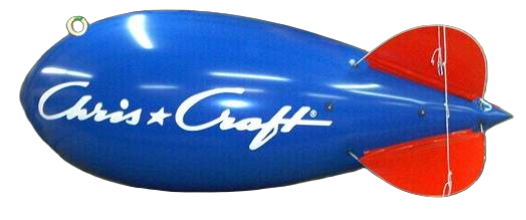
This is where the small business advertising trends of 2026 connect directly to large-format outdoor marketing. As digital ad costs rise and audiences grow more selective about which brands they trust, businesses are looking for visibility tools that work continuously, without a daily budget, and without competing against thousands of other ads for the same few seconds of attention. Giant helium balloons, cold-air inflatables, and aerial marketing blimps fill exactly that gap. A 20-foot inflatable balloon positioned above a new home community or dealership lot is visible to every driver who passes, day after day, for a fraction of what a comparable digital campaign might cost over the same period.
Trade show exhibitors are seeing similar value. In crowded convention halls where every booth competes for the same foot traffic, a branded balloon or inflatable product replica rising above the show floor solves the same problem search and social ads are struggling with: getting noticed before a prospect’s attention moves elsewhere. Companies looking to learn more about how the broader industry operates can also explore Arizona Balloon Company’s full range of services, which include manufacturing, rental, sales, and service support for both balloon and blimp marketing programs.
What This Means for Your Marketing
The data from this year’s small business marketing surveys points to a clear opportunity rather than a warning. Owners are not cutting back, they are getting more selective, and that selectivity rewards marketing investments that are visible, memorable, and cost-predictable over time. For home builders showcasing a new model home, auto dealers managing seasonal inventory promotions, or trade show exhibitors trying to stand out on a crowded floor, location-based outdoor marketing offers exactly the kind of durable, repeatable visibility that rising digital ad costs are making harder to sustain through paid channels alone.
A practical approach for the rest of 2026 is to treat outdoor and digital marketing as complementary rather than competing line items. Digital channels are well suited to targeting specific buyers actively searching online, while large-format outdoor displays are better suited to building broad, repeated local awareness among everyone who drives past a location, regardless of whether they searched for the business that day. Businesses that combine both tend to show up more consistently across a buyer’s decision-making process, which several 2026 industry reports identify as one of the strongest predictors of which small businesses pull ahead of competitors this year.
For business owners weighing where to add visibility without significantly increasing recurring ad spend, helium advertising balloons and aerial marketing blimps offer a way to extend a location’s footprint in a manner that digital advertising simply cannot replicate. They work around the clock, require no daily bidding against competitors, and give a business a physical landmark that becomes part of how customers recognize and remember the location itself.
Sources
- MarketingProfs: “More Spend, More Time: Small Business Marketing Trends for 2026”
- Constant Contact: “Faced With Inflation, Small Businesses Are Doubling Down in 2026”
- LocaliQ: “The Big Small Business Marketing Trends Report for 2026”
- Digital Advertising Trends, June 2026 (Startup Edition)
- Feather Flag Nation: “Outdoor Advertising for Small Businesses That Compete With Big Brands”