Author: Veena Furtado

  • Festival Brand Activation: Lessons from the Wisconsin State Fair’s 175th Year

    Festival Brand Activation: Lessons from the Wisconsin State Fair’s 175th Year

    Festival Brand Activation: What Wisconsin State Fair’s 175th Year Teaches Marketers

    By Arizona Balloon Company (arizonaballoon.com) — August 12, 2026

    Festival brand activation booth with helium balloons at an outdoor fair

    A Milestone Fair Built Around Brand Activation

    Festival brand activation is having a visible moment in the Midwest this week, as the Wisconsin State Fair marks its 175th year with an eleven-day run through August 16. The fair, presented by T-Mobile, is drawing hundreds of thousands of visitors to West Allis, and local coverage shows just how central corporate sponsors have become to the day-to-day experience. Businesses looking to reach dense, family-oriented crowds can learn a lot from how this event structures its partnerships, and companies exploring outdoor marketing solutions will recognize a familiar theme: visibility at scale is the whole game.

    How Sponsors Are Driving Attendance and Engagement

    Rather than static logo placement, this year’s sponsors are built into the daily schedule itself. Meijer offered a same-day admission discount tied to in-store receipts, while Piggly Wiggly paired a discounted opening-day ticket with a food donation drive benefiting Hunger Task Force. Prairie Farms Dairy sponsored free admission for educators, and Network Health hosted a dedicated day recognizing veterans and military families. Each of these partnerships pairs a retail incentive with an on-site activation, such as Meijer’s Central Park giveaway area and food truck, giving fairgoers a reason to physically visit a branded space rather than simply see a name on a banner.

    Festival brand activation booth with helium balloons at an outdoor fair

    Why Experiential Marketing Matters Right Now

    Industry reporting on 2026 festival sponsorship trends confirms this shift is not unique to Wisconsin. Brands increasingly expect to be treated as co-producers of the event experience rather than passive logo sponsors, and organizers who still sell only static signage are finding it harder to close sponsorship deals. Attendees now expect interactive touchpoints: a giveaway table, a photo moment, a food sample, or simply a landmark they can find their friends near. That last point matters more than most marketing plans account for.

    The Visibility Challenge at Large Outdoor Events

    Large fairgrounds and festival sites are sprawling, loud, and visually crowded. A booth ten feet off the main path can be invisible in a sea of tents, food trucks, and competing signage. Even a well-designed activation loses value if attendees never find it. This is the practical problem underneath every sponsorship strategy discussion happening in the trade press right now: how does a brand rise above the noise of a fairground that spans dozens of acres and runs for a week or more?

    Where Aerial Advertising Fits the Festival Mix

    This is precisely the gap that helium advertising balloons and marketing blimps are built to solve. A large branded balloon anchored above a sponsor’s tent turns a ground-level booth into a landmark visible from anywhere on the fairground, well above tents, crowds, and competing signage. For sponsors like the ones activating at the Wisconsin State Fair, a tethered balloon or an advertising blimp functioning as a wayfinding anchor could meaningfully increase foot traffic to a giveaway station or food truck, especially across a multi-day event where repeat visits matter. Fair and festival organizers building sponsorship decks for 2026 and beyond have an opportunity to package aerial visibility as a premium add-on alongside the interactive activations sponsors already expect.

    The Same Playbook Applies at Sports Events

    The lesson extends well past state fairs. Sports event marketing faces an identical visibility problem: stadium concourses, tailgate lots, and outdoor sports festivals are just as crowded and just as easy to get lost in. Auto dealers, trade show exhibitors, and general businesses sponsoring a race day, tournament, or tailgate activation face the same challenge Wisconsin’s sponsors are solving this week — making a ground-level booth findable from a distance, in a setting where thousands of people are moving at once.

    What This Means for Your Marketing

    Whether the venue is a state fair, a tailgate lot, or a downtown festival street, the marketing fundamentals are the same: attendees reward brands that give them something to do, and they can only do it if they can find you. Sponsorship packages built around interactive touchpoints, like the food giveaways and admission promotions seen at Wisconsin’s fair, consistently outperform passive signage because they earn attention rather than assuming it.

    For business owners planning a festival or sports event presence in the coming season, pairing an activation with a strong aerial anchor is one of the simplest ways to close that visibility gap. A branded helium advertising balloon or aerial marketing blimp gives your booth a landmark that is visible from across a parking lot, a fairground, or a stadium plaza, so the interactive experience you built actually gets found. Home builders staging community events, trade show exhibitors on crowded expo floors, and auto dealers running lot promotions can all apply the same principle Wisconsin’s sponsors are using this week.

    Planning a fall festival, tailgate, or trade show activation? Reviewing rental and purchase options for helium advertising balloons ahead of time ensures your booth has visibility built in from day one, rather than being an afterthought once the crowds arrive.

    Sources

  • Vertiport Advertising Balloons: Marketing the New eVTOL Transit Hubs

    Vertiport Advertising Balloons: Marketing the New eVTOL Transit Hubs

    Vertiport Advertising Balloons: How Businesses Can Market to America’s New Air Taxi Hubs

    By Arizona Balloon Company (arizonaballoon.com) — August 11, 2026

    Vertiport advertising balloons rising near a next-generation eVTOL air taxi transportation hub

    Atoms and Joby Announce National Vertiport Buildout

    Businesses looking for the next wave of high-visibility marketing locations should pay close attention to vertiport advertising balloons as a strategy, because the real estate that will make it possible is now being built. On August 4, 2026, Atoms, the infrastructure company founded by Travis Kalanick, and Joby Aviation announced a strategic partnership to acquire and develop vertiport sites across the United States. The companies said they will initially focus on Florida, New York, Texas, and California — the same states where Joby is preparing to launch early electric air taxi operations under the FAA’s Advanced Air Mobility and eVTOL Integration Pilot Program.

    According to the companies, these vertiports will function as multimodal transportation hubs, connecting electric aircraft, autonomous ground vehicles, and ridesharing services in one location, anchored by on-site power for charging and aircraft servicing. Joby has already flown its first FAA-conforming aircraft and entered the final stage of type certification, with piloted demonstration flights completed in the San Francisco Bay Area and New York City this year. For a deeper look at how outdoor promotion strategies are evolving alongside transportation infrastructure, visit Arizona Balloon Company, which has tracked location-based marketing trends for the home building, trade show, and dealership industries for years.

    Why This Story Matters to Marketers

    For most Americans, eVTOL aircraft still feel like science fiction. But for marketing decision-makers, the vertiport buildout is a concrete, dated infrastructure project with a real construction timeline — and construction timelines mean new locations, new crowds, and new advertising opportunities before national competitors even notice the shift. Vertiports are not being built in obscure corners of cities. They are being positioned as central hubs where residents, commuters, and business travelers will pass through daily, similar to how airports and major transit stations became magnets for large-format advertising.

    Home builders, auto dealers, and trade show exhibitors in the initial rollout states — Florida, New York, Texas, and California — have a rare early-mover advantage. Companies that identify emerging vertiport zones now can plan visibility strategies, including advertising blimps, well ahead of the crowds that will eventually gather around these sites.

    Vertiport advertising balloons rising near a next-generation eVTOL air taxi transportation hub

    Vertiports Will Create Brand-New Foot Traffic Zones

    Atoms describes its role as building “smart city infrastructure” — power-intensive, complex developments where aircraft, ground transport, and passengers converge. That description matters for marketers because it signals these will not be small landing pads tucked away from the public. They are being designed as full transportation hubs with parking, last-mile transit connections, and passenger amenities. Historically, any new transit hub of this scale — airports, light rail stations, major highway interchanges — has become valuable real estate for outdoor advertising, signage, and promotional displays almost immediately after opening.

    Auto dealers in particular should note that vertiports are expected to include ground transportation connections, meaning ridesharing and personal vehicle traffic will cluster nearby. That creates natural cross-traffic between people arriving by air taxi and people needing a car for the rest of their trip.

    Regulatory Momentum Is Accelerating the Timeline

    This vertiport announcement did not happen in isolation. It follows the FAA’s launch of its nationwide eVTOL Integration Pilot Program, which selected eight projects spanning 26 states, and it comes on the heels of Joby’s public demonstration flights in New York City and the Bay Area earlier this year. Regulators have signaled operations should begin by summer 2026, with the pilot program running for three years to gather data ahead of full-scale rules. That means the infrastructure race — and the marketing opportunity tied to it — is moving faster than many outside the aviation industry realize.

    For business owners tracking commercial real estate and consumer traffic trends, this is a signal to start scouting locations near planned vertiport sites now, rather than waiting until construction is finished and prime advertising spots are already claimed by competitors.

    Why Helium Advertising Balloons Fit the eVTOL Era

    There is a fitting symmetry between aerial transportation technology and aerial marketing technology. As eVTOL aircraft normalize the idea of activity in the sky above cities, large helium advertising balloons and blimps become even more effective at capturing attention, because they work in the same visual space the public is already learning to look toward. A business situated near a future vertiport, dealership row, or new mixed-use development can use a tethered balloon or inflatable product replica to stand out from ground-level clutter, drawing eyes from a distance in a way that flat signage cannot.

    This is especially relevant for home builders and trade show exhibitors evaluating new developments springing up around planned transportation hubs. A helium advertising balloon placed at a model home site or grand-opening event near an emerging vertiport corridor can capitalize on the increased regional attention these projects generate, well before the aircraft themselves ever take off.

    Getting Ready Before the Rush

    Because vertiport development is still in its early acquisition and planning phase, businesses have a window to prepare rather than react. That includes budgeting for outdoor marketing equipment, scouting sightlines near announced project areas, and building relationships with local permitting offices that will eventually govern signage and inflatable displays near these hubs. Companies that treat this as a long-term positioning opportunity, rather than a one-time event, are more likely to benefit as vertiport traffic grows over the coming three-year pilot period.

    What This Means for Your Marketing

    Outdoor, location-based marketing works best when it anticipates where crowds will be, not just where they already are. The Atoms-Joby vertiport partnership is an early signal that entirely new pockets of foot and vehicle traffic are coming to select U.S. markets over the next few years. Businesses that plan visibility strategies around these emerging hubs now — rather than after they open — stand to capture attention while competition for that space is still low.

    Helium advertising balloons and aerial marketing blimps are particularly well suited to this moment. They are mobile, can be deployed for a single grand opening or kept in place for ongoing visibility, and require far less permanent investment than traditional signage or billboard leasing near a site that is still under development. For home builders staking out territory near a future vertiport, or auto dealers positioning themselves along new ground-transportation routes, a large inflatable presence can do the work of announcing “we are here” long before permanent infrastructure catches up.

    As advanced air mobility moves from pilot program to daily reality, the businesses that adapt their outdoor marketing strategy early will be the ones remembered as the neighborhood’s or district’s original brand. Explore how helium advertising balloons can support a location-based marketing plan built around this next generation of transportation hubs.

    Sources

  • Helium Shortage 2026: What It Means for Advertising Balloons and Marketing Blimps

    Helium Shortage 2026: What It Means for Advertising Balloons and Marketing Blimps

    Helium Shortage 2026: What It Means for Advertising Balloons and Marketing Blimps

    By Arizona Balloon Company (arizonaballoon.com) · August 10, 2026

    Helium shortage 2026 affecting supply of gas for advertising balloons

    What Caused the 2026 Helium Shortage

    The helium shortage 2026 traces back to a chain reaction that started far from any party store or trade show floor. In late February 2026, military strikes on Iran triggered a wider regional conflict, and Iran responded by disrupting shipping through the Strait of Hormuz, the narrow waterway that carries most of Qatar’s natural gas exports. Qatar’s Ras Laffan Industrial City, one of only two production hubs (alongside the American Midwest) that together supply more than three-quarters of the world’s helium, took direct damage from drone and missile strikes in late February and March. QatarEnergy declared force majeure and halted production, removing roughly a third of global helium supply almost overnight. For companies like Arizona Balloon Company, which manufactures, sells, and services helium advertising balloons across the country, a disruption at that scale in the global gas supply chain is impossible to ignore.

    Helium Pricing and Supply Right Now

    Distributors felt the squeeze almost immediately. Airgas, one of the largest industrial gas suppliers in the United States, declared force majeure on its own helium contracts in March, began rationing allocations to roughly half of normal volumes for some customers, and layered surcharges on top of existing contract pricing. Retail liquid helium, which historically sold for around $5 to $10 a liter, has climbed into the $30 to $55-plus range, and bulk industrial helium briefly spiked past $90,000 a metric ton during the worst weeks of the disruption. On top of the Qatar damage, China’s Ministry of Commerce imposed a blanket ban on all helium exports on July 10, 2026, tightening an already stressed global market even further. Officials have said the policy could be adjusted as conditions change, but as of early August no formal timeline for lifting it has been announced.

    Helium shortage 2026 affecting supply of gas for advertising balloons

    Which Industries Are Feeling It Most

    Hospitals depend on liquid helium to keep MRI magnets cold enough to remain superconducting, and a supply interruption can force a costly “quench,” an emergency venting event that can cost tens of thousands of dollars to recover from. Semiconductor fabs in South Korea and Taiwan have drawn down emergency stockpiles to keep chip production running, since helium is used for cooling, plasma etching, and leak detection throughout the manufacturing process. Aerospace programs rely on helium to pressurize rocket fuel tanks in flight. None of these sectors compete directly with balloon marketing for volume, but they compete for the same limited, geographically concentrated pool of helium, and that competition is a major reason prices have moved so sharply this year.

    What the Helium Shortage 2026 Means for Advertising Balloons

    For businesses that rely on inflatable marketing, the practical effect of the helium shortage 2026 is straightforward: fill costs are higher, and lead times for large orders matter more than they used to. Helium advertising balloons and blimps use a small fraction of what hospitals, chipmakers, or rocket programs consume, but suppliers everywhere are pricing gas against a tighter global market, not against any single customer’s usage level. Home builders staging a grand opening, auto dealers running a weekend sales event, and trade show exhibitors booking floor space months in advance are all now budgeting for helium the way they budget for fuel or freight, as a line item that can shift between the time a campaign is planned and the day it launches. Working with a supplier that manages its own gas contracts and locks in fill schedules in advance, rather than sourcing helium last-minute, has become a meaningful advantage this year.

    Practical Steps for Businesses Using Helium

    Marketing teams that plan ahead are weathering the shortage with far less disruption than those booking balloons or blimps at the last minute. A few adjustments make a real difference: reserving inflatables and gas fills several weeks before an event rather than days, confirming pricing at the time of booking instead of assuming last quarter’s rate still applies, and asking suppliers directly about their current helium sourcing and allocation. Reusable, professionally maintained advertising blimps also stretch a helium fill much further over a campaign’s life than single-use inflatables, which matters more in a market where every cubic foot of gas costs more than it did a year ago.

    Is Relief on the Way

    New helium production is coming online, though not fast enough to fully offset the Ras Laffan losses in the near term. South Africa’s Renergen has been producing commercial liquid helium since 2024 and is targeting a meaningful share of global supply, a new Colorado plant has cleared approval, and a Minnesota project is working through a liquefaction deal. Recycling and recovery systems, which capture helium that would otherwise boil off and vent into the atmosphere, are also getting more attention from large-volume users. Industry analysts generally describe recovery from the Qatar damage as a multi-year process rather than a matter of weeks, so elevated helium pricing is likely to remain part of event and marketing budgets well into 2027.

    What This Means for Your Marketing

    Outdoor, location-based marketing still delivers something digital ads cannot: a giant, unmissable visual that pulls eyes from the freeway, the parking lot, or the trade show aisle. That value hasn’t changed because of a gas market disruption on the other side of the world. What has changed is the need to plan further ahead and work with a supplier who can guarantee availability and pricing at the time you actually need equipment in the air.

    For home builders opening a new community, auto dealers running a blowout sale, or trade show exhibitors trying to stand out on a crowded floor, booking early is now a cost-control strategy as much as a scheduling one. Locking in a fill date and a price weeks in advance, rather than calling the week of an event, protects a marketing budget from mid-campaign surprises.

    Businesses that want the visibility of large-scale inflatable advertising without the guesswork of sourcing helium themselves are increasingly turning to full-service partners who handle procurement, delivery, and setup in one package. Arizona Balloon Company continues to supply helium advertising balloons and aerial marketing blimps to businesses across the country, with sourcing relationships built to keep campaigns on schedule even as the broader gas market stays tight.

    Sources

  • Small Business Outdoor Advertising: Why It’s Winning Back Attention in 2026

    Small Business Outdoor Advertising: Why It’s Winning Back Attention in 2026

    Small Business Outdoor Advertising Is Making a Comeback as Feeds Get Noisier

    Byline: Arizona Balloon Company (arizonaballoon.com) — August 8, 2026

    Small business outdoor advertising balloon floating above a storefront to attract local customers

    The Attention Economy Has a New Price Tag

    New reporting on small business marketing this month lands on a blunt conclusion: attention is now cheap to publish into and expensive to actually earn. Business owners are being told to stop chasing reach and start proving they’re worth noticing, because feeds are saturated with automated posts, recycled video, and paid placements that all blur together. For business owners weighing where to spend their next marketing dollar, this is exactly why small business outdoor advertising is getting a second look — it puts a brand in front of people in the physical world, where a message can’t be scrolled past in half a second.

    The shift isn’t a rejection of digital marketing. It’s a recognition that digital channels have gotten crowded and expensive to stand out in, and that businesses need at least one channel that guarantees visibility rather than competing for it. That’s a lesson home builders, dealerships, and trade show exhibitors have leaned on for years, often by putting a memorable structure in the sky. You can learn more about how Arizona Balloon Company supports that strategy across industries.

    Where Small Business Outdoor Advertising Fits In

    The core advice in the latest reporting is to treat every marketing dollar as a test: does this actually create a conversation, a lead, or a sale, or does it just create a number that feels good for a moment? Applied to outdoor formats, the same test holds up well. A balloon, blimp, banner, or sign doesn’t need an algorithm’s cooperation to be seen. It works around the clock, doesn’t compete against a thousand other posts in a feed, and requires no click to register in someone’s memory.

    That’s a meaningful advantage for local businesses that don’t have the budget or team to win an all-out content arms race online. Instead of trying to out-produce national brands on social media, a business can install one high-visibility piece of advertising balloons at a grand opening, a sales event, or along a high-traffic road, and get consistent exposure for the length of the campaign without fighting for placement.

    Small business outdoor advertising balloon floating above a storefront to attract local customers

    Referrals Are Surging — But They Still Need a Spark

    A separate industry report released in late July found that word of mouth has become the top customer source for small businesses, with 83 percent of owners now naming referrals as their best acquisition channel, up sharply from 65 percent a year earlier. Paid advertising still matters — 46 percent of owners still name it as a leading source — because referrals rarely happen in a vacuum. Someone has to notice a business before they can recommend it.

    That’s the piece easy to miss in a referral-heavy strategy. Ads and visibility campaigns create the first touch; happy customers close the loop. A business that disappears from public view can’t generate the initial spark that eventually turns into a referral. Owners are being advised to keep spending enough to stay visible while funneling extra energy into turning new customers into advocates — which only works if new customers keep discovering the business in the first place.

    Physical Presence Still Beats a Scroll-Past

    Out-of-home advertising has quietly kept growing while digital channels get more crowded. Industry tracking shows out-of-home ad revenue hit a record high in 2025, extending nearly two decades of consecutive quarterly growth, even as advertisers pour more money into social and search. That’s a strong signal that physical, location-based advertising isn’t a relic — it’s a channel advertisers keep returning to precisely because it doesn’t suffer from the same fatigue as digital feeds.

    For a small business, the appeal is practical. A billboard, a branded vehicle, or a helium balloon towering over a parking lot reaches everyone who passes by, regardless of what platform they use or whether they follow the business online. There’s no algorithm deciding who sees it.

    How Helium Balloons and Blimps Solve the Visibility Problem

    This is where aerial advertising earns its place in a modern marketing plan. A large custom balloon or a marketing blimp is, by design, built to be seen from a distance, day or night, by anyone in the area — foot traffic, drivers, and neighboring businesses alike. It functions the same way “proof” does in the current marketing conversation: it’s hard to fake, impossible to ignore, and it demonstrates that a business is active, established, and worth a second look.

    Home builders use giant balloons to mark model homes and new communities that are otherwise easy to miss from the road. Auto dealers use them to make a lot stand out during a sales event. Trade show exhibitors use inflatable displays and blimps to pull attendees away from competing booths. In each case, the balloon does the job digital ads are struggling to do on their own right now: it earns attention rather than renting it.

    Who Benefits Most Right Now

    Businesses with a physical location or a time-limited event stand to gain the most from adding outdoor visual advertising into the mix. Grand openings, seasonal promotions, model home showcases, and trade show floors are all situations where a business needs to be found quickly by people who are already nearby. In those moments, a balloon or blimp does in seconds what a social post might take weeks to accomplish organically.

    What This Means for Your Marketing

    The lesson from this month’s marketing coverage isn’t that digital advertising has stopped working — it’s that digital alone is no longer enough to guarantee visibility. Small businesses that rely entirely on social feeds are competing against an enormous volume of content for a shrinking share of attention. Adding a location-based, physical channel gives a business a form of visibility that doesn’t depend on an algorithm’s mood.

    Outdoor and location-based marketing also pairs naturally with the referral surge business owners are reporting. A visible, memorable presence in a community — at a storefront, a lot, or an event — creates the first impression that eventually turns into word-of-mouth recommendations. It’s difficult to refer a business that a friend has never noticed.

    For business owners looking to add that kind of guaranteed visibility to a campaign, helium advertising balloons and aerial marketing blimps offer a straightforward way to stand out locally without competing in an increasingly crowded digital feed.

    Sources

  • Helium Balloon Shortage: What It Means for Outdoor Advertising

    Helium Balloon Shortage: What It Means for Outdoor Advertising

    Helium Balloon Shortage Forces Businesses to Rethink Outdoor Advertising

    Byline: Arizona Balloon Company (arizonaballoon.com) — August 7, 2026

    Helium balloon shortage affecting giant advertising balloons and outdoor marketing displays

    The Helium Balloon Shortage Crisis, Explained

    The helium balloon shortage that emerged earlier this year continues to ripple through the events, retail, and advertising industries. The war in the Middle East has disrupted helium supplies, with the disruption affecting far more than just party balloons. Qatar has historically supplied roughly a third of the world’s helium, and Iranian missile strikes on Qatar’s Ras Laffan facility in March 2026 damaged production infrastructure, taking a significant share of annual helium output offline. For companies that rely on helium advertising balloons to drive foot traffic and brand visibility, understanding this supply chain disruption is essential to planning the rest of the year.

    Industry analysts now expect the shortage to persist for years rather than weeks, with elevated prices likely to remain for an extended period even after shipping routes stabilize. That timeline matters for any business planning a launch, grand opening, or seasonal campaign built around inflatable displays.

    Why the Helium Balloon Shortage Matters for Marketers

    Marketing teams that lean on large-format inflatables for visibility are feeling the pinch differently than party supply retailers, but the underlying pressure is the same. During shortages, helium sold for party balloons and other lifting applications tends to get cut off first, since medical imaging and semiconductor manufacturing are treated as higher priorities by suppliers. That allocation order means marketing and events budgets are more exposed to price swings and availability gaps than industries with contractual priority status.

    For businesses that depend on eye-catching aerial displays — new home communities, dealership lots, and trade show booths among them — the practical question becomes how to keep a location-based marketing strategy running when the lifting gas itself is harder to source. Many are turning to companies that manufacture, service, and rent marketing blimps built for durability and repeat use rather than one-time inflation.

    Helium balloon shortage affecting giant advertising balloons and outdoor marketing displays

    How Businesses Are Adapting

    Balloon and event companies across the country are adjusting their models rather than shutting down. Some balloon providers have shifted toward air-filled displays instead of helium-filled ones, sharing new, more durable designs so clients can see what remains possible without relying on a limited resource. Others are stockpiling helium in advance of peak seasons or locking in supplier contracts earlier than usual to avoid last-minute allocation cuts.

    For advertising balloon and blimp operators specifically, the shift favors equipment designed for longevity — reusable vinyl balloons, tethered systems, and blimps that can be serviced and reflated efficiently rather than replaced. Businesses that already work with a full-service provider are better positioned to weather allocation swings than those sourcing helium tank by tank from local suppliers.

    Impact on Trade Shows and Grand Openings

    Grand openings and trade show activations are especially sensitive to the helium balloon shortage because timing is everything — a delayed helium delivery can mean a launch event without its signature aerial display. Home builders opening new model communities and auto dealers hosting weekend sales events are increasingly booking inflatable displays weeks in advance rather than days, and confirming with vendors that helium supply is secured before the event date.

    Trade show exhibitors face a similar calculus. Convention centers and expo halls have not reported widespread helium restrictions, but exhibitors who wait until the week of the show to book a balloon or blimp display risk running into the same allocation delays affecting party supply retailers nationwide.

    Alternatives and Solutions

    Not every high-visibility display requires helium. Cold-air inflatables — the tube dancers, arches, and giant character balloons powered by a continuous-duty blower rather than gas — are seeing renewed interest precisely because they sidestep the shortage entirely. Tethered advertising blimps that use a fixed helium fill and are serviced periodically, rather than reinflated from scratch for every event, also reduce total helium demand per display compared to disposable balloon setups.

    Businesses weighing their options should ask vendors directly about helium sourcing, contract priority, and whether air-powered alternatives could meet the same visibility goals for a given campaign.

    Outlook for the Rest of 2026

    Analysts remain divided on when relief will arrive. Air Liquide’s CEO has acknowledged tension in a market that shifted from excess capacity to deficit, noting the company is working closely with clients to allocate volumes as carefully as possible. Until Qatar’s damaged facilities are fully repaired, businesses should expect continued price volatility and plan marketing calendars with that uncertainty in mind.

    What This Means for Your Marketing

    Outdoor, location-based marketing still delivers some of the strongest visibility-per-dollar of any advertising channel, but the helium balloon shortage is a reminder to diversify how that visibility gets created. Businesses that pair traditional helium displays with reusable, low-helium-dependency options — like tethered blimps or cold-air inflatables — protect their campaigns from supply disruptions without giving up the scale and attention that large aerial displays provide.

    Booking early matters more than ever. Home builders planning model-home openings, dealers scheduling sales events, and exhibitors reserving trade show space should confirm equipment and helium availability well ahead of the event date rather than assuming next-day fulfillment. A full-service partner that manufactures, services, and stocks its own equipment is far less exposed to the allocation cuts hitting smaller, tank-by-tank operators.

    For businesses ready to plan ahead, working with a provider of aerial marketing blimps and advertising balloons that manages its own supply chain offers more predictability than relying on last-minute rentals during a period of ongoing helium constraints.

    Sources

  • Buyers Market Marketing: What the New Housing Data Means for Your Business

    Buyers Market Marketing: What the New Housing Data Means for Your Business

    Buyers Market Marketing: What the New Housing Data Means for Your Business

    By Arizona Balloon Company (arizonaballoon.com) | August 6, 2026

    Buyers market marketing concept showing a for-sale sign in a shifting U.S. housing market

    Buyers Gain Leverage Across the Country

    A new wave of housing data confirms what many sellers already suspect: the balance of power is tipping toward buyers, and buyers market marketing has become the phrase business owners need to understand. According to an analysis by Best Interest Financial and Clever Real Estate, the typical home is now selling below its list price in 41 of the 50 most populous U.S. metros. Detroit ranked as the most buyer-friendly market in the study, while Hartford, Connecticut offered sellers the strongest position. For home builders, brokers, and local businesses, this shift changes how properties, developments, and storefronts need to compete for attention. Companies that once relied on demand alone are now discovering that visibility drives decisions, a lesson the team at Arizona Balloon Company has watched play out across every softening market cycle.

    A Market Divided by Region

    The data shows a sharply divided national picture. Buyers are gaining the most leverage in Texas, Florida, and parts of the Midwest, while sellers in several Northeastern and coastal metros remain firmly in control. Eight of the fifteen metros with the largest year-over-year increases in price reductions were in the Midwest, including Cincinnati, Detroit, Indianapolis, and Kansas City. Yet price-drop activity actually declined year over year in 31 of the 50 metros analyzed, suggesting that buyer advantage may have already peaked in some regions even as it continues to build in others. That inconsistency means national headlines about a “buyer’s market” can be misleading for any single business trying to plan a local campaign. Builders and dealers exploring advertising balloons for site visibility are increasingly using that regional nuance to decide where and when to deploy outdoor marketing.

    Buyers market marketing concept showing a for-sale sign in a shifting U.S. housing market

    How Home Builders Are Responding

    Homebuilders are not waiting passively for the market to turn in their favor. Broader industry reporting shows builders leaning heavily on price cuts and incentives, with a large share of builders offering closing cost assistance, mortgage rate buydowns, or design upgrades to bring buyers to the closing table. Separate research from J.P. Morgan notes that median home prices have climbed for 36 straight months even as new federal supply-side legislation attempts to ease long-term affordability pressure. In this environment, incentives alone are not enough. A model home tucked behind a fence, invisible from the main road, will not benefit from a price cut that no one drives by to see. Builders competing in the 41 buyer-favorable metros need every advantage to stand out from neighboring developments offering similar deals.

    The New Challenge: Getting Buyers Through the Door

    When sale-to-list ratios soften and days on market stretch longer, the businesses that win are the ones buyers actually notice. Longer listing times mean more competition for the same pool of shoppers, and that competition is increasingly visual. Real estate professionals are being advised to rely on current, local data rather than national assumptions, and the same logic applies to marketing: a static yard sign or a small window banner rarely competes with the volume of listings now on the market. Builders, agents, and dealers alike are rethinking how to physically stand out at street level, especially in metros where inventory has climbed to multi-year highs and buyers have more open houses to choose from on any given weekend.

    Buyers Market Marketing: Where Advertising Balloons Fit In

    This is precisely where buyers market marketing tactics like helium advertising balloons and aerial marketing blimps earn their value. A giant inflatable balloon towering above a model home complex, a dealership lot, or a grand-opening event is visible from blocks away, something a printed sign simply cannot achieve. Home builders in softening markets are using tethered balloons and custom-shaped inflatables to mark active listings, flag weekend open houses, and pull passing traffic off the highway. Because buyers now have more listings to sift through, the properties that catch the eye first often get the first showing. Businesses researching marketing blimps for dealership and grand-opening events report that aerial visibility shortens the gap between a curious drive-by and an actual walk-in.

    Beyond New Homes: Other Businesses Feel the Shift

    The ripple effects of a buyer-favorable housing market extend well past home builders. Balloon and blimp rental companies are fielding more inquiries from real estate teams looking to differentiate open houses. Trade show exhibitors selling home services, mortgage products, or renovation supplies are leaning on inflatable displays to stand out at packed industry events tied to the housing slowdown. Auto dealers, who often see cross-shopping increase when consumers redirect discretionary spending away from home purchases, are using the same balloon and blimp strategies to capture attention on busy retail corridors. Even general businesses unrelated to housing are borrowing the same playbook, recognizing that in a crowded, price-sensitive market, being seen first is often the deciding factor.

    What This Means for Your Marketing

    For any business operating near the housing market right now, this data is a signal to invest in visibility rather than pull back. When buyers have more options and more time to decide, physical, location-based marketing becomes one of the most reliable ways to capture attention before a competitor does. Outdoor advertising that can be seen from a distance, such as helium advertising balloons positioned above a property or event, gives home builders, agents, and local businesses an edge that digital ads alone cannot replicate on a Saturday afternoon drive-by.

    This strategy works especially well paired with the regional unevenness in the current market. Businesses in buyer-friendly metros like Detroit, Houston, or Indianapolis can use inflatable marketing to accelerate already-favorable foot traffic, while businesses in tighter seller’s markets can use the same tools to make a smaller number of available listings or promotions feel like must-see events.

    Whichever side of the market a business is on, the underlying lesson is consistent: visibility converts interest into action. Companies exploring outdoor campaigns can review options for aerial marketing blimps to see how a single well-placed inflatable can extend the reach of a marketing budget during a shifting housing cycle.

    Sources

  • Grand Opening Marketing: What Burlington’s 12-Store August Rollout Teaches Retailers

    Grand Opening Marketing: What Burlington’s 12-Store August Rollout Teaches Retailers

    Grand Opening Marketing: What Burlington’s 12-Store August Rollout Teaches Retailers

    By Arizona Balloon Company (arizonaballoon.com) | August 5, 2026

    grand opening marketing balloons outside a new retail store launch

    Burlington’s August Expansion, By the Numbers

    Grand opening marketing is back in the spotlight this week as off-price retailer Burlington confirmed 12 new store openings across eight states and Puerto Rico throughout August, part of a broader push toward more than 1,000 total locations nationwide. According to reporting from USA TODAY, the chain plans to open more than 100 stores by the end of 2026, with new locations featuring an updated store design meant to draw shoppers in from the parking lot. The retailer’s CEO framed the expansion around delivering value and a refreshed in-store experience, but the real test for every one of these openings happens outside the front doors, in the parking lot and along the street frontage, where Arizona Balloon Company has spent years helping businesses win that first glance from passing traffic.

    The new locations span markets from Mesquite, Texas, to Queensbury, New York, and each store faces the same opening-week hurdle: converting nearby traffic into walk-ins during the critical first weekend, when word of mouth hasn’t had time to build yet.

    Why This Grand Opening Wave Matters for Marketers

    National retail data shows store openings are outpacing closures again in 2026, a reversal from the cautious years that followed the pandemic. Industry trackers cite thousands of announced openings for 2026 across chains such as Aldi, Costco, IKEA, and Nordstrom Rack, alongside Burlington’s own aggressive rollout. That volume matters to independent business owners and franchise operators too, because it signals that consumers are actively watching for new stores in their neighborhoods and rewarding retailers who make their launch impossible to miss.

    For home builders unveiling a new model home community, auto dealers launching a new lot, or trade show exhibitors debuting a booth, the underlying lesson is the same. A quiet grand opening gets lost in a crowded retail calendar. A visible one earns free attention, local press mentions, and the kind of opening-weekend crowd that sets the tone for months to come.

    grand opening marketing balloons outside a new retail store launch

    The Foot Traffic Challenge Behind Every New Store

    New store locations rarely open with built-in name recognition on their specific street corner. Even a well-known national brand like Burlington has to reintroduce itself at every new address, because shoppers driving past a shopping center simply don’t know a store exists there yet unless something visually interrupts their commute. Standard signage, banners, and window clings help once a customer is already close, but they do little to pull someone off their regular route from a quarter mile away.

    This is the exact gap that outdoor advertising has always been built to close, and it is why grand opening events so often lean on oversized, hard-to-miss visual cues rather than print alone.

    Solving Visibility With Aerial Marketing

    Helium advertising balloons and rooftop blimps solve the distance problem that ground-level signage cannot. A giant inflatable balloon tethered above a storefront is visible from major roads long before a driver reaches the entrance, giving them time to plan a turn instead of driving past. Retailers and franchise owners running a launch event can pair a rooftop balloon with directional flags, streamers, or a mid-size advertising blimp to create a visual funnel that guides traffic straight into the lot. For businesses exploring options, browsing a dedicated advertising balloons product page is often the fastest way to compare sizes and shapes suited to a single-day event versus a multi-week rollout.

    Regional Competition Is Heating Up

    Burlington isn’t opening in a vacuum. The same reporting that covered its August expansion noted competing off-price and discount chains, including Nordstrom Rack, Aldi, and dollar-store operators, are simultaneously adding hundreds of locations across the country this year. When multiple retailers open near each other in the same shopping season, differentiation on opening day becomes a competitive necessity rather than a nice-to-have. Local businesses without a national marketing budget can still compete on visibility by leaning into low-cost, high-impact tools that punch well above their price point.

    Planning Your Own Opening-Day Push

    Retailers watching this wave of national openings should treat it as a planning cue rather than just industry trivia. Booking outdoor visual elements, whether a tethered balloon, an inflatable blimp, or a full grand-opening package, works best when scheduled several weeks ahead of the event date, since permitting, weather contingencies, and rental availability all factor into a smooth launch day. Pairing that visual element with a clear call to action, a limited-time promotion, or a ribbon-cutting time slot tends to produce the strongest turnout.

    What This Means for Your Marketing

    The broader retail story here is simple: physical store openings are rising again in 2026, and every one of them competes for the same finite attention span of local drivers and shoppers. Outdoor, location-based marketing remains one of the most cost-effective ways to convert that attention into a first visit, because it works at the exact moment a customer is close enough to act on it. Unlike digital ads that require someone to be scrolling at the right time, a large inflatable above a storefront reaches anyone within eyesight of the road, no targeting budget required.

    Home builders opening a new community, auto dealers launching a lot event, and general businesses hosting a grand opening can all apply the same principle Burlington’s national rollout illustrates on a larger scale. Visibility drives foot traffic, and foot traffic drives the word-of-mouth momentum that carries a new location past its first difficult weeks. Businesses planning an upcoming launch can review options for helium advertising balloons to map out sizing, placement, and timing well before the event date.

    For multi-day promotions, trade shows, or larger campuses where a single balloon may not cover enough ground, an aerial marketing blimp can extend visibility across a wider radius, making it a practical option for businesses with bigger footprints or longer promotional windows.

    Sources

  • Trade Show Booth Visibility Becomes a Bigger Challenge as Shows Sell Out

    Trade Show Booth Visibility: Why Sold-Out Shows Demand Bigger Marketing

    Trade Show Booth Visibility Becomes a Bigger Challenge as Shows Sell Out

    Arizona Balloon Company (arizonaballoon.com) — August 4, 2026

    trade show booth visibility at a crowded exhibitor hall

    A Sold-Out Trade Show Signals Rising Competition

    Trade show booth visibility is becoming a harder problem to solve as major U.S. exhibitions report record turnout. The Atlanta Shoe Market (TASM), one of the footwear industry’s key trade events, is heading into another sold-out edition on August 15-17, 2026, with roughly 1,100 registered exhibitors representing 1,800 brands. Retailer registrations are also climbing, up about 5 percent from the prior show, according to TASM executive director Laura Conwell O’Brien. The exhibitor waitlist has swelled past 60 brands, driven largely by international vendors looking for a foothold in the U.S. market.

    For companies that plan trade show appearances as part of their annual marketing calendar, this kind of growth is a signal worth paying attention to. When more exhibitors compete for the same buyer traffic, a well-placed booth is no longer enough on its own. Businesses that want their presence noticed are increasingly investing in strategies that extend visibility beyond the four walls of a standard booth space, a shift that companies exploring helium advertising balloons are already putting into practice.

    What Record Exhibitor Demand Means for Booth Visibility

    TASM’s growth is not an isolated case. Industry-wide data shows event budgets are expected to rise in 2026, with a strong majority of planners preferring in-person formats over virtual or hybrid alternatives. That preference is filling exhibition halls even as some venues undergo renovation and expansion to keep pace, as is the case at TASM’s host site, the Cobb Convention Center. The venue is adding a junior ballroom, eleven meeting rooms, and an executive boardroom totaling 24,000 square feet, with construction expected to wrap by early 2027.

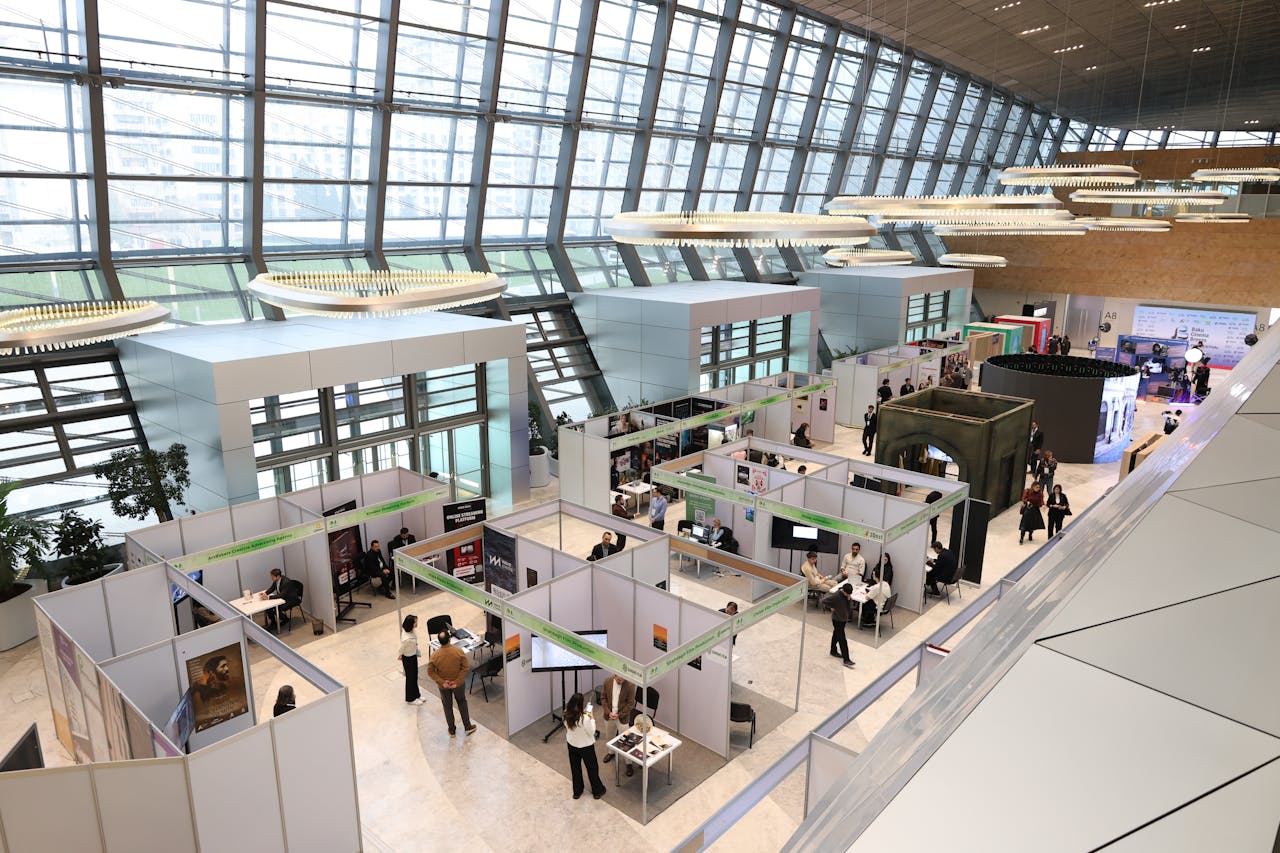
    More exhibitors and steady attendee recovery sound like good news for the trade show economy overall, and largely they are. But for individual businesses on the floor, it means the visual competition for attendee attention is intensifying every season. A booth that once stood out in a half-full hall can now be lost in a sea of nearly identical 10×10 and 10×20 displays.

    trade show booth visibility at a crowded exhibitor hall

    Crowded Floors Make Standing Out Harder

    Booth design experts have long pointed to visual impact as one of the top factors in attracting foot traffic. Roughly 48 percent of exhibitors report that eye-catching displays are what pull attendees in, ahead of giveaways or staff outreach. That statistic matters more in a sold-out hall than in a half-empty one, because the number of competing visual signals on the floor rises in direct proportion to the number of booths.

    At the same time, buyers are arriving at shows with more pre-show research already done and more specific agendas in hand. That shift rewards exhibitors who can be spotted quickly from a distance, rather than those who rely on attendees stumbling past a table. A visitor working from a mental checklist of “must-see” booths needs a clear landmark to navigate by, not just a logo at eye level.

    Why Elevated Marketing Is Gaining Ground

    This is where elevated, above-the-crowd marketing has started to earn a place in exhibitor budgets. Helium balloons, arches, and tethered inflatables give a booth a visual anchor that is visible from across a hall or a parking lot, well before an attendee is close enough to read signage. Unlike floor-level graphics, an elevated marker does not compete for space with neighboring booths; it simply rises above them.

    Home builders, auto dealers, and trade show exhibitors already use this tactic at open houses, lot events, and expo floors for the same underlying reason: attention is won at a distance, then converted at the table. As exhibitor counts climb at shows like TASM, that principle applies with even more force. A branded balloon column or a small marketing blimp positioned above a booth can do the work of getting attendees to look up and walk over, freeing booth staff to focus on the conversations that actually close business.

    Advice from Event Marketing Insiders

    Event marketing analysts covering the 2026 season have made a similar point in broader terms: booth design is only half the equation for winning attention on a crowded floor, and open sightlines paired with vibrant, easily recognizable displays are what separate a memorable booth from a forgettable one. That advice lines up closely with what TASM’s own exhibitor growth suggests — as competition for buyer attention rises, visual differentiation stops being optional and starts being a baseline requirement for exhibitors who want to be found.

    Planning Ahead for 2027 and Beyond

    With Cobb Convention Center’s expansion targeted for completion by early 2027, TASM organizers expect the show’s current sold-out format to hold steady until then. That gives exhibitors a predictable runway to plan ahead rather than scrambling each season. Businesses that book premium visual marketing assets, from balloon displays to marketing blimps, well in advance tend to secure better placement and pricing than those who wait until the week of the show.

    What This Means for Your Marketing

    The lesson from TASM’s sold-out edition applies far beyond footwear. Any business that exhibits at trade shows, hosts a grand opening, or runs a lot event should expect the floor, and the parking lot outside it, to get more crowded before it gets less crowded. Outdoor and location-based marketing tools are built for exactly this environment because they solve the one problem floor-level signage cannot: visibility from a distance, in every direction, without competing for eye-level real estate.

    For home builders promoting a new community, auto dealers running a weekend sales event, or trade show exhibitors trying to stand out among a thousand other booths, the same principle holds. A visible landmark above the crowd draws foot traffic before a single conversation begins. That is the core value proposition behind aerial marketing blimps and helium balloon displays: they turn a location into something people notice from across a room, a lot, or a street.

    As event budgets rise and shows continue selling out through 2026 and into 2027, the businesses that plan their visual marketing early, rather than treating it as a last-minute add-on, are the ones most likely to convert a crowded floor into a strong lead list.

    Sources

  • Experiential Outdoor Advertising: What the Run Club Boom Means for Local Marketers

    Experiential Outdoor Advertising: What the Run Club Boom Means for Local Marketers

    Experiential Outdoor Advertising: What the Run Club Boom Means for Local Marketers

    By Arizona Balloon Company (arizonaballoon.com) | August 3, 2026

    Experiential outdoor advertising balloon display drawing a crowd at a community event

    The Run Club Boom Signals a New Era of Experiential Outdoor Advertising

    A new report published this week by out-of-home media giant OUTFRONT Media highlights a trend that marketers can’t afford to ignore: run clubs have become one of the fastest-growing social activities in the country, and brands are following the crowds into the real world. This shift is a clear signal that experiential outdoor advertising is moving from a nice-to-have tactic to a central strategy for reaching consumers who are actively choosing in-person connection over screen time. According to the report, younger participants in particular are seeking group activities that build community, with the vast majority reporting improved wellbeing and stronger social bonds after joining a running group.

    For businesses that already invest in physical, location-based marketing, this is validating news. Whether it’s a helium balloon and blimp advertising company like Arizona Balloon Company or a local retailer, the takeaway is the same: people are gathering in parks, along race routes, and outside neighborhood businesses, and those gathering points are becoming premium advertising real estate.

    Why This Story Matters for Marketing Decision-Makers

    Marketing managers and business owners often default to digital ad spend because it’s easy to track. But the data behind this story suggests a meaningful shift is underway. Community running events have grown several times over in just one year, and consumers are intentionally seeking out real-world experiences instead of passive scrolling. That means the businesses showing up physically, at the events, on the routes, and in the neighborhoods where people gather, are the ones building the strongest brand recall.

    One case cited in the report involved a regional marathon that used strategically placed transit and street-level advertising during a 60-day campaign window. The race saw a significant jump in registrations, with thousands of participants scanning ads or reporting they learned about the event through out-of-home placements. It’s a clear demonstration that physical, in-the-moment advertising still drives measurable action, not just impressions.

    Experiential outdoor advertising balloon display drawing a crowd at a community event

    Where Helium Balloons and Marketing Blimps Fit Into IRL Advertising

    Community races, run clubs, and neighborhood gatherings share one thing in common with trade shows, dealership lots, and new home communities: they are outdoor, foot-traffic-heavy environments where visibility matters most. This is exactly the environment where giant helium advertising balloons and marketing blimps perform best. Unlike a static banner or a digital ad competing for a swipe, an oversized balloon or blimp floating above a crowd is visible for blocks, drawing attention long before a person reaches the actual booth, dealership, or storefront.

    As the run club trend illustrates, people are craving tangible, in-person moments. A branded balloon character, cold-air inflatable, or tethered blimp adds exactly that kind of tangible presence to an otherwise ordinary event, turning a sponsorship logo into a memorable physical landmark.

    Trade Shows and Local Events: The Same Playbook

    Trade show exhibitors face a version of this same challenge every time they set foot on a crowded convention floor or an outdoor expo lot. Attention is scarce, competitors are everywhere, and a table sign rarely cuts through. The lesson from the community-event data is directly transferable: exhibitors who add height, motion, or a striking visual, such as a rooftop balloon or an inflatable product replica, consistently pull more foot traffic than those relying on printed signage alone.

    Auto Dealers and Home Builders Can Apply the Same Strategy

    Auto dealers and home builders are two of the industries best positioned to capitalize on this experiential shift. A model home community or a dealership lot functions much like a race-day environment: a defined physical space where a business wants passersby to stop, look, and remember the brand. Large inflatable arrows, giant balloon dancers, and rooftop blimps have long served this purpose for car lots and new home sales offices, and the renewed consumer appetite for real-world experiences only strengthens the case for keeping that kind of visual marketing in the budget.

    Measurable Results Are Driving the Shift Back to Physical Media

    Perhaps the most important detail in this week’s report is the emphasis on measurability. Physical advertising placements tied to community events produced trackable outcomes, including QR code scans and self-reported awareness, giving brands hard numbers to justify the spend. That same measurement mindset applies to balloon and blimp campaigns at local events, dealership promotions, and grand openings, where foot traffic counts, lead scans, and sales conversions can all be tracked back to the physical activation.

    What This Means for Your Marketing

    The broader lesson for business owners is that outdoor, location-based marketing is regaining ground precisely because consumers are spending more of their free time offline and in community settings. Whether that’s a weekend run club, a neighborhood festival, or a busy dealership lot on a Saturday afternoon, the businesses that show up with a strong physical presence are the ones people remember and talk about.

    For home builders, auto dealers, and trade show exhibitors alike, this is a good moment to revisit how much visual impact a location actually has. A sign at eye level competes with dozens of other signs. A giant balloon or an aerial blimp does not. It stands above the noise, quite literally, and gives a brand a landmark that people can spot from a distance and navigate toward.

    Businesses looking to translate this trend into results don’t need to reinvent their strategy from scratch. Adding helium advertising balloons or aerial marketing blimps to an existing event, grand opening, or ongoing lot promotion is a low-lift way to capture the same kind of attention that’s driving results at community races and local gatherings nationwide.

    Sources

  • Helium Price Drop: What It Means for Advertising Balloons

    Helium Price Drop: What It Means for Advertising Balloons

    Helium Price Drop: What It Means for Advertising Balloons

    By Arizona Balloon Company (arizonaballoon.com) | August 2, 2026

    Helium price drop shown through deflating and inflating balloon supply chart concept for marketing businesses

    Helium Price Drop: The July 2026 Numbers

    A meaningful helium price drop has appeared in the latest monthly market data, offering the first real relief to helium-dependent businesses since the Qatar supply crisis rattled the industry earlier this year. According to newly published pricing data, North American helium prices fell roughly 9.7% in July 2026, while Northeast Asia saw a 14.7% decline and Europe dropped about 9.1% over the same period. For business owners who rely on helium for events, trade shows, or promotional displays, this marks the clearest signal yet that the worst of the pricing pressure may be easing. Companies like Arizona Balloon Company have been monitoring these shifts closely because helium cost directly affects the price of every inflated advertising balloon program nationwide.

    From Shortage to Relief: What Changed

    To understand why this price drop matters, it helps to remember how severe the disruption was. Military strikes on Qatar’s Ras Laffan Industrial City in early March 2026 knocked out roughly one-third of global helium production, since helium is captured as a byproduct of liquefied natural gas processing there. Qatar’s output normally accounts for a large share of the world’s traded helium supply, so the outage triggered force majeure declarations from major industrial gas suppliers, rationing to non-critical customers, and sharp surcharges that rippled down to party stores, event companies, and marketing firms across the country. Recent industry reporting now indicates that stabilizing operations at Qatar’s North Field, combined with disciplined contract procurement in North America, have allowed prices to settle closer to their late-2025 levels for the first time since the crisis began.

    Helium price drop shown through deflating and inflating balloon supply chart concept for marketing businesses

    What Drove the Price Correction

    Several factors converged to bring prices down. New helium production capacity has been coming online outside the traditional Qatar-U.S. axis, including commercial output from South Africa’s Renergen project and early-stage development in Saskatchewan, Montana, and Colorado. At the same time, buyers who panic-bought inventory during the peak of the shortage have worked through those stockpiles, easing short-term demand. Industry analysts also point to more disciplined long-term contract procurement in North America, which has insulated domestic buyers from some of the volatility still affecting Asian and Middle Eastern markets.

    Why the Market Remains Fragile

    Despite the encouraging numbers, experts caution against assuming the crisis is fully resolved. Qatar’s Ras Laffan facility has faced ongoing complications during its restart process, and the Strait of Hormuz — the only export route for Middle Eastern helium — has seen repeated periods of disrupted shipping throughout 2026. Because helium cannot be stockpiled in large volumes at most production or distribution sites, any renewed disruption in the Gulf region could quickly reverse the recent price relief. Businesses that plan helium-dependent marketing campaigns should treat the current pricing environment as a window of opportunity rather than a permanent new normal.

    What This Means for the Balloon and Blimp Industry

    For companies in the helium advertising balloon and marketing blimp space, this price movement is directly relevant. Helium is the single largest variable input cost behind fuel, labor, and equipment maintenance for giant advertising balloons, cold-air inflatables, and tethered marketing blimps. When wholesale helium prices spike, that cost is typically passed along through higher rental rates or surcharges on filled units. A sustained price drop gives balloon and blimp operators more room to hold steady pricing for clients, while also making it more feasible to plan larger seasonal campaigns — such as grand openings, model home showcases, and dealership lot promotions — without the fear of last-minute helium surcharges eating into the marketing budget.

    What This Means for Your Marketing

    Outdoor, location-based marketing has always competed on visibility, and few tools deliver visibility as efficiently as a giant balloon or an aerial blimp hovering above a busy road or a packed trade show floor. With helium pricing pressure easing, now is a practical time for home builders, auto dealers, and trade show exhibitors to lock in campaigns that were paused or scaled back during the shortage. A single tethered balloon or inflatable arch can be seen from a quarter mile away, drawing foot traffic that digital ads simply cannot generate in a local market.

    Businesses that plan ahead tend to benefit the most from favorable pricing windows like this one. Rather than waiting until peak season — spring home-buying months, major auto sales events, or convention season — to book helium-dependent displays, forward-thinking marketing managers are locking in rental agreements now while supply conditions remain relatively stable. This is especially true for multi-location businesses coordinating balloon displays across several sites at once, where bulk scheduling can further reduce per-unit costs.

    Whether the goal is a single grand-opening event or a recurring seasonal campaign, working with an experienced supplier matters as much as the helium price itself. Arizona Balloon Company helps businesses plan and execute campaigns using helium advertising balloons sized and scheduled to match current market conditions, so marketing budgets stretch further without sacrificing the visual impact that drives walk-in traffic.

    Sources