Outdoor Advertising Hits Record Quarter as U.S. Businesses Reassess Local Visibility
Byline: Arizona Balloon Company (arizonaballoon.com) — August 24, 2026
What Happened in the Outdoor Advertising Market
Outdoor advertising revenue in the United States reached $3.16 billion during the second quarter of 2026, a 10.7% increase from the same quarter last year. It was the first quarter in which U.S. out-of-home revenue exceeded $3 billion, while year-to-date growth reached 9.2%, according to the Out of Home Advertising Association of America.
The increase was not limited to one advertiser category. The OAAA reported that 73% of the top 100 outdoor advertisers increased their spending compared with Q2 2025. Technology, artificial intelligence, financial services, local services, entertainment, and live events all contributed to the market’s momentum.
For small-business owners, the news is less about matching the budgets of national brands and more about recognizing where customer attention is moving. Physical locations, busy roads, retail districts, event venues, and community gathering places remain valuable opportunities for brands that need to be noticed before a customer searches, calls, or visits.
Why Outdoor Advertising Matters to Small Businesses
Small businesses often compete against larger companies with greater digital reach and larger paid-search budgets. A location-based campaign can provide a different advantage: repeated visibility in the precise area where a business serves customers.
A home builder, for example, may want to reach drivers near a new subdivision rather than consumers across an entire metropolitan area. An auto dealer may need attention during a weekend sales event. A trade show exhibitor may need to help attendees find its booth quickly. In each case, a visible physical message can complement search, social, email, and retargeting campaigns.
The OAAA report also shows that local services and amusements grew 10.5% year over year, while architects, contractors, and engineers were among the leading product categories that increased spending. Those categories are especially relevant to businesses that rely on local awareness and in-person inquiries.

Where the Recent Growth Is Coming From
Digital out-of-home advertising was a major contributor to the quarter’s performance. DOOH revenue increased 18.5% year over year and represented 38.4% of total quarterly OOH revenue. Transit advertising grew 23.9%, while place-based formats increased 19.3%.
These figures point to a broader trend: advertisers are placing messages in environments where people are already traveling, shopping, attending events, or waiting. Digital screens are one part of that strategy, but the underlying principle also applies to physical displays that create strong visual recognition in a defined location.
The Local Visibility Opportunity
Small businesses can apply the same location-first thinking without buying a large regional media package. The starting point is to identify a high-value customer moment, such as a model-home open house, dealership clearance event, grand opening, festival, or trade show.
From there, marketers can select a format that supports the goal. A message should be short enough to understand from a distance, use high-contrast brand colors, and direct people toward one action: visit, call, scan, or enter. The campaign should also run when the target audience is most likely to be nearby.
This approach makes outdoor advertising more measurable and more efficient. Instead of treating visibility as a general branding expense, businesses can connect the display to a specific event, location, offer, landing page, phone number, or lead form.
How Balloons and Blimps Fit the Trend
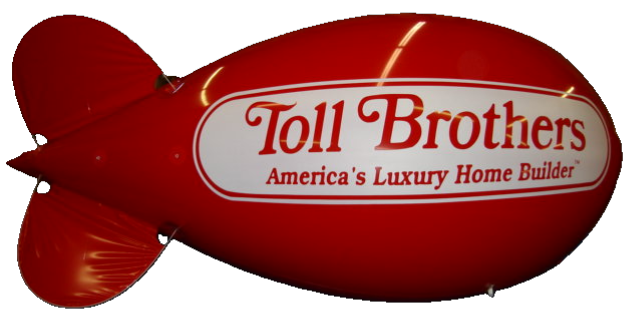
Helium advertising balloons and marketing blimps offer a flexible form of location-based visibility. They can mark a property from a distance, rise above a dealership lot, identify an exhibitor’s position, or make a temporary promotion easier to spot from surrounding roads.
For home builders, a branded blimp over a model-home community can function as an aerial landmark during weekend traffic peaks. Auto dealers can use one to signal a sales event, while trade show exhibitors can use custom balloons to make a booth easier to locate where venue rules and ceiling height allow. General businesses may use them for grand openings, seasonal campaigns, and community events.
Arizona Balloon Company manufactures, rents, sells, and services custom inflatables. Its custom advertising blimps are available in multiple sizes and can be printed with company artwork. The company’s polyurethane products are designed to use less helium than comparable PVC blimps, which can influence the operating cost of short campaigns.
Planning and Measuring a Campaign
A practical campaign begins with the site, not the product. Marketers should evaluate traffic volume, sightlines, surrounding buildings, weather exposure, available setup space, and local property or sign requirements. The right size depends on how far away the audience will be and whether the display will be used indoors or outdoors.
Measurement can include event attendance, calls, QR-code scans, direction requests, website visits, coupon redemptions, and changes in branded search activity. Businesses should compare results with the campaign’s cost and with other channels targeting the same audience.
Outdoor visibility also works best as part of an integrated plan. A social post can announce the event, a search campaign can capture high-intent visitors, and a visible inflatable can help customers recognize the location when they arrive.
What This Means for Your Marketing
The latest market data suggests that U.S. advertisers continue to value channels that place brands in real-world environments. Small businesses do not need national-scale spending to benefit from that trend. They can focus on a few high-value locations, a clear offer, and a campaign schedule aligned with customer traffic.
For home builders, dealers, exhibitors, and event-focused companies, a highly visible aerial display can reinforce digital promotion and reduce the chance that customers pass by without noticing the destination. Businesses evaluating helium advertising balloons or aerial marketing blimps should compare rental and purchase options, confirm local requirements, and define a measurable response before launch.
The most useful lesson is strategic rather than technological: visibility still matters when it is relevant, well placed, and connected to an action. A coordinated location-based campaign can give a small business a stronger physical presence while digital channels handle discovery, follow-up, and conversion.