New Home Sales Incentives Surge as Builders Face a 9.6-Month Supply Glut
Byline: Arizona Balloon Company (arizonaballoon.com) — August 29, 2026
1. New Home Sales Fell Sharply in July
New home sales incentives are becoming the norm across the country as builders work to unload a growing stockpile of finished houses. According to newly released Census Bureau data, sales of new single-family homes dropped 10.5% in July compared to June, falling to a seasonally adjusted annual rate of 607,000 units and landing 6.3% below July 2025 levels. At the same time, the median new-home price slipped to $393,800, its lowest point since 2021. For homebuilders and the marketing teams that support them, the numbers point to a market where price alone is no longer enough to close a sale — visibility and urgency matter just as much. Builders exploring every available option, from helium advertising balloons and marketing blimps to financing perks, are the ones best positioned to move product in this environment.
2. Why New Home Sales Incentives Are Spreading Fast
Roughly 63% of builders reported offering some form of incentive in August, while 35% cut list prices outright, according to industry survey data cited by National Mortgage Professional. Financing perks — mortgage-rate buydowns, closing-cost credits, and upgraded appliance packages — have become standard tools for converting hesitant shoppers into signed contracts. The National Association of Home Builders reports that new single-family inventory climbed to 488,000 units in July, a 1.9% increase from June, pushing months’ supply to 9.6, the highest reading since January. That is more than double the four-to-six-month range historically considered a balanced market. Builders who want to promote these incentive events at scale often turn to a marketing blimp flown over the community during open-house weekends to signal the sale from miles away.

3. Buyers Now Hold More Leverage
A 9.6-month supply hands buyers negotiating power they haven’t had in years. Shoppers can compare multiple communities, request additional concessions, and take their time before signing. Analysts note that builder financing offers can sometimes lower a monthly payment more than a straightforward price cut, but only if buyers actually walk through the door to hear the pitch. That reality puts pressure on builder marketing teams to generate foot traffic, not just online leads, because incentive details are often best explained in person at the sales office or model home.
4. A Market Divided by Region
The slowdown is not uniform. NAHB data shows the Northeast has bucked the national trend, with new home sales up nearly 9% year-to-date, while other regions continue to soften. Meanwhile, the composition of unsold inventory is shifting: completed, ready-to-occupy homes fell from 132,000 units at the start of 2026 to 114,000 in July, as builders throttled back construction starts rather than keep building into a glutted market. Housing starts nationally are down roughly 6% year-over-year, a sign builders are trying to right-size supply before discounting even deeper.
5. The Real Problem: Getting Buyers to Notice
Industry commentary from HousingWire describes the current climate as a “race to the bottom,” where builders lean on price cuts and buydowns to convert prospects who show plenty of interest but little urgency. That gap between interest and action is largely a visibility problem. A buyer who doesn’t know a sales event, price drop, or financing special exists cannot act on it. Builders that rely solely on digital ads and yard signs are competing for attention in a crowded, low-urgency market where a scroll-past online ad rarely converts into a Saturday showroom visit.
6. How Aerial Marketing Helps Move Spec Inventory
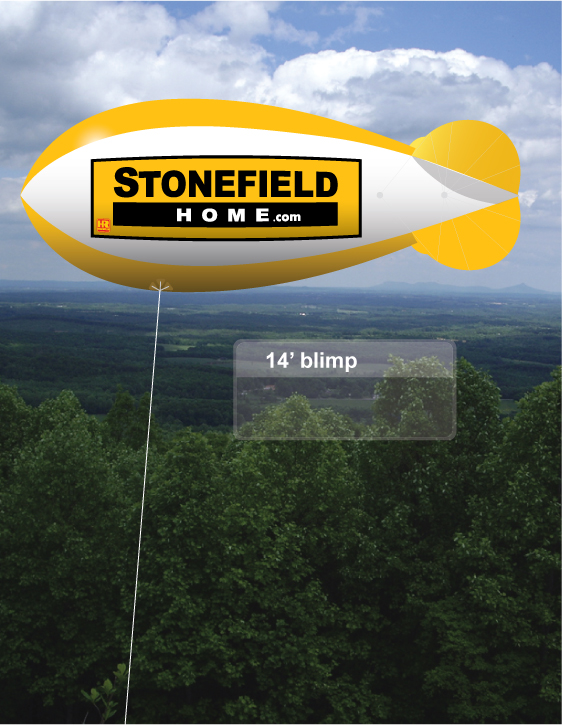
This is where large-format outdoor advertising earns its place in a builder’s marketing mix. A helium advertising balloon anchored above a community entrance, or a slow-circling marketing blimp over a highway corridor, creates a physical, unmissable signal that something is happening on-site right now. Unlike digital impressions, aerial advertising reaches drive-by traffic, nearby renters, and passersby who were not actively searching for a new home but notice the display and turn in. For builders sitting on completed, unsold inventory, that kind of impulse-driven visibility can shorten the time a finished home sits on the books.
What This Means for Your Marketing
With months’ supply near a multi-year high and incentives becoming table stakes, homebuilders need marketing that does more than list a price cut on a website. Outdoor, location-based advertising puts the offer directly in front of the people most likely to act on it: local drivers, nearby residents, and weekend house hunters passing by a community they didn’t know was selling. A visible presence at the site itself often outperforms another round of digital ad spend competing for the same shrinking pool of ready buyers.
Sales events, grand openings, and incentive weekends are exactly the moments where a large, eye-catching display pays for itself. Builders who pair their price and financing incentives with strong on-site visibility tend to convert more of that curbside interest into actual showings, because the display does the work of stopping traffic before a single sales conversation even begins.
For builders and developers looking to stand out in a market this competitive, helium advertising balloons offer a straightforward way to turn a quiet subdivision entrance into a can’t-miss landmark for the length of a sales event, open house, or model home tour.
Sources
- ConsumerAffairs — New-home sales tumble as lower prices fail to bring buyers back
- National Mortgage Professional — New-Home Sales Tumble, Giving Buyers More Leverage With Builders
- NAHB Eye On Housing — Economic Uncertainty, Affordability Challenges Weigh on New Home Sales
- Rock Products Magazine — Economic Challenges Weigh on New Home Sales