Outdoor Advertising Balloons and the OOH Study Small Businesses Are Watching
By Arizona Balloon Company (arizonaballoon.com) | October 8, 2026
The Study Behind the Outdoor Advertising Balloons Conversation
Outdoor advertising balloons and other physical, location-based formats are getting renewed attention as marketers respond to a study from the Out of Home Advertising Association of America (OAAA) and Kochava. The research, titled “OOH – A Valuable Performance Medium,” was released in May 2026 and remains a headline item on the OAAA’s website this month. Because most of this week’s small business advertising coverage recaps earlier releases, it is the most decision-relevant story we found for business owners weighing where to spend a fourth-quarter budget.
According to the Digital Signage Today report, the analysis examined device-level data across hundreds of campaigns in seven verticals, including retail, automotive, quick service restaurants, and media and entertainment. Campaigns using out-of-home (OOH) delivered a median lift of 20% for in-person outcomes and 14% for digital outcomes. Connected TV and broadcast TV each came in at roughly 10%.
The study covers OOH broadly. It does not isolate balloons or blimps, so the findings should be read as evidence for the channel rather than for any single format. Still, the results matter to local advertisers because many of the verticals studied, retail and automotive in particular, overlap with the businesses that rely on visible, location-based promotion.
Why Frequency and Weekly Cycles Matter
One of the study’s more practical findings concerns frequency. Researchers identified a recurring seven-day pattern in consumer response, in which conversions resurface weekly after ad exposure. For a business owner, that suggests a single impression may keep working for days, and that repeated exposure in the same place can compound.
Industry commentary points the same direction. In a piece for The Drum, an OOH sales executive argued that real-world, contextual advertising lets repeated exposure build consideration without the frequency fatigue common in digital formats. That is one executive’s perspective, and the OAAA is a trade association with a stake in the outcome. It is still a useful frame for anyone planning a sustained campaign around a single storefront, lot, or community.
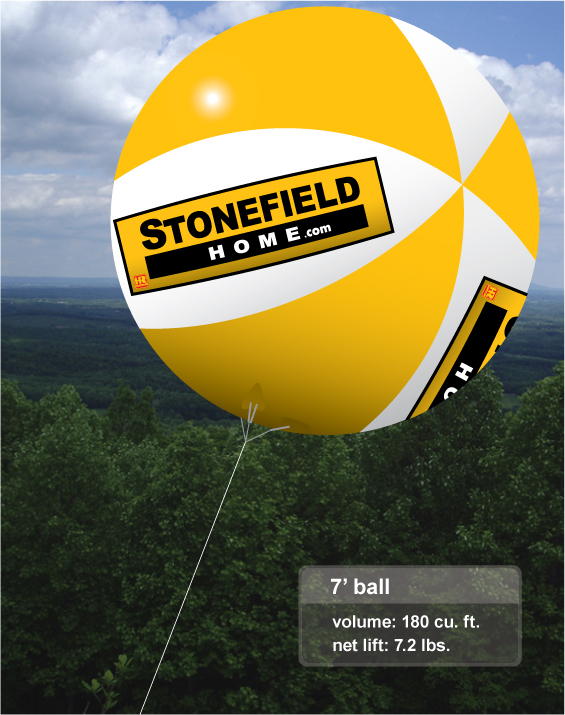
Local advertisers evaluating advertising balloons can apply this directly. A fixture that stays in place for weeks delivers the repeated, same-location exposure the study associates with stronger results. A one-day placement does not.
Measurement Gaps Still Undervalue Outdoor
The study also raises a measurement point. Its authors note that short attribution windows often undervalue OOH, since the response unfolds over a longer period. A commentary in The Drum adds that when media-mix models receive aggregated or inconsistent OOH inputs, they tend to understate the channel’s contribution.
Small businesses rarely run formal media-mix models, but the lesson carries over. If you judge a physical advertising placement only by what happens in the first 24 hours, you may miss its effect. A simpler approach is to record a four-week baseline of calls, walk-ins, and web inquiries, then compare it against the weeks the placement is active. Ask new customers how they found you. Those inexpensive habits capture more of the picture than a single click report.
Consumers Respond to In-Person Brand Experiences
Separate OAAA research with The Harris Poll, highlighted on the association’s site, points to the same theme. It found that 80% of consumers are more likely to consider a brand after experiencing it in person. It also found that 86% would take action after seeing a retail OOH ad that interests them. As with any trade-group research, readers should consider the source, but the direction is consistent with the Kochava findings.
For businesses with a physical presence, this supports a straightforward idea: visibility at the point of decision matters. Someone driving past a new home community, a dealership, or a trade show hall is already close to the purchase or the event.
Where Helium Balloons and Blimps Fit
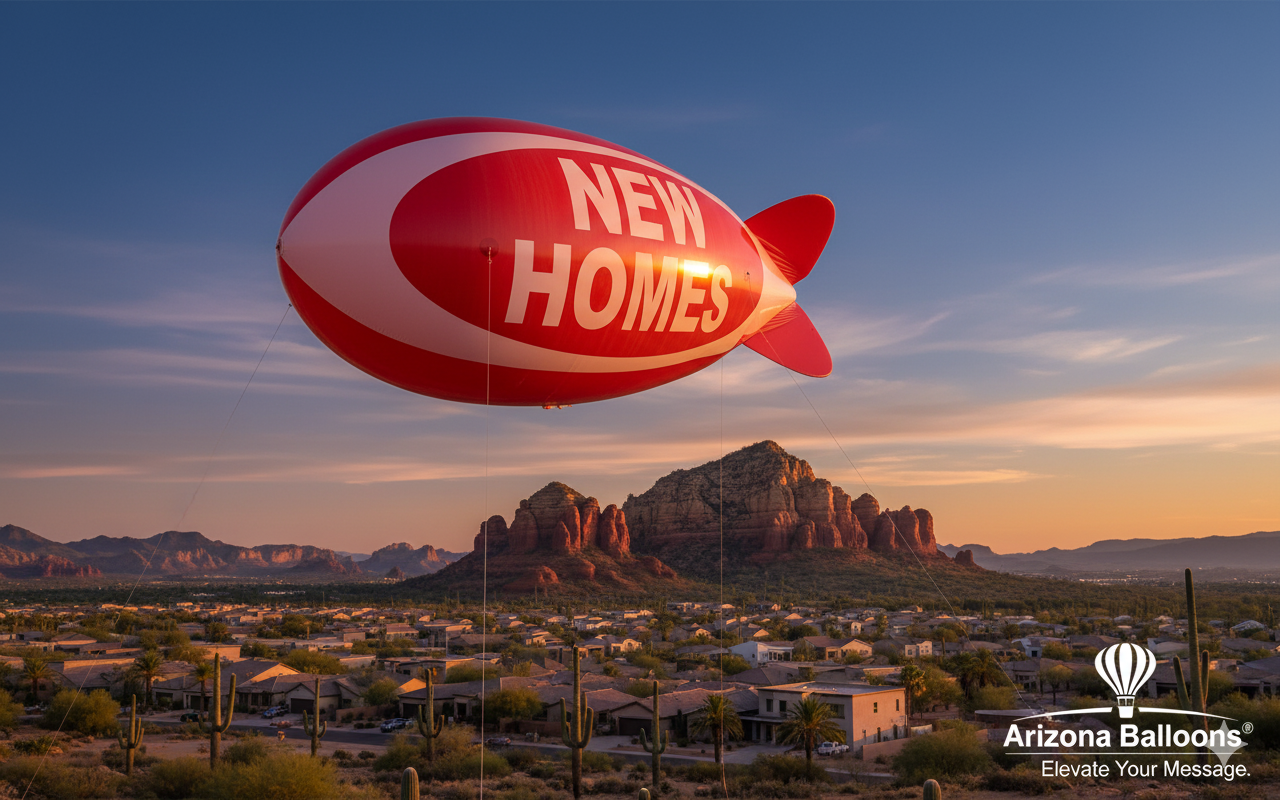
As industry insight, the findings help explain why tethered aerial advertising stays popular with the businesses we serve. Home builders use elevated visuals to mark community entrances and model homes. Auto dealers use them to draw attention across a crowded roadway. Trade show exhibitors use overhead branding to stand out on a busy floor. In each case the goal matches what the research describes: repeated, in-person exposure close to where customers act.
Larger formats such as advertising blimps add motion and height to that exposure and can be seen from farther away than ground-level signage. Neither format replaces digital advertising, and the study does not claim that OOH should. It does suggest that physical placements deserve a measured test alongside streaming and search budgets.
What This Means for Your Marketing
The central takeaway is that location-based advertising can be measured, and recent industry research suggests it performs competitively against TV for driving both in-person and digital actions. For small businesses, the lesson is less about shifting an entire budget and more about testing a physical placement for a defined period, with a baseline in place before it starts.
Plan around the weekly response cycle. Keep a placement visible for several weeks rather than a single weekend, and track inquiries over a longer window than usual. Pair it with a simple local call to action, such as a phone number, an offer, or a event date, so you can tell which responses came from it.
Businesses exploring this approach can review helium advertising balloons to see formats suited to lots, storefronts, and events. As with any channel, define the outcome you want first, whether foot traffic, calls, or event attendance, and judge the results against it.