Why a Sustainable Marketing Strategy Needs Visible Proof in 2026
Arizona Balloon Company (arizonaballoon.com) — September 12, 2026
1. North American Businesses Are Doubling Down on Sustainability
A sustainable marketing strategy is becoming harder to fake and more important to get right. A new study covering Canada, Mexico, and the United States found that just one in ten sustainability professionals expects their organization’s sustainability ambition to decrease, even amid economic, political, and regulatory pressure. The research, conducted by UN Global Compact Networks and GlobeScan, points to a steady commitment among North American businesses to keep sustainability on the agenda rather than quietly walk it back.
For home builders, dealerships, and trade show exhibitors who rely on Arizona Balloon Company for high-visibility promotions, this matters. It signals that customers, investors, and employees are still watching how companies talk about — and act on — environmental commitments, and that any marketing campaign built around sustainability needs a firmer foundation than a slogan.
2. Why Claims Alone No Longer Build Trust
The study’s most important finding for marketers isn’t the ambition number itself — it’s what businesses are being asked to do about it. According to GlobeScan, sustainability commitments and communications “remain important, but they are no longer sufficient on their own.” Businesses are being pushed to connect sustainability directly to measurable value, with 76% of respondents saying that link is now the defining test of credible leadership.
That shift mirrors what regulators and consumer watchdogs have been signaling for years: vague or unsupported “green” language invites scrutiny, while specific, demonstrable actions build trust. A brand promoting a genuinely energy-efficient model home, a low-emission delivery fleet, or a recycling initiative needs a way to make that real progress visible — which is where large-scale, attention-grabbing displays like an advertising balloon can help turn an internal milestone into a public, memorable event.

3. The Shift From Strategy to Execution
A related study by BDO, released the same week, found that corporate sustainability is increasingly treated as a core business priority — but many companies still struggle to translate commitments into day-to-day operations. More than three fifths of sustainability professionals surveyed said embedding sustainability into strategy and capital allocation should be a top priority going forward, rather than leaving it as a side initiative.
This “execution gap” is a marketing opportunity in disguise. Every time a business closes that gap — installing solar panels at a dealership, using recycled materials in a build, or cutting fleet emissions — it creates a concrete story worth telling. The challenge is making sure that story reaches the public in a format people actually notice, rather than getting buried in a sustainability report few customers will ever read.
4. Sustainability Professionals Are Becoming Business Translators
The North American study also found that the role of sustainability professionals is expanding well beyond technical compliance work. Increasingly, they’re expected to influence leadership, work across departments, and help drive organizational change — effectively becoming translators between environmental goals and business performance.
Marketing teams are natural partners in that translation work. A sustainability officer can identify what genuinely changed at the operational level; a marketing team’s job is to present that change to the public in a way that’s honest, visible, and memorable. That pairing matters more than ever as skepticism toward unsubstantiated environmental claims continues to rise among consumers.
5. Where Outdoor and Aerial Marketing Fit In
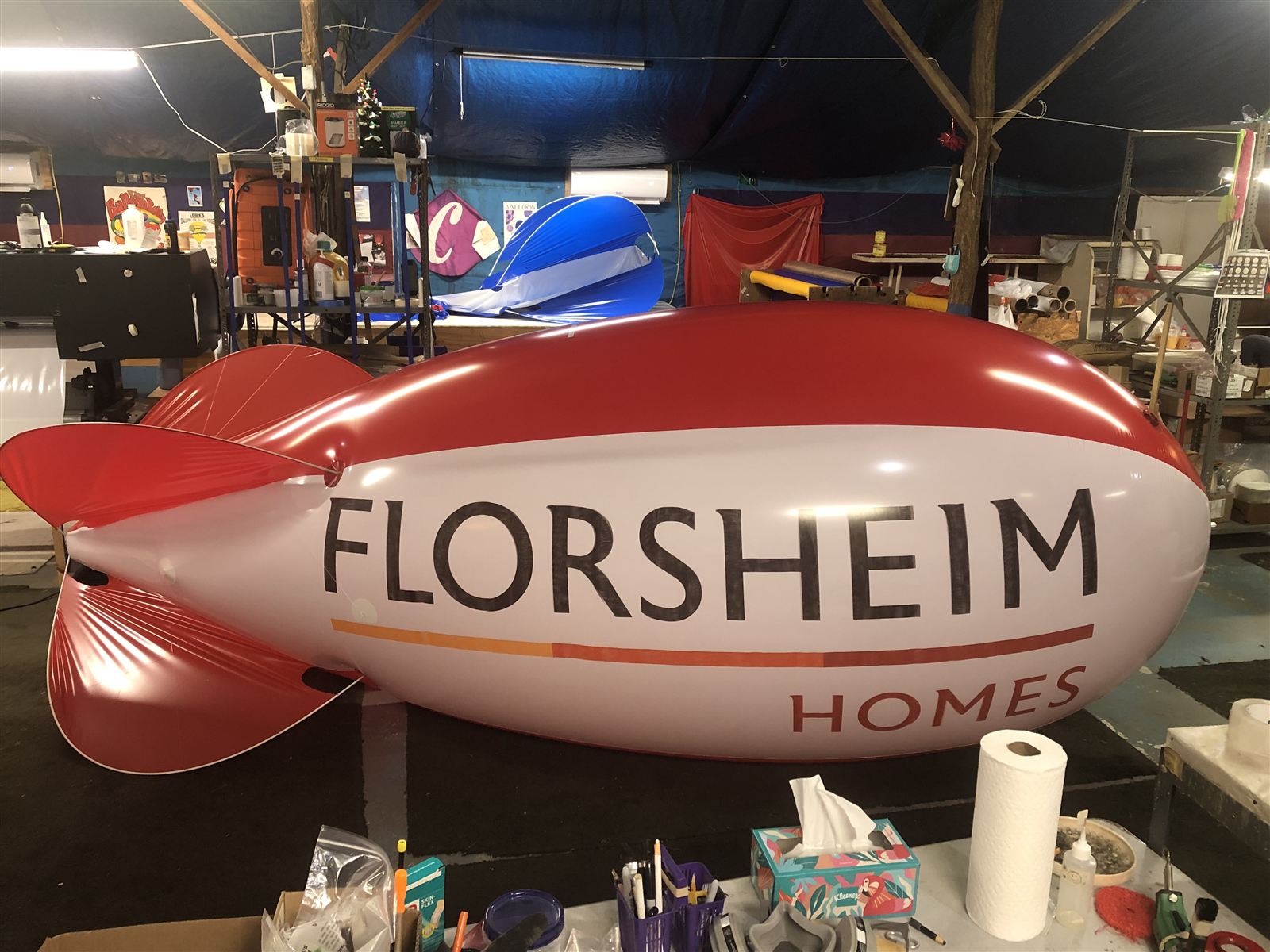
Outdoor, location-based advertising has a specific advantage in this environment: it’s public, it’s physical, and it’s tied to a real place and moment in time. A branded marketing blimp flying above a new energy-efficient housing development, a dealership’s EV lot, or a green-themed trade show booth does something a press release cannot — it puts the claim in front of an audience in real time, anchored to an actual physical achievement rather than an abstract statement.
This is especially relevant for home builders and auto dealers, two of the industries most exposed to consumer skepticism about “green” labeling. Pairing an aerial display with a genuine, specific milestone — a certified energy rating, a solar installation, a low-emission vehicle lineup — helps businesses show their sustainability work instead of simply asserting it.
6. Practical Ways to Show, Not Just Tell
Businesses looking to align outdoor marketing with the trends identified in this research have several practical options. Grand-opening events for energy-efficient developments can use branded balloons to draw attention to a specific, verifiable feature rather than a generic tagline. Trade show exhibitors can use blimps or balloon displays to highlight a booth built around a real sustainability initiative, giving attendees a reason to stop and ask questions. Auto dealers introducing electric or hybrid inventory can use aerial advertising to mark the occasion as a milestone, not just a sale.
In each case, the goal lines up with what the North American research describes: connecting communication to demonstrated value, rather than treating messaging as the finish line.
What This Means for Your Marketing
The data is consistent across recent studies: sustainability ambition in North America is holding steady or growing, but businesses are being held to a higher standard of proof. For marketing decision-makers, that means outdoor and location-based marketing works best when it’s tied to something specific and real — a certified building standard, a measurable emissions reduction, a genuine product change — rather than a broad environmental claim.
Helium advertising balloons and aerial marketing blimps are well suited to this moment because they draw attention to a place and a moment, not just a message. A balloon over a new low-energy model home, or a blimp circling a dealership’s EV showcase, gives your audience something concrete to see and remember, which supports the kind of substantiated, trust-building communication that today’s sustainability-conscious consumers expect.
Businesses that pair genuine sustainability progress with high-visibility, physical marketing — rather than words alone — are best positioned to meet rising consumer scrutiny while still standing out in a crowded market. Learn more about how helium advertising balloons can support your next launch, groundbreaking, or showcase event.
Sources
- Just one in ten sustainability professionals in North America expects ambition to decrease – SustainabilityOnline
- Leading Through Uncertainty: The Evolving Role of Sustainability Professionals in North America – GlobeScan
- New North American Survey on Sustainability Ambition – PR Newswire
- Corporate sustainability is shifting from strategy to execution, says BDO – SustainabilityOnline