Tag: green marketing

  • Sustainable Outdoor Marketing: Why Honest, Visible Campaigns Are Winning in 2026

    Sustainable Outdoor Marketing: Why Honest, Visible Campaigns Are Winning in 2026

    Sustainable Outdoor Marketing: Why Honest, Visible Campaigns Are Winning in 2026

    By Arizona Balloon Company (arizonaballoon.com) | August 13, 2026

    Sustainable outdoor marketing campaign using eco-conscious outdoor advertising to build consumer trust

    The Story: Businesses Are Rethinking How They Talk About Sustainability

    A wave of new commentary published this week is pushing a clear message to business owners: sustainable outdoor marketing and every other form of green messaging only works when it is honest, specific, and visible rather than vague. A report published August 7, 2026 argues that sustainable marketing has to look beyond quick sales and go past adding a green sticker to packaging, calling instead for honest messaging, ethical sourcing, and real community connection as the foundation of any credible sustainability campaign. That guidance lands at a moment when marketing teams across the United States are under growing pressure to prove, not just claim, that their environmental commitments are real.

    The timing is notable. Regulatory attention on environmental marketing claims has intensified in 2026, with legal analysts noting that U.S. companies now face a stricter compliance environment even without a single new federal rule, because enforcement increasingly looks at the overall impression a claim leaves rather than just its literal wording. For businesses that rely on visible, public-facing promotion — including retailers, home builders, and event marketers — that shift changes how every campaign, from a billboard to a helium advertising balloon, needs to be worded and positioned.

    Why This Matters for Marketing Decision-Makers

    For marketing managers and business owners, this is not an abstract compliance issue. It is a trust issue with direct revenue consequences. Consumer research compiled this year shows that greenwashing skepticism has grown far faster than overall concern about sustainability has declined, meaning shoppers are not tuning environmental messaging out — they are scrutinizing it more closely. Brands that lean on vague eco-language without backing it up risk losing credibility not just for that one claim, but across their entire marketing program.

    At the same time, many companies have started quietly minimizing public sustainability communication altogether, a trend researchers call “greenhushing.” One widely cited industry analysis found that the large majority of surveyed companies had maintained or expanded sustainability programs, yet only a small fraction were willing to promote that work publicly, largely out of fear of accusations of overstatement. That creates an opening for businesses willing to communicate real, substantiated efforts clearly and visibly in their local markets.

    Sustainable outdoor marketing campaign using eco-conscious outdoor advertising to build consumer trust

    Greenwashing Fatigue Is Reshaping Buyer Behavior

    Recent consumer survey data underscores how far skepticism has spread. Global research groups have found that a majority of consumers say they have personally encountered misleading or false sustainability claims from brands, and a large share say they would stop buying from a company caught greenwashing entirely. Notably, this skepticism is fairly consistent across age groups, suggesting it is a broad market reality rather than a niche concern limited to younger, environmentally focused shoppers.

    This creates a narrow but real opportunity for businesses that get their messaging right. Instead of leaning on unverifiable buzzwords like “eco-friendly” or “green” without support, companies that anchor claims to specific, visible actions — and communicate them through channels people naturally trust, such as local, in-person, and community-based advertising — are better positioned to stand out from brands practicing either greenwashing or greenhushing.

    Where Outdoor Advertising Fits Into Honest Sustainability Messaging

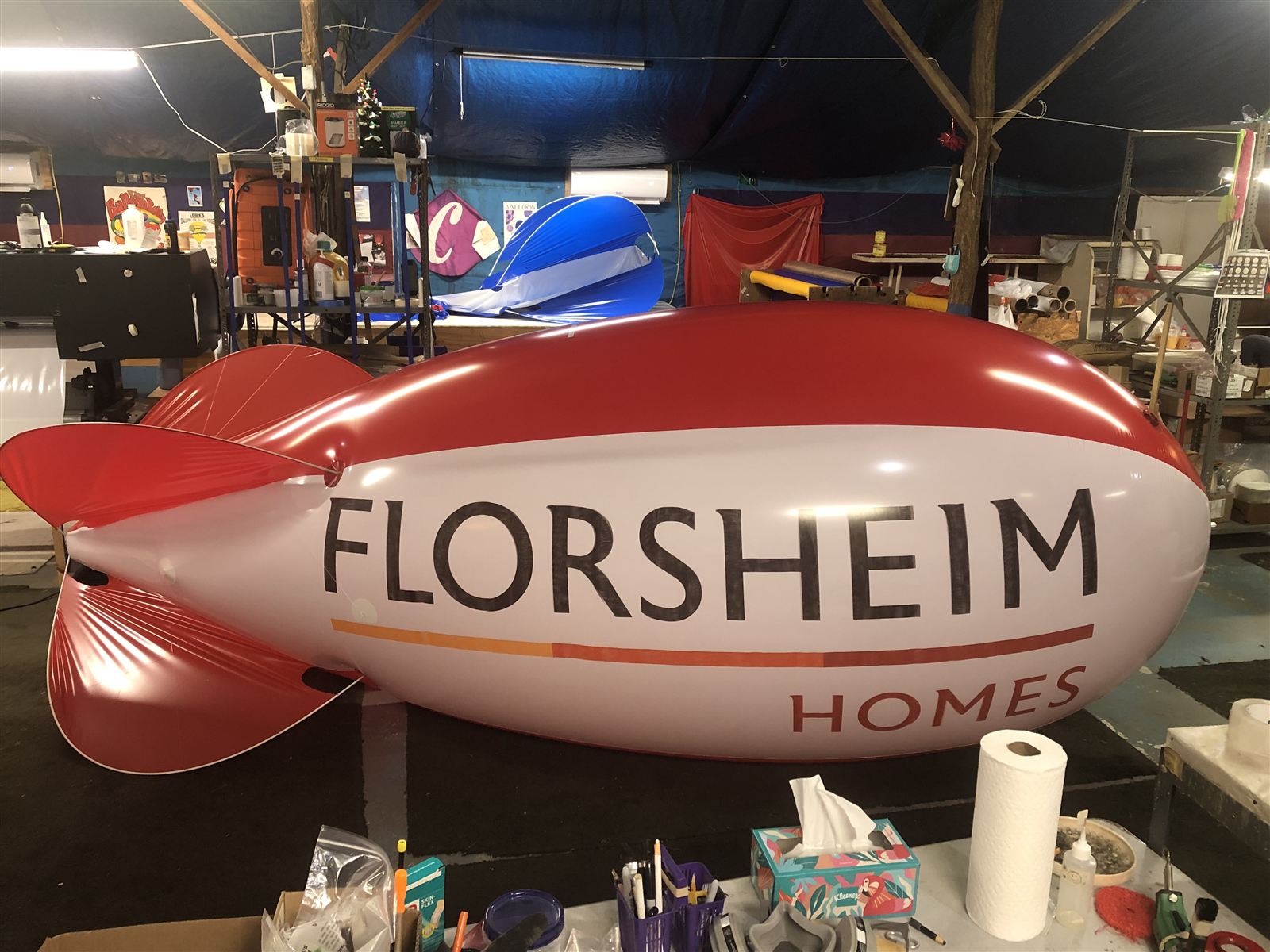
    This is where outdoor and location-based advertising has an underappreciated advantage. Digital ads and packaging claims are easy to dismiss as marketing spin, but a visible, physical presence in a community — at a home builder’s model site, a car dealership lot, or a trade show booth — reads as tangible rather than abstract. A branded marketing blimp or helium balloon does not make an environmental claim on its own, but it puts a business’s name and message in front of real people, in real neighborhoods, which is precisely the kind of grounded, community-based visibility that current research says builds more trust than broad, unsubstantiated slogans.

    For home builders in particular, this matters. Energy-efficient homes, water-conscious landscaping, and sustainable building materials are increasingly part of the sales pitch, but that pitch only lands if buyers see it reinforced consistently at the point of decision — on-site, at open houses, and at community events, not just in a brochure.

    Practical Steps for Building a Credible Green Campaign

    Businesses looking to align with this shift should focus on a few concrete practices: state specific, verifiable facts rather than broad claims; avoid ambiguous terms that regulators and consumers alike now view with suspicion; and pair any sustainability messaging with visible, real-world presence rather than packaging language alone. Reviewing marketing materials regularly, rather than treating sustainability messaging as a one-time campaign, is also recommended as part of an ongoing, adaptable approach.

    Industries Under the Most Pressure to Get This Right

    Home builders, auto dealers, and trade show exhibitors are among the industries most exposed to this shift, since all three depend heavily on public-facing, high-visibility marketing to drive foot traffic and sales. Home builders face buyer expectations around energy efficiency and sustainable materials. Auto dealers face growing scrutiny of electric and hybrid vehicle marketing claims. Trade show exhibitors, meanwhile, compete in crowded event environments where authenticity and visibility both matter for standing out. Across all three, the common thread is that credibility now depends on pairing any sustainability message with clear, verifiable, and visible follow-through.

    What This Means for Your Marketing

    The practical takeaway for business owners is straightforward: outdoor, location-based marketing is well-suited to this moment because it is inherently visible and hard to fake. Rather than leaning on vague sustainability language that regulators and consumers are increasingly skeptical of, businesses can build trust by showing up consistently and prominently in the communities they serve. A physical, branded presence communicates confidence and permanence in a way that a digital ad or a packaging claim cannot.

    This is where helium advertising balloons and aerial marketing blimps offer a practical advantage. They create sustained, high-visibility brand presence at model homes, dealership lots, grand openings, and trade show floors — the exact kind of grounded, community-facing marketing that current research suggests earns more trust than broad claims alone. For home builders and dealers especially, pairing genuine sustainability efforts with visible outdoor marketing can reinforce the message that the commitment is real, not just a slogan.

    As scrutiny of environmental marketing claims continues to grow through the rest of 2026, businesses that combine substantiated messaging with authentic, visible local presence will likely fare better than those relying on either overstated green claims or none at all. Outdoor advertising formats built for visibility and repeat local impressions are a natural fit for that strategy.

    Sources

  • Energy-Efficient Home Marketing Takes Center Stage as New Certified Communities Open


    Energy-Efficient Home Marketing Takes Center Stage as Builders Certify Communities

    Energy-Efficient Home Marketing Takes Center Stage as New Certified Communities Open

    Arizona Balloon Company (arizonaballoon.com) — July 24, 2026

    Energy-efficient home marketing shown through a new certified townhome community grand opening

    Certified Communities Are Opening Across the Country

    Energy-efficient home marketing is having a real moment this month, and the clearest example just opened in Northern California. Arizona Balloon Company tracks stories like this closely because they shape how builders, developers, and dealers think about drawing traffic to a physical location. KB Home recently opened Meadowbrook, a new ENERGY STAR–certified townhome community in Campbell, California, offering three-story homes engineered for energy and water efficiency. Company leadership framed the launch around transparent pricing and buyer-driven personalization, positioning efficiency as a value proposition rather than a marketing add-on.

    The timing matters. Builders across the country are opening certified communities at a pace that suggests energy performance has shifted from a niche selling point to a baseline expectation among buyers. That shift changes what a grand opening needs to communicate, and it raises the stakes for how a community announces itself to a neighborhood, a city, and a regional market. A quiet ribbon-cutting no longer matches the scale of the claim a builder is making about their product.

    New Compliance Pathways Give Builders More to Talk About

    Just days before the Meadowbrook opening, the National Green Building Standard rolled out new alternative compliance pathways designed to translate existing ENERGY STAR, DOE Efficient New Homes, and code-compliance achievements directly into formal NGBS Green Certification tiers, from Bronze through Emerald. The change means builders who already meet recognized energy programs can now layer on a fuller sustainability certification without duplicating work, giving them a stronger, better-documented story to tell buyers.

    For home builders, that is a meaningful development. A certification tier is a concrete, third-party-verified claim, which is exactly what skeptical buyers are asking for. But a certificate on a wall or a badge on a listing page only reaches the people who are already reading the fine print. Builders that want the achievement to actually move traffic still need a way to put it in front of the people who are not reading anything at all yet.

    Energy-efficient home marketing shown through a new certified townhome community grand opening

    The Trust Gap Builders Are Racing to Close

    Consumer skepticism toward environmental claims has climbed steadily in recent years, with a large share of shoppers saying they distrust green marketing language on its face. That skepticism is precisely why regulators have kept revisiting environmental marketing guidance, and why certifications like ENERGY STAR, NGBS, and RESNET’s HERS Index carry so much weight with builders right now. A certified home gives a buyer something to verify. An unverified adjective does not.

    This is good news for builders who have done the work, but it also raises the bar for how that work gets communicated. A community that has earned a real certification has a stronger claim to make than most competitors, and stronger claims deserve more visible announcements. Burying a hard-won certification in a press release footnote wastes the credibility a builder just spent months earning.

    Certification Solves Credibility, Not Visibility

    Sustainable construction is also advancing on the materials and design side, with builders increasingly weighing insulation performance, glass facades, and renewable integration as standard planning inputs rather than upgrades. That progress is genuinely newsworthy inside the industry. Outside the industry, it competes with everything else happening on a Saturday morning: kids’ soccer, grocery runs, other new-home tours down the street. A certification announcement has to win attention before it can win trust.

    That is the gap between a good sustainability story and a good marketing outcome. The home builders opening ENERGY STAR and NGBS-certified communities this summer have real substance behind their claims. What decides whether a grand opening actually fills with visitors is whether the announcement is visible from more than a block away.

    Where Aerial Advertising Fits Into Green Building Marketing

    This is the connection worth drawing for the home building industry specifically. A certified, energy-efficient community is a physical location with a physical grand opening, a sales office, and a model home row that only works if people actually drive over and walk through it. Digital ads and certification badges build the case; they do not, on their own, pull a car off the main road. A large helium advertising balloon anchored above a new community entrance does something a listing page cannot: it makes the launch visible from the freeway, the school pickup line, and the neighboring subdivision, all at once, for the entire duration of the opening weekend.

    Builders launching certified communities have increasingly leaned on giant inflatables, entrance arches, and custom-branded blimps to turn a private construction milestone into a public event. It is a practical pairing: the certification supplies the credibility, and the aerial marketing supplies the reach. Neither substitutes for the other, but together they turn “we built something efficient” into “come see it this weekend.”

    What This Means for Your Marketing

    If your business has invested in genuine sustainability credentials, whether that is an ENERGY STAR rating, an NGBS certification tier, or a documented HERS Index score, the marketing question is no longer whether the claim is credible. It is whether enough people saw the claim before deciding where to spend their Saturday. Outdoor, location-based marketing exists precisely to solve that visibility gap, and it works best when it is timed to a real event: a grand opening, a model home debut, or a certification milestone worth celebrating publicly.

    Home builders, trade show exhibitors, and dealers all face a version of the same problem: a strong claim that nobody drives past. A giant balloon, an entrance arch, or an aerial marketing blimp turns a static sign into something people notice from a distance, remember, and photograph. For a certified green community especially, that visibility reinforces the message rather than distracting from it — the balloon gets people to the site, and the certification is what earns their trust once they arrive.

    As green building standards keep tightening and buyer skepticism keeps rising, the builders who win will be the ones who pair real substance with real visibility. Certification proves the claim. Aerial advertising makes sure the right people see it.

    Sources


  • Consumer Distrust in Green Claims Is Pushing Brands Toward Sustainable Outdoor Advertising


    Sustainable Outdoor Advertising: Why Consumer Distrust in Green Claims Is Reshaping Marketing

    Consumer Distrust in Green Claims Is Pushing Brands Toward Sustainable Outdoor Advertising

    Byline: Arizona Balloon Company (arizonaballoon.com) — July 9, 2026

    Sustainable outdoor advertising balloon floating above a business storefront

    The Trust Gap Behind Green Marketing Claims

    A wave of new consumer research is putting pressure on how businesses talk about sustainability, and the findings point toward a growing opportunity in sustainable outdoor advertising. Shoppers are no longer taking eco-friendly claims at face value, and marketing teams that rely only on written statements about being “green” are finding those messages fall flat. Instead of asking customers to simply believe a claim, brands are being pushed to show real, visible action. That shift matters for every business owner who plans a marketing budget, from home builders promoting energy-efficient construction to auto dealers highlighting hybrid and electric inventory.

    Industry researchers describe this moment as a turning point where environmental concern remains high among consumers, but patience for vague or unproven marketing language has run out. For businesses that have leaned on sustainability messaging to differentiate themselves, the practical question is no longer whether to talk about green values, but how to prove them in a way people actually trust. Learn more about how Arizona Balloon Company helps businesses build visible, memorable campaigns at arizonaballoon.com.

    What the New Data Shows

    According to a newly released consumer sustainability report from research firm Kantar, environmental concern still ranks as the second-largest global issue based on unprompted consumer mentions, but only about a quarter of people believe brands are actually doing something meaningful about climate and environmental issues. Even more striking, more than half of consumers surveyed said they have personally seen or heard false or misleading claims about a brand’s sustainable actions. That statistic helps explain why traditional green marketing language, printed on packaging or buried in a website’s sustainability page, is losing its persuasive power.

    The report argues that brands need to help people take visible action rather than simply asking them to “care more,” and that proof, inclusion, and demonstrated follow-through matter more than polished messaging alone. For marketing decision-makers, this reframes the sustainability conversation away from copywriting and toward demonstrable, real-world presence.

    Sustainable outdoor advertising balloon floating above a business storefront

    Why Tangible, Visible Marketing Wins Trust

    If consumers are skeptical of written sustainability claims, the marketing channels that succeed going forward will be the ones that let people see a brand’s presence and effort directly, rather than reading about it. Physical, location-based marketing has an inherent advantage here: a giant helium balloon over a new home development or a blimp circling a stadium during a community event is not a claim, it is a fact people can watch happen. That kind of visible, in-person marketing builds a different kind of credibility than a paragraph of environmental language on a landing page.

    This does not mean every business needs to rebrand around sustainability messaging. It means that as digital ad claims face more scrutiny, real-world, visible marketing formats are becoming more valuable simply because they cannot be faked the way a written claim can.

    How Balloons and Blimps Fit Sustainable Outdoor Advertising

    Helium advertising balloons and marketing blimps are, by nature, an honest and demonstrative form of advertising. There is no ambiguity about what a business is doing when a branded balloon is anchored above a grand opening or a blimp is flying over a trade show; the presence itself is the message. As green marketing skepticism grows, this kind of straightforward, visible outdoor advertising stands in contrast to messaging that can feel exaggerated or unverifiable.

    Balloon and blimp companies, exhibitors, home builders, and auto dealers are also finding that reusable inventory fits naturally into a broader sustainability conversation. A durable, reusable advertising balloon or blimp used across multiple events lines up well with the “do, not just say” standard that current research suggests consumers now expect. Businesses exploring this approach can review options for advertising blimps or helium advertising balloons designed for repeated use across seasons and events.

    Practical Steps for Authentic Green Campaigns

    Marketing teams looking to respond to this trust gap have a few practical options. First, pair any sustainability claim with something visible and specific, rather than a general statement. Second, favor marketing formats that demonstrate presence and consistency over time, since one-time claims are the most likely to be viewed as greenwashing. Third, involve the local community directly, whether through an in-person event, a grand opening, or a sponsorship appearance, since research shows people respond better to inclusion and participation than to messaging alone.

    For businesses without a dedicated sustainability program, this is also a reminder that authenticity and visibility can matter more than a perfectly worded claim. A tangible, well-executed local marketing presence can build more consumer confidence than a sustainability statement that cannot be independently verified.

    What This Means for Your Marketing

    For home builders, auto dealers, trade show exhibitors, and general businesses, the current research is a signal to shift marketing dollars toward formats that people can see and experience directly. Outdoor, location-based advertising has always offered this advantage, and it is becoming more valuable as skepticism toward written or digital sustainability claims increases. A visible presence at a grand opening, community event, or dealership lot does more to build trust today than another paragraph of marketing copy.

    This is also a good moment to think about reuse and durability as part of a marketing strategy, not just as a cost-saving measure. Choosing helium advertising balloons or aerial marketing blimps that can be deployed across multiple campaigns and seasons supports both budget efficiency and the kind of consistent, visible brand presence that today’s more skeptical consumers respond to.

    Businesses that pair a genuine local presence with clear, honest messaging, rather than broad sustainability claims, are best positioned to earn attention in a marketplace where trust in green marketing has become harder to win and easier to lose.

    Sources

  • Sustainable Outdoor Marketing Is Reshaping U.S. Brands in 2026


    Sustainable Outdoor Marketing Is Reshaping U.S. Brands in 2026

    Sustainable Outdoor Marketing Is Reshaping U.S. Brands in 2026

    By Arizona Balloon Company | arizonaballoon.com — June 22, 2026

    sustainable outdoor marketing campaign with eco-friendly brand signage at a live event

    Green Marketing Is Surging — and So Is Consumer Scrutiny

    Sustainable outdoor marketing has become one of the most competitive arenas in American business this year. The global green marketing sector is valued at approximately $58.68 billion in 2026, and the United States leads the charge, with sustainability influencing the purchasing decisions of roughly 82% of American consumers before they buy. That is not a niche demographic — it is the mainstream. Marketing managers who ignore this shift are ceding ground to competitors who have already adjusted their brand messaging, event strategies, and physical advertising footprint to reflect environmental responsibility.

    The momentum is real and documented. Sustainable products grew 2.7 times faster than conventional products over recent years, capturing a 32% share of overall market growth. Interest in the search term “eco-friendly” hit its highest point in five years as recently as mid-2025, according to Google Trends data cited by Shopify. Meanwhile, nearly 63% of companies have increased their sustainability-focused marketing budgets, and 75% of advertising campaigns now include some form of sustainability messaging. For business owners and marketing decision-makers, the strategic question has shifted from whether to pursue green marketing to how to do it credibly and cost-effectively.

    The payoff for brands that get it right is substantial. Sustainable brands grow 5.6 times faster than conventional competitors, and 74% of companies that pursue authentic eco-campaigns report positive outcomes. The data makes a compelling case for action — provided the messaging is grounded in verifiable practices rather than hollow slogans.

    The Trust Gap: Why Vague Eco-Claims Are Backfiring

    The single largest obstacle to capitalizing on the green marketing wave is a widening trust gap between brands and consumers. According to multiple independent surveys, only about one in five consumers currently believes the environmental claims made by brands. Approximately 57% of consumers distrust green marketing claims outright, and 59% suspect that companies routinely exaggerate their sustainability commitments. Regulators in the United States, United Kingdom, and Australia have all increased enforcement activity targeting misleading environmental advertising.

    This trend toward accountability accelerated in 2025 and has carried into 2026. High-severity greenwashing cases — those involving deliberate concealment of environmental violations — surged by more than 30% globally in 2024. North America and Europe together recorded a 27% increase in high-severity incidents. The Federal Trade Commission maintains guidelines requiring that environmental marketing claims be truthful and backed by reliable evidence, and state-level legal actions, such as the ExxonMobil lawsuit in Connecticut, are setting precedents that could redefine liability for misleading eco-advertising.

    The lesson for marketing teams is clear: vague descriptors like “green,” “natural,” or “eco-friendly” without supporting evidence are no longer a safe harbor. Brands that pair real environmental action with honest, specific marketing communication are the ones building durable customer loyalty. Third-party certifications, transparent progress reporting, and visible, locally rooted outdoor campaigns are emerging as the most credible approaches.

    sustainable outdoor marketing campaign with eco-friendly brand signage at a live event

    Outdoor Advertising Goes Green in 2026

    Within the broader marketing landscape, outdoor and out-of-home advertising is experiencing its own green transformation. The global outdoor advertising market was valued at approximately $43.3 billion in 2025 and is projected to reach $71.2 billion by 2034, growing at a compound annual rate of 5.5%. Much of that momentum is now intersecting with sustainability priorities. Major brands are switching to recyclable materials, energy-efficient LED displays, and solar-powered installations as standard practice rather than premium upgrades.

    Industry analysts at multiple research firms confirm that sustainability has become a defining factor in outdoor advertising strategy for 2026. Advertisers are responding to both regulatory sustainability requirements and growing demand from eco-conscious businesses for responsible media partnerships. The shift is also commercial: consumers recall outdoor placements more readily when the physical advertising medium itself signals environmental alignment with the brand’s values. A campaign that preaches green business practices while plastered on a wasteful or disposable structure sends a contradictory message.

    For brands in sectors such as home building, real estate development, and automotive retail, where large-format outdoor advertising has always driven foot traffic and grand-opening awareness, the pressure to align physical marketing tools with sustainability values is intensifying. The good news is that effective, high-visibility outdoor options exist that carry a far lighter environmental footprint than many traditional alternatives.

    How Helium Advertising Balloons Give Eco-Brands a Visible Edge

    One of the most practical and underutilized tools in sustainable outdoor marketing is also one of the oldest: the large-format inflatable. Helium advertising balloons and cold-air inflatables are manufactured from durable, long-lasting vinyl and polyester materials that are designed to be used repeatedly over many years, not discarded after a single event. Unlike printed banners that end up in landfills after a single campaign or disposable promotional items that contribute to waste streams, a quality advertising blimp or balloon can serve a brand across dozens of events with minimal additional resource consumption.

    The visibility advantages are immediate and measurable. A large helium balloon or aerial marketing blimp rises above the visual clutter of street-level signage, creating a landmark effect that draws customers from a wide radius. For a home builder hosting a model home opening, an eco-aligned company exhibiting at a trade show, or an auto dealer running a weekend event, the aerial signal is unmistakable. The advertising medium itself becomes a talking point — a physical demonstration that the brand is willing to invest in prominent, reusable, high-quality marketing infrastructure rather than disposable materials.

    Eco-conscious brands can further reinforce their green credentials by choosing inflatables printed with water-based inks, sourcing from manufacturers who provide documented material data sheets, and committing to a rental or lease model that keeps the same unit circulating rather than purchasing new displays for every event. This approach directly mirrors the circular economy principles that sustainability-minded consumers and regulators now reward.

    Practical Applications: From Home Builders to Auto Dealers

    The most active users of large-format outdoor inflatables are precisely the businesses that stand to benefit most from green marketing credibility. Home builders launching new communities face a growing base of buyers who research a developer’s environmental practices before signing a contract. A grand opening event anchored by a reusable helium blimp bearing eco-certified messaging — net-zero construction, solar-ready homes, green materials — creates a high-visibility, photogenic moment that travels through social media far beyond the event itself.

    Trade show exhibitors competing in sustainability-focused industries face similar pressure. Floor space at major expos is crowded and expensive. Brands that invest in eye-catching aerial inflatables above their booth draw attendees who would otherwise walk past. The visual dominance of a well-designed advertising blimp translates directly to more conversations, more lead captures, and better brand recall after the show.

    Auto dealers promoting hybrid and electric vehicle lines are another primary beneficiary. A large inflatable displayed above a dealership during an EV launch event visually signals that this location is worth visiting, reaching thousands of drivers passing by on adjacent roads. The longevity of the inflatable — the same unit can be deployed for every seasonal promotion — means the per-use cost drops sharply over time, making it one of the more cost-efficient formats in a dealership’s outdoor advertising toolkit. For businesses across all these verticals, the combination of high reach, reusability, and versatility makes aerial inflatables a logical fit within a sustainable marketing strategy.

    What This Means for Your Marketing

    The green marketing surge of 2026 is not simply a consumer trend to monitor; it is a strategic imperative that is reshaping where advertising budgets go, which media formats get selected, and how brands are held accountable for their messaging. For business owners and marketing managers, the immediate priority is to audit all outdoor and location-based marketing activities for consistency. Any brand positioning itself as eco-conscious but relying on disposable, single-use promotional materials is sending a mixed signal that increasingly sharp consumers will notice and that social media will amplify.

    Outdoor and location-based marketing remains one of the highest-impact channels available for driving foot traffic, event attendance, and brand recall. The key in 2026 is choosing formats that align with sustainability values rather than undermine them. Reusable large-format inflatables, repurposable banners with documented material sourcing, and event marketing tools designed for multi-year use all check the boxes that eco-aligned brands need. Helium advertising balloons from a reputable manufacturer or rental source represent exactly this type of investment — highly visible, reusable, and easy to brand consistently across multiple events and locations throughout the year.

    The most effective sustainable outdoor marketing programs in 2026 are combining authentic environmental commitments with bold physical visibility. Brands that can prove their green practices and then make themselves impossible to miss at a grand opening, trade show, or sales event are capturing both the attention and the loyalty of an increasingly discerning buyer base. The infrastructure for that kind of campaign does not need to be complicated — it needs to be genuine, visible, and built to last.

    Sources

  • Green Sustainable Marketing: What 2026 Greenwashing Rules Mean for You


    Green Sustainable Marketing: What 2026 Greenwashing Rules Mean for You

    Green Sustainable Marketing: What 2026 Greenwashing Rules Mean for You

    By Arizona Balloon Company (arizonaballoon.com) — June 4, 2026

    Green sustainable marketing outdoor advertising campaign with eco-friendly branding

    What Is Changing in Green Sustainable Marketing Compliance

    For marketing managers and business owners investing in green sustainable marketing, 2026 is a pivotal year. A tightening compliance environment on both sides of the U.S.–Canada border is forcing brands to treat environmental claims with the same legal rigor they apply to product performance statements. A compliance guide published by Fairware on May 25, 2026 summarizes the landscape clearly: regulators are paying closer attention to whether eco-claims are specific, supportable, and unlikely to leave a misleading overall impression on consumers.

    The shift is not driven by a single landmark ruling. In the United States, the Federal Trade Commission’s existing Green Guides remain the primary federal framework for environmental marketing claims. What has changed is the enforcement posture. Legal teams, procurement departments, and brand strategists must now work in tighter alignment to verify that any public sustainability messaging is accurate and defensible before campaigns launch. Businesses that approach outdoor marketing proactively—including those that use helium advertising balloons for high-visibility location-based promotions—stand to gain a credibility edge by leading with transparent, verifiable messaging.

    In Canada, the shift is more concrete. Amendments to the Competition Act that became law on June 20, 2024, now require that environmental benefit claims be backed by adequate and proper testing, and business-level claims must follow an internationally recognized methodology. While that law applies north of the border, North American marketers running cross-market campaigns should treat it as a preview of where U.S. enforcement is heading.

    The FTC Green Guides and What They Actually Require

    A widespread misconception circulating in marketing circles is that the FTC issued a new Green Guides ruling in 2026. According to Fairware’s compliance analysis, no finalized new ruling is in force. The current Green Guides, which have been the key U.S. guidance for environmental marketing claims for decades, remain the operative standard. The FTC’s baseline requirement is that advertising must be truthful, not misleading, and properly substantiated.

    What has shifted, in practical terms, is the cultural expectation inside organizations. Sustainability language that once sat comfortably inside brand storytelling now belongs in the same category as product performance claims: it needs internal evidence, cross-functional alignment, and pre-launch review. Marketing managers who treat green claims as brand narrative rather than verifiable fact are increasingly exposed to regulatory scrutiny, consumer skepticism, and reputational risk.

    For businesses promoting new home communities, auto dealerships, trade shows, or retail locations, this regulatory context makes outdoor marketing strategy more important than ever. Physical, location-specific advertising—such as the custom advertising blimps available through Arizona Balloon Company—delivers brand presence without the digital paper trail that regulators increasingly scrutinize for misleading environmental claims made in online copy.

    Green sustainable marketing outdoor advertising campaign with eco-friendly branding

    Which Eco-Marketing Terms Carry the Highest Legal Risk

    The compliance guide identifies the highest-risk marketing terms as the broadest ones: “green,” “eco-friendly,” “sustainable,” and “carbon neutral.” The danger, regulators note, is not usually that these claims are entirely false, but that the overall impression they create is too broad for the narrow evidence a brand can actually provide. Calling a product line “eco-friendly” when only one component has been tested against an environmental standard, for example, may meet the letter of brand intent while failing regulatory scrutiny.

    This has created a genuine tension for marketing teams. Consumers still type terms like “green” and “eco-friendly” into search engines and AI tools when looking for responsible brands, meaning that abandoning these terms entirely would hurt discoverability. The practical solution, according to sustainability compliance experts, is to pair broad terms with specific, documented substantiation—stating exactly what is green, how it was measured, and what the limitation of the claim is. Honesty about progress builds more consumer loyalty than vague aspirational language.

    The Consumer Trust Gap: Why Vague Claims Are Backfiring

    The compliance pressure from regulators reflects a deeper problem that is already visible in consumer data. According to research cited by Shopify’s green marketing analysis, only one in five consumers currently believes brands’ claims about their environmental efforts. That trust deficit is the product of years of overpromising and underdelivering across industries. A 2024 PwC Voice of the Consumer survey found that shoppers are willing to pay a nearly 10 percent premium for sustainably sourced goods—but that premium is contingent on trust.

    Around 82 percent of American consumers consider sustainability factors before purchasing, according to green marketing market data published in April 2026 by Business Research Insights. Yet that same consumer base is increasingly skeptical of vague branding. Brands with strong, substantiated sustainability narratives are documented to grow at more than twice the rate of average competitors—but the key word is substantiated. Businesses that make specific, honest claims supported by documentation are outperforming those that rely on aesthetic eco-signaling alone.

    The takeaway for marketing decision-makers is that authenticity is now a competitive advantage, not just a compliance requirement. Businesses willing to document their actual environmental practices—however incremental—and communicate them clearly are better positioned to capture the growing segment of values-driven buyers than those relying on broad green labels.

    How Aerial Advertising Supports Authentic Green Sustainable Marketing

    For businesses operating in the green and sustainable marketing space, aerial and outdoor advertising formats offer a practical branding advantage that is worth understanding. Helium advertising balloons and custom marketing blimps are reusable, long-lasting physical assets. Unlike single-use printed banners, disposable promotional materials, or energy-intensive digital display campaigns, a well-maintained advertising balloon can serve a brand across dozens of events and locations over multiple seasons. That longevity reduces per-impression material waste significantly.

    For home builders promoting green-certified communities, auto dealers featuring electric or hybrid vehicle lines, or trade show exhibitors showcasing sustainability solutions, a giant aerial balloon or blimp creates immediate, unmistakable brand presence at the physical location where the sale is happening. This matters in the context of 2026’s compliance environment because the message delivered by a physical aerial display is inherently local, transparent, and tied to a specific offering—a sharp contrast to the broad digital claims that regulators are scrutinizing most closely.

    Outdoor advertising formats are also increasingly aligned with consumer values. Research from industry analysts confirms that sustainability is becoming a defining factor in out-of-home advertising strategies, with brands adopting reusable materials and formats that reduce environmental footprint without sacrificing visibility. A custom helium blimp or advertising balloon from Arizona Balloon Company represents the kind of durable, location-based marketing investment that holds up well under both consumer scrutiny and environmental accounting.

    What This Means for Your Marketing

    The 2026 greenwashing compliance story is ultimately a story about credibility. Marketing managers who relied on vague sustainability language to differentiate their brands now face a choice: invest in documenting and substantiating their environmental claims, or risk regulatory exposure and declining consumer trust. The businesses that will benefit most from the current environment are those that have always led with transparency—communicating honestly about what they do, where they do it, and why it matters to the customer standing in front of them.

    Location-based, physical advertising is well suited to this moment. When a prospective home buyer drives past a new community and sees a giant branded helium advertising balloon marking the sales office, the message is direct, visible, and tied to a real place and a real product. There is no algorithmic mediation, no digital ad copy for regulators to scrutinize, and no vague eco-claim floating across a social feed. The brand shows up exactly where the customer is, delivering a message that is as transparent as the open sky above it.

    For businesses in home building, automotive, trade shows, or any sector where green credentials are part of the brand story, the smartest next move is to pair credible sustainability documentation with high-impact outdoor advertising that gets customers to the location. Whether you are marking a grand opening, promoting a green-certified development, or standing out at an outdoor event, aerial marketing blimps and helium advertising balloons from Arizona Balloon Company deliver the ground-level visibility that no digital campaign can replicate. Contact Arizona Balloon Company to discuss rental, purchase, and custom branding options for your next campaign.

    Sources


  • Earth Week 2026: Reshaping Sustainable Outdoor Marketing


    Earth Week 2026: Reshaping Sustainable Outdoor Marketing

    Earth Week 2026: Greenwashing Backlash Is Reshaping Sustainable Outdoor Marketing Strategy

    By Arizona Balloon Company — April 27, 2026

    sustainable outdoor marketing with eco-friendly aerial advertising displays

    Earth Week 2026 and the Greenwashing Wake-Up Call

    This week’s Earth Day coverage has put a sharp spotlight on a problem that marketing managers can no longer afford to ignore: the widening gap between what brands claim about their environmental commitments and what they actually do. For businesses investing in sustainable outdoor marketing, that gap is both a threat and an opportunity. Across the United States, Earth Week 2026 arrived with a wave of eco-branded campaigns, tree-planting pledges, and limited “green edition” product launches—most of which experts and consumers are greeting with skepticism rather than applause.

    A February 2026 analysis by a coalition of environmental organizations including Beyond Fossil Fuels, Friends of the Earth US, and Stand.earth examined more than 150 climate-related claims from major companies. The findings were stark: 74 percent of the industry claims reviewed were unproven, and 36 percent cited no supporting evidence at all. As one analyst summarized, the trick is bundling low-impact sustainability work alongside high-impact operations and marketing the combined package as a climate solution. Consumers, regulators, and journalists are increasingly calling this out—and the reputational damage for brands caught overstating their green credentials is swift and significant.

    For marketing decision-makers, this is not just a PR story. It is a direct signal about where credibility lives in 2026, and what kinds of marketing investments will build lasting brand equity versus what will invite backlash. Explore Arizona Balloon Company’s full range of marketing solutions to see how durable, reusable aerial displays fit into a credible, high-visibility strategy.

    The Consumer Trust Gap: Why 57% of Shoppers Are Skeptical

    The numbers behind consumer sentiment on green marketing are sobering. According to data from Kantar’s Sustainability Sector Index, 57 percent of consumers report having encountered false or misleading information about brands’ sustainable practices. Only about one in five consumers believe that major companies are genuinely taking meaningful action on climate and environmental issues. That distrust has real commercial consequences: 78 percent of buyers have switched brands over sustainability concerns, while 82 percent report greater trust in brands they perceive as environmentally responsible.

    What these two data points together reveal is a high-stakes credibility divide. Brands that communicate sustainability claims with specificity and transparency earn measurable loyalty advantages. Brands that rely on vague language—terms like “eco-friendly,” “natural,” or “green”—without substantiation are exposed to growing regulatory and consumer scrutiny. California’s SB 343 “Truth in Recycling” law, with enforcement deadlines arriving in October 2026, and the proposed federal PACK Act signal that environmental marketing claims are moving from aspirational messaging into legally auditable territory across the United States.

    For home builders, auto dealers, trade show exhibitors, and event-driven businesses, the lesson is clear: green marketing in 2026 must be grounded in verifiable action, not seasonal campaigns. The Earth Week news cycle amplifies this message every April, but the underlying consumer expectation is now a year-round standard. Businesses that build their marketing around tangible, observable practices—not just verbal commitments—will be better positioned to earn and retain customer trust.

    sustainable outdoor marketing with eco-friendly aerial advertising displays

    Sustainable Outdoor Advertising Is Going Mainstream in 2026

    The outdoor advertising industry is experiencing its own sustainability transformation alongside this broader green marketing shift. Industry analysts project the global outdoor advertising market will reach $45.9 billion in 2026, growing to $68.56 billion by 2033. Within that growth story, sustainability has emerged as a competitive differentiator rather than a niche concern. Brands are actively seeking outdoor marketing formats that reduce waste, minimize environmental footprint, and signal genuine commitment to responsible business practices—not just for Earth Week, but as a year-round posture.

    According to multiple 2026 industry reports, outdoor advertisers are increasingly adopting energy-efficient technologies such as LED displays, solar-powered signage, and materials designed for extended durability and reuse. The driving force is a dual pressure: consumer-facing demand for visible environmental accountability, and regulatory pressure from jurisdictions pushing stricter standards for environmental claims made in advertising. For marketers operating in high-visibility, location-based channels, this means that the format of outdoor advertising—not just its message—is now part of the brand’s sustainability story.

    How Helium Advertising Balloons Support Authentic Green Marketing

    Against this backdrop, helium advertising balloons and aerial marketing blimps offer businesses in the green and sustainable marketing space a format that aligns with the authenticity the current moment demands. Unlike single-use printed materials, disposable banners, or energy-intensive digital billboard systems, high-quality advertising balloons are designed for repeated deployments. A well-maintained helium blimp or giant advertising balloon can be deployed across dozens of events, grand openings, and trade show appearances—delivering a cost-per-impression that decreases with each use while generating zero ongoing energy consumption once inflated.

    For home builders showcasing new communities, auto dealers running sales events, and trade show exhibitors competing for attention on crowded floors, the reusability of aerial advertising is not just a cost advantage—it is a verifiable sustainability credential. When a business can point to a durable, reusable marketing asset that has been in active use for multiple seasons, it is demonstrating exactly the kind of tangible, observable commitment that 2026 consumers and regulators are asking for. That narrative is far more defensible than a seasonal digital campaign with a green color palette.

    The high-altitude visibility of advertising blimps and large-format balloons also eliminates a common sustainability trade-off in outdoor marketing: the need for multiple smaller signs, printed handouts, or repeated physical installations to achieve equivalent reach. A single aerial display visible from a quarter-mile radius can replace dozens of ground-level materials—reducing both material consumption and logistical footprint for the advertiser.

    What Green-Minded Businesses Should Do Right Now

    The Earth Week 2026 greenwashing conversation points toward a set of actionable principles for marketing managers who want to position their organizations credibly in the sustainability space. First, move away from vague environmental language and toward specific, observable claims. The IMD Business School’s 2026 sustainability analysis put it directly: sustainability in 2026 is shifting from marketing story to operating system. The brands winning consumer trust are those that embed environmental accountability into actual product and operational decisions—not those that add green messaging to unchanged business practices.

    Second, evaluate every marketing channel and format for its own environmental footprint. The Arbor Day Foundation’s 2026 consumer research, conducted with The Harris Poll, found that half of consumers now actively seek environmental information before making a purchase. When your marketing formats are themselves demonstrably durable, reusable, and low-waste, that information is already visible to the consumers you are trying to reach. A helium advertising blimp deployed at a new home community opening, a trade show, or a grand opening communicates not just the advertiser’s message but also something about the advertiser’s values through the choice of format itself.

    Third, build marketing calendars that go beyond Earth Week. One of the clearest patterns in the 2026 greenwashing backlash is consumer frustration with brands that appear to care about the environment only in April. Businesses that invest in year-round, reusable, high-visibility outdoor marketing tools are structurally positioned to avoid this criticism—because their commitment is demonstrated by the equipment in the field, not by the messaging on the calendar.

    What This Means for Your Marketing

    Earth Week 2026 has made one thing unmistakably clear for U.S. marketing managers and business owners: authenticity in sustainable marketing is no longer optional, and it is no longer purely a messaging challenge. Consumers and regulators are looking at the substance behind the claims—what formats you use, how long they last, what footprint they leave, and whether your environmental commitments show up in your actual operations rather than just your April campaigns. Businesses in sectors like home building, real estate, automotive, and event marketing that choose durable, reusable outdoor marketing tools are making a choice that speaks for itself.

    Location-based, outdoor marketing remains one of the highest-impact channels for businesses targeting customers at the moment of decision—at a new community, a dealership, a trade show floor, or a grand opening. The key in 2026 is choosing formats that deliver both the attention and the authenticity your target audience is increasingly demanding. Helium advertising balloons and aerial marketing blimps, designed and manufactured for repeated use across dozens of deployments, represent exactly the kind of tangible, observable sustainability commitment that resonates with today’s more discerning consumer.

    If your business is looking to elevate its outdoor presence with a marketing format that aligns with green values, delivers unmatched visibility, and generates a per-event cost that decreases over time, the investment in aerial marketing blimps or large-format advertising balloons is worth a close look this season. The Earth Week conversation will move on, but the consumer expectations it reflects are permanent features of the 2026 marketing landscape.

    Lastly, sustainable outdoor marketing should align with overall business goals for maximum impact. Continuous improvement in sustainable outdoor marketing practices is essential for long-term success. Case studies showcasing successful sustainable outdoor marketing can serve as valuable references for other businesses. Incorporating customer feedback into sustainable outdoor marketing can refine brand strategies and messaging. Through sustainable outdoor marketing, brands can demonstrate their commitment to environmental stewardship.

    Sources


  • How Green Marketing Rules Are Reshaping Brand Visibility in 2026


    Sustainable Outdoor Advertising: How Green Marketing Rules Are Reshaping Brand Visibility in 2026

    Sustainable Outdoor Advertising: How Green Marketing Rules Are Reshaping Brand Visibility in 2026

    By Arizona Balloon Company (arizonaballoon.com) — April 13, 2026

    sustainable outdoor advertising with eco-friendly balloon displays at a green marketing event

    The Green Marketing Shift Hitting U.S. Brands Right Now

    Sustainable outdoor advertising has moved from a niche differentiator to a business necessity as the green marketing landscape undergoes its most significant regulatory and consumer-driven transformation in years. The global green marketing market is valued at approximately $58.68 billion in 2026 and is projected to reach $80.57 billion by 2035, according to Business Research Insights. In the United States alone, sustainability has been adopted in the marketing strategies of nearly 70 percent of Fortune 500 companies, and roughly 82 percent of American consumers report that they factor environmental responsibility into their purchasing decisions. For marketing managers and business owners, these figures are not abstract trends — they represent direct pressure on how brands must communicate, advertise, and prove their commitments in the marketplace.

    Interest in eco-friendly messaging hit a five-year high in June 2025 according to Google Trends data, and that momentum has continued into 2026. Sustainable brands are growing at approximately 5.6 times the rate of conventional competitors, with 74 percent of companies reporting positive outcomes from eco-focused campaigns. Yet, as the market grows, so does the scrutiny. A surge in greenwashing enforcement at the federal and state levels is reshaping what brands can say, where they can say it, and how they must back it up. The window for vague environmental claims is closing fast.

    Greenwashing Crackdown: New Rules Every Marketer Must Know

    Two major U.S. regulatory developments are driving the compliance conversation right now. First, California's SB 343 — the “Truth in Recycling” law — begins active enforcement in October 2026. Under this law, a product may only be labeled as recyclable if it meets a strict “double 60” threshold: the product must be accepted by recycling programs serving at least 60 percent of California residents and processed by facilities that recycle at least 60 percent of that material type. Since January 2024, companies have been required to maintain written documentation to substantiate recyclability claims, and those records must be made available to any member of the public upon request. Violations can result in civil penalties and consumer protection actions.

    Second, the proposed federal Packaging and Advertising Claims for Knowledge (PACK) Act has been advancing in Congress, seeking to establish national-level standards for recyclability and environmental claims on packaging. According to analysis by global law firm DLA Piper, the combination of SB 343 and the PACK Act signals “a fundamental shift from principles-based guidance to enforceable mandates.” Meanwhile, the FTC's Green Guides — last updated in 2012 — remain the primary federal reference for environmental marketing claims, though their future update under the current administration is still uncertain. Broad terms like “eco-friendly,” “green,” or “planet-safe” are increasingly under enforcement scrutiny unless they are precisely defined and backed by robust evidence.

    sustainable outdoor advertising with eco-friendly balloon displays at a green marketing event

    The Consumer Trust Gap and What It Means for Advertisers

    Regulatory action is accelerating partly because consumer skepticism has reached a critical level. Only one in five consumers currently believes that brands' claims about their environmental efforts are genuine, according to a survey cited by Shopify. Separately, 57 percent of consumers report that they distrust green marketing claims outright, and 59 percent believe companies regularly exaggerate their sustainability achievements. High-severity greenwashing cases globally increased by more than 30 percent in 2024, according to RepRisk data, while Europe and North America specifically saw a 27 percent rise in the most serious incidents. Companies accused of greenwashing face an average decline in consumer trust of 1.34 percent per incident, according to Harvard Business Review research — a meaningful erosion for any brand building long-term market share.

    The takeaway for marketing decision-makers is direct: the era of aspirational environmental messaging is over. Stakeholders at every level — regulators, investors, and everyday shoppers — are demanding verifiable proof, specific data, and transparent methodology. Marketing, legal, sustainability, and supply chain teams must now work in closer alignment than at any point in the past decade. For businesses that get this right, the reward is substantial: educated, eco-conscious buyers are more loyal, spend more, and advocate more loudly on behalf of brands they trust.

    How Sustainable Outdoor Advertising Fills the Credibility Gap

    Against this backdrop of regulatory pressure and consumer skepticism, smart marketing managers are reconsidering where and how their brands show up in the physical world. Sustainable outdoor advertising — promotional activity that minimizes environmental footprint while maximizing local visibility — is emerging as a strategic answer to the credibility gap. According to analysis from The Creative Stable, brands are increasingly choosing recyclable materials, energy-efficient digital screens, and lower-impact formats as industry standards evolve. Solar-powered installations and carbon-neutral campaign approaches are gaining traction as brands seek outdoor presence that aligns with their stated environmental values.

    Outdoor advertising carries a distinct advantage in a greenwashing-sensitive market: physical presence is inherently verifiable. Unlike a social media post or a website banner that can be toggled on and off, a visible street-level or aerial marketing display is a concrete expression of brand commitment. It is local, tangible, and seen by the community a business serves. That authenticity matters to consumers who have grown skeptical of digital-only sustainability claims. For home builders, auto dealers, trade show exhibitors, and event-driven businesses, outdoor formats offer both reach and demonstrable, place-based credibility.

    Helium Advertising Balloons and the Green Marketing Advantage

    When green marketing strategy calls for a high-impact, reusable, and locally visible advertising solution, helium advertising balloons and giant inflatable displays offer a surprisingly well-aligned option. Unlike printed vinyl banners — which research from the MDPI journal on sustainable outdoor advertising notes are largely non-recyclable due to their PVC composition and typically end up in landfills — high-quality helium advertising balloons and advertising blimps are built to be durable, reusable assets deployed campaign after campaign. A single blimp or tethered balloon can serve dozens of events over several years, dramatically reducing the per-use material waste compared to single-use printed formats.

    Reusability is a core principle of sustainable marketing strategy. The circular economy model — keeping products in service as long as possible — is one of the most widely endorsed approaches across sustainable marketing frameworks cited by DesignRush and others. An advertising blimp or giant helium balloon that is rented, deployed, and returned for refurbishment aligns naturally with that model. Additionally, these displays generate no electricity consumption during operation, no ongoing digital emissions, and no wasteful paper or ink production. For businesses in the green building, renewable energy, or eco-conscious retail sectors, visible aerial advertising is not only attention-grabbing — it is an honest reflection of a reuse-first brand philosophy.

    Home builders marketing green-certified communities, auto dealers promoting hybrid and EV inventory, and trade show exhibitors representing sustainable product lines all benefit from the combination of sky-high visibility and low-waste format. A helium advertising balloon above a sales event communicates scale and seriousness while avoiding the disposable single-use materials that increasingly attract regulatory and consumer scrutiny in traditional outdoor advertising formats.

    What This Means for Your Marketing

    The green marketing compliance wave of 2026 is not just a legal story — it is a strategic opportunity for businesses that act with transparency and choose their advertising formats deliberately. Marketing managers who align their outdoor campaigns with genuine environmental values will have a measurable advantage over competitors still relying on vague “eco-friendly” language. Start by auditing every environmental claim in your current marketing collateral against FTC Green Guide standards and California SB 343 requirements. Specificity, third-party verification, and documented proof are the new baseline, not a premium feature.

    For location-based and event-driven advertising, the format you choose sends its own message. Selecting reusable, durable, low-waste display tools — such as helium advertising balloons from Arizona Balloon Company — lets your physical marketing presence reinforce rather than undermine your sustainability story. A business that claims green values but wraps its storefront in single-use PVC banners every quarter faces an obvious credibility mismatch. Outdoor displays that are designed for repeat use, maintained professionally, and visible to the surrounding community project exactly the kind of consistency that builds consumer trust in a skeptical era.

    Finally, think geographically. Green-conscious consumers are concentrated in specific markets, and sustainable outdoor advertising is most powerful when it reaches those buyers where they are physically present — at the job site, the trade show floor, the dealership lot, or the community event. Aerial marketing formats are among the highest-visibility, lowest-recurring-waste options available at any budget level. As regulatory pressure on environmental claims tightens through 2026 and beyond, businesses that lead with verifiable, locally visible, and genuinely reusable marketing tools will be best positioned to earn and hold consumer trust.

    Sources