Why Home Builder Marketing Matters More as New Construction Slows
Arizona Balloon Company (arizonaballoon.com) — August 21, 2026
1. Housing Starts Post a Sharp Monthly Decline
Federal data released this week show that home builder marketing is about to matter a great deal more, because the homes themselves are getting harder to sell before they’re even finished. Housing starts fell 12.4% last month to an annualized rate of 1.24 million, missing the pace economists had expected. Single-family starts dropped nearly 10% to their weakest level since late 2022, and multifamily starts fell even further after a brief surge the prior month. For builders and developers who rely on Arizona Balloon Company and similar visibility partners to draw traffic to active communities, the numbers are a clear signal that fewer projects are breaking ground — which means every open house, model home, and finished lot now needs to work harder to convert lookers into buyers.
2. Price Cuts and Slower Sales Add Pressure
The construction slowdown isn’t happening in isolation. Pending home sales, an indicator of future closings, slid to their weakest reading since the start of the year, and price cuts are spreading across markets this summer, with more than a third of listings now sitting below their original asking price. Elevated mortgage rates, which have climbed since the start of the Iran war, continue to weigh on affordability and buyer confidence. Builders sitting on finished inventory or entry-level product are feeling the squeeze most, since incentives and price reductions alone haven’t been enough to move traffic. Many are turning to on-site attractions like advertising balloons for new home communities to pull drive-by traffic off the main road and into the sales office.
3. Why Visibility Becomes a Competitive Advantage
When housing starts drop and permits sit on developers’ desks longer, the number of active, marketable communities shrinks — but competition for the remaining buyer pool intensifies. Builders who can be seen from the highway, from a shopping center parking lot, or from a mile away at a community festival have an edge over those relying solely on digital listings and yard signs. Overall building permits did rise 5% to their highest level since February, suggesting some builders are positioning for a rebound, but a recent industry survey found 70% of investment professionals still expect single-family starts to decline further this year. In that environment, physical, large-scale visibility at the point of sale becomes one of the few marketing levers builders can pull immediately, without waiting on rate cuts or permit approvals.
4. How Builders Are Adjusting Their Sales Strategy
Sales and marketing teams at production builders are responding by shifting budget toward top-of-funnel awareness rather than pure digital lead generation, which has grown more expensive as fewer qualified buyers search. Grand openings for new phases, model home unveilings, and weekend “move-in ready” events are being timed more deliberately, often paired with incentives on financing or closing costs. Some builders are also consolidating marketing spend across fewer, more visible communities rather than spreading thin campaigns across every active site, concentrating foot traffic where inventory actually needs to move.
5. Where Balloons and Blimps Fit the Slowdown
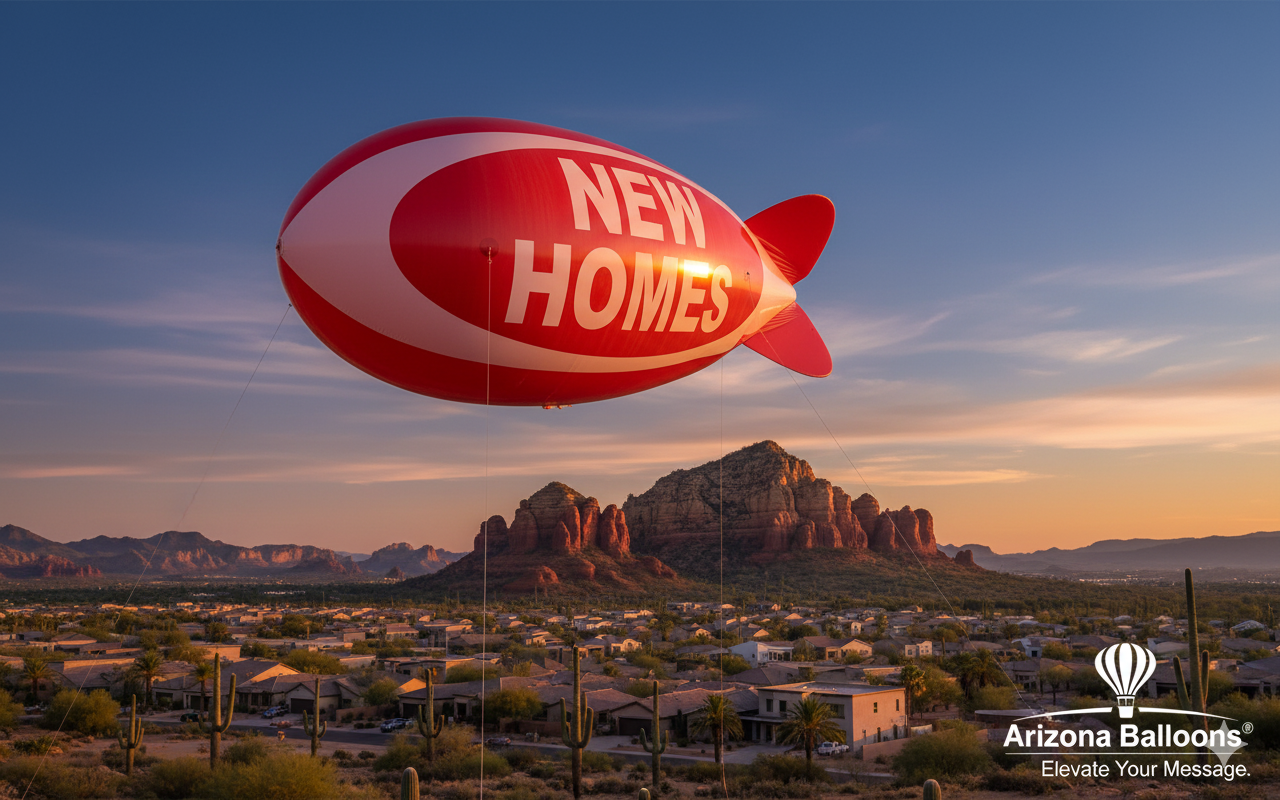
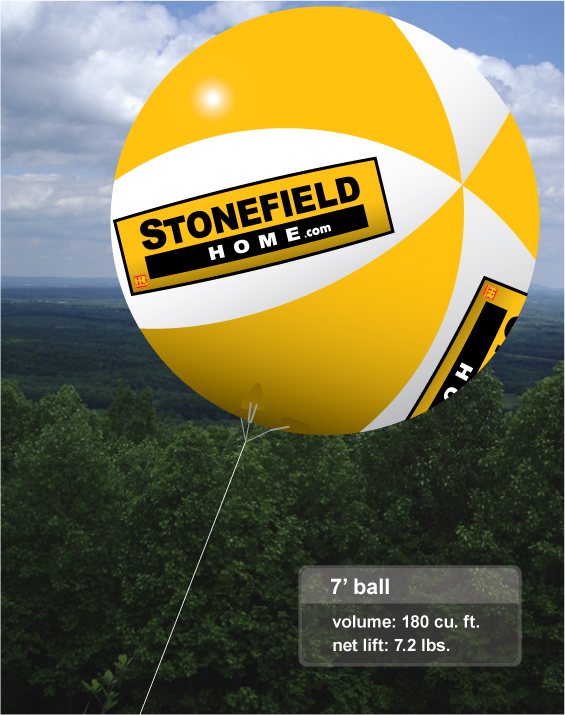
Helium advertising balloons and tethered marketing blimps have long been a staple for home builders precisely because they solve the visibility problem cheaply and quickly. A 20-foot balloon anchored above a sales trailer or a giant inflatable arrow at a subdivision entrance can be set up in under an hour and seen from roads that no digital ad can reach. During a slowdown like the one reflected in this month’s construction data, that immediacy matters: builders don’t need a new campaign concept or a lengthy production timeline, they need traffic this weekend. Balloons and blimps also scale easily across multiple communities, letting a regional builder rotate the same equipment between grand openings as phases open and close.
6. A Regional Snapshot Worth Watching
The slowdown in starts was broad-based across the South, Midwest, and West, while construction activity actually improved in the Northeast, buoyed by multifamily projects. That regional split matters for marketing planning: builders in softening Sun Belt and Western markets may need to lean harder into visibility and incentive-driven events to compete for a shrinking buyer pool, while Northeast builders riding stronger multifamily demand may prioritize leasing-office signage and amenity showcases instead. Watching where permits are rising, not just where starts are falling, can help marketing teams decide which communities deserve the bigger promotional push in the coming quarter.
What This Means for Your Marketing
A softening construction market doesn’t mean marketing budgets should shrink — it means they need to work smarter. When fewer buyers are actively shopping, the builders who capture attention first, and hold it long enough to get a name on a sign-in sheet, are the ones who close sales while competitors wait for the market to turn. Outdoor, location-based marketing has an outsized advantage in this environment because it reaches people who are already in the neighborhood, already car shopping, or already driving past on their commute — exactly the audience a builder wants walking into a model home this weekend.
For home builders and community developers navigating this slowdown, pairing a strong incentive package with unmistakable on-site visibility, such as helium advertising balloons at the community entrance or a grand-opening event, tends to outperform digital-only campaigns on cost per visitor. Balloons and blimps are also flexible enough to move between communities as sales priorities shift week to week, which matters when inventory decisions are changing as quickly as this month’s data suggests they are.
The broader lesson from this week’s numbers is that attention is the scarce resource, not ad spend. Builders, trade show exhibitors, and auto dealers alike are competing for a buyer pool that is more cautious and more price-sensitive than it was a year ago. Physical, high-visibility marketing that turns heads on the drive to work or the weekend errand run remains one of the most direct ways to convert that cautious attention into a walk-through, a test drive, or a signed contract.