Home Builder Marketing Faces a Harder Sell as Housing Hits Multi-Year Lows
By Arizona Balloon Company (arizonaballoon.com) | November 21, 2026

Builder Confidence Falls to a 14-Year Low
Home builder marketing is entering the final weeks of 2026 under unusual pressure. The National Association of Home Builders (NAHB) and Wells Fargo reported on November 17 that their Housing Market Index fell four points to 25 in November, the lowest reading since April 2012. Economists polled by Reuters had expected the index to hold at 29.
NAHB Chief Economist Robert Dietz linked the decline to mortgage rates above 7%, softer consumer confidence and an uncertain economic outlook. The association also pointed to ongoing inflation, higher energy and material costs, labor shortages and hesitant buyers. The gauge of current sales conditions dropped to 28 from 34 in October, while expectations for future sales eased to 30 from 32.
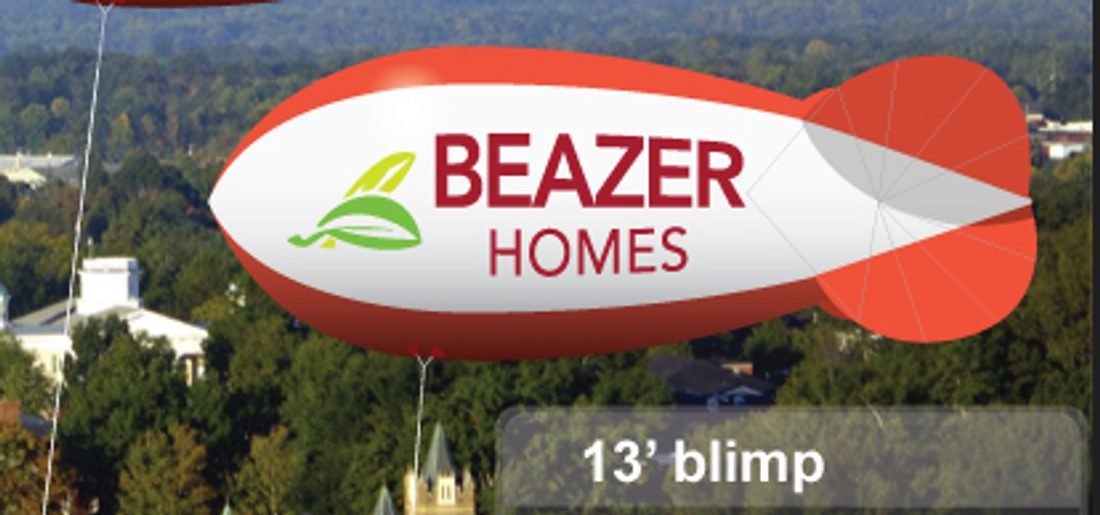
For builders competing for a smaller pool of buyers, visibility around the sales center matters more than usual. Tactics such as advertising blimps are one way community sales offices can stand out along busy roads.
Existing and Pending Home Sales Sink
The weakness is not limited to new construction. The National Association of Realtors (NAR) said existing-home sales fell 5.5% in October to a seasonally adjusted annual rate of 3.75 million, the slowest pace since August 2010. Sales were down 8.8% from a year earlier, even as the median price edged up 0.4% to $416,700, the 40th straight month of annual gains.
The market looks different from the last time sales were this low. Fortune noted that foreclosures and short sales made up 26% of transactions in 2010, compared with just 2% of October sales. Investors and second-home buyers accounted for 20% of purchases, up from 16%, suggesting that ordinary owner-occupant demand is what has faded.
Forward-looking data points the same way. NAR’s Pending Home Sales Index fell 4.7% in October and 16.7% from a year earlier, the second consecutive record low. The West declined 20.3% year over year and the South 18.7%. Dietz’s counterpart at NAR, Chief Economist Lawrence Yun, said October could mark the low point for contract signings, though he warned that annual existing-home sales could still end up at their lowest level since the mid-1990s. Arizona Balloon Company follows these indicators because builders, dealers and exhibitors adjust promotional spending as market conditions shift.
Price Cuts and Incentives Become the Norm
Builders are responding with discounts. According to NAHB data summarized by TheStreet, 46% of builders cut prices in November, the highest share of the post-Covid period. The average cut held at 6% for an eighth straight month, and 68% of builders used sales incentives, also a post-Covid high.
That shift changes what marketing has to do. When most competitors are offering concessions, a promotion that nobody sees does little work. Builders increasingly need to communicate an offer, such as a rate buydown or closing-cost credit, quickly and at the point where a buyer is already looking at homes.
Construction activity has not collapsed. A weekly housing roundup reported that housing starts rose 9.9% in October to a 1.309 million annual rate, beating forecasts, though Reuters described the single-family trend as still subdued. Builders are still adding supply into a market where demand is soft, which increases the pressure to move inventory.
Mortgage Rates and the Road Ahead
Borrowing costs remain the central issue. Freddie Mac’s 30-year fixed rate averaged 7.18% on November 5, its third straight weekly decline, but one mortgage industry analysis noted that buyers who stepped aside when rates reached 7.4% in mid-October will not appear as missing sales until November and December closings. That suggests the next NAR report could still look weak.
Some analysts see a slow rebalancing rather than a collapse. Capital Economics economist Ariane Curtis wrote that softer demand is gradually moving the market back toward equilibrium, typically considered about six months of supply. Whether lower rates arrive soon enough to lift spring activity remains uncertain, and builders have said affordability is the main obstacle.
Where Aerial Advertising Fits a Slow Market
In a market where buyers are scarce and selective, physical visibility is a practical concern for the home building industry. Model-home parks, grand openings and weekend open houses depend on drive-by traffic and local awareness, and neither is easy to buy through digital channels alone.
Helium advertising balloons and marketing blimps are tethered, elevated displays that can be seen from a distance. For a sales center on a new development, that can mean signaling the entrance from a main road, anchoring a launch event, or highlighting a limited-time incentive. They are also reusable. A builder can move a display between communities or phases, which may appeal to marketing managers watching budgets. Options such as helium advertising balloons are typically available for purchase or rental, so the commitment can be matched to the length of a campaign.
The same logic extends to other sectors listed among this site’s core audiences, including trade show exhibitors and auto dealers, who also rely on temporary, high-visibility promotion when foot traffic is uncertain.
What This Means for Your Marketing
The current data describes a buyer who is cautious, price-sensitive and comparing many options. Marketing that works in that environment tends to be local, visible and tied to a clear reason to visit now. Outdoor and location-based tactics fit that pattern because they reach people who are already near the product, whether that is a model home, a dealership lot or a convention floor.
Marketing leaders may want to review where their budgets are concentrated. If an offer is strong but poorly seen, the problem is exposure rather than the offer itself. Pairing a sales incentive with a prominent on-site display, such as helium advertising balloons, is one way to make a promotion noticeable without a large media commitment.
Planning also matters. NAR’s November report and upcoming mortgage-rate readings will show whether October was the low point. Businesses that line up outdoor promotions ahead of the spring selling season may be better positioned if activity recovers.
Sources
- NAHB: Builder Sentiment Continues to Fall on Affordability Concerns
- NAHB Eye on Housing: Builder Sentiment Continues to Fall on Affordability Concerns
- Reuters (via GV Wire): US Homebuilder Sentiment Tumbles to More Than 14-1/2-Year Low in November
- TheStreet Pro: 3 Things to Watch as Homebuilder Sentiment Sinks to Lowest Since April 2012