Grand Opening Marketing Heats Up With New U.S. Store Launches
By Arizona Balloon Company (arizonaballoon.com) | November 20, 2026
How IKEA Sarasota Built Its Opening Day
Grand opening marketing is getting a closer look this week as several national retailers open new U.S. locations within days of each other. The most detailed example comes from IKEA U.S., which opened its Sarasota, Florida store on Wednesday, November 18, at University Town Center. It is the company’s sixth Florida location, and the launch was planned as a full event rather than a simple unlocking of the doors.
According to IKEA’s announcement, opening activities began at 8 a.m., with special gifts for select customers waiting in line. A grand opening ceremony followed at 9:30 a.m., and doors opened at 10 a.m. The retailer also promoted its free IKEA Family loyalty program as a way for shoppers to receive opening updates and offers, which gave the event a lasting data-capture component beyond a single day of foot traffic.
The company also tied the opening to the community, announcing a $10,000 donation to Streets of Paradise, a Sarasota-based nonprofit working on homelessness. The store itself was positioned around local living, with room settings built around Florida’s climate, outdoor entertaining and open-concept homes. For businesses of any size, the pattern is worth noting: a scheduled sequence, a local hook, a community gesture and a way to stay in touch afterward.
Three Openings in One Week
IKEA was not the only brand staging a launch. World Market opened a store in Dublin, California, on November 20, beginning with an 8:45 a.m. ribbon-cutting and continuing with a weekend of tastings and giveaways. The company described the location as its seventh new store of 2026, which suggests that repeatable opening playbooks are now part of its expansion strategy.
Wayfair, meanwhile, is marking the debut of its first Colorado store in Denver with a grand opening weekend running November 20 through 22. Like the other two launches, it is scheduled around the start of the holiday shopping season, when consumer attention is high and competition for it is intense.
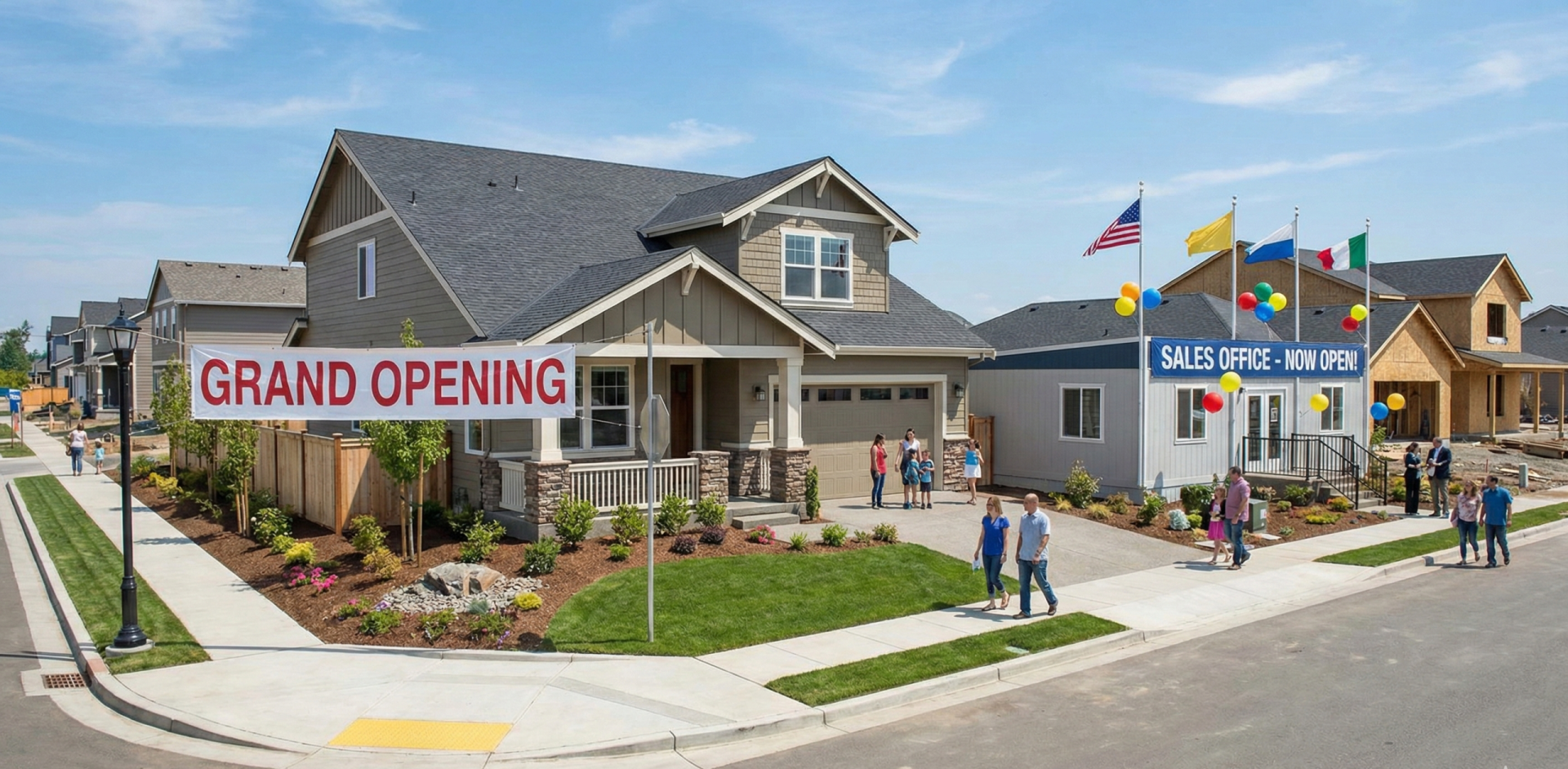
Taken together, the three announcements share a common structure. Each has a defined date, a multi-day or multi-stage program, an incentive for early visitors and a clear invitation to the surrounding community. Marketing managers at independent retailers, restaurants, dealerships and service businesses can borrow that structure at a much smaller scale. Companies that want visibility along the road can look at helium advertising balloons as one of several outdoor attention tools for an opening weekend.

Why Opening Day Works as a Local Event
A new store is competing for attention on a specific street, in a specific trade area, over a specific few days. That makes grand opening marketing different from ongoing brand advertising. Reach matters less than concentration: the goal is to draw as many nearby people as possible to a single address during a narrow window.
The IKEA, World Market and Wayfair announcements all emphasize timing. Early-arrival gifts, a morning ribbon-cutting and weekend programming each give customers a reason to show up on a particular day instead of “sometime soon.” That urgency is a core feature of opening events, and it is one reason local news outlets, community groups and social media tend to pick up the story.
The announcements also show how retailers connect an opening to what the community cares about. IKEA highlighted a local donation and a Florida-specific product presentation. World Market promoted tastings and giveaways. Neither approach requires a national budget. A hometown business can pair an opening with a local charity partner, a neighborhood giveaway or a short ceremony with a chamber of commerce representative.
Where Aerial Advertising Fits
As an industry observation, one challenge every new location faces is visibility from the road. A storefront that is easy to see for someone parked outside may be invisible to drivers a block away, especially in shopping centers, strip malls and large lifestyle developments. Elevated, tethered media can help address that gap because it rises above signage, parked vehicles and other obstructions.
That is where helium advertising balloons and marketing blimps have long been used in retail, automotive and real estate promotions. A large inflatable floating above a site signals that something is happening there, and it can be customized with a logo, a message or an opening date. Because the display is physical and location-specific, it tends to complement digital promotion rather than replace it. Online posts can tell people when and why to come, while an aerial display helps them find the entrance once they are nearby.
Businesses should still check local sign ordinances, landlord rules and any height or placement restrictions before installing an elevated display. Requirements vary by city and by property, and opening dates leave little room for last-minute permit surprises.
A Practical Planning Checklist
The structure shared by this week’s openings can be turned into a simple planning outline for smaller businesses.
- Set a firm date and publish a time-based schedule, including any early-arrival incentive.
- Choose one local hook, such as a nonprofit partnership, a ribbon-cutting or a neighborhood giveaway.
- Offer a way to stay connected, such as a loyalty program, email list or text opt-in.
- Plan outdoor visibility in advance, including signage, banners and elevated displays, and confirm local rules early.
- Extend the event across a weekend if foot traffic allows, since multi-day programming gives late-hearing customers a second chance.
What This Means for Your Marketing
This week’s openings suggest that large retailers still treat the first day or weekend of a new location as a major marketing moment, and that they build it around a clear schedule, a local story and a follow-up channel. Those elements do not depend on company size. A single-location business can apply the same logic with a smaller budget and a tighter radius.
Location-based marketing works best when digital and outdoor channels support each other. Social posts, press releases and email can announce the event, while physical elements at the site turn that awareness into visits. Outdoor tools such as helium advertising balloons are one option for adding visible, tethered presence above the property during the opening period.
Whatever mix you choose, build the plan backward from opening day. Lock in the date, line up permissions, prepare the local story and decide how you will capture contact details from visitors. Businesses that do this work early are better placed to turn a one-day crowd into repeat customers.