Tag: housing market

  • Homebuilder Marketing Shifts as NAHB Calls 7.5% Mortgage Rates the “New Normal”

    Homebuilder Marketing Shifts as NAHB Calls 7.5% Mortgage Rates the “New Normal”

    Homebuilder Marketing Shifts as NAHB Calls 7.5% Mortgage Rates the “New Normal”

    By Arizona Balloon Company (arizonaballoon.com) | October 14, 2026
    New home community representing homebuilder marketing in a high mortgage rate market

    Homebuilder Marketing in a 7.5% Rate Environment

    Homebuilder marketing is entering a more demanding phase after the National Association of Home Builders (NAHB) chief economist said mortgage rates near 7.5% may be the norm for some time. Dr. Robert Dietz made the comments on NAHB’s Housing Developments podcast, recorded at the association’s Fall Leadership Meeting in Detroit and published October 9.

    Dietz described the economy as unbalanced, with stock market performance far ahead of consumer sentiment. He tied elevated inflation to the Iran war and said the 7.5% range is likely to persist until those geopolitical factors are resolved. He also noted that the economy is still expanding and that the risk of a recession in 2027 is low.

    The rate data supports his view. Freddie Mac’s latest weekly survey, as summarized by an industry digest, put the 30-year fixed rate at 7.40%. That is up from 7.28% a week earlier and 6.30% a year ago. Newsweek noted that buyers waiting for a return to the roughly 6% range seen earlier this year have little sign that it is coming soon. For builders, that makes the next several quarters a test of how well they can attract and convert buyers at a higher monthly payment.

    Readers who want a broader look at outdoor promotion can start at Arizona Balloon Company, which manufactures, rents, sells, and services aerial advertising products.

    Three Straight Years of Modest Production Declines

    Dietz and his team forecast a 3% decline in single-family production next year. That would be the third consecutive year of modest decreases. The forecast is not a collapse, but it signals a market where builders compete harder for each qualified buyer.

    Fewer starts do not necessarily mean fewer homes to sell. Many builders still carry inventory and active communities, and they need steady traffic to keep those communities moving. When the market contracts gradually, companies that keep visibility high often hold on to share while competitors cut spending.

    Marketing leaders may also find that the buyer pool is changing. Higher rates push some households out of the market and push others toward smaller floor plans, builder incentives, or rate buydown programs. Each of those messages has to reach buyers before they choose a competing community.
    New home community representing homebuilder marketing in a high mortgage rate market

    What Higher Rates Mean for Buyers and Sales Centers

    Mortgage rates are closely tied to longer-term Treasury yields rather than to the Federal Reserve’s benchmark rate alone. As a result, builders cannot assume that a Fed decision will quickly relieve pressure on buyers. Higher rates can sharply raise the cost of buying a home even when the price of the property stays the same.

    For sales centers, this means fewer casual walk-ins and more buyers who arrive with a specific payment in mind. Those buyers research carefully, compare communities, and often decide where to visit before they ever leave home. Builders that are easy to find, easy to remember, and easy to reach have an advantage when each visit counts.

    This is also why location-based visibility matters. A buyer driving past a community on a Saturday morning is already in the target area and may already be considering a move. A clear, tall, hard-to-miss presence at that moment can turn a drive-by into a model home tour.

    Labor Shortages Add to the Squeeze

    Rates are not the only pressure. NAHB’s third-quarter remodeling survey, reported October 9, found that labor shortages are lengthening project timelines. NAHB attributed the problem to stricter immigration enforcement and competition from data center construction. A separate analysis of September jobs data from the Associated General Contractors of America found that residential builders and subcontractors lost 4,900 jobs in the month, while nonresidential firms added 16,100.

    The remodeling survey does not measure new construction directly, but the trades overlap. Longer schedules and tighter crews can push back closings, and that complicates marketing promises about move-in dates. Builders may need to spend their advertising dollars on communities that are ready to sell now, and to promote available quick-move-in homes more aggressively.

    Where Helium Advertising Balloons and Blimps Fit

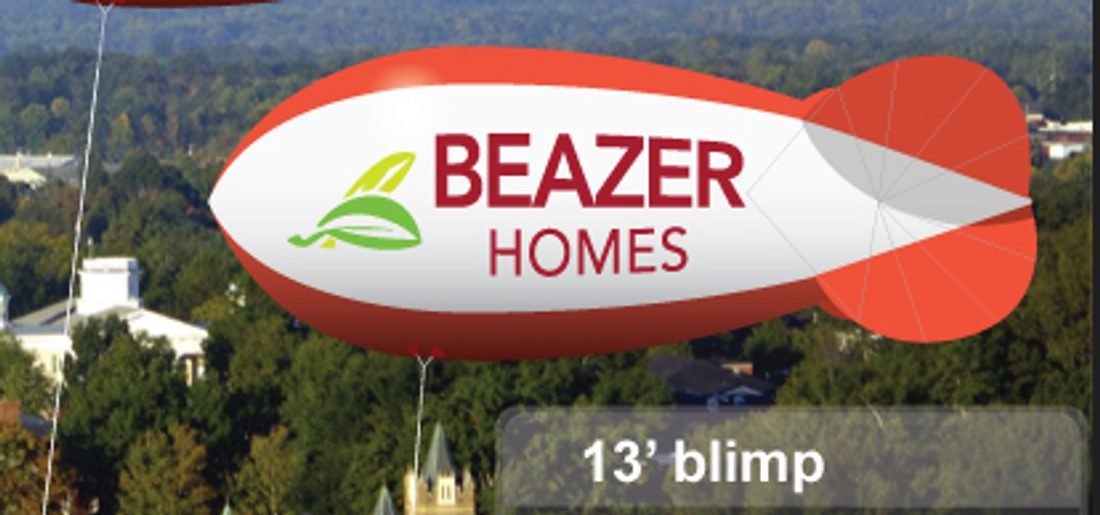
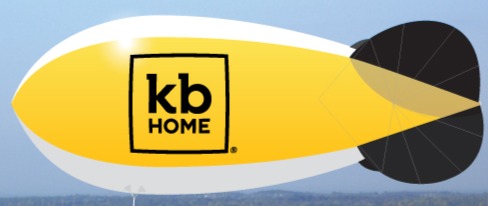
    As an industry insight, homebuilders have long used large, visible outdoor media at community entrances, grand openings, and sales events because new home buyers tend to shop locally and in person. Helium advertising balloons and marketing blimps are one option within that mix. They can be flown above a model home complex or a main road to draw attention to a community that may otherwise be hidden behind construction fencing or set back from traffic.

    The format has practical advantages in a cautious market. It operates at the exact location where the sale takes place. It can be scheduled around grand openings, weekend events, or limited-time incentives. It also lets a builder test a presence at one community without committing to a long media buy. Businesses evaluating this approach can review options such as advertising blimps for large outdoor visibility and helium advertising balloons for sales events and community openings.

    What This Means for Your Marketing

    The central lesson from this week’s news is that the market is stable but costly for buyers, and that is likely to remain true for a while. Builders cannot count on a quick rate decline to restore traffic. Marketing teams are better served by concentrating spending where it is easiest to measure, which is at the communities with homes available to sell.

    Outdoor and location-based tactics fit that approach. A strong entrance presence, clear incentive messaging, and event-driven promotion help convert local drive-by interest into appointments. Builders can track results by comparing traffic and inquiries before and after an event, which keeps spending accountable at a time when budgets are tight.

    For teams planning fall and winter promotions, adding helium advertising balloons to the community marketing mix is one way to raise visibility at a sales center without redesigning an entire campaign. Whatever tactics a builder chooses, the goal is the same: make sure interested buyers can find the community while they are still deciding where to look.

    Sources

  • Builder Confidence Falls to 34: What It Means for Your Homebuilder Marketing Strategy in 2026


    Builder Confidence Falls to 34: What It Means for Your Homebuilder Marketing Strategy in 2026


    Builder Confidence Falls to 34: What the April 2026 NAHB Data Means for Your Homebuilder Marketing Strategy

    By Arizona Balloon Company — April 28, 2026

    homebuilder marketing strategy aerial signage new home community

    NAHB Builder Confidence Drops to 34 in April 2026

    The latest NAHB/Wells Fargo Housing Market Index makes clear that sharpening your homebuilder marketing strategy is not optional in the current environment — it is urgent. Builder confidence fell four points in April 2026 to a reading of 34, a level that signals a majority of builders view current market conditions as unfavorable. The three component readings paint a consistent picture: current sales conditions dropped four points to 37, sales expectations for the next six months fell seven points to 42, and traffic of prospective buyers declined three points to 22.

    The buyer traffic sub-index is especially telling for marketing and sales professionals. A reading of 22 means that the flow of prospective shoppers walking into model homes and sales centers is deeply suppressed. Foot traffic is the first step in the conversion funnel for new home communities, and when it dries up, pipeline pressure ripples through every downstream metric — appointments, deposits, and closings.

    The April HMI was released against a backdrop of persistent affordability headwinds, lingering tariff-related cost uncertainty, and cautious consumer sentiment. For marketing decision-makers at homebuilding companies, the data is a clear signal: you cannot rely on organic demand to fill your sales office. Communities that invest in active, visible outreach will have a measurable advantage over those that do not. Learn more about outdoor and aerial marketing solutions at arizonaballoon.com.

    Zonda Data: New Home Sales Down 7% in March

    The NAHB sentiment data is reinforced by Zonda’s March 2026 New Home Market Update, published April 22. Zonda, which tracks approximately 85% of the production new home market across the United States, reported that new home contract sales came in at a seasonally adjusted annualized rate of 656,588 in March — a decline of 7.2% both month-over-month and year-over-year. On a non-seasonally adjusted basis, 61,744 homes sold in March, down 7.4% from a year ago.

    Zonda’s chief economist Ali Wolf attributed the decline to three compounding forces that struck simultaneously in March: an erosion of consumer confidence tied to geopolitical instability, upward pressure on mortgage interest rates driven by inflation expectations, and rising energy costs that squeezed household budgets. The result was that foot traffic and sales volume came in below expectations for roughly half of the builders surveyed by Zonda, even as the traditional spring selling season was expected to provide a tailwind.

    There are 17,477 actively selling communities tracked by Zonda nationally, up 2.3% from a year ago. More communities competing for a shrinking pool of active buyers means that the quality and visibility of each community’s marketing footprint matters more than ever.

    homebuilder marketing strategy aerial signage new home community

    Incentives and Competition Intensify Across the Market

    One of the most significant competitive dynamics playing out in April 2026 is the widespread use of builder incentives. The April NAHB HMI survey found that 36% of builders cut prices during the month, with an average reduction of 5%. That figure is actually down slightly from 37% in March, suggesting the rate of price cutting may be stabilizing, but the level remains historically elevated.

    Beyond price reductions, builders are offering mortgage rate buydowns, closing cost assistance, and design upgrade packages to convert hesitant shoppers into committed buyers. Zonda’s data also shows that national quick move-in (QMI) inventory — homes that can be occupied within roughly 90 days — totaled 32,332 units in March, down 4.3% year-over-year but still 71.3% above 2019 levels. Builders are carrying significant move-in-ready inventory that needs to be absorbed.

    In this environment, the communities that win will be those that combine compelling financial incentives with strong on-the-ground visibility. A buyer who never discovers a community cannot be converted by even the most generous rate buydown.

    Why Standing Out On-Site Has Never Been More Critical

    National homebuilder marketing budgets increasingly skew toward digital — search advertising, social media, email automation, and AI-optimized content. These channels are valuable, but they compete for attention in an environment where consumers are exposed to thousands of digital messages per day. Industry experts have noted that buyers today encounter somewhere between 4,000 and 10,000 advertising impressions daily, making it exceptionally difficult for any single online message to break through.

    Driving physical visits to a community requires both digital discovery and location-based awareness. A prospective buyer may see a digital ad on their phone, but it is often a visible, compelling physical presence at the community entrance or along a high-traffic corridor that triggers the impulse to pull in and explore. This is where out-of-home and aerial marketing tools create value that digital channels cannot replicate.

    Midwestern markets such as Columbus, Indianapolis, and Kansas City are outperforming national trends according to NAHB chief economist Robert Dietz, and new community openings are occurring across the Sun Belt even as those markets work through oversupply. In every geography, the fundamental challenge is the same: give motivated buyers a reason to visit your location today, not next weekend.

    How Advertising Balloons Help Homebuilders Drive Foot Traffic

    For homebuilders looking to generate on-site traffic in a compressed market, helium advertising balloons and aerial marketing inflatables offer one of the highest-visibility, lowest-cost-per-impression tools available in location-based marketing. A large helium blimp or shape balloon tethered above a model home or community entrance is visible from distances of a mile or more, creating a landmark that draws drive-by traffic from arterial roads and highways without requiring a consumer to be actively searching online.

    For grand opening events, weekend sales events, and incentive campaign launches, aerial inflatables generate the kind of real-world urgency and excitement that no banner ad can produce. They signal to potential buyers in the immediate trade area that something is happening at that location right now, which aligns perfectly with the QMI and move-in-ready inventory that builders are currently motivated to sell quickly.

    Builders using aerial marketing tools as part of a coordinated campaign — pairing a physical balloon presence with digital retargeting of prospects in the surrounding zip codes — report stronger weekend open-house attendance and shorter days on market for their most price-sensitive inventory. In a market where each sale requires more effort, as Builders FirstSource noted in its 2026 housing outlook, reducing friction in the discovery phase is a measurable competitive advantage.

    What This Means for Your Marketing

    The April 2026 NAHB data and Zonda’s March sales figures together confirm that the homebuilding market is in a period of compressed demand that requires active, multi-channel marketing to sustain traffic and sales velocity. Financial incentives alone are not enough to drive conversions if prospective buyers are not physically arriving at your communities. Homebuilders who are investing in location-based visibility — whether through grand opening events, model home marketing weekends, or ongoing aerial signage at community entrances — are giving their sales teams a larger pool of prospects to work with.

    Outdoor and aerial marketing tools work especially well when layered on top of digital campaigns. Digital advertising identifies and retargets interested buyers; physical visibility captures the impulse shopper who is already driving through your trade area but has not yet been reached by a screen. Aerial marketing blimps and large helium advertising balloons are purpose-built for exactly this kind of community-level traffic generation, and they are scalable — deployable for a single weekend event or maintained on a long-term basis at an actively selling location.

    With community counts up 2.3% nationally and buyer traffic readings near multi-year lows, the builders and community marketers who commit to being more visible — not less — will be best positioned to capture the share of motivated buyers who are actively in the market right now. The spring selling season is underway. Buyers are out there. The question is whether they can find your community before they find a competitor’s.

    Sources