Tag: high visibility marketing

  • Q4 Outdoor Advertising: Why Place-Based OOH Is Winning Late-Quarter Budgets

    Q4 Outdoor Advertising: Why Place-Based OOH Is Winning Late-Quarter Budgets

    Q4 Outdoor Advertising: Why Place-Based OOH Is Winning Late-Quarter Budgets

    By Arizona Balloon Company (arizonaballoon.com) | October 2, 2026

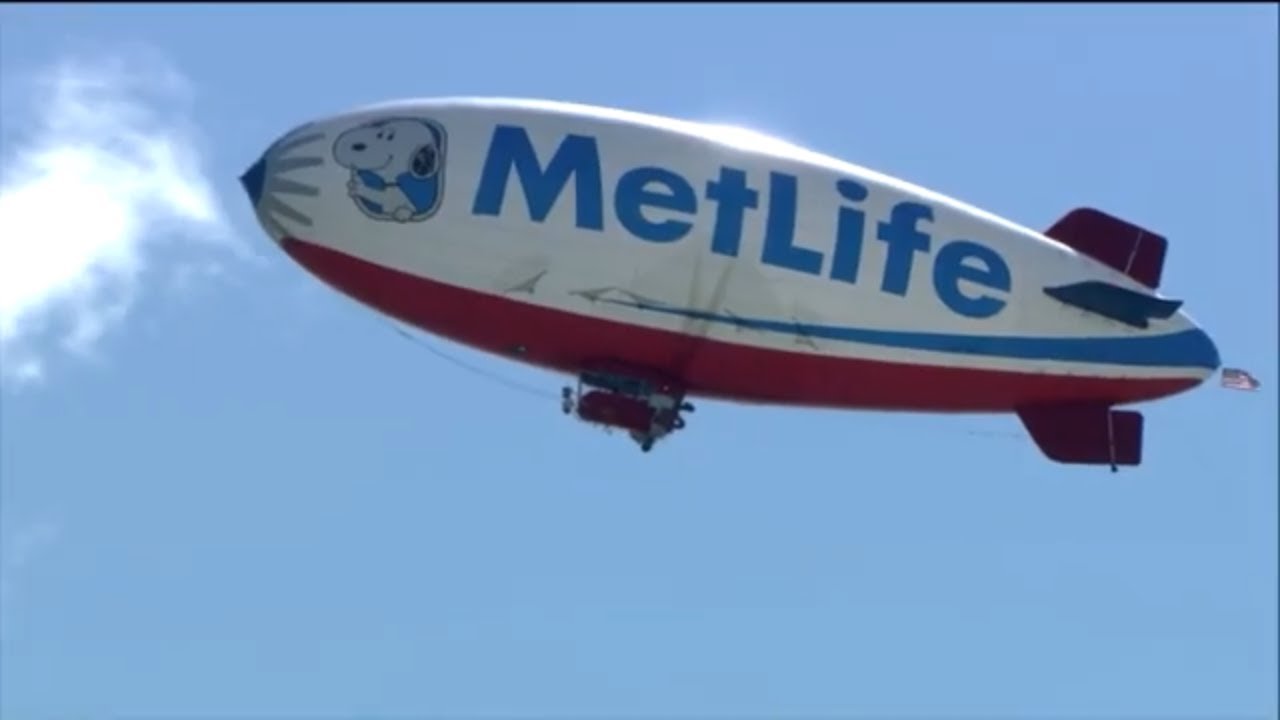
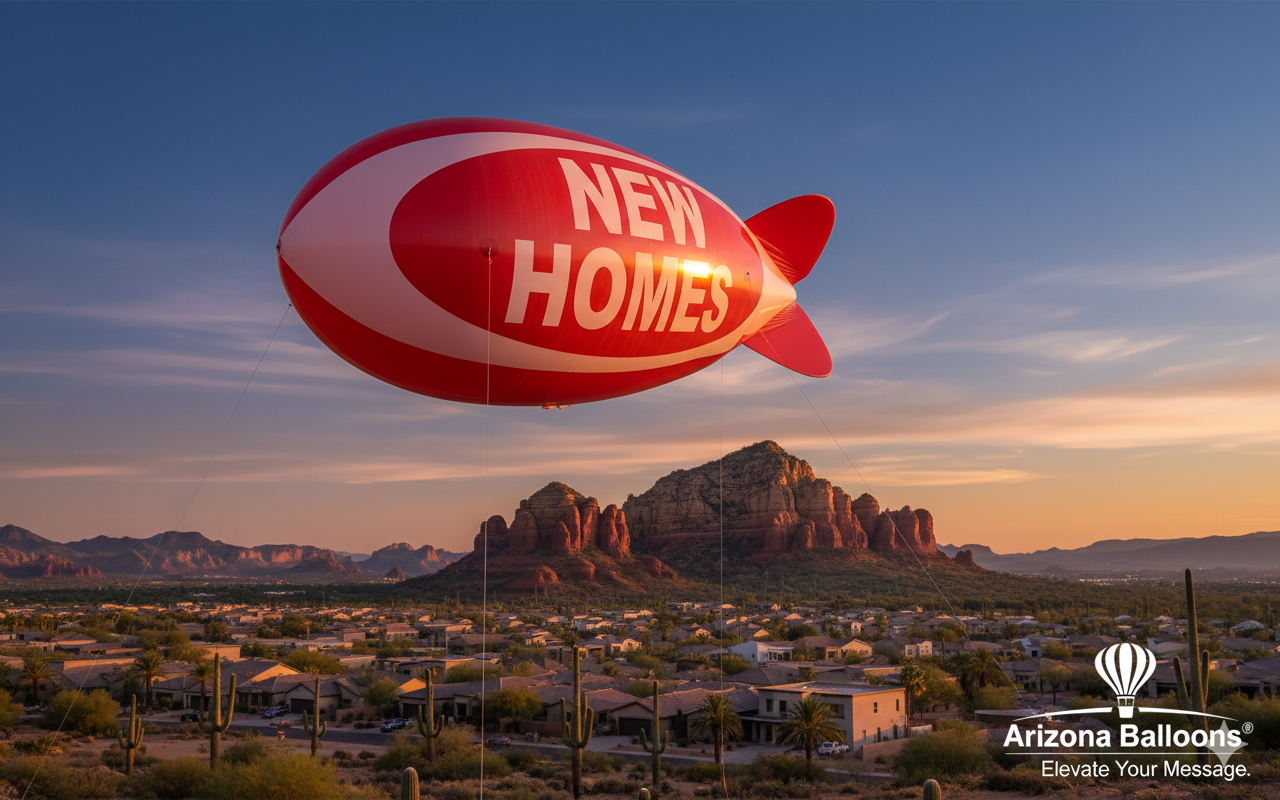
    Q4 outdoor advertising with a large helium balloon above a business location

    Why Q4 Outdoor Advertising Planning Is Shifting

    Q4 outdoor advertising is drawing fresh attention this week. According to a September 30 feature in OOH Today, most media plans are already running by the time the final quarter begins. Budgets are committed and holiday strategies are taking shape. Even so, the quarter tends to create new needs: extra budget turns up, a market needs more support, or a retailer wants a stronger holiday push. The question stops being what the ideal six-month plan looks like and becomes what can still make an impact now.

    That shift affects more than national brands. Home builders chasing year-end closings, auto dealers clearing inventory, and trade show exhibitors preparing for fall and winter events all work against the same compressed timeline. Local, physical visibility that goes live quickly is worth a look for these buyers, and formats such as helium advertising balloons from our advertising balloons line are one example of media that can be placed exactly where a customer is deciding.

    Consumers Act Near the Point of Purchase

    The article leans on recent research from the Outdoor Advertising Association of America (OAAA) and the Harris Poll. Among consumers aged 18 to 64, 86% said they would act after seeing a retail out-of-home ad that interests them. Forty-five percent would visit the retailer’s website or app, 42% would search for the retailer online, and 33% would visit a store.

    Proximity appears to strengthen the effect. Half of respondents said retail out-of-home advertising influences purchase decisions in the days before shopping. That figure rises to 59% immediately outside a store and 64% inside one. The practical lesson for a business owner is that the closer a message sits to the buying moment, the more likely it is to prompt a next step. Our advertising blimps follow the same logic, since they put a large, hard-to-miss message directly over a showroom, sales center, or event.

    Q4 outdoor advertising with a large helium balloon above a business location

    Quick-Turn Does Not Mean Generic

    When time is short, planners often default to broad reach. The OOH Today piece argues for a different approach: move fast while still building around specific markets, venue types, and behaviors. Examples it names include digital screens in retail, convenience stores, and workplaces; signage at gas stations and pharmacies; coffee sleeves; and restaurant and bar media.

    The article also separates two jobs. Digital formats add speed and creative flexibility, while static formats provide sustained visibility and repetition. The goal, it says, is not to use every format but to choose the environments that suit the campaign.

    One note on sourcing: the piece is labeled as a partner message from Encompass Media Group, an OOH Today advertising partner, and it highlights that company’s national place-based coverage. The OAAA and Winterberry Group findings it cites are worth considering independently of that positioning. They report that 98% of surveyed marketers include out-of-home in purchase-driven initiatives, and 86% expect their investment to increase over the next two years.

    Audience Concentration Changes the Plan

    A second item from OOH Today, a Stat of the Week from StreetMetrics, adds a planning caution. For frequent leisure travelers, the best-fitting units in a market reach the audience about 2.4 times as efficiently as the median unit. For SUV shoppers the figure is about 2.2 times. For fast casual diners, the flattest of the 125 segments StreetMetrics measures, the best units are barely better than average.

    The takeaway is to check how concentrated an audience is before building the plan. If the spread is wide, choosing the right location carries most of the value. If it is narrow, almost any unit in the market reaches the audience, and reach matters more. An auto dealer promoting SUVs, for instance, gains from precise placement. A business selling to everyone may gain more from sheer visibility.

    Where Balloons and Blimps Fit the Q4 Window

    Helium advertising balloons and marketing blimps are place-based media by nature. They sit at the business location, the community entrance, or the event floor, which is where the research above says influence is strongest. Like the static formats described in the OOH Today article, they offer sustained visibility and repetition, because the same message is seen by everyone who passes day after day.

    This matters for the categories that make up much of the outdoor market. Home builders can mark a model home or new community during peak weekend traffic. Auto dealers can add height and motion to a year-end sales event. Trade show exhibitors can draw attention from across a hall. In each case the format is physical, local, and fast to deploy relative to many larger media buys, and none of it depends on the audience being online.

    Questions to Settle Before Year-End

    The research points to a short list of decisions. Which action do you want, such as a store visit, a search, or a call? Is your audience concentrated in particular places, or spread everywhere? And which format will stay visible long enough to build repetition before the holidays? Answering these early keeps a late-quarter buy tied to strategy rather than urgency.

    What This Means for Your Marketing

    The common thread in this week’s coverage is relevance over volume. Late-quarter dollars work best when they reach people in the environments where decisions are already being made. For location-driven businesses, that argues for putting your message at or near the place where customers act.

    Consider pairing quick-turn local visibility with a clear action, such as a sales event or open house, so results are easy to judge. If your audience is concentrated, invest in placement. If it is broad, invest in repetition and scale. Businesses weighing physical, high-visibility options can explore aerial marketing blimps as part of that mix.

    Sources

  • U.S. Outdoor Advertising Revenue Growth Hits Record $2.12 Billion in Q1 2026


    U.S. Outdoor Advertising Revenue Growth Hits Record $2.12 Billion in Q1 2026


    U.S. Outdoor Advertising Revenue Growth Hits All-Time Record of $2.12 Billion in Q1 2026

    By Arizona Balloon Company (arizonaballoon.com) — June 9, 2026

    outdoor advertising revenue growth billboard and experiential marketing display

    A Record Quarter for Outdoor Advertising Revenue Growth

    Outdoor advertising revenue growth in the United States reached a historic milestone in the first quarter of 2026, with the Out of Home Advertising Association of America (OAAA) reporting an all-time Q1 high of $2.12 billion in total industry revenue. The figure represents a 7.1 percent increase compared to the same period in 2025 and extends the medium’s unbroken growth streak to 20 consecutive quarters. For marketing managers, business owners, and brand strategists, the data signals one undeniable trend: location-based, real-world advertising is not just surviving in a digital era — it is accelerating.

    The strong Q1 performance follows a record-setting 2025, during which the OOH industry generated $9.46 billion in annual revenue. The latest figures build on that foundation and suggest 2026 is on track to surpass it. For businesses that invest in physical, place-based visibility — from home builders and auto dealers to trade show exhibitors and retail chains — the timing is favorable. Consumer attention is demonstrably shifting back toward the physical environment, and advertisers across nearly every category are responding with increased outdoor budgets.

    For businesses looking to capitalize on this momentum with high-impact physical media, custom advertising balloons from Arizona Balloon Company offer a proven, attention-commanding format that fits seamlessly into an outdoor advertising strategy.

    What Is Driving Outdoor Advertising Revenue Growth in 2026

    Digital Out-of-Home (DOOH) formats are the primary engine behind the industry’s expansion, rising 12.9 percent year-over-year and accounting for 36 percent of total OOH revenue in Q1 2026. These programmatic, screen-based placements allow advertisers to update creative in real time, target audiences by time of day or weather condition, and measure campaign performance with greater precision than traditional static formats. The rapid adoption of DOOH by major national brands has elevated the perceived legitimacy of the broader OOH category, creating a rising tide effect that benefits all outdoor formats.

    Among specific OOH channel types, Transit advertising posted the highest growth in Q1 2026 at 18 percent over the prior year period. Street Furniture placements followed closely with an 11.5 percent increase. Billboard formats grew 4.8 percent, while Place-Based media expanded 3.3 percent. Across all major format categories, digital inventory posted gains — with double-digit growth across nearly every digital OOH segment. Printed OOH, sometimes described as a declining medium, still managed a 4.1 percent increase, underscoring that physical presence continues to deliver measurable value for advertisers.

    outdoor advertising revenue growth billboard and experiential marketing display

    Traditional Formats Hold Strong Alongside Digital Innovation

    A common misconception in marketing circles holds that traditional, non-digital outdoor formats are being displaced entirely by screens and programmatic inventory. The Q1 2026 OAAA data challenges that view. Printed OOH grew by 4.1 percent, and all major format categories reported positive results. The evidence suggests that physical, analog outdoor media continues to play a valuable and complementary role in the modern media mix, particularly for businesses that need to establish a visible, trusted presence in a specific geography.

    Physical outdoor formats carry a brand legitimacy that digital screens cannot fully replicate. A large-format presence in a high-traffic area signals investment, commitment, and scale — qualities that resonate especially with consumers making significant purchasing decisions, such as buying a home, selecting a contractor, or choosing an auto dealership. The OAAA data reinforces what experienced local and regional marketers have long understood: being visible in the real world builds the kind of brand trust that accelerates conversion downstream, whether online or in person.

    New Brands Entering the OOH Space in Q1 2026

    One of the more telling indicators from the Q1 2026 OAAA report is the wave of brands that made their first-ever appearance in OOH spending during the quarter. Eight brands were identified as new to Q1 OOH compared with the same period in 2025, including artificial intelligence companies Genspark, OpenAI, and Lambda, as well as established names such as Charter Communications, Citi, eBay, and Boehringer Ingelheim. The entry of AI-sector brands into physical outdoor media is particularly instructive: companies whose entire product exists in the digital world are now turning to real-world, location-based advertising to build awareness and credibility with a general consumer audience.

    This pattern reflects a broader understanding among sophisticated marketing teams that digital-only strategies have ceiling effects. Display advertising faces growing challenges from ad blockers, banner blindness, and platform saturation. OOH, by contrast, is non-skippable, non-blockable, and reaches consumers precisely when they are moving through the world and making decisions. The influx of new advertisers — particularly high-spending technology brands — drives up the overall perceived value of the OOH category and validates the investment for businesses of all sizes that have relied on outdoor formats for years.

    How Helium Advertising Balloons and Marketing Blimps Fit the Outdoor Surge

    The record outdoor advertising numbers released by the OAAA reflect demand for visibility in the physical world — a demand that helium advertising balloons and marketing blimps have served for decades. While the industry conversation often centers on digital screens and programmatic technology, the fundamental principle driving OOH growth is unchanged: brands need to be seen, remembered, and associated with specific locations. Inflatable aerial advertising achieves all three objectives at a fraction of the cost of a digital billboard campaign.

    For home builders, auto dealers, trade show exhibitors, and general businesses, a giant advertising blimp or a cluster of custom-shaped helium balloons creates an instant visual landmark. It draws attention from passing traffic, anchors a brand to a physical location, and communicates the message that something significant is happening at that address — a grand opening, a sale event, a model home tour, or a trade show presence. These are precisely the use cases that the broader OOH surge validates. Outdoor advertising works because people are physically present in the world, and aerial formats cut through ground-level visual clutter in ways that static signage cannot.

    Arizona Balloon Company’s aerial marketing blimps are manufactured, rented, and serviced to deliver this kind of high-impact visibility for businesses across every sector currently driving OOH growth. As the industry continues its record-setting trajectory, physical aerial formats represent a cost-effective and highly differentiated entry point into the outdoor advertising mix.

    What This Means for Your Marketing

    The OAAA’s Q1 2026 data is more than an industry benchmark — it is a strategic signal for marketing decision-makers. The 20 consecutive quarters of growth demonstrate that the consumer shift toward digital consumption has not diminished the effectiveness of outdoor and location-based media. If anything, outdoor advertising is proving to be a critical counterbalance in an era of digital oversaturation. For business owners planning their 2026 campaigns, the data supports a stronger allocation toward real-world visibility, particularly in the high-traffic locations where their target customers are already present.

    Experiential and location-based advertising formats are especially well-positioned for businesses with a strong geographic component to their sales process — home builders marketing model homes, auto dealers driving lot traffic, and trade show exhibitors competing for attention on a crowded show floor. The most effective outdoor strategies combine multiple physical touchpoints: signage, branded environments, and aerial elements that establish a visible identity across a wide radius. Helium advertising balloons from Arizona Balloon Company can serve as the anchor of that aerial layer, providing the kind of unmistakable, high-altitude visibility that no ground-level format can replicate.

    The record OOH revenue figures from Q1 2026 should encourage marketing managers to resist the temptation to shift all investment into digital channels. The brands winning in today’s advertising environment are those deploying integrated strategies that combine the targeting precision of digital with the undeniable physical impact of outdoor. An aerial marketing blimp above a grand opening event, a balloon arch at a trade show booth, or a giant custom shape floating above a home builder’s community — these are proven, measurable tools that belong in any serious outdoor advertising plan. The data supports the investment. The results speak for themselves.

    Sources